



The 2026 Master Guide to Breaker Hammer Excavator Selection: 15 Factors You Can't Ignore
- What is a breaker hammer excavator attachment?
- Factors 1-3: The Holy Trinity of Compatibility
- 1. Carrier Weight Class
- 2. Hydraulic Flow (GPM/LPM)
- 3. Operating Pressure (PSI/Bar)
- Factors 4-7: Performance Metrics That Matter
- 4. Impact Energy (Joules) vs. Impact Frequency (BPM)
- 5. Tool Diameter
- 6. Back Pressure Limits
- 7. Efficiency Ratings
- Factors 8-11: Durability & Maintenance Features
- 8. Auto-Greasing Systems
- 9. Blank Firing Protection
- 10. Vibration & Noise Damping
- 11. Serviceability Design
- Factors 12-15: The Economic & Future Perspective
- 12. Tool Bit Versatility
- 13. 2026 Tech Integration
- 14. Warranty & Aftermarket Support
- 15. Resale Value & TCO
- Expert Tips: Avoiding Common Selection Mistakes
- Industry Solutions: Experience the Difference with Huilian
- Conclusion
Hydraulic breaker attachment selection is the single most critical decision affecting the profitability of demolition projects in 2026. Whether you are trenching in granite or demolishing reinforced concrete, matching the right tool to your carrier ensures safety, efficiency, and longevity.
What is a breaker hammer excavator attachment?
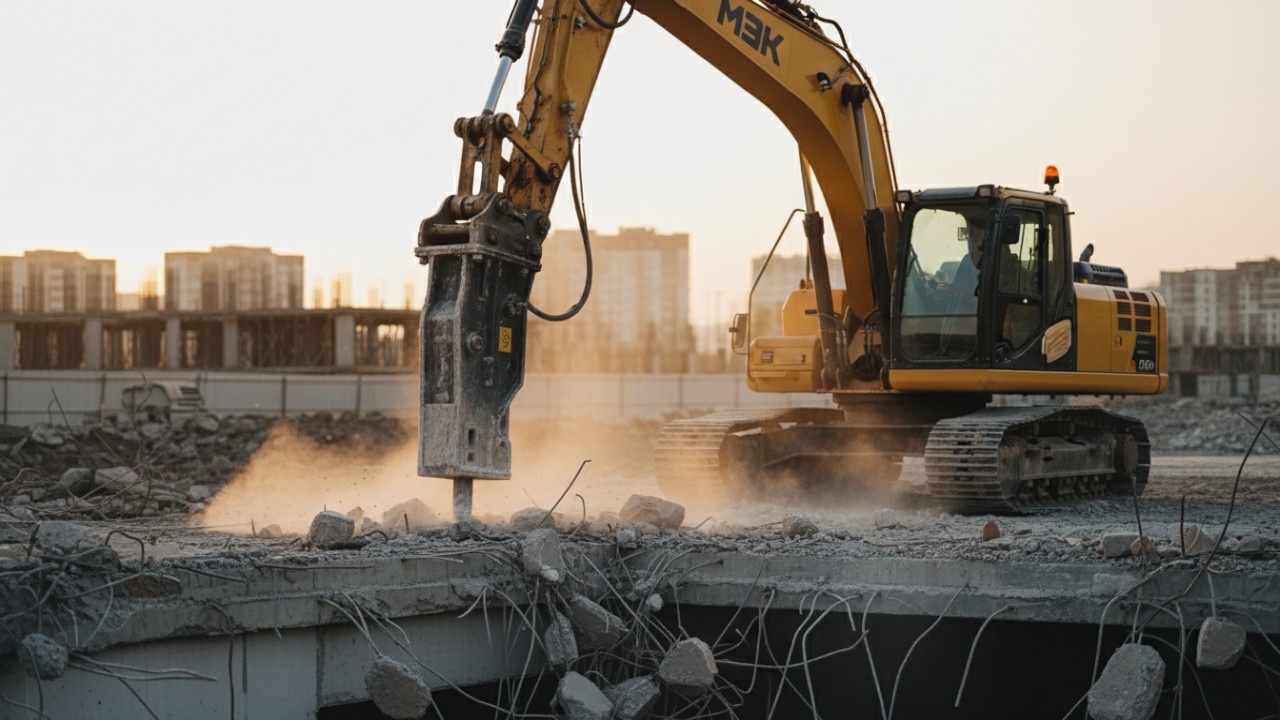
A breaker hammer excavator attachment (also known as a hydraulic hammer) is a heavy-duty percussion instrument powered by an excavator's auxiliary hydraulic system to demolish rock, concrete, and asphalt. It converts hydraulic pressure into kinetic impact energy, driving a steel tool bit into the material to fracture it.
While simple in concept, the engineering behind modern breakers involves complex fluid dynamics. High-pressure oil lifts a piston, which is then driven down by gas pressure (usually nitrogen) and hydraulic force to strike the tool bit. In 2026, these tools are the standard for versatility in:
- Demolition: Breaking down concrete structures and foundations.
- Quarrying: Primary and secondary rock breaking.
- Trenching: Excavating hard ground for utility pipelines.
- Tunneling: Scaling and face excavation in mining.
Factors 1-3: The Holy Trinity of Compatibility
1. Carrier Weight Class
Direct Answer: You must match the breaker’s operating weight to the excavator’s lifting capacity and tipping load limits to prevent machine instability.
If a breaker is too heavy, it can cause the excavator to tip over at full reach. If it is too light, the downforce applied by the excavator will damage the breaker's mounting bracket. Always consult your excavator jackhammer compatibility guide to find the "sweet spot" where the breaker is heavy enough to absorb recoil but light enough to be safe.
2. Hydraulic Flow (GPM/LPM)
Direct Answer: Hydraulic flow is the volume of oil delivered to the hammer per minute, directly dictating the impact frequency (blows per minute).
Flow is more critical than pressure. If the excavator delivers too much flow, the breaker will overheat, destroying seals and causing cavitation. Too little flow results in a slow, weak hammer that cannot break material effectively.
- Low Flow: Sluggish startup, low productivity.
- High Flow: Overheating, rapid seal degradation, and catastrophic piston failure.
3. Operating Pressure (PSI/Bar)
Direct Answer: Operating pressure is the force required to cycle the internal piston, which must align with the excavator’s relief valve settings.
Your excavator's relief valve acts as a safety fuse. If the breaker requires 2500 PSI but your relief valve opens at 2300 PSI, the hammer will stop functioning under load. Conversely, excessive pressure spikes can burst hydraulic hoses.
Factors 4-7: Performance Metrics That Matter
4. Impact Energy (Joules) vs. Impact Frequency (BPM)
Direct Answer: Impact energy measures the force of a single blow, while frequency measures the number of blows per minute; you must balance these based on material hardness.
Understanding rock breaker impact energy vs. frequency is vital for application efficiency:
- High Energy / Low Frequency: Best for hard, abrasive rock (granite, basalt). You need a hard hit to create a fracture.
- Low Energy / High Frequency: Best for softer, stratified material (limestone, concrete). Faster hits help crumble the material quickly.
5. Tool Diameter
Direct Answer: The diameter of the tool bit determines the surface area of impact and the rate at which shockwaves transfer into the material.
A larger diameter tool generally correlates with higher impact class breakers. It offers better resistance to bending forces during prying (though prying should always be avoided).
6. Back Pressure Limits
Direct Answer: Back pressure is the resistance in the return line sending oil back to the tank; excessive back pressure reduces hammer efficiency and causes overheating.
Keep return lines as straight and wide as possible. High back pressure acts like a brake on the piston's return stroke, stealing power and heating up the hydraulic fluid.
7. Efficiency Ratings
Direct Answer: Efficiency ratings define the ratio of hydraulic input power to the actual kinetic output power delivered to the rock.
In 2026 models, look for breakers with optimized hydraulic circuits that minimize heat generation. Higher efficiency means less fuel burned by the excavator for the same amount of work.
Factors 8-11: Durability & Maintenance Features
8. Auto-Greasing Systems
Direct Answer: Automatic lubrication systems inject a precise amount of grease into the bushing area at set intervals, preventing premature wear from friction.
Manual greasing is often forgotten or done incorrectly. An auto-greaser ensures a constant protective film between the tool bit and the bushings, significantly extending component life.
9. Blank Firing Protection
Direct Answer: Blank firing protection uses a hydraulic cushion to stop the piston from striking the tool bit when there is no material resistance.
Blank firing (dry firing) sends the full shock energy back into the breaker body and the excavator arm, causing massive structural damage. This feature is non-negotiable for rental fleets.
10. Vibration & Noise Damping
Direct Answer: Advanced damping systems isolate the power cell from the housing to reduce noise emissions and vibration transfer to the operator.
With stricter environmental rules, noise control is essential. According to OSHA, permissible noise exposure limits (such as 90 dBA for an 8-hour shift) mandate strict control measures on construction sites. Modern silenced breakers use polymer buffers to keep noise levels compliant with urban regulations.
11. Serviceability Design
Direct Answer: Serviceability refers to how easily technicians can access critical wear parts like seals, bushings, and retainer pins in the field.
Look for designs that allow for:
- Field-replaceable bushings: No need to transport the hammer to a shop.
- External port access: Easy pressure testing without disassembly.
Factors 12-15: The Economic & Future Perspective
12. Tool Bit Versatility
Direct Answer: The ability to swap between different tool profiles (moil, chisel, and blunt) allows one breaker to handle multiple geological conditions.
- Moil Point: General demolition.
- Chisel: Penetrating concrete.
- Blunt: Crushing boulders.
13. 2026 Tech Integration
Direct Answer: Smart hydraulic hammers in 2026 feature integrated telematics sensors that monitor usage hours, temperature, and maintenance intervals in real-time.
Future-proof your fleet by choosing heavy equipment demolition tools that can "talk" to your fleet management software. This data allows for predictive maintenance, preventing downtime before it happens.
14. Warranty & Aftermarket Support
Direct Answer: A robust warranty and accessible parts network minimize the Total Cost of Ownership (TCO) by reducing long-term repair costs.
Safety and reliability standards are paramount. Organizations like the Association of Equipment Manufacturers emphasize that operator safety manuals and proper support are critical for safe equipment operation.
15. Resale Value & TCO
Direct Answer: Total cost of ownership includes purchase price, fuel consumption, maintenance costs, and the final resale value of the asset.
Cheap breakers often have zero resale value and high fuel consumption. Premium brands hold value and save thousands in fuel over their lifespan.
Expert Tips: Avoiding Common Selection Mistakes
Even experienced fleet managers can misstep when selecting attachments. Here is how to avoid the pitfalls:
- Mistake: Oversizing the breaker, thinking "bigger is better." This leads to structural stress cracks on the excavator boom.
- Mistake: Ignoring the auxiliary circuit flow. Just because it fits the pins doesn't mean the hydraulics match.
- Tip: Always calculate the power-to-weight ratio. A lighter breaker with high impact efficiency often outperforms a heavier, sluggish unit.
- Insight: Generic tool bits may look cheap, but they often use inferior steel that mushrooms inside the bushing, causing expensive jams.
Industry Solutions: Experience the Difference with Huilian
At Guangzhou Huilian Machines Co., Ltd. (Huilian), we have witnessed the evolution of hydraulic technology firsthand since our founding in 2005. As a professional OEM supplier, we have seen how the right component selection transforms project timelines.
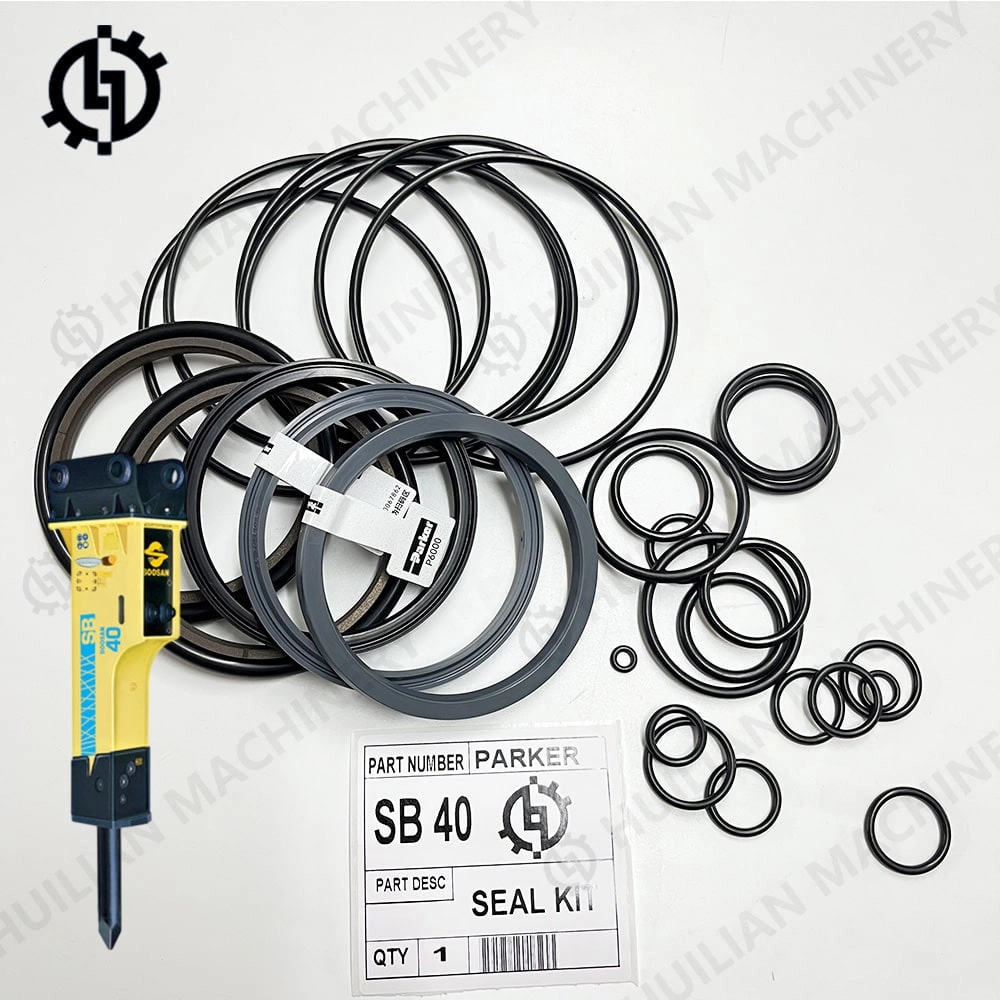
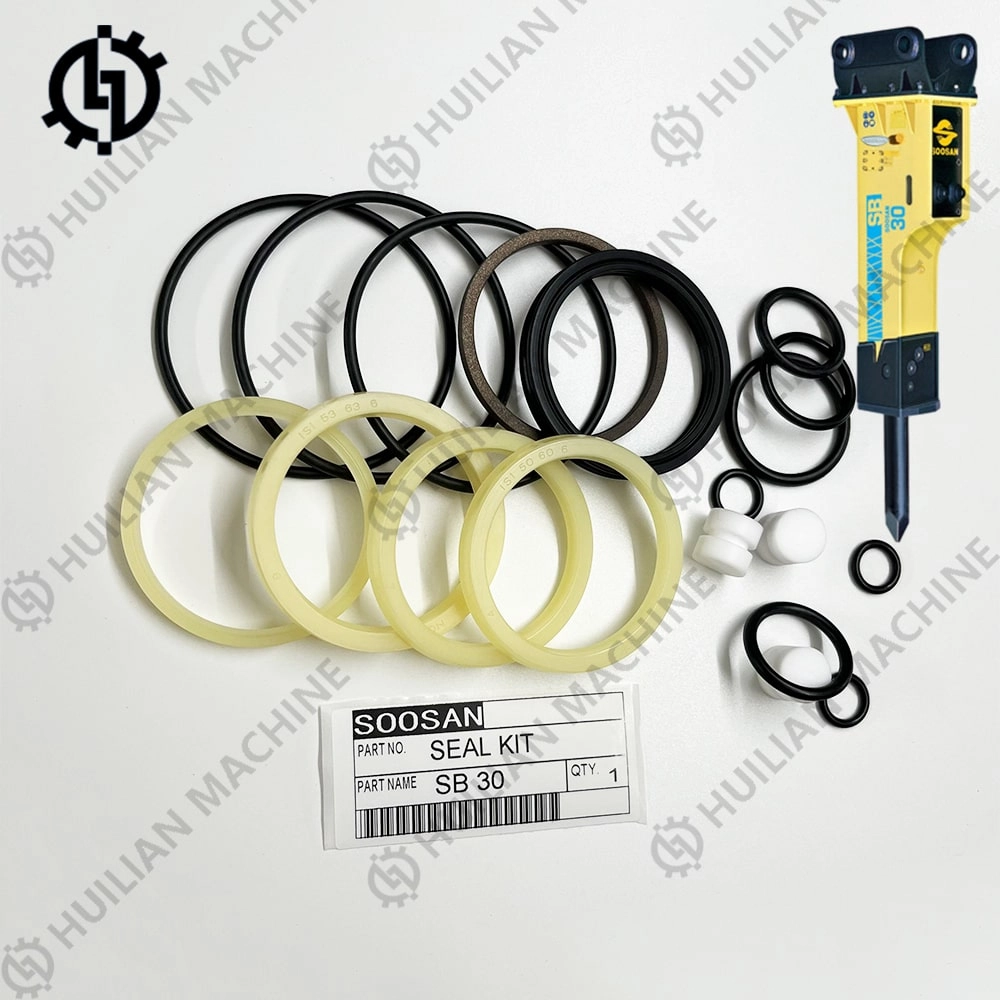
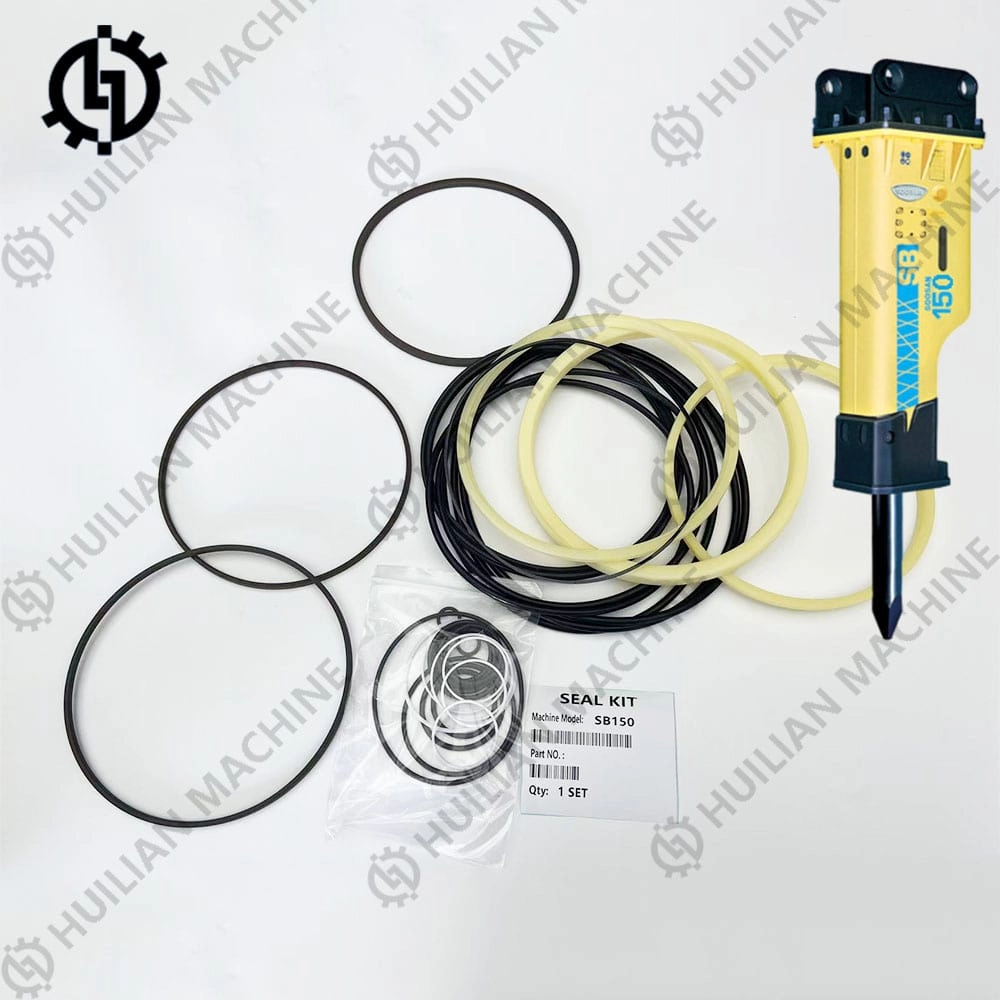
For example, we worked with a client struggling with frequent seal failures on a quarry site. By switching them to our high-performance Parker seal kits and properly matching their flow settings using our technical data, they reduced downtime by 30%.
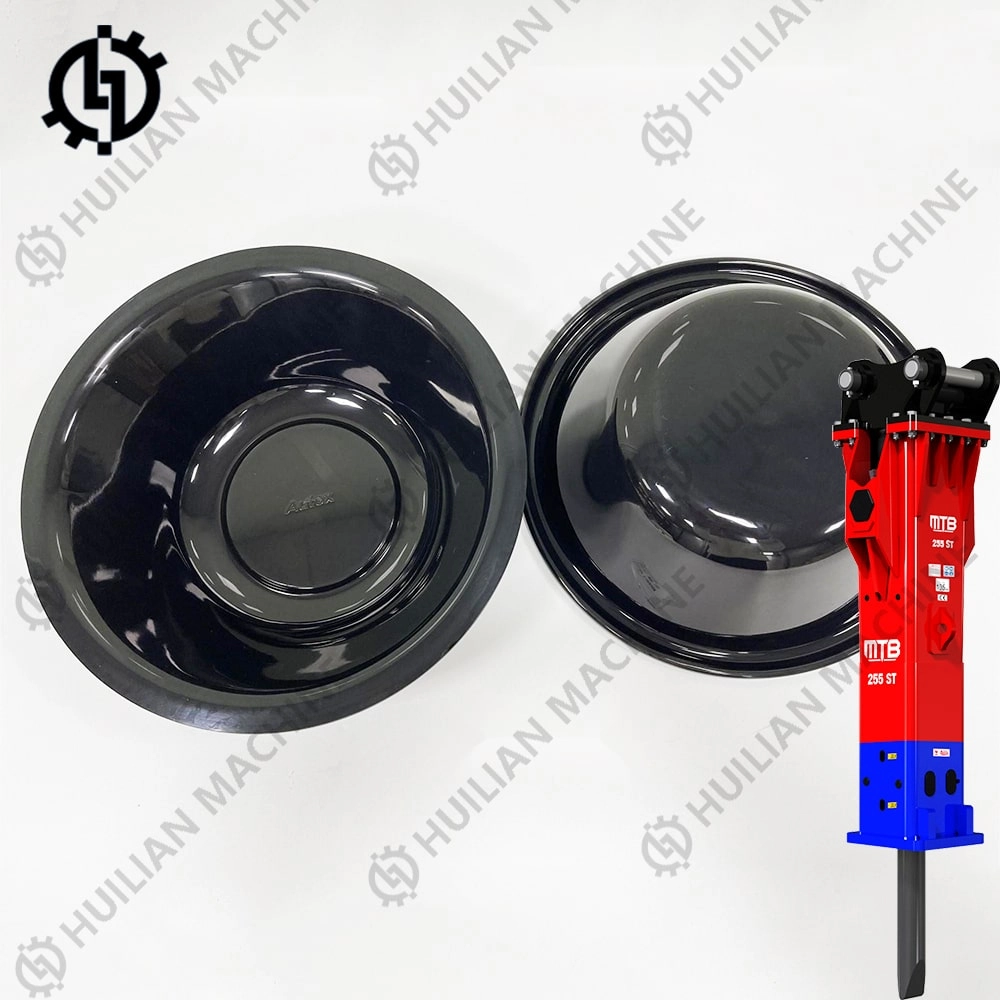
We specialize in comprehensive excavator breaker parts, including diaphragms, pistons, and wear bushes. Our products are exported to over 90 countries because we prioritize quality control and R&D. Whether you need a complete hydraulic breaker or just a replacement side bolt, our team ensures you get parts that meet 2026 standards for durability and efficiency.
Conclusion
Selecting the right breaker hammer is a science that balances hydraulic compatibility with geological requirements and future technology. By considering these 15 factors—from flow rates to telematics—you ensure your equipment is ready for the demands of tomorrow's job sites.
Contact Guangzhou Huilian Machines Co., Ltd today to discuss your specific needs and find the perfect breaker match for your excavator.


About
Are your parts compatible with all excavator brands?
Yes, our parts are designed to be compatible with major brands like Komatsu, Caterpillar, Hitachi, Hyundai, Doosan, JCB, Kobelco, Sany, and many more.
What types of excavator parts do you offer?
We provide a wide range of high-quality excavator parts, including hydraulic breakers, chisels, seal kits, diaphragms, pistons, wear bushes, retainer bars, through bolts, side bolts, valves, and liners.
How can I ensure I’m selecting the right part for my equipment?
Our expert team can assist you in finding the right part based on your machine model, specifications, and requirements. Contact us for personalized support.
What is your shipping and delivery time?
We offer fast and reliable global shipping. Delivery times vary depending on location and order size, but we strive to process and ship orders as quickly as possible.
Do you offer OEM and aftermarket parts?
Yes, we manufacture high-quality OEM parts and supply aftermarket parts from top brands such as NOK, Parker, SKF, and Hallite to ensure optimal performance.




Getting started is easy 
Contact with our experts to find the best excavator parts solutions for your needs. Discover how Huilian can enhance your equipment's performance and efficiency.


Get in touch
 About us
© 2025 HUILIAN MACHINE. All rights reserved