



The 2026 Guide to Excavator Breaker Attachments: Selection, Tech & ROI Optimization
- What is an Excavator Breaker Attachment?
- 2026 Industry Trends: The Rise of Smart Breakers
- Technical Selection: Pairing Breakers with Carriers
- Expert Maintenance: Maximizing Service Life
- Operational Mistakes to Avoid
- Frequently Asked Questions (FAQ)
- How do I size a breaker for my excavator?
- What causes a hydraulic breaker to lose power?
- Can I use an excavator breaker underwater?
- What is blank firing and why is it dangerous?
- How often should I grease my excavator hammer?
- When should I replace the breaker tool point?
- What hydraulic pressure is needed for a breaker?
- Conclusion
- References
In the evolving landscape of 2026 construction, the excavator breaker attachment—often called a hydraulic hammer—remains the backbone of demolition, mining, and quarrying projects. However, simply mounting a breaker to a carrier is no longer enough to guarantee profitability. With global infrastructure demands rising and the hydraulic breaker market projected to reach USD 3.83 billion in 2025, optimizing your equipment for hydraulic hammer impact energy and longevity is critical for maintaining a competitive edge.

Drawing on over two decades of industry expertise, including data from Guangzhou Huilian Machines Co., Ltd (Huilian), this guide provides the technical precision required to dominate the 2026 job site.
What is an Excavator Breaker Attachment?
An excavator breaker attachment is a percussive hydraulic tool that converts the carrier machine’s auxiliary fluid power into kinetic impact energy to fragment hard materials like rock and concrete.
Unlike static tools, breakers rely on a high-velocity piston striking a tool point to create fracture lines in the substrate. This process depends heavily on the efficient transfer of hydraulic hammer impact energy, which is generated by the pressurized nitrogen gas in the accumulator and the hydraulic oil flow from the excavator.
Core Functions:
- Primary Demolition: Breaking down reinforced concrete structures.
- Secondary Reduction: Fragmenting oversized boulders in quarries for crushers.
- Trenching: Excavating hard rock layers for utility pipelines.
2026 Industry Trends: The Rise of Smart Breakers
The dominant trend for 2026 is the integration of IoT telematics and AI-driven predictive maintenance to eliminate unplanned downtime.
As profit margins tighten, contractors are moving away from reactive repairs. According to recent market analysis, the construction equipment telematics sector is growing at a CAGR of 12.6%, driven by the need for real-time asset monitoring. Modern breakers are now acting as data nodes, sending usage statistics directly to fleet managers.
Key Technology Shifts:
- Real-Time Diagnostics: Sensors that monitor vibration levels and oil temperature to prevent overheating.
- Automated Greasing: Systems that auto-inject paste based on blow count rather than hours worked.
- Noise Compliance: Advanced dampening shells to meet strict 2026 urban noise ordinances.
- Usage Tracking: GPS data that logs actual "hammer time" versus engine idling time for accurate billing.
Technical Selection: Pairing Breakers with Carriers
Proper pairing requires matching the breaker’s operating weight to 5-10% of the carrier’s weight and ensuring hydraulic flow falls within the manufacturer’s specified range.
Failure to adhere to these ratios results in catastrophic failure. If the breaker is too heavy, it causes stability issues; if the hydraulic flow is excessive, it destroys internal seals. Mastering excavator attachment flow requirements is the single most important factor in preventing premature wear.
Selection Checklist:
- Carrier Weight Class: Ensure the excavator has the lifting capacity to handle the tool at full reach.
- Hydraulic Flow (GPM/LPM): Verify the carrier's pump output matches the breaker's intake. Excess flow generates heat, degrading oil viscosity.
- Operating Pressure: Set the relief valve settings correctly to protect the breaker from pressure spikes.
- Auxiliary Hydraulic Circuit Optimization: Ensure the return line backpressure is low enough to prevent piston stalling.
- Breaker Tool Point Selection: Choose the right bit for the material:
- Moil Point: General use, sedimentary rock, and concrete.
- Chisel: Trenching and cutting through rebar-reinforced slabs.
- Blunt Tool: Igneous rock and secondary breaking (transfers energy by shockwave).
Expert Maintenance: Maximizing Service Life
The most effective maintenance protocol is the "20-20-2 Rule": inspect the tool point every 20 minutes, check for loose hardware every 20 hours, and grease every 2 hours.
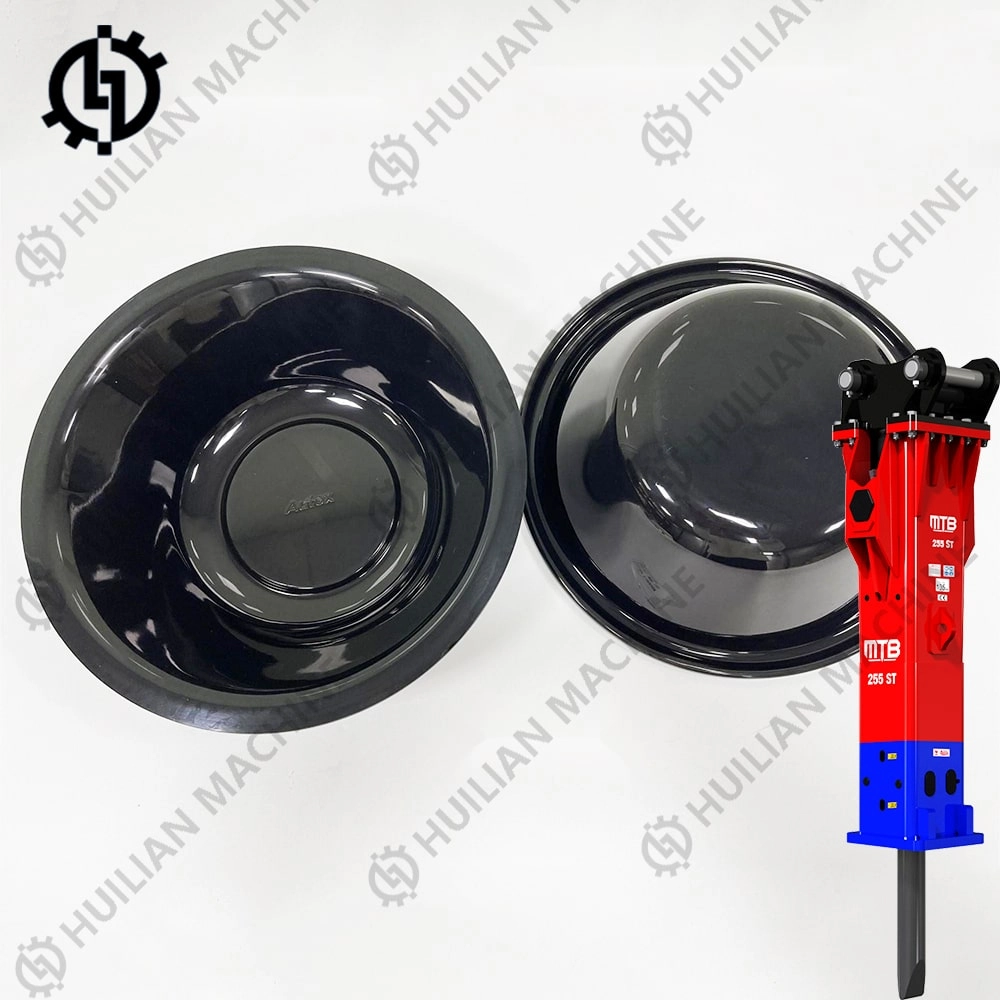
Neglecting demolition attachment maintenance is the leading cause of piston seizure and tie-rod breakage. Companies like Guangzhou Huilian Machines Co., Ltd, founded in 2005, have observed that 80% of breaker failures are traceable to lubrication issues or contaminated oil. As a leading OEM supplier exporting to over 90 countries, Huilian emphasizes that using high-quality seal kits and diaphragms is non-negotiable for extending service intervals.
Critical Maintenance Protocols:
- Nitrogen Accumulator Checks: Recharge gas pressure regularly to maintain consistent impact force.
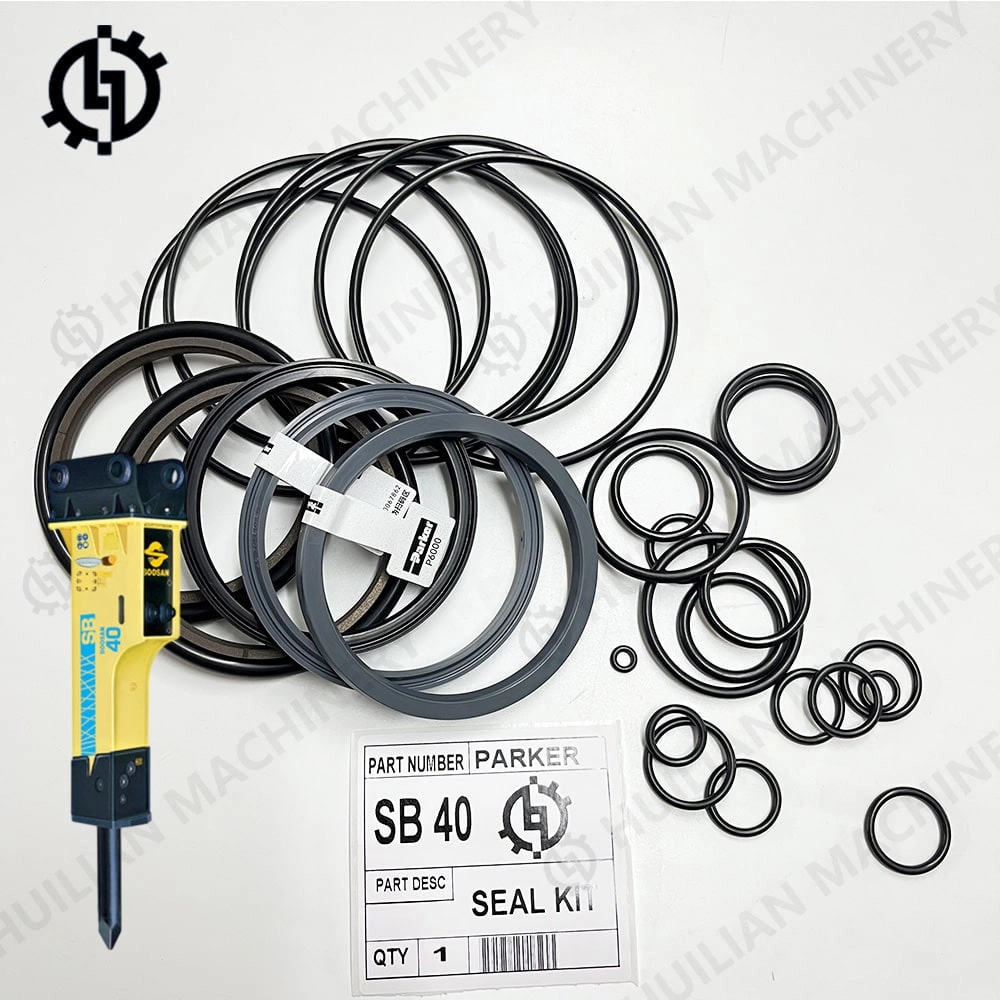
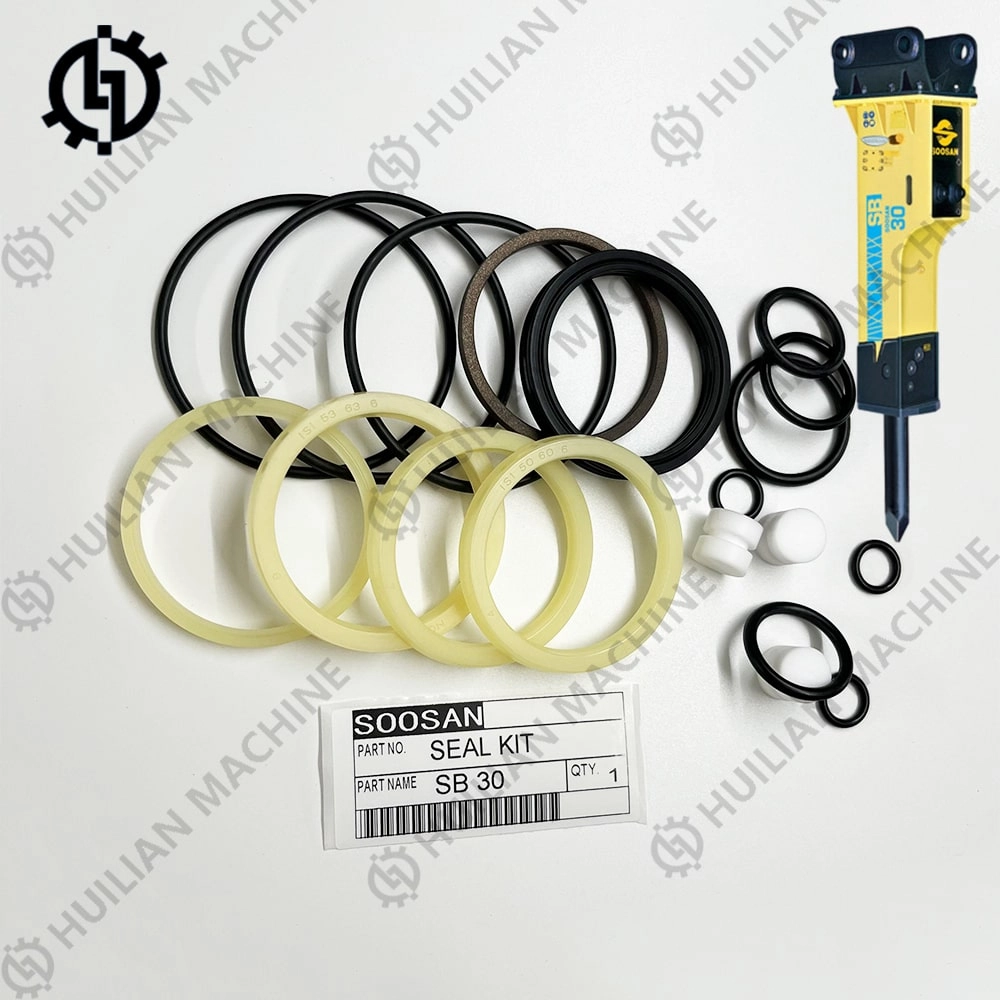
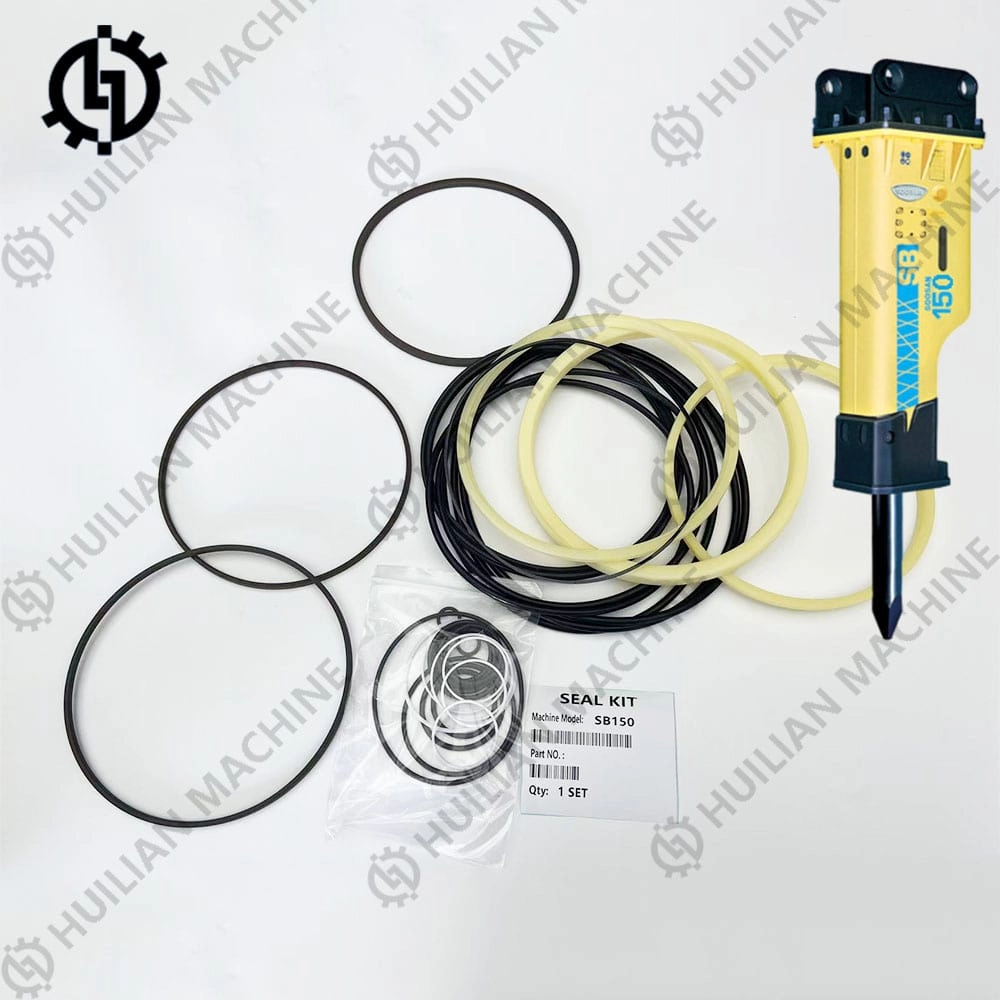
- Seal Replacement: Use premium Parker seal kits (available through Huilian) to prevent hydraulic bypass.
- Bushing Wear Monitoring: Replace wear bushes before the tool point acts as a lever against the piston.
- Grease Quality: Use high-temperature molybdenum disulfide paste to prevent metal-on-metal welding.
Operational Mistakes to Avoid
The most destructive operational error is "blank firing," which occurs when the piston strikes the tool point without material resistance, sending shockwaves back into the breaker body.
This action inevitably cracks pistons and shears side bolts. Operators must be trained to stop the hammer the instant the material breaks.
Common Pitfalls:
- The Prying Fallacy: Using the breaker as a pry bar causes immediate misalignment of the tool and piston.
- Over-striking: Hammering in one spot for more than 15 seconds generates excessive heat, leading to hydraulic hammer impact energy loss.
- Improper Storage: Storing a breaker horizontally for long periods allows seals to deform; always store vertically or use a stand.
- Submerged Operation: Never operate underwater without a specialized compressed air kit to keep water out of the percussion chamber.
Frequently Asked Questions (FAQ)
How do I size a breaker for my excavator?
Compare the excavator's lifting capacity and hydraulic output to the breaker's specs. The breaker should generally weigh 5-10% of the carrier's operating weight, and the carrier must meet the specific excavator attachment flow requirements (L/min).
What causes a hydraulic breaker to lose power?
Power loss is typically caused by low nitrogen pressure in the accumulator, worn internal seals allowing oil bypass, or incorrect hydraulic oil viscosity for the ambient temperature.
Can I use an excavator breaker underwater?
You can only use a breaker underwater if it is equipped with an underwater kit that pressurizes the percussion chamber with air. Without this, water will enter the cylinder, causing hydraulic lock and catastrophic damage.
What is blank firing and why is it dangerous?
Blank firing happens when the hammer cycles without the tool pressing against rock. This causes the piston to strike the shank stop directly, transmitting damaging shockwaves into the tie rods and excavator boom.
How often should I grease my excavator hammer?
The industry standard is every two hours of continuous operation. However, automated greasing systems are recommended for 2026 operations to ensure consistent lubrication without downtime.
When should I replace the breaker tool point?
Replace the tool point when it has worn down by 2-3 inches from its original length or if the diameter shows signs of "mushrooming" inside the bushing, which can damage the piston.
What hydraulic pressure is needed for a breaker?
Most breakers operate between 1,500 and 2,500 PSI. Always check your specific model's manual and perform auxiliary hydraulic circuit optimization to match the carrier's relief valve settings.
Conclusion
As we move through 2026, the gap between profitable projects and costly delays often comes down to equipment reliability. By adhering to strict selection criteria, leveraging smart telematics, and following rigorous maintenance schedules, contractors can maximize their ROI.
For those seeking reliable components, Guangzhou Huilian Machines Co., Ltd stands as a proven partner. With a team of R&D experts and a product line ranging from hydraulic hammers to specialized seal kits, Huilian supports the sustainable development of the excavator parts industry globally.
References


About
How can I ensure I’m selecting the right part for my equipment?
Our expert team can assist you in finding the right part based on your machine model, specifications, and requirements. Contact us for personalized support.
Do you offer OEM and aftermarket parts?
Yes, we manufacture high-quality OEM parts and supply aftermarket parts from top brands such as NOK, Parker, SKF, and Hallite to ensure optimal performance.
Are your parts compatible with all excavator brands?
Yes, our parts are designed to be compatible with major brands like Komatsu, Caterpillar, Hitachi, Hyundai, Doosan, JCB, Kobelco, Sany, and many more.
What is your shipping and delivery time?
We offer fast and reliable global shipping. Delivery times vary depending on location and order size, but we strive to process and ship orders as quickly as possible.
What types of excavator parts do you offer?
We provide a wide range of high-quality excavator parts, including hydraulic breakers, chisels, seal kits, diaphragms, pistons, wear bushes, retainer bars, through bolts, side bolts, valves, and liners.




Getting started is easy 
Contact with our experts to find the best excavator parts solutions for your needs. Discover how Huilian can enhance your equipment's performance and efficiency.


Get in touch
 About us
© 2025 HUILIAN MACHINE. All rights reserved