



Excavator with Hydraulic Breaker: The 2026 Ultimate Guide to Selection & Maximum ROI
- What is an excavator with hydraulic breaker attachment?
- The Anatomy of Power
- 2026 Key Takeaways: Fast Facts for Site Managers
- Smart Technology & ROI
- Matching the Breaker to Your Excavator Carrier
- The Critical Ratios
- The Master Operator’s Playbook: Maximizing Tool Life
- Best Practices for 2026
- Advanced Maintenance and Nitrogen Charging
- Nitrogen Gas Charging Protocol
- Spare Parts Strategy
- Solving the 'Blank Firing' Crisis
- The Role of Strike Rate
- Frequently Asked Questions (FAQ)
- What is the best way to determine the right size breaker for my excavator?
- How often should I grease my hydraulic breaker?
- Why is my hydraulic breaker hitting slower than usual?
- Can I use an excavator breaker to pry or lift rocks?
- How do I know when the breaker chisel needs replacing?
- How do 2026 smart breakers help with project ROI?
- References
In the high-stakes world of demolition and mining, the excavator with hydraulic breaker attachment is the undisputed king of productivity. Whether you are breaking trench rock or demolishing reinforced concrete, the efficiency of your operation hinges on the seamless integration of carrier and tool. Drawing on over two decades of OEM experience from Guangzhou Huilian Machines Co., Ltd (founded in 2005), this guide bridges the gap between fundamental mechanics and the latest 2026 smart technologies.
What is an excavator with hydraulic breaker attachment?
A hydraulic breaker is a heavy-duty percussion attachment powered by an excavator’s auxiliary hydraulic system, designed to penetrate and demolish concrete, rock, or asphalt. It functions by driving an internal piston against a tool bit (chisel), effectively converting hydraulic fluid pressure into high-impact mechanical energy for breaking hard materials.
The Anatomy of Power
While the concept is simple, the internal engineering is precise. A breaker relies on a synchronized dance between the control valve, nitrogen chamber, and piston. When hydraulic fluid enters the chamber, it raises the piston; when released, the pressurized nitrogen gas drives the piston down with immense force.
At Huilian Machines, we engineer these critical components—from pistons to seal kits—to withstand extreme pressures. Our global experience exporting to over 90 countries confirms that the durability of the housing and through bolts is just as critical as the internal hydraulics. Versatility is key; breakers are available for everything from 1-ton micro-excavators to 50+ ton mining giants.
Key Components:
- Power Cell: The heart of the breaker containing the piston and cylinder.
- Nitrogen Chamber: Acts as a spring to accelerate the piston stroke.
- Tool (Moil/Chisel): The heat-treated steel bit that contacts the material.
- Damping Elements: Polyurethane buffers to protect the carrier from vibration.

2026 Key Takeaways: Fast Facts for Site Managers
The 2026 landscape for hydraulic breakers is defined by data-driven efficiency, with a shift toward IoT integration and stricter environmental compliance. Modern site managers must now prioritize predictive maintenance and noise reduction over raw power alone to ensure project profitability and regulatory adherence.
Smart Technology & ROI
The industry is moving fast. According to recent market reports, the predictive maintenance sector is projected to reach approximately $12.59 billion in 2025, driven by IoT adoption.
- Smart Monitoring: 2026 breakers feature built-in sensors tracking vibration, temperature, and stroke count.
- ROI Impact: Data from Deloitte suggests that sensor-driven maintenance can reduce unplanned downtime by up to 25%. For a contractor, this means billing for actual "strike time" rather than estimating hours.
- Environmental Rule: With cities like Denver and Austin updating noise ordinances in 2024 to cap decibel limits (often around 85 dBA for specific permits), using "silenced" breaker housings is no longer optional—it is a compliance necessity for urban projects.
Matching the Breaker to Your Excavator Carrier
Selecting the right breaker requires adhering to strict engineering ratios, specifically ensuring the breaker's operating weight is approximately 10% of the excavator's total weight. Failing to align these specifications results in catastrophic equipment failure, either by tipping the carrier or destroying the breaker's internal seals.
The Critical Ratios
Two primary factors dictate compatibility: carrier weight class matching and hydraulic flow. If a breaker is too heavy, it creates instability; if too light, the excavator's down-pressure will crush the breaker housing.
1. Carrier Weight Class Matching
- Stability: A 20-ton excavator ideally requires a 2,000–2,500 kg breaker. This ensures the machine can hold the tool stable without "bouncing" off the material.
- Safety: Proper matching prevents the excavator boom from cracking under excessive recoil forces.
2. Hydraulic Hammer Flow Requirements Equally important are the hydraulic hammer flow requirements. Every breaker operates within a specific range of Liters Per Minute (LPM) and operating pressure (Bar).
- Low Flow: Results in a slow, weak strike that cannot fracture rock.
- High Flow: Causes oil overheating and cavitation damage. Always consult the carrier’s lift capacity chart and auxiliary output specs before connection.
The Master Operator’s Playbook: Maximizing Tool Life
Operational longevity is achieved by adhering to the "90-Degree Rule," which mandates keeping the tool perpendicular to the material to prevent side-loading and shaft breakage. Skilled operation drastically reduces the frequency of spare parts replacement and prevents premature wear on the excavator's bushings.
Best Practices for 2026
Even the best equipment, like Huilian's precision-engineered chisels, can fail if abused.
- The 90-Degree Rule: Always break at a right angle. Angled strikes cause "side-loading," which snaps the tool bit inside the chuck housing.
- Scoring Technique: Do not drill down in one spot. Score the surface to create fracture lines before attempting full penetration.
- The 15-30 Second Rule: Never strike the same spot for more than 30 seconds. If the material doesn't break, move the tool to find a weakness. Prolonged stationary striking builds immense heat, annealing the steel and causing it to mushroom.
- Warm-up Procedures: In cold 2026 climates, recirculate hydraulic oil to reach operating temperature before high-impact cycling to protect internal seals.
Advanced Maintenance and Nitrogen Charging
Routine maintenance must go beyond daily greasing to include strict adherence to the nitrogen gas charging protocol, which regulates the impact energy delivered by the piston. Neglecting gas pressure or using contaminated grease is the leading cause of piston seizure and cylinder scoring in hydraulic attachments.
Nitrogen Gas Charging Protocol
The back head of the breaker contains nitrogen gas (N2) that acts as a cushion and energy booster.
- Temperature Sensitivity: Ambient temperature affects gas pressure. In summer, the charge should be slightly lower to account for expansion; in winter, slightly higher.
- Performance check: If the percussion hammer strike rate is erratic or the hoses shudder violently, check the N2 pressure immediately.
Spare Parts Strategy
When components eventually wear down, sourcing high-quality hydraulic breakers spare parts is non-negotiable.
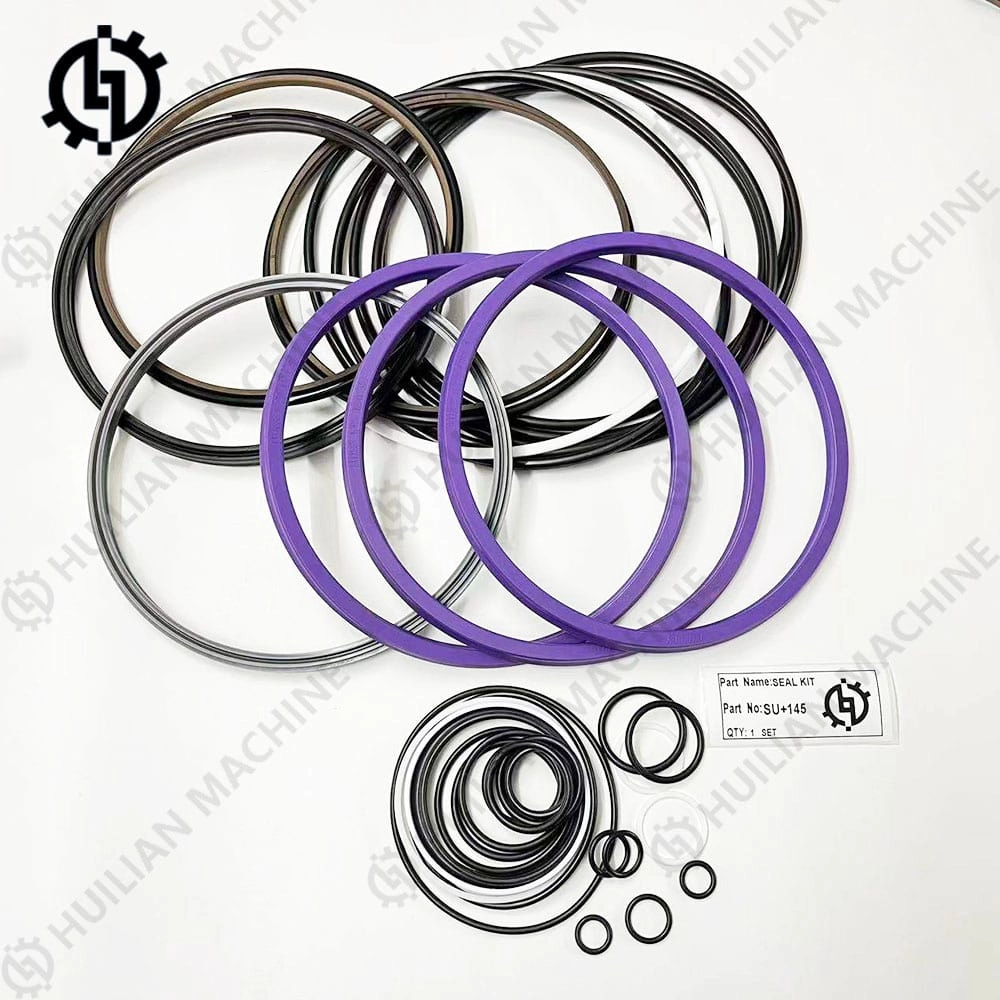
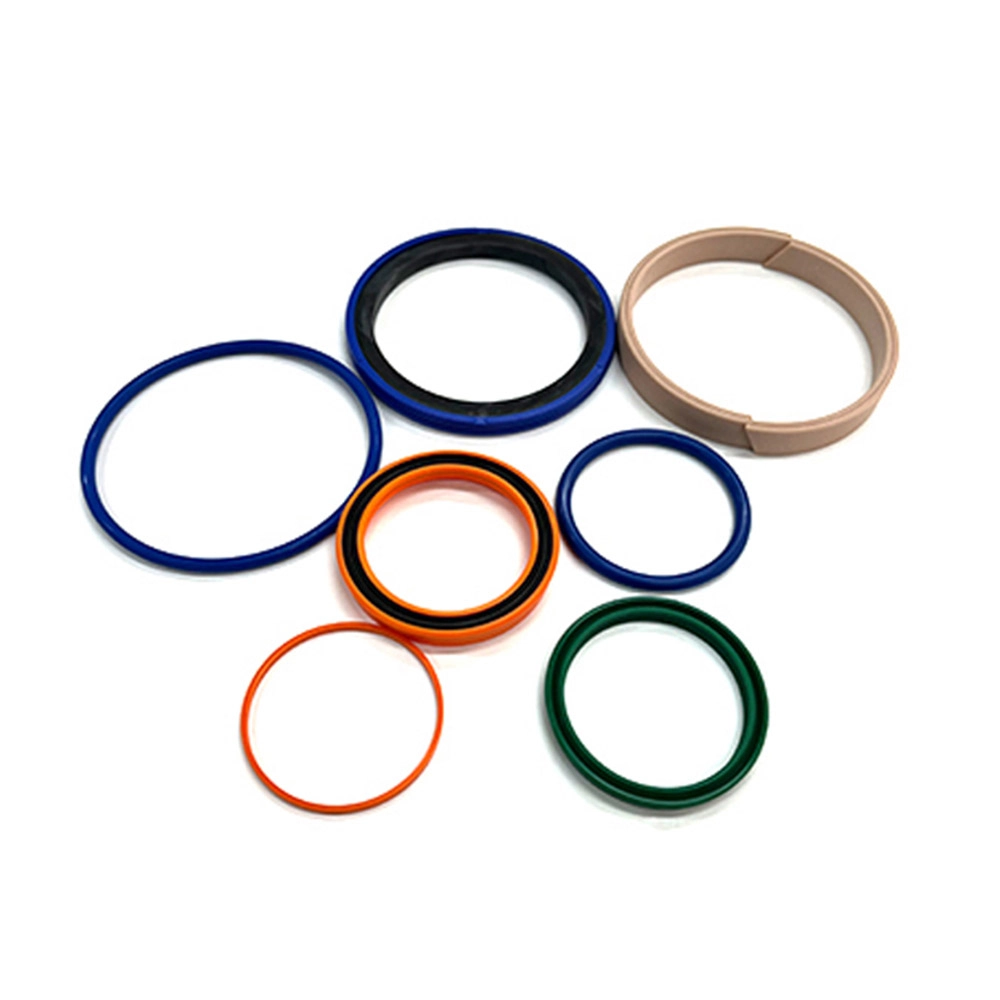
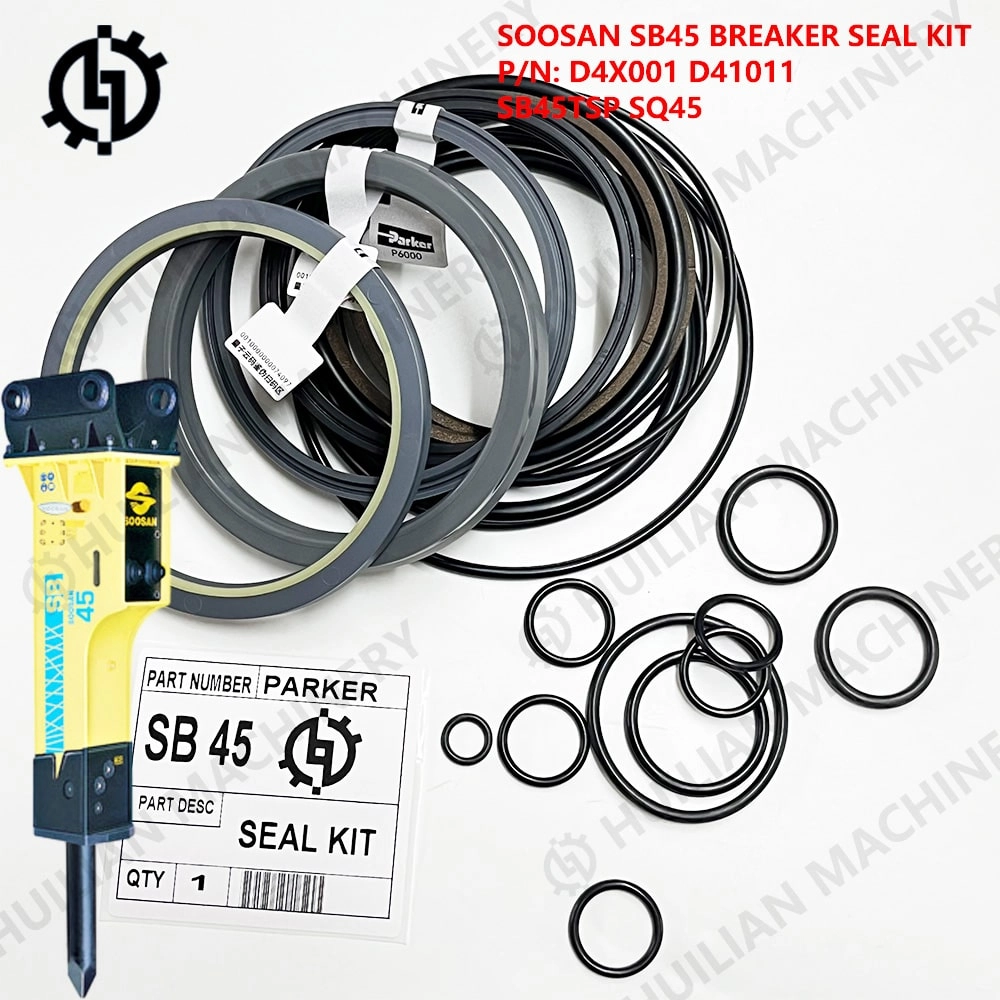
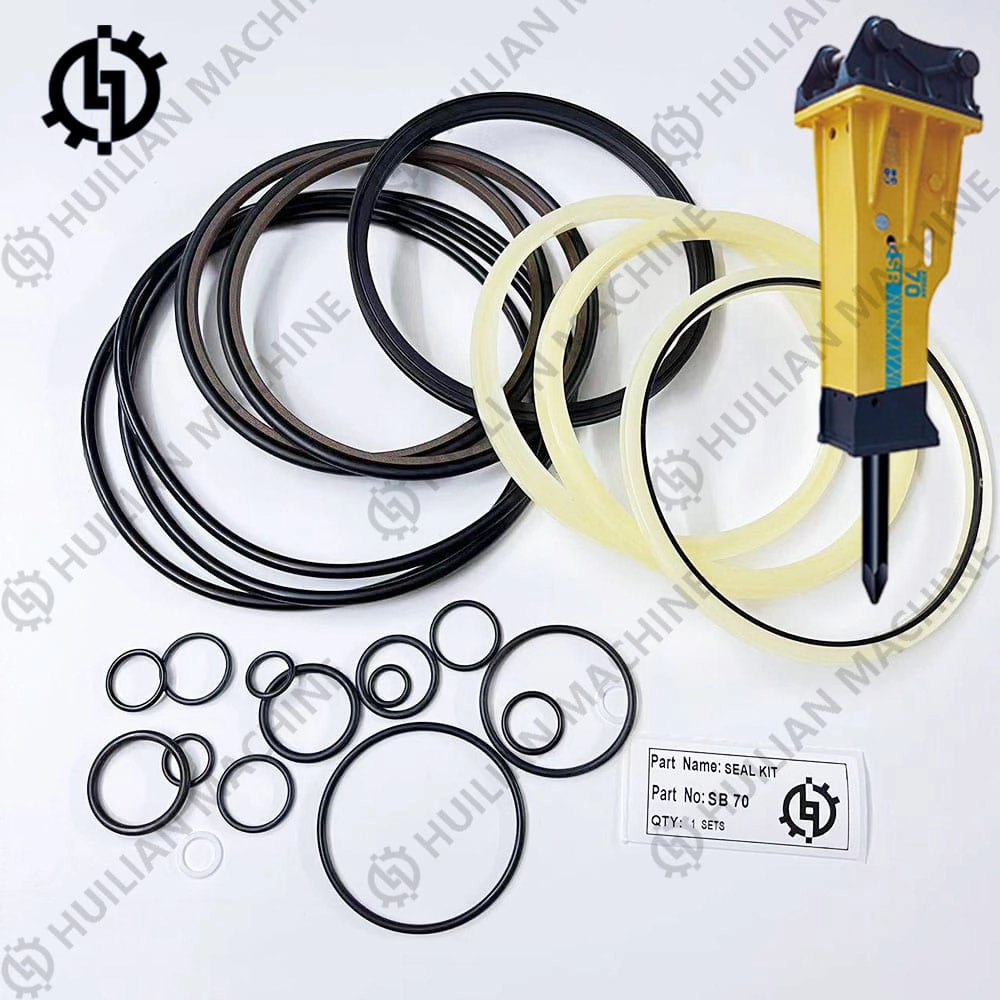
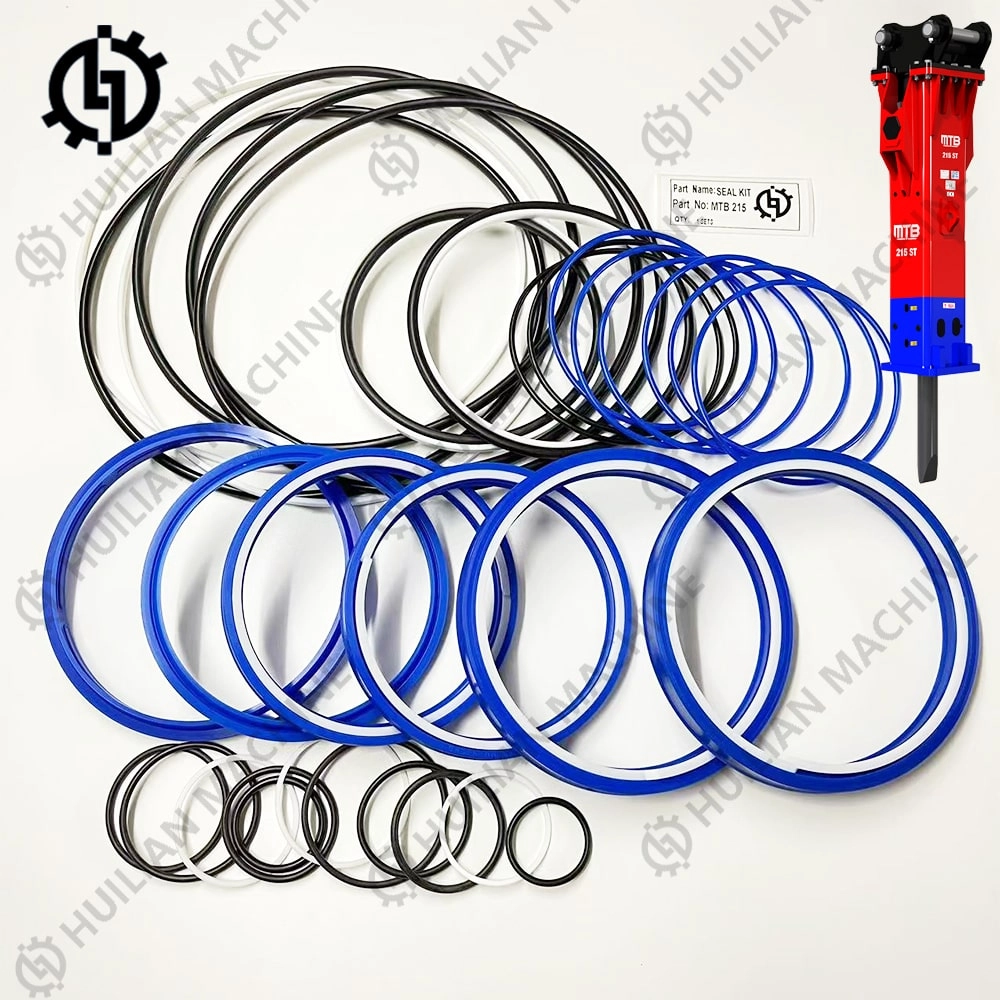
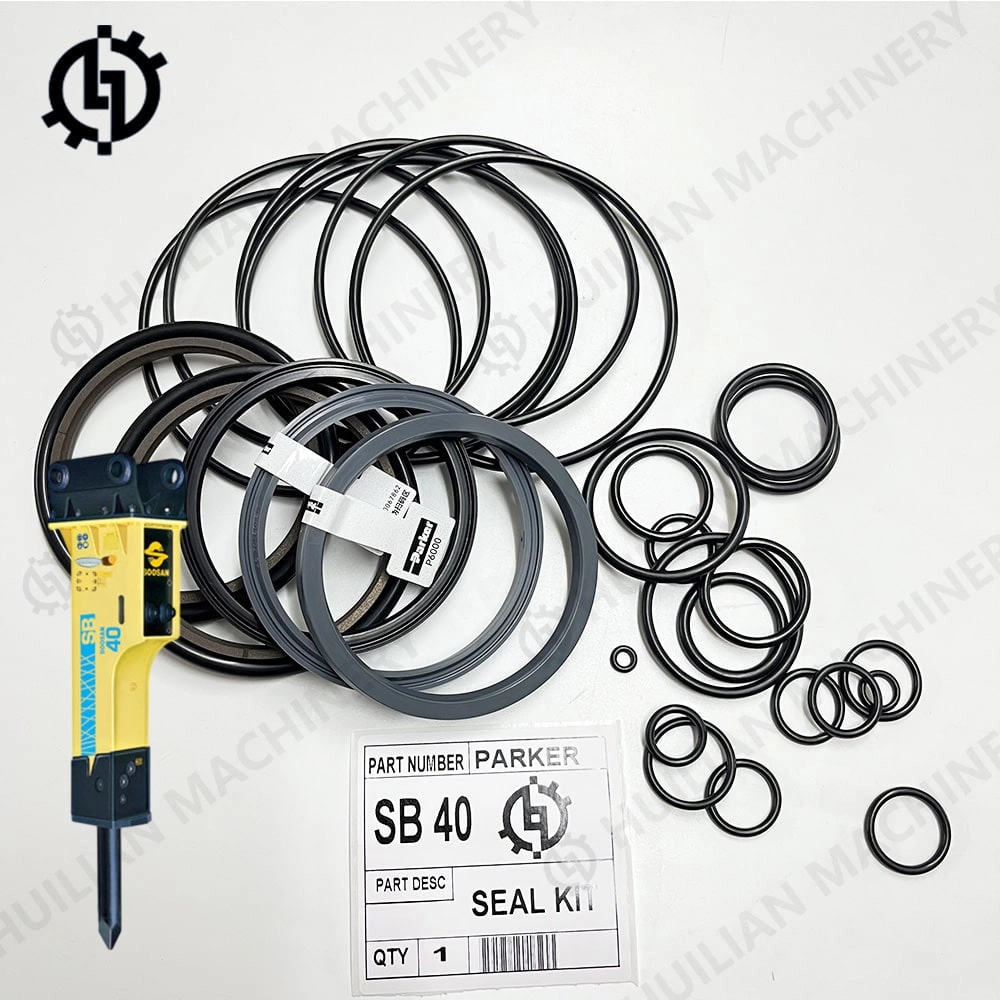
- Seal Kit Replacement: Watch for oil "weeping" on the tool bit. This indicates seal failure. Huilian Machines offers comprehensive seal kits and Parker seals designed to resist high-temperature degradation.
- Bushing Wear: Measure the gap between the tool and inner bushing. Excessive clearance leads to piston misalignment.
- Underwater Operations: If working submerged, you must use a compressor to supply air to the strike chamber, preventing water from being sucked into the cylinder.
Solving the 'Blank Firing' Crisis
Blank firing occurs when the piston strikes the tool bit without any material resistance beneath it, sending the full shockwave energy back into the breaker body and excavator boom. This is the most destructive force a breaker experiences, often snapping tie-rods and cracking the main housing housing instantly.
The Role of Strike Rate
Understanding your percussion hammer strike rate is vital here. High-frequency breakers are more prone to blank firing if the operator does not react quickly when the material fractures.
Anti-Blank Fire (ABF) Technology: Many 2026 models, including advanced units supported by Huilian's R&D team, feature auto-stop valves. These smart valves detect the lack of resistance and hydraulically dampen the piston, preventing the metal-on-metal collision that destroys equipment.
Impact on ROI: Eliminating blank firing extends the life of the through bolts and front head by up to 50%, significantly improving the asset's lifetime Return on Investment.
Frequently Asked Questions (FAQ)
What is the best way to determine the right size breaker for my excavator?
Consult the excavator's lift capacity chart and hydraulic output. You must match the breaker’s required oil flow (LPM) and ensuring the breaker weight is roughly 10% of the carrier's operating weight.
How often should I grease my hydraulic breaker?
For manual systems, grease every 2 hours of active hammering. For high-production environments, 2026 standards recommend auto-lubrication systems that continuously monitor grease cartridge levels.
Why is my hydraulic breaker hitting slower than usual?
This is typically caused by low nitrogen gas pressure in the back head or insufficient hydraulic flow from the excavator’s pump. Check the nitrogen gas charging protocol specs for your specific model.
Can I use an excavator breaker to pry or lift rocks?
No. This is called "side-loading." It will bend the tool, damage the bushings, and potentially snap the piston. The breaker is designed for percussion only, never as a lever.
How do I know when the breaker chisel needs replacing?
Replace the chisel when the tip is rounded or "mushroomed" beyond the manufacturer's wear limit, or if the steel shows blue/red discoloration from overheating.
How do 2026 smart breakers help with project ROI?
Smart breakers use IoT sensors to log actual "strike time" vs. "idle time," allowing for accurate billing. They also provide predictive alerts for seal and bushing wear to prevent costly downtime.
References


About
What types of excavator parts do you offer?
We provide a wide range of high-quality excavator parts, including hydraulic breakers, chisels, seal kits, diaphragms, pistons, wear bushes, retainer bars, through bolts, side bolts, valves, and liners.
Are your parts compatible with all excavator brands?
Yes, our parts are designed to be compatible with major brands like Komatsu, Caterpillar, Hitachi, Hyundai, Doosan, JCB, Kobelco, Sany, and many more.
What is your shipping and delivery time?
We offer fast and reliable global shipping. Delivery times vary depending on location and order size, but we strive to process and ship orders as quickly as possible.
Do you offer OEM and aftermarket parts?
Yes, we manufacture high-quality OEM parts and supply aftermarket parts from top brands such as NOK, Parker, SKF, and Hallite to ensure optimal performance.
How can I ensure I’m selecting the right part for my equipment?
Our expert team can assist you in finding the right part based on your machine model, specifications, and requirements. Contact us for personalized support.


Getting started is easy 
Contact with our experts to find the best excavator parts solutions for your needs. Discover how Huilian can enhance your equipment's performance and efficiency.


Get in touch
 About us
© 2025 HUILIAN MACHINE. All rights reserved