



How to Match the Perfect Hammer Rock Breaker to Your Excavator Loader for Peak Productivity
- What is a Hammer Rock Breaker for an Excavator Loader?
- Key Takeaways: Quick Summary for Peak Productivity
- Core Compatibility: Mastering Carrier Weight and Hydraulic Flow
- Data Comparison Table: Nitrogen Gas vs. Fully Hydraulic Systems
- Selecting the Right Tool Bit for the Job
- Bridging the Gap: 2026 Tech Innovations and True Pricing Data
- Expert Tips and Common Mistakes to Avoid
- Industry-Leading Solutions by Guangzhou Huilian Machines Co., Ltd
- Conclusion & Call to Action
- Frequently Asked Questions
- How do I know if a rock breaker fits my excavator loader?
- What size hydraulic breaker do I need for a 20-ton excavator?
- How often should a hammer rock breaker be greased?
- What is the difference between moil and chisel tool bits?
- Can I use the same breaker on a backhoe loader and an excavator?
- Why is my hydraulic breaker vibrating excessively?
- What causes a rock breaker to blank fire?
- How does nitrogen gas improve hydraulic hammer performance?
What is a Hammer Rock Breaker for an Excavator Loader?
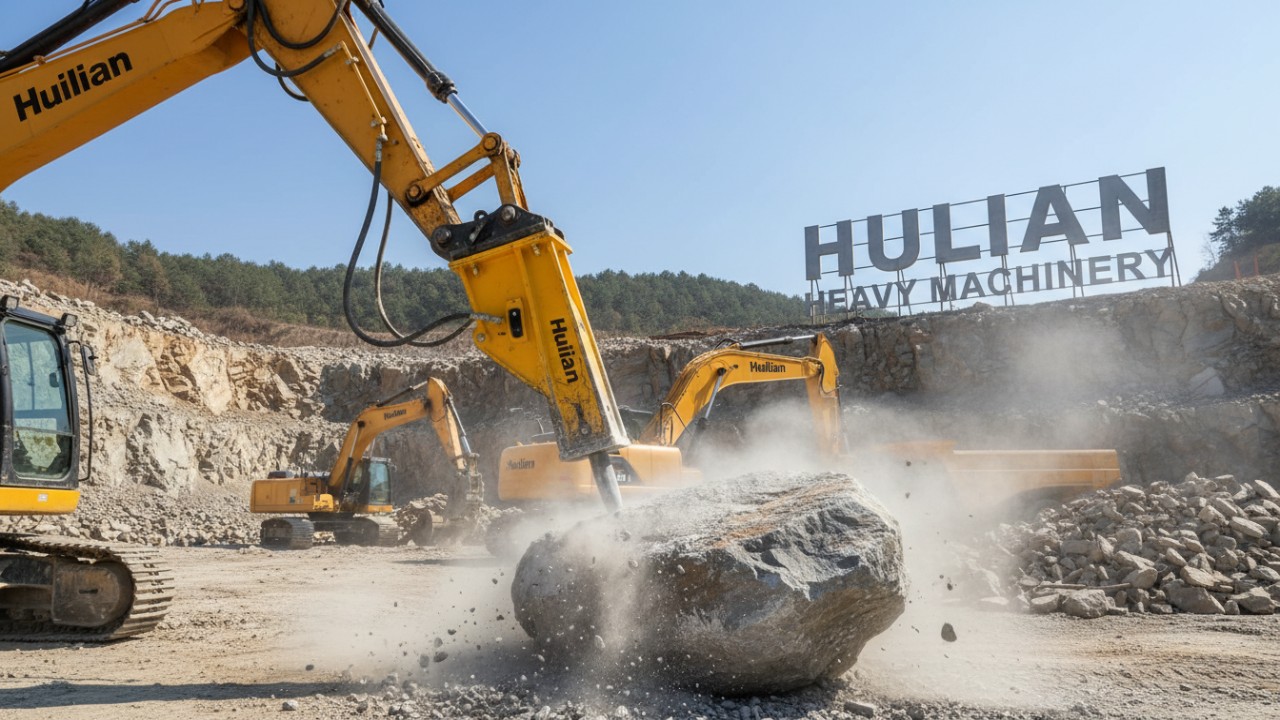
A hammer rock breaker for an excavator loader is a powerful hydraulic attachment designed to demolish concrete, rocks, and extremely hard surfaces. Powered by the carrier's internal hydraulic system, it converts fluid pressure into high-impact kinetic energy.
This allows operators to tackle heavy-duty excavation, quarrying, and trenching projects with maximum efficiency. By harnessing the loader's hydraulic power, the breaker delivers rapid, devastating blows to materials that standard buckets cannot penetrate.
Key Takeaways: Quick Summary for Peak Productivity
Maximizing productivity requires matching the breaker’s physical weight precisely to the loader’s lifting capacity, ensuring the correct auxiliary hydraulic flow rate, selecting appropriate tool bits, and maintaining strict greasing routines to maximize lifespan and prevent mechanical fatigue.
To achieve optimal performance on your job site, follow these critical guidelines:
- Match Physical Weight: Ensure the breaker's physical weight aligns precisely with the loader's lifting capacity to prevent tipping, instability, and mechanical fatigue.
- Align Hydraulic Specs: Verify that the auxiliary flow rate (GPM) and operating pressure (PSI) align perfectly with the manufacturer's required specifications.
- Select the Correct Bit: Choose the appropriate tool bit profile—such as moil, chisel, or blunt—based entirely on the specific material you are breaking.
- Maintain Daily Routines: Adopt strict daily maintenance routines, including high-temperature greasing every two hours, to maximize the attachment's functional lifespan.
Core Compatibility: Mastering Carrier Weight and Hydraulic Flow
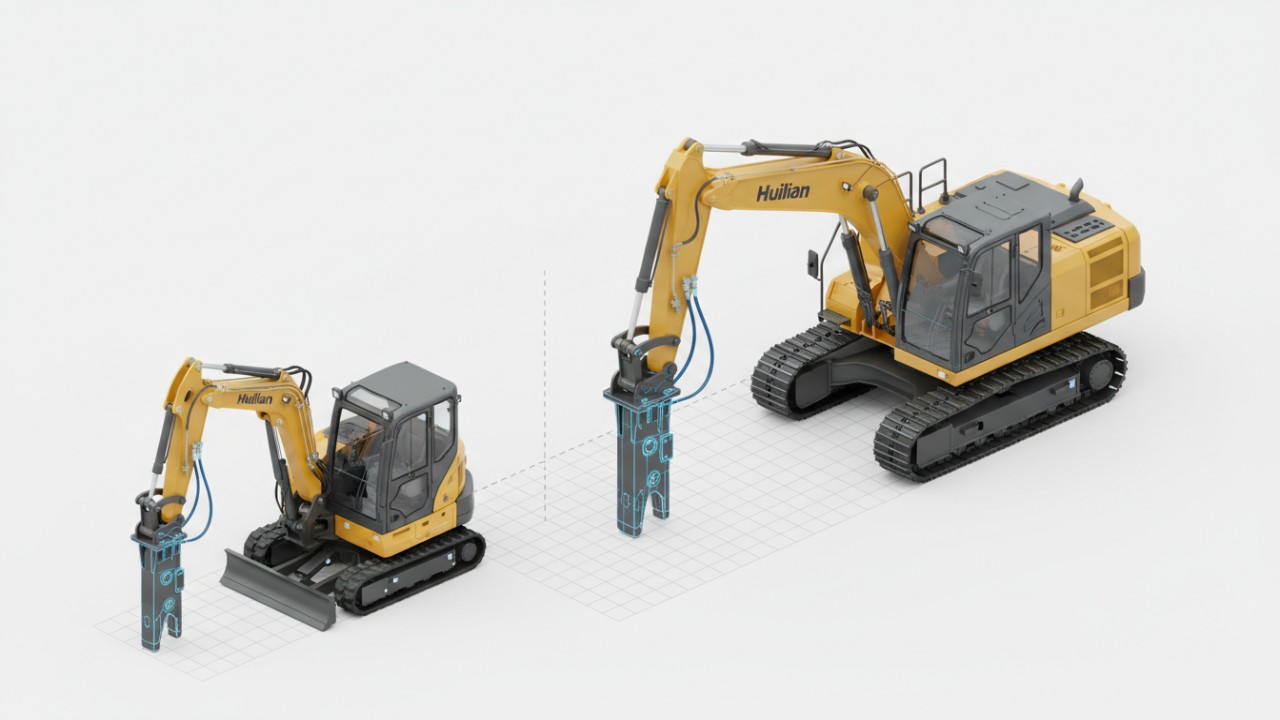
Core compatibility involves aligning your excavator carrier weight compatibility with the physical mass of the rock breaker, while perfectly matching the loader's auxiliary flow and operating pressure to the hammer's exact mechanical specifications to prevent equipment failure.
Understanding how to pair these machines is the foundation of site safety. According to the Occupational Safety and Health Administration, improperly secured or mechanically mismatched hydraulic attachments pose significant unexpected release hazards and can destabilize heavy machinery.
- Assessing Carrier Class: Understand why mini, mid-size, and heavy excavators require vastly different impact energy classes. A small breaker on a massive excavator will suffer from excessive hydraulic force, while a massive breaker on a mini excavator will cause immediate tipping hazards.
- Hydraulic Compatibility Basics: The critical importance of matching the loader's auxiliary flow and pressure to the hammer's exact requirements cannot be overstated. Too much flow causes catastrophic seal blowouts, while too little flow results in weak, ineffective strikes.
- Avoiding the 'Bigger is Better' Trap: Oversizing a breaker does not yield faster results. Instead, it damages boom arms, creates severe operating instability, and immediately voids expensive manufacturer warranties.
Data Comparison Table: Nitrogen Gas vs. Fully Hydraulic Systems
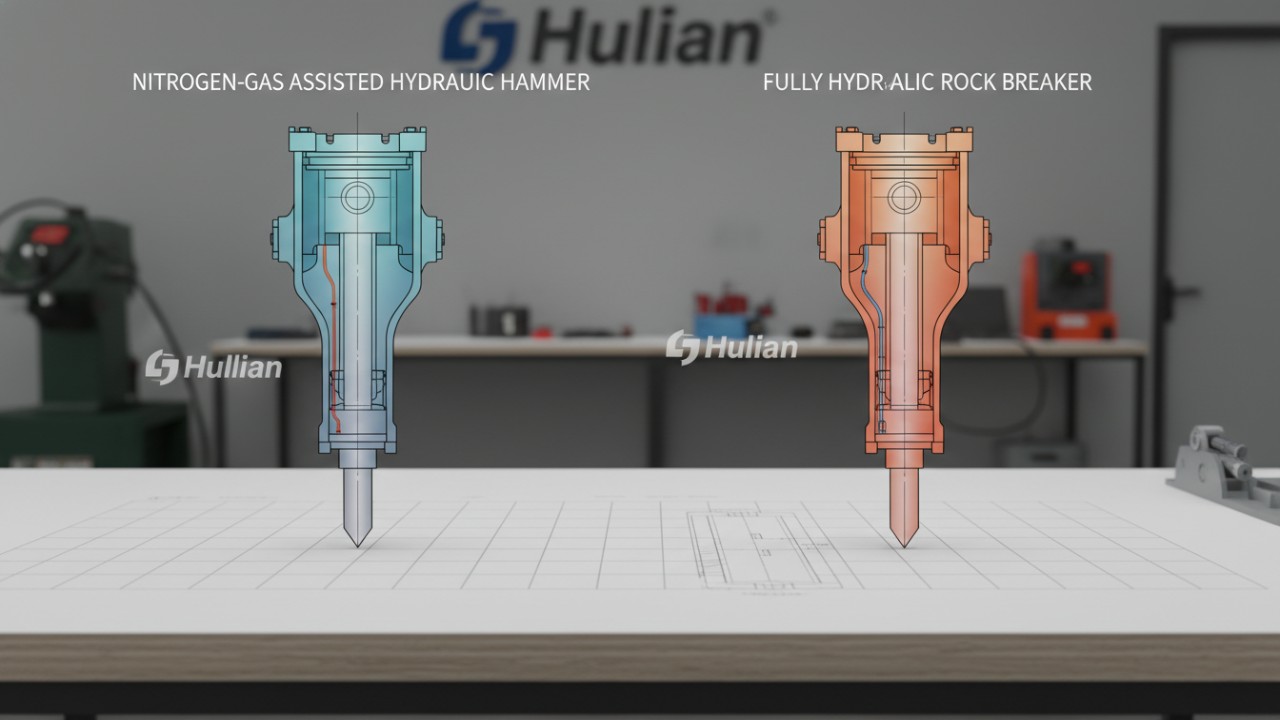
The choice between nitrogen vs fully hydraulic breakers depends on balancing the high initial strike power and lower upfront costs of nitrogen systems against the consistent power delivery and reduced routine maintenance of fully hydraulic models.
When selecting your system, use the following data comparison table to evaluate which mechanics best suit your project duration, rock hardness, and budget constraints.
Selecting the Right Tool Bit for the Job
Proper rock breaker tool bits selection requires matching the bit profile—such as moil, chisel, or blunt—directly to the material’s hardness and the specific demolition task to reduce internal wear and dramatically improve strike efficiency.
Using the wrong tool bit is a guaranteed way to waste fuel, damage the breaker, and halt productivity.
- Moil Points: This is the industry standard for multi-purpose demolition and general concrete breaking. Its conical shape shatters material by driving energy outward from a single point.
- Chisel Bits: Engineered specifically for trenching, directional breaking, and cutting through layered rock. The flat blade creates a wedge effect to split materials cleanly.
- Blunt Tools: The mandatory choice for secondary breaking and scaling exceptionally hard igneous rock. Blunt tools deliver massive shockwaves into oversized boulders to fracture them without penetrating.
Bridging the Gap: 2026 Tech Innovations and True Pricing Data
The 2026 market introduces advanced IoT vibration monitoring and predictive maintenance alerts to the standard hydraulic rock breaker attachment, providing clear ROI frameworks that factor in lifecycle maintenance costs, attachment downtime, and true productivity gains.
Furthermore, the Centers for Disease Control and Prevention state that prolonged exposure to heavy equipment vibration without proper mitigation can lead to severe musculoskeletal fatigue. Modern attachments address this directly through technology.
- Real-World Pricing Expectations: Budgeting frameworks for 2026 must look beyond the initial sticker price. Premium hydraulic hammers often offset their costs within the first year by drastically reducing unplanned downtime compared to cheaper, poorly machined alternatives.
- Calculating ROI: True Return on Investment factors in lifecycle maintenance costs, the cost of attachment downtime, and the daily productivity rate.
- 2026 Industry Trends: Modern hammers are integrating IoT sensors for real-time vibration monitoring and predictive maintenance alerts, allowing fleet managers to service equipment right before a critical failure occurs.
Expert Tips and Common Mistakes to Avoid
Avoiding common operator mistakes involves strictly preventing blank firing, limiting continuous strikes to 15 seconds per spot, applying high-temperature molybdenum grease, and maintaining a strict 90-degree angle of attack to prevent severe internal mechanical damage.
Even the most technologically advanced equipment will fail if the operator uses it incorrectly.
- Avoid Blank Firing: Never fire the hydraulic hammer when it is not pressed firmly against the material. Blank firing destroys internal tie rods and retaining pins because the kinetic energy has nowhere to transfer.
- The 15-Second Rule: Do not continuously strike the exact same spot for more than 15 seconds. If the rock does not break, reposition the tool. Continuous striking leads to severe tip overheating and mushrooming.
- Proper Greasing Techniques: Always use the correct high-temperature molybdenum paste. Standard grease will melt away under extreme friction, leaving internal bushings entirely unprotected from metal-on-metal scoring.
- Angle of Attack: Always ensure the operator maintains a strict 90-degree angle to the rock face. Prying or hammering at an angle creates massive side-load stress, guaranteeing a snapped tool bit.
Industry-Leading Solutions by Guangzhou Huilian Machines Co., Ltd
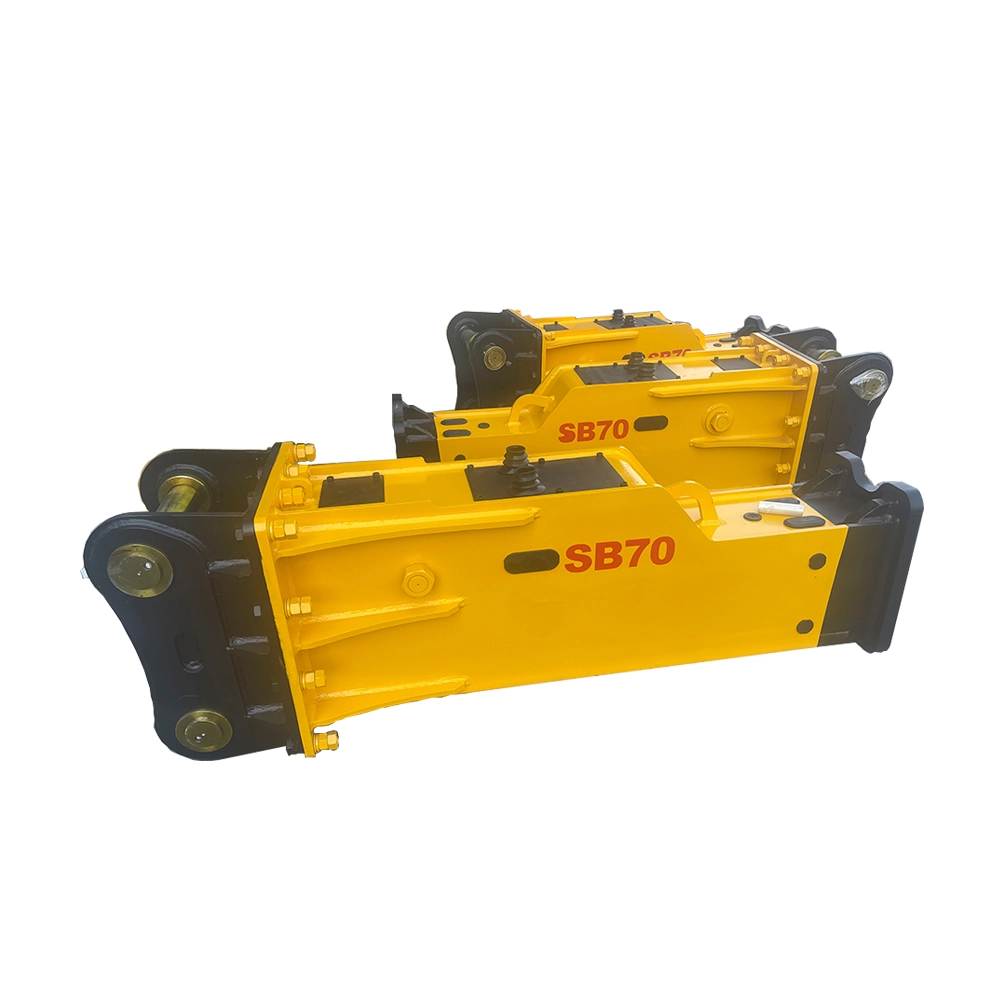
Guangzhou Huilian Machines Co., Ltd is a professional OEM supplier founded in 2005, providing an extensive lineup of premium Excavator Hydraulic Breaker attachments that guarantee a 100% compatibility match with all top loader brands.
As leading excavator breaker parts manufacturers in China, the Huilian brand represents decades of engineering excellence. Our dedicated R&D experts, technicians, and quality control professionals ensure that every hammer is built to endure the harshest quarrying environments.
- 100% Compatibility: Discover how our premium hydraulic breaker lineup guarantees a seamless match with your specific excavator carrier, ensuring flawless hydraulic fluid integration.
- Advanced Ergonomics: Experience integrated vibration dampening technology designed to protect your boom, pins, and operators from long-term mechanical and physical fatigue.
- Proven Success: In a recent case study, a local quarry achieved a 30% increase in daily productivity simply by upgrading to our optimized tool bit matching system and precision-machined pistons.
Conclusion & Call to Action
Matching the perfect hammer rock breaker to your excavator loader is a critical step for ensuring site safety, operational efficiency, and long-term equipment longevity on every job site.
By perfectly aligning hydraulic flow, understanding the nuances of tool bits, and leveraging modern maintenance technologies, you ensure peak productivity. When you match the carrier properly and maintain the tool diligently, your heavy equipment becomes an unstoppable force in demolition and quarrying.
Contact Guangzhou Huilian Machines Co., Ltd today to discuss your specific needs.
Frequently Asked Questions
How do I know if a rock breaker fits my excavator loader?
Check your excavator's lifting capacity to ensure it can safely handle the physical weight of the breaker. Verify that your loader's auxiliary hydraulic flow rate (GPM) matches the breaker's required operating range, and always consult the carrier weight guidelines provided by the hydraulic hammer manufacturer.
What size hydraulic breaker do I need for a 20-ton excavator?
A 20-ton excavator typically requires a medium-to-large hydraulic breaker. The breaker should generally weigh between 10% to 15% of the excavator's total operating weight. Always cross-reference the excavator's hydraulic pressure capabilities with the specific breaker model.
How often should a hammer rock breaker be greased?
Most hydraulic hammers require manual greasing every two hours of continuous operation. High-temperature molybdenum paste must be used to withstand the extreme friction. Many modern breakers offer auto-lube systems to maintain constant, optimal greasing.
What is the difference between moil and chisel tool bits?
Moil points have a pyramidal or conical shape, ideal for multi-directional, general demolition. Chisel bits have a flat, blade-like edge designed for directional breaking, such as trenching. Choosing between them depends on whether you need to shatter material or cut a line through it.
Can I use the same breaker on a backhoe loader and an excavator?
Only if both machines share identical hydraulic flow rates, pressure settings, and weight capacities. Backhoe loaders generally have lower flow capacities than dedicated excavators of a similar footprint. Using a quick-coupler can make swapping easier, but hydraulic compatibility remains the primary constraint.
Why is my hydraulic breaker vibrating excessively?
Excessive vibration is often caused by incorrect hydraulic pressure settings from the carrier. It can also indicate worn internal bushings or degraded shock absorbers within the breaker housing. Operating the tool at an improper angle (not 90 degrees) pushes vibration back into the boom arm.
What causes a rock breaker to blank fire?
Blank firing happens when the piston strikes the tool bit without the bit resting against a solid surface. It is usually an operator error caused by continuing to trigger the hydraulics after the rock has broken. Frequent blank firing causes severe internal damage to the tie rods and tool retaining pins.
How does nitrogen gas improve hydraulic hammer performance?
Nitrogen gas acts as an accumulator, storing energy from the hydraulic fluid to amplify the downward stroke. It significantly increases the impact energy and speed of each blow compared to fluid alone. The nitrogen chamber absorbs return shock, protecting the carrier's hydraulic system from pressure spikes.


About
Do you offer OEM and aftermarket parts?
Yes, we manufacture high-quality OEM parts and supply aftermarket parts from top brands such as NOK, Parker, SKF, and Hallite to ensure optimal performance.
Are your parts compatible with all excavator brands?
Yes, our parts are designed to be compatible with major brands like Komatsu, Caterpillar, Hitachi, Hyundai, Doosan, JCB, Kobelco, Sany, and many more.
How can I ensure I’m selecting the right part for my equipment?
Our expert team can assist you in finding the right part based on your machine model, specifications, and requirements. Contact us for personalized support.
What is your shipping and delivery time?
We offer fast and reliable global shipping. Delivery times vary depending on location and order size, but we strive to process and ship orders as quickly as possible.
What types of excavator parts do you offer?
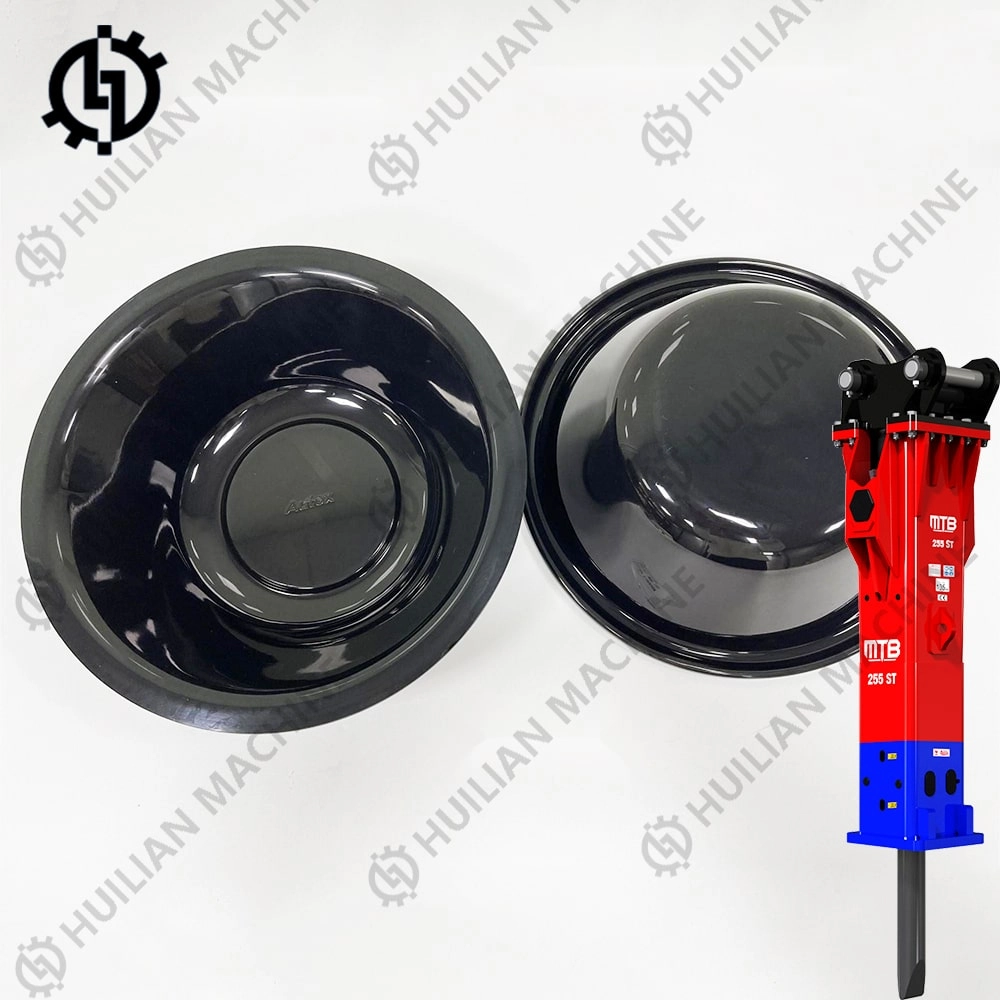
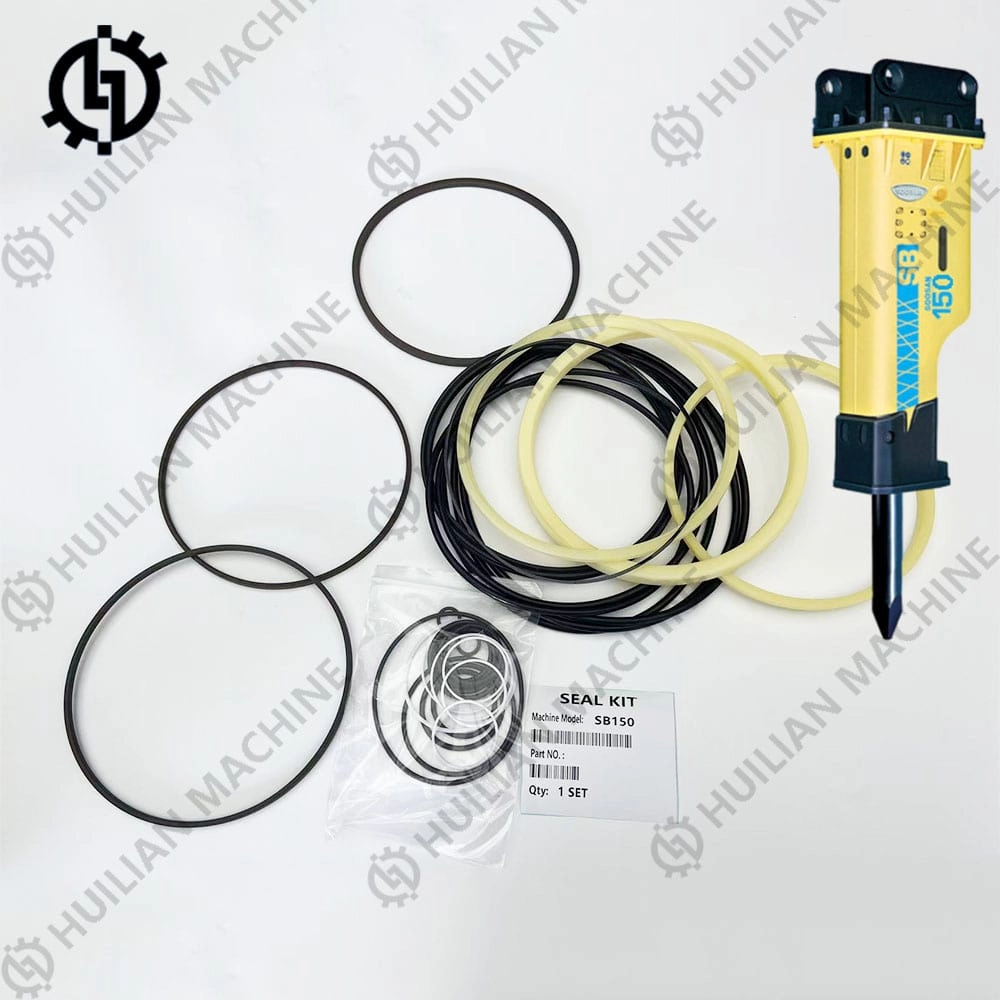
We provide a wide range of high-quality excavator parts, including hydraulic breakers, chisels, seal kits, diaphragms, pistons, wear bushes, retainer bars, through bolts, side bolts, valves, and liners.




Getting started is easy 
Contact with our experts to find the best excavator parts solutions for your needs. Discover how Huilian can enhance your equipment's performance and efficiency.


Get in touch
 About us
© 2025 HUILIAN MACHINE. All rights reserved