



Boost Work Efficiency: Choose a High-Performance Hydraulic Rock Breaker
- Quick Summary: Key Takeaways for Maximizing Efficiency
- What is a high-performance hydraulic rock breaker?
- The Mechanics of Power
- Why Efficiency Matters: The ROI of the Right Equipment
- Calculating Real Costs
- Critical Specs: Matching the Hammer to Your Excavator
- Understanding Hydraulic Balance
- Advanced Features Defining 2026 High-Performance Models
- Innovation in Action
- Selecting the Right Tool Bit for Hard Rock Formations
- Geology and Physics
- Expert Tips: Avoiding Common Efficiency Killers
- Operational Discipline
- Conclusion & Call to Action
Quick Summary: Key Takeaways for Maximizing Efficiency
A high-performance hydraulic rock breaker reduces project timelines by optimizing impact energy transfer and minimizing downtime. To achieve maximum output, operators must match the attachment to the carrier's hydraulic flow, not just its weight class.
- Impact Optimization: High-performance breakers deliver higher joules per blow, breaking rock faster than standard models.
- Geology Matching: Using the correct tool bit (e.g., blunt vs. chisel) prevents energy loss and tool breakage.
- Smart Features: 2026 models include blank-firing protection and auto-greasing to extend service life.
- Maintenance: Routine checks of nitrogen levels and bushing wear prevent 80% of common efficiency losses.
What is a high-performance hydraulic rock breaker?
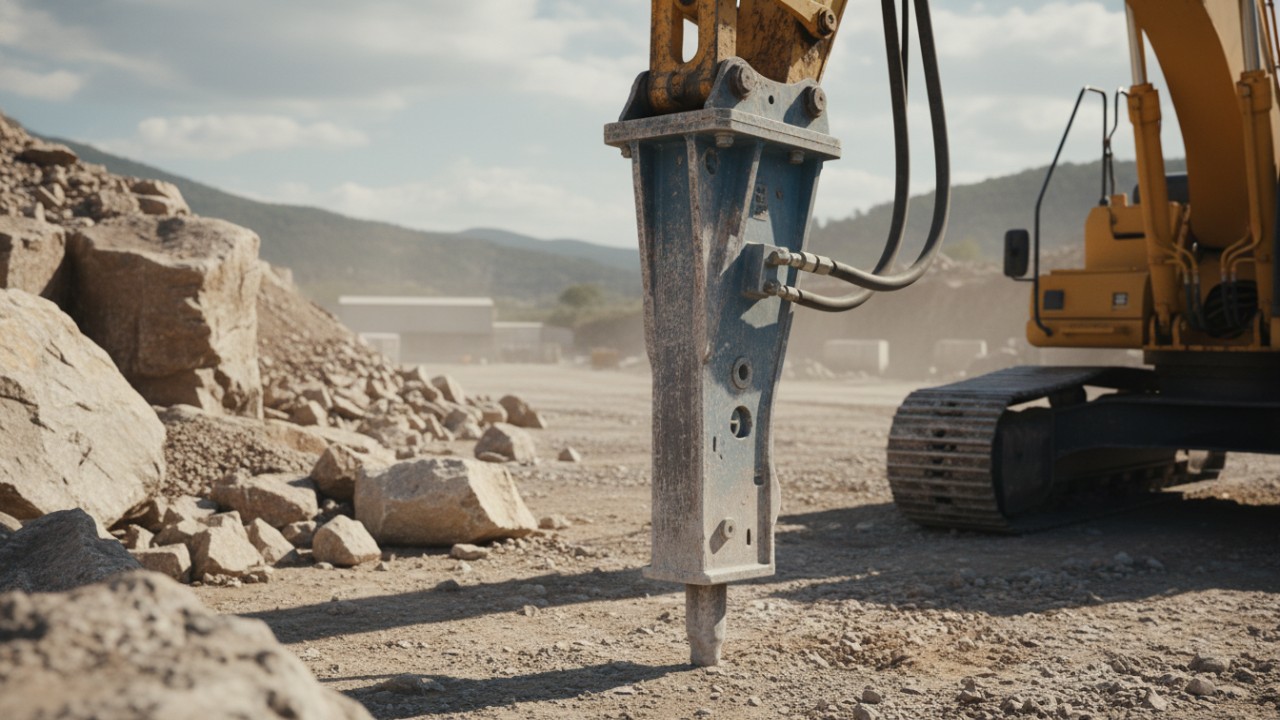
A high-performance hydraulic rock breaker is a specialized piece of heavy-duty demolition equipment that utilizes pressurized hydraulic oil to drive a piston and tool bit for breaking hard rock, concrete, and asphalt with maximum kinetic energy. Unlike standard breakers, high-performance variants feature advanced energy recovery systems that recycle recoil energy into the next blow.
The Mechanics of Power
These attachments transform hydraulic power from the excavator into mechanical impact energy. The efficiency of this transformation is what defines "performance." A standard breaker might waste energy as heat or vibration, whereas a high-performance model directs that force into the material. This distinction is critical for contractors looking to improve their bottom line.
Key Characteristics:
- Optimized Power-to-Weight Ratio: Delivers more power without destabilizing the carrier.
- Vibration Dampening: Internal buffers protect the excavator boom from damaging recoil.
- Energy Recovery: Captures rebound energy to increase the frequency of the next strike.
Why Efficiency Matters: The ROI of the Right Equipment
Hydraulic breaker efficiency in 2026 is defined by the ratio of fuel consumed and time spent to the volume of material broken. Inefficient equipment leads to higher fuel costs, increased excavator idle time, and accelerated wear on the carrier machine.
Calculating Real Costs
Many operators focus solely on the initial purchase price, ignoring the "cost per ton" of broken material. A breaker with low rock breaker impact energy may require 50 blows to crack a boulder that a high-performance model breaks in 15. This difference drastically affects project timelines.
According to the Association of Equipment Manufacturers, operating breakers beyond their design limits or efficiently matching them to the job site conditions is critical for safety and longevity. Overworking an undersized breaker leads to overheating, which degrades hydraulic seals and forces costly downtime.
ROI Factors:
- Speed (BPM): Higher blows per minute work best for softer stratified rock.
- Impact Energy (Joules): Higher energy is required for massive, non-stratified boulders.
- Fuel Economy: Efficient braking reduces the excavator's engine load and fuel burn.
- Operator Fatigue: Lower vibration levels allow operators to work longer shifts safely.
Critical Specs: Matching the Hammer to Your Excavator
The most critical step in selection is ensuring the excavator's hydraulic flow (LPM) and operating pressure (bar) match the breaker's requirements exactly. Installing an excavator hydraulic hammer attachment that is too large can damage the carrier's structural integrity, while one that is too small will be ineffective.
Understanding Hydraulic Balance
At Guangzhou Huilian Machines Co., Ltd., we often see customers attempting to fit the largest possible hammer onto their machine. However, "bigger is better" is a dangerous myth. If the excavator cannot supply the necessary flow rate, the hammer will strike sluggishly, causing heat buildup. Conversely, excessive back pressure can blow seals and damage the excavator's main pump.
Specification Checklist:
- Carrier Weight: The excavator must be heavy enough to remain stable during firing.
- Oil Flow (LPM): The volume of oil the pump delivers determines the strike frequency.
- Operating Pressure: The force required to drive the piston.
- Relief Valve Setting: Must be set higher than the breaker's operating pressure to prevent overheating.
Advanced Features Defining 2026 High-Performance Models
Modern high-performance breakers utilize "smart" hydraulics and telematics to automatically adjust impact frequency based on rock hardness. These 2026 standards move beyond simple mechanical operation to integrated system management.
Innovation in Action
For example, Huilian integrates smart-flow technology into our premium breaker lines. This allows the hammer to sense the resistance of the material. When encountering soft rock, the piston shortens its stroke to increase speed. When hitting hard granite, it lengthens the stroke to maximize impact energy.
Top 2026 Features:
- Automatic Variable Speed: Optimizes BPM vs. Joules in real-time.
- Auto-Lube Systems: Delivers precise amounts of grease during operation to prevent bushing wear.
- Anti-Blank Firing: Sensors stop the piston immediately if the tool bit is not pressed against rock, preventing internal damage.
- Noise Suppression: Enclosed housing designs meet strict urban noise regulations.
Selecting the Right Tool Bit for Hard Rock Formations
Breaker tool bit selection is dictated by the geological properties of the material, specifically its hardness and stratification. Using the wrong bit type is the leading cause of premature tool failure and reduced productivity.
Geology and Physics
To maximize efficiency, you must refer to geological standards like the Mohs Hardness Scale. According to the National Park Service, minerals like quartz rank 7 on the scale, requiring significantly higher impact energy to fracture than calcite (rank 3). For high-silica-content rock, a blunt tool is often superior because it transmits stress waves deeply into the boulder, shattering it from within.
Tool Bit Guide:
- Moil Point: The "Swiss Army Knife" for general demolition and sedimentary rock.
- Chisel Bit: Best for cutting trenches or breaking rock with defined cleavage planes.
- Blunt Tool: Essential for igneous hard rock (granite, basalt) and abrasive boulders. It prevents the tool from getting stuck.
- Pyramidal Point: Specialized for reinforced concrete to wedge apart rebar and cement.
Expert Tips: Avoiding Common Efficiency Killers
The most common efficiency killer is "blank firing," where the hammer cycles without resistance, sending damaging shockwaves back into the carrier. This destroys tie rods, pistons, and seals rapidly.
Operational Discipline
Drawing from Huilian's experience since 2005 as a professional OEM supplier, we have analyzed thousands of failed units. The data shows that 90% of failures are operator-induced or maintenance-related. For instance, prying with the tool bit—using the breaker as a lever—snaps the tool shaft and damages the bushings.
Pro Tips for Longevity:
- Warm-Up: In cold climates, cycle the breaker at low speed to warm the hydraulic fluid and prevent piston seizure.
- 15-Second Rule: Never strike the same spot for more than 15-30 seconds. If it doesn't break, move to a new angle.
- Grease Positioning: Only grease the breaker when it is vertical and the tool is pressed against the ground to prevent grease from entering the hydraulic chamber.
- Silica Safety: When breaking concrete or rock, huge amounts of dust are generated. As noted by OSHA, operators must use water suppression systems to limit exposure to respirable crystalline silica, ensuring both health safety and clear visibility.
Conclusion & Call to Action
Choosing a high-performance hydraulic rock breaker is a strategic investment that enhances speed, longevity, and operational safety on your job site. By carefully matching specifications to your carrier, utilizing modern features like auto-lubrication, and adhering to strict maintenance protocols, contractors can ensure their heavy-duty demolition equipment delivers maximum ROI.
Contact Guangzhou Huilian Machines Co., Ltd today to discuss your specific needs and find the perfect breaker solution for your fleet.


About
What is your shipping and delivery time?
We offer fast and reliable global shipping. Delivery times vary depending on location and order size, but we strive to process and ship orders as quickly as possible.
How can I ensure I’m selecting the right part for my equipment?
Our expert team can assist you in finding the right part based on your machine model, specifications, and requirements. Contact us for personalized support.
What types of excavator parts do you offer?
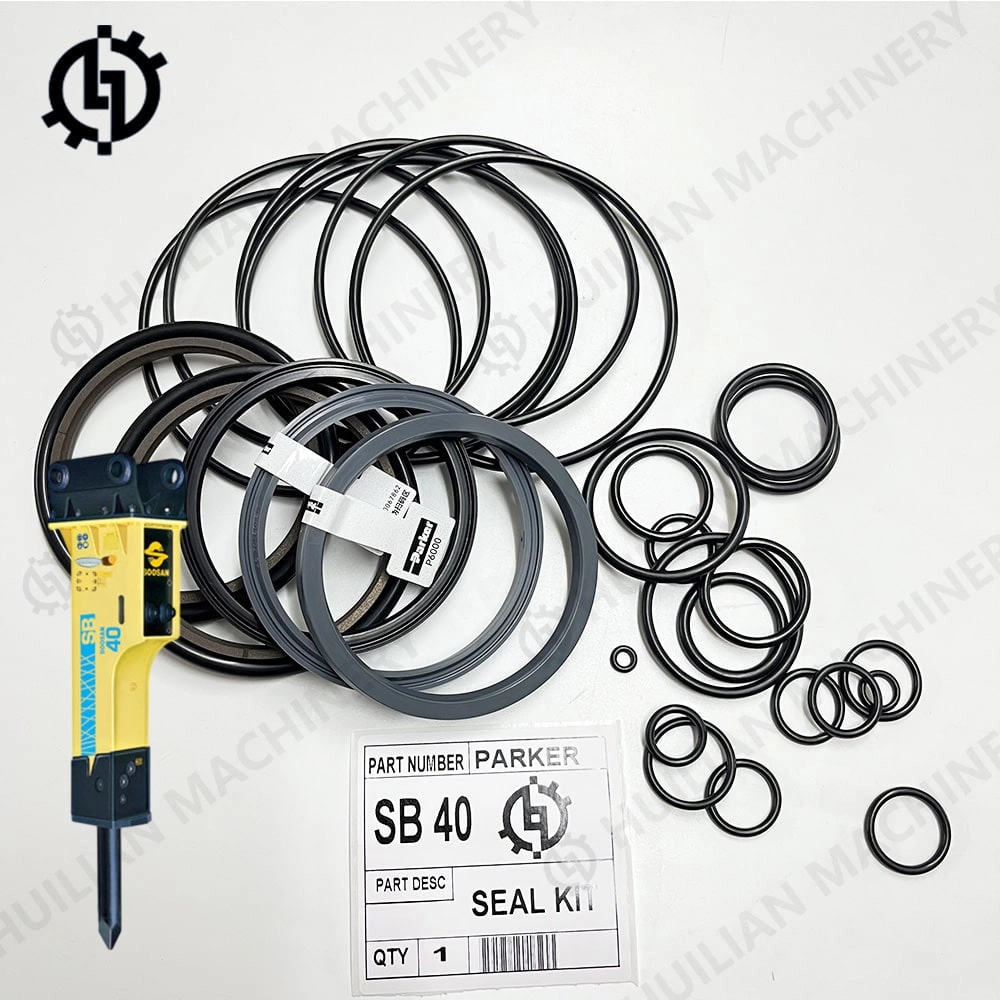
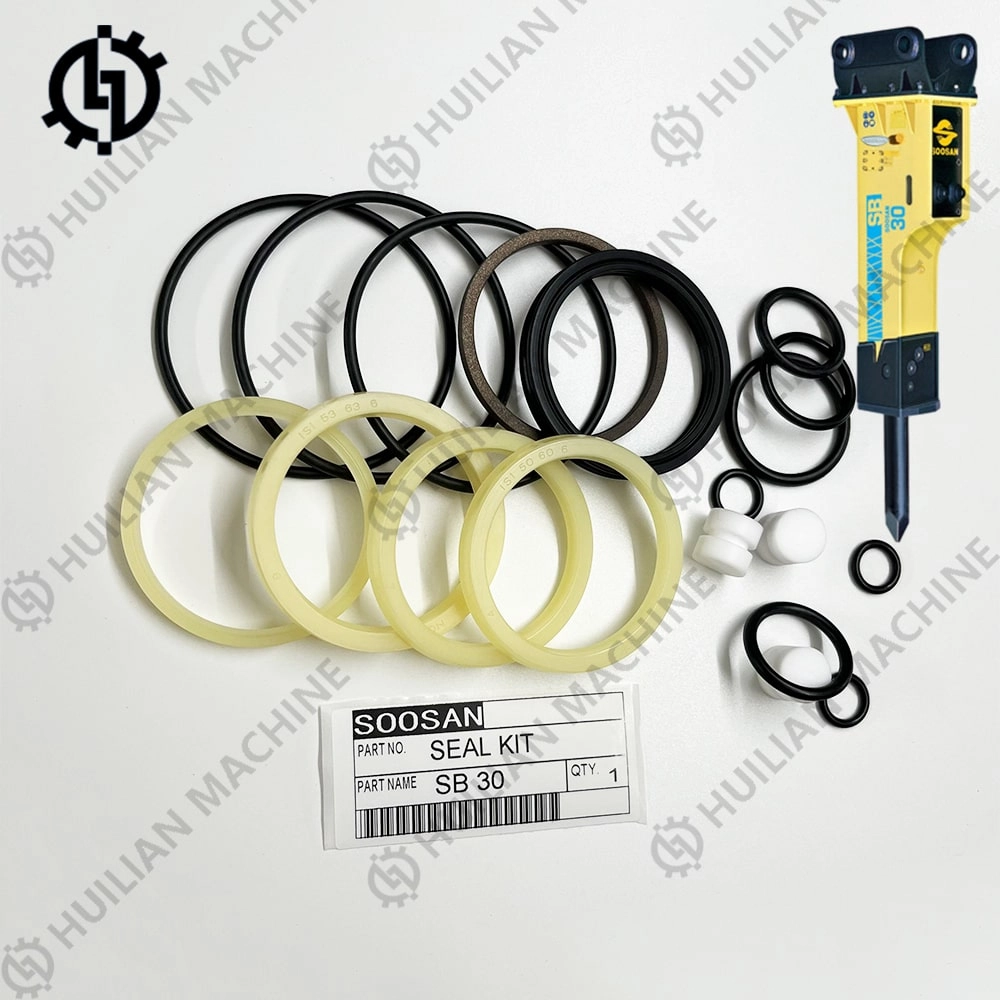
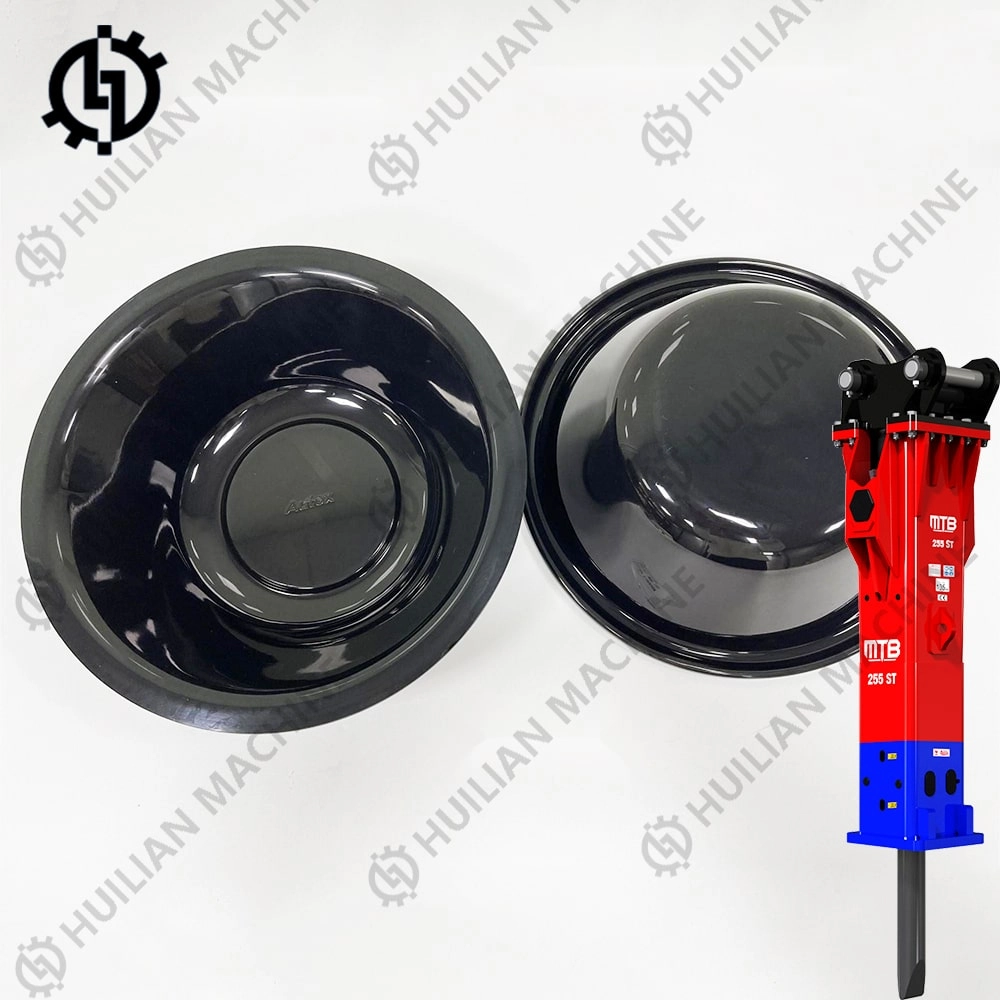
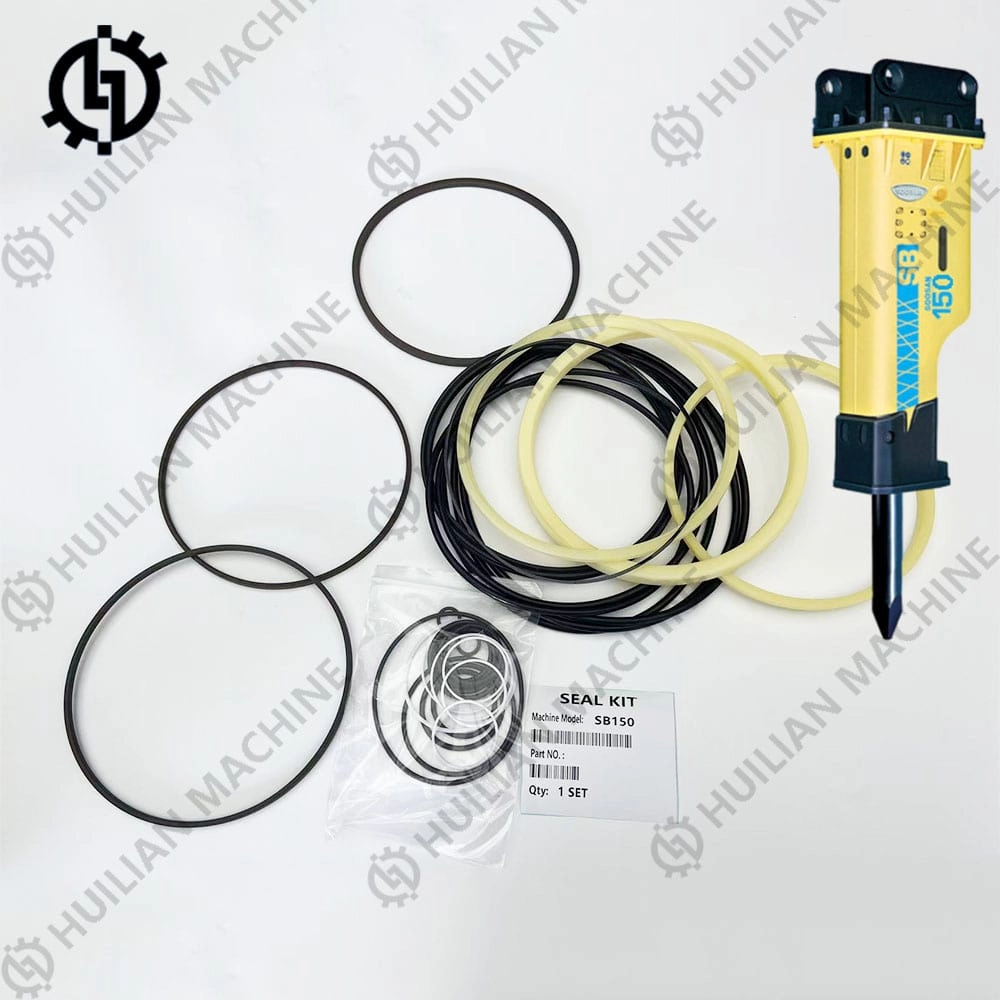
We provide a wide range of high-quality excavator parts, including hydraulic breakers, chisels, seal kits, diaphragms, pistons, wear bushes, retainer bars, through bolts, side bolts, valves, and liners.
Are your parts compatible with all excavator brands?
Yes, our parts are designed to be compatible with major brands like Komatsu, Caterpillar, Hitachi, Hyundai, Doosan, JCB, Kobelco, Sany, and many more.
Do you offer OEM and aftermarket parts?
Yes, we manufacture high-quality OEM parts and supply aftermarket parts from top brands such as NOK, Parker, SKF, and Hallite to ensure optimal performance.




Getting started is easy 
Contact with our experts to find the best excavator parts solutions for your needs. Discover how Huilian can enhance your equipment's performance and efficiency.


Get in touch
 About us
© 2025 HUILIAN MACHINE. All rights reserved