


OEM vs. Aftermarket: How to Choose the Best Excavator Seal Kit to Maximize ROI
- What is an excavator seal kit, and why is quality critical?
- The Core Debate: OEM vs Aftermarket Hydraulic Seals
- Material Science 101: High-Performance Polyurethane Seals
- The ROI Equation: Heavy Equipment Maintenance ROI
- Decision Matrix: When to Choose Which Kit?
- Expert Tips: Common Installation Mistakes with Hydraulic Cylinder Repair Seals
- Conclusion
Every hour an excavator sits idle due to a blown cylinder seal, your operation bleeds money. When a boom cylinder starts drifting or leaking, the immediate question is always the same: Should you pay a premium for the brand-name box, or will a high-quality aftermarket excavator seal kit deliver the same performance for half the price?
For fleet managers and heavy equipment technicians, this isn't just about saving $50 on parts. It is about protecting a $200,000 machine from catastrophic hydraulic contamination. This guide breaks down the technical differences, material science, and financial ROI of choosing the right seals for your fleet.
What is an excavator seal kit, and why is quality critical?
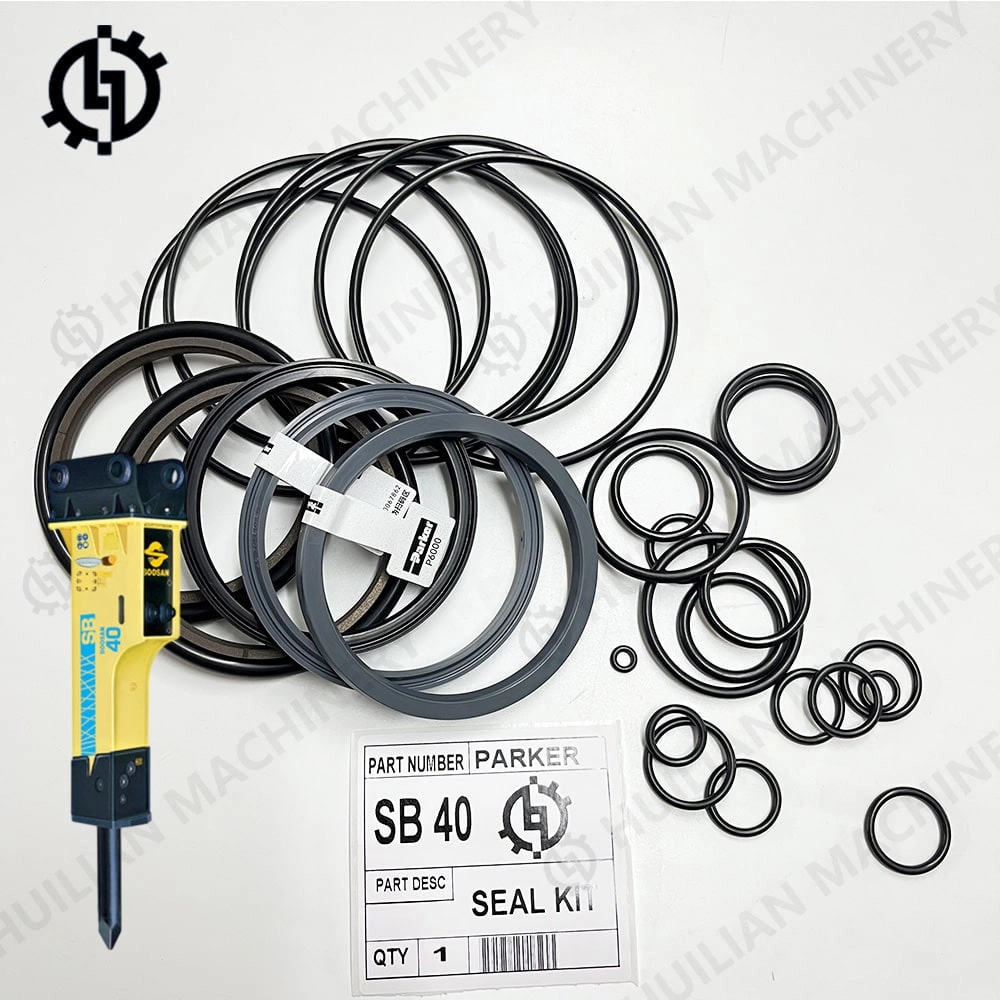
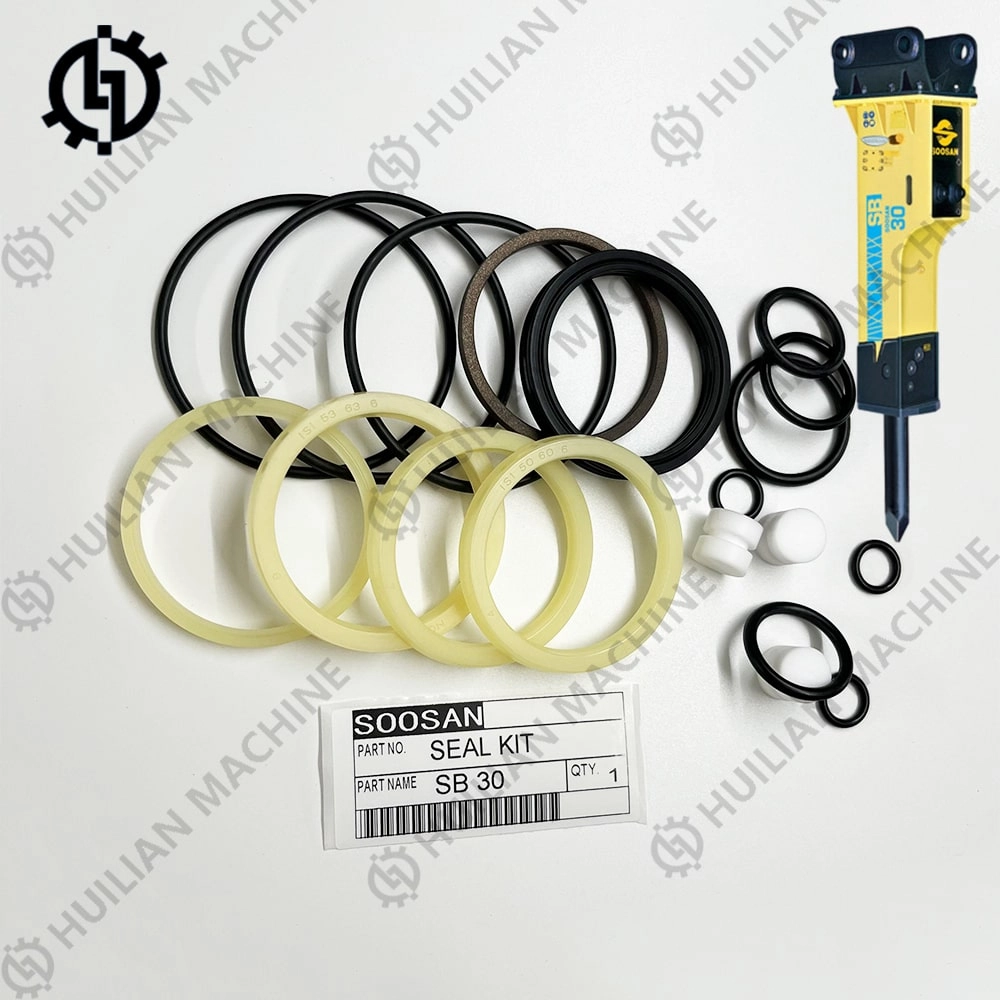
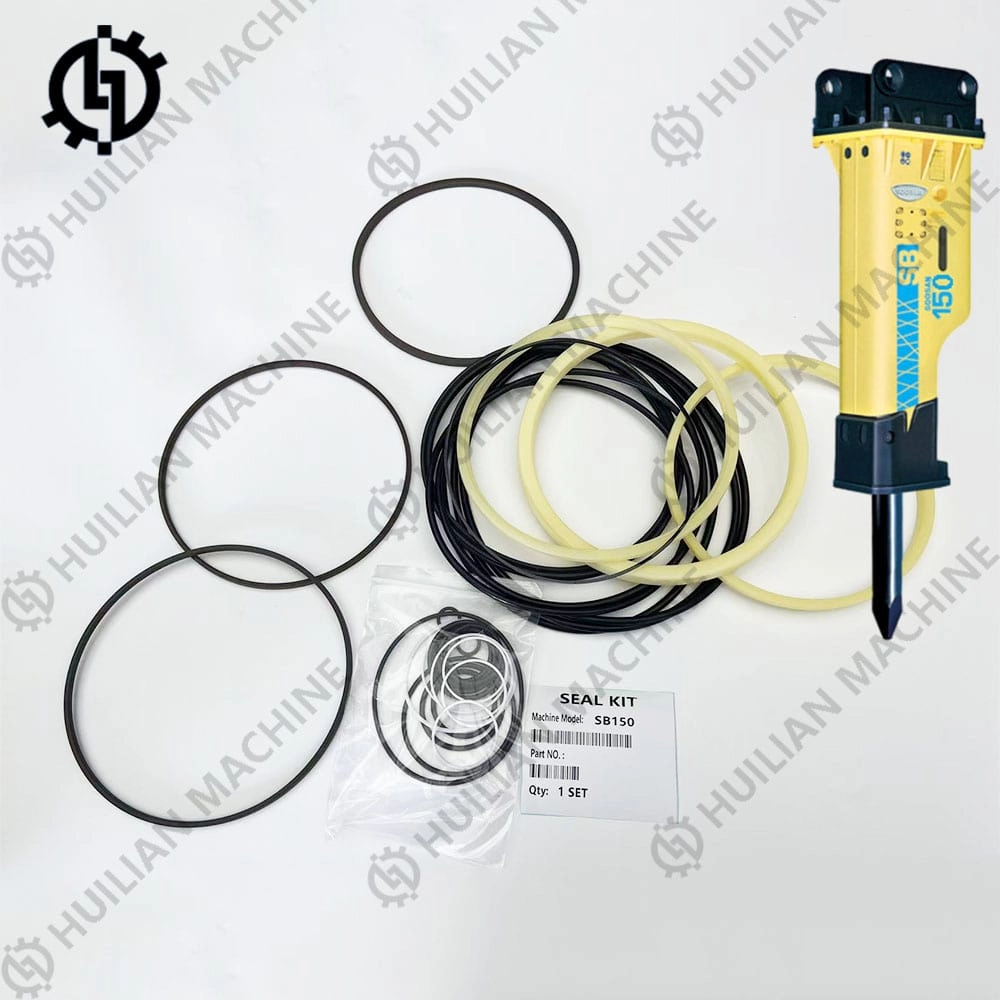
An excavator seal kit is a packaged set of precision-engineered components—including rod seals, piston seals, wipers, and O-rings—specifically designed to seal hydraulic fluid under high pressure while preventing contaminants from entering the cylinder.
These kits function as the critical barrier within your hydraulic system. They must contain fluid pressures that frequently exceed 5,000 PSI while accommodating the rapid reciprocating motion of the cylinder rod. If a seal fails, the system loses pressure, the machine loses digging force, and the pump is at risk of cavitation.
The Critical Components:
- Rod Seals: The primary seal preventing fluid leaks to the outside.
- Piston Seals: Prevents fluid from bypassing the piston, maintaining pressure for lifting heavy loads.
- Wiper/Scraper: Cleans the rod as it retracts, stopping dirt from entering the system.
- Guide Rings: Prevents metal-to-metal contact between internal components.
The Core Debate: OEM vs Aftermarket Hydraulic Seals
OEM seals are manufactured by the machine's original creator to exact factory specifications, whereas aftermarket seals are produced by third-party specialists, often offering a wider range of material options at a lower cost.
The debate between OEM vs aftermarket hydraulic seals has shifted in recent years. Historically, "aftermarket" was synonymous with "cheap rubber." Today, reputable aftermarket manufacturers often use the same raw material suppliers (like Huntsman or BASF) as the OEMs, meaning the performance gap has narrowed or vanished entirely—provided you choose a reputable supplier.
Comparison Breakdown:
- OEM (Original Equipment Manufacturer):
- Pros: Guaranteed fit, preserves factory warranty, consistent quality control.
- Cons: significantly higher price (often 300%+ markup), long lead times for backordered parts.
- Aftermarket (Premium):
- Pros: Cost-effective (better ROI), often uses upgraded materials (like PPDI) for older machines, immediate availability.
- Cons: Quality varies wildly; requires vetting the supplier's material source.
Material Science 101: High-Performance Polyurethane Seals
The durability of a seal is determined by its material hardness (Shore A), rebound resilience, and resistance to hydrolysis, with PPDI polyurethane currently representing the gold standard for high-heat hydraulic applications.
Standard aftermarket kits often use basic NBR (Nitrile) or standard TPU (Thermoplastic Polyurethane). While these are functional for light duty, they degrade quickly under the high operating temperatures of modern excavators. For maximum longevity, you must look for high-performance polyurethane seals made from PPDI materials.
Material Hierarchy:
- Standard NBR: Good for static O-rings but fails under high friction.
- Standard TPU: Decent wear resistance but softens at temperatures above 100°C.
- PPDI (Premium Polyurethane): Offers superior rebound resilience (bouncing back to shape) and maintains structural integrity at temperatures up to 130°C. This is crucial for high-intensity mining or breaker hammer applications.
According to Mearthane Products Corporation, polyurethanes exhibit superior abrasion resistance and tensile strength compared to rubber, making them the preferred choice for applications requiring extended wear life in harsh environments.
The ROI Equation: Heavy Equipment Maintenance ROI
Heavy equipment maintenance ROI is calculated by comparing the Total Cost of Ownership (TCO) of the part against the Cost of Downtime (CoD), rather than just comparing the sticker price of the seal kit.
Saving $100 on a seal kit is a false economy if the cheaper seal fails three months early. To make a data-driven decision, you must calculate the potential loss.
The Downtime Reality:
- Part Cost: OEM ($300) vs. Premium Aftermarket ($120).
- Labor Cost: 4 hours x $150/hr = $600 (Fixed).
- Downtime Cost: If your 30-ton excavator generates $300/hour in revenue, a 4-hour repair costs $1,200 in lost production.
Recent industry data highlights the severity of these costs. The 2024 State of Industrial Maintenance Report by MaintainX indicates that the average cost of unplanned downtime now hovers around $25,000 per hour across industrial sectors, emphasizing why reliability must trump initial part cost.
ROI Formula:
- (Total Cost) = (Kit Price) + (Labor) + (Lost Revenue)
- If a premium aftermarket kit lasts 90% as long as an OEM kit but costs 30% of the price, the ROI is positive—unless the machine is a critical path asset where any failure stops the entire job site.
Decision Matrix: When to Choose Which Kit?
Fleet managers should utilize a risk-based decision matrix to select seals, prioritizing OEM for warranty-bound machines and premium aftermarket for out-of-warranty or mixed-fleet equipment.
At Guangzhou Huilian Machines Co., Ltd., we have observed thousands of repair cycles since 2005. Based on this experience, we recommend the following selection strategy:
- Scenario A: Machine Under Warranty
- Choice: OEM Only.
- Reason: Using aftermarket parts can void the manufacturer's powertrain warranty. Do not risk it.
- Scenario B: Production Mining/Quarry (24/7 Operation)
- Choice: OEM or Premium PPDI Aftermarket.
- Reason: The cost of downtime is too high. If choosing aftermarket, verify the material is PPDI (like Parker-grade standards).
- Scenario C: General Construction / Older Fleet
- Choice: Premium Aftermarket.
- Reason: Best ROI. The machine's depreciation doesn't justify OEM pricing, provided the seals are high quality.
- Scenario D: Backup Machines / Low Usage
- Choice: Standard Aftermarket.
- Reason: Cost preservation is the priority for machines that run less than 500 hours a year.
Expert Tips: Common Installation Mistakes with Hydraulic Cylinder Repair Seals
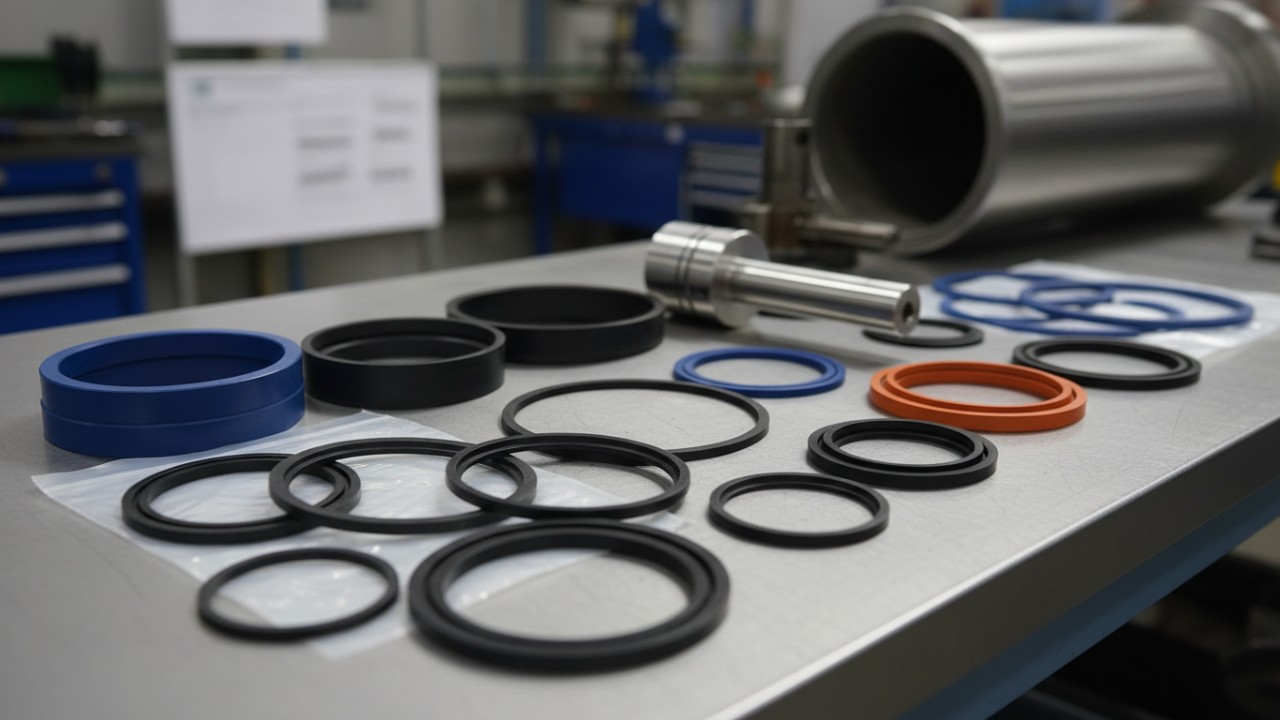
The majority of premature seal failures are caused by contamination during installation or damage to the sealing lip caused by using improper tools during the fitting process.
Even the most expensive hydraulic cylinder repair seals will fail if installed incorrectly. Reliability relies on cleanliness.
Installation Best Practices:
- The 80% Rule: It is widely recognized in the industry, including by sources like Machinery Lubrication, that up to 80% of hydraulic system failures are caused by fluid contamination. Always clean the gland area with lint-free cloths before installation.
- Watch the Direction: U-cup seals are directional. The "open" side of the U must face the pressure. Install it backward, and it will leak immediately.
- Warm the Seals: In cold climates, polyurethane becomes stiff. Soak the seals in warm hydraulic oil to make them pliable and easier to install without nicking.
- Deburr the Cylinder: Ensure there are no sharp metal burrs on the cylinder head that could slice the seal during insertion.
Conclusion
Choosing between OEM and aftermarket is not a binary choice between "good" and "bad." It is a strategic calculation involving machine age, application intensity, and budget. By focusing on material specifications like PPDI and understanding the true cost of downtime, you can significantly increase your heavy equipment maintenance ROI.
Whether you need the assurance of OEM quality or the cost-efficiency of high-performance aftermarket solutions, Huilian's 19+ years of experience and export network across 90 countries ensure we have the right fit for your fleet.
Contact the technical experts at Guangzhou Huilian Machines Co., Ltd today to identify the perfect seal kit for your specific application.


About
What is your shipping and delivery time?
We offer fast and reliable global shipping. Delivery times vary depending on location and order size, but we strive to process and ship orders as quickly as possible.
How can I ensure I’m selecting the right part for my equipment?
Our expert team can assist you in finding the right part based on your machine model, specifications, and requirements. Contact us for personalized support.
Are your parts compatible with all excavator brands?
Yes, our parts are designed to be compatible with major brands like Komatsu, Caterpillar, Hitachi, Hyundai, Doosan, JCB, Kobelco, Sany, and many more.
Do you offer OEM and aftermarket parts?
Yes, we manufacture high-quality OEM parts and supply aftermarket parts from top brands such as NOK, Parker, SKF, and Hallite to ensure optimal performance.
What types of excavator parts do you offer?
We provide a wide range of high-quality excavator parts, including hydraulic breakers, chisels, seal kits, diaphragms, pistons, wear bushes, retainer bars, through bolts, side bolts, valves, and liners.




Getting started is easy 
Contact with our experts to find the best excavator parts solutions for your needs. Discover how Huilian can enhance your equipment's performance and efficiency.


Get in touch
 About us
© 2025 HUILIAN MACHINE. All rights reserved