



Rock Breaker Selection Guide: How to Choose the Right Hammer for Any Excavator Model
- Key Takeaways: Quick Guide to rock breaker Selection
- How do I choose the right rock breaker for my excavator?
- Critical Compatibility Factors: The Big Three
- 1. Carrier Weight Class (The 10% Rule)
- 2. Hydraulic Flow (LPM) & Pressure
- 3. Lifting Capacity & Stability
- Selecting the Body Style: Box, Top, or Side?
- Matching the Tool Bit to the Geology
- Beyond the Basics: ROI and Smart Features (2026+ Trends)
- 5 Common Mistakes to Avoid When Buying a Hydraulic Hammer
- Conclusion & Call to Action
- FAQ
- What size rock breaker do I need for a 20-ton excavator?
- Can I put a larger hammer on a smaller excavator?
- Does impact energy matter more than blows per minute (BPM)?
- How often does a hydraulic breaker need to be greased?
Key Takeaways: Quick Guide to rock breaker Selection
To select the correct rock breaker, you must match the attachment's specifications to the excavator's hydraulic output and operating weight.
If you are in a rush, use this checklist to make an immediate decision:
- The Golden Rule: The breaker should weigh approximately 10% of the excavator's operating weight.
- Hydraulic Match: Ensure your carrier's pump can deliver the required Liters Per Minute (LPM) and Operating Pressure (Bar). Too little flow equals low power; too much flow destroys seals.
- Application: Use Box (Silenced) brackets for city work to meet noise regulations and Top brackets for mining reach.

How do I choose the right rock breaker for my excavator?
You must verify that your excavator's lifting capacity and hydraulic pump output match the specific flow and pressure requirements of the hammer.
Choosing the wrong size is the most common cause of equipment failure. Excavator attachment compatibility is not just about whether the pins fit; it is about the balance of power. If a hammer is too heavy, your machine becomes unstable and dangerous. If the hydraulic flow is mismatched, you risk overheating the excavator's cooling system or blowing the breaker's internal seals.
Critical Compatibility Factors: The Big Three
The three non-negotiable factors for sizing are the carrier weight class, hydraulic flow rate, and relief valve pressure settings.
Getting these numbers right ensures your investment lasts for years rather than months.
1. Carrier Weight Class (The 10% Rule)
Most industry experts recommend a rock breaker operating weight ratio of roughly 10%. This means a 20-ton excavator is best suited for a 2-ton breaker.
- Compact Excavators (Mini): Often require a higher ratio (up to 12-15%) because they have relatively higher hydraulic stability for their size.
- Heavy Duty Mining: May use a slightly lower ratio (8-10%) to prioritize reach and cycle speed over sheer weight.
2. Hydraulic Flow (LPM) & Pressure
Hydraulic flow rate matching is the technical heart of the system.
- Flow (LPM): Determines the speed of the piston. Excess flow causes the hammer to strike too fast, generating heat that destroys seals.
- Pressure (Bar): Determines the force of each blow. Insufficient pressure results in the tool bouncing off the rock rather than penetrating it.
Pro Tip: Always check your excavator's "Auxiliary Relief Valve" setting. It must be set slightly higher than the breaker's operating pressure to prevent constant bypassing and overheating.
3. Lifting Capacity & Stability
According to the Association of Equipment Manufacturers (AEM), operators must verify the machine's load chart to ensure stability. The excavator must be able to extend the boom fully with the attachment without tipping forward. This is critical for safety on uneven terrain.
Selecting the Body Style: Box, Top, or Side?
The shape of the breaker bracket determines its suitability for noise-sensitive urban areas or rugged mining environments.
- Box (Silenced) Type:
- Best for: Urban construction and residential zones.
- Why: The hammer cell is fully enclosed in a box, often with polyurethane dampers. This significantly reduces noise and vibration, helping compliance with environmental standards.
- Top Type:
- Best for: Mining and quarrying.
- Why: The direct vertical design maximizes the excavator's reach and applies downward force efficiently for breaking floor rock.
- Side Type:
- Best for: Demolition and limited-height spaces.
- Why: It has a lower center of gravity and is generally easier to install, though it sacrifices some reach compared to the top type.
Matching the Tool Bit to the Geology
Select your tool bit based on the hardness of the rock (Mohs scale) to maximize penetration and minimize wear.
Using the wrong bit on abrasive rock will wear it down in hours.
- Moil Point (Pyramid):
- Application: Soft to medium rock, concrete, and sedimentary stone.
- Action: Penetrates like a nail. Good multi-purpose tool.
- Chisel (Wedge):
- Application: High-abrasion rock and trenching.
- Action: Cuts into the rock. Best for materials that contain high quartz content.
- Blunt Tool:
- Application: Igneous rock (granite, trap rock) with high hardness (6-7 on the Mohs scale).
- Action: Transmits shockwaves to shatter the rock rather than penetrating it. This prevents the tool from snapping.
Beyond the Basics: ROI and Smart Features (2026+ Trends)
Modern breakers now include smart technology that increases Return on Investment (ROI) by preventing operator error and reducing maintenance.
When calculating the value of a purchase, consider using a hydraulic hammer sizing calculator to project long-term costs, not just the upfront price.
- Auto-Lube Systems: Manual greasing is required every 2 hours. An auto-lube system removes this downtime and extends bushing life by up to 30%.
- Anti-Blank Firing: This technology stops the piston from striking if the tool is not firmly pressed against rock. Blank firing is the #1 cause of internal damage (piston cracking).
- Energy Recovery: High-end models capture the recoil energy from the piston's rebound and use it to boost the next strike, increasing efficiency without using more fuel.
5 Common Mistakes to Avoid When Buying a Hydraulic Hammer
Avoiding these five errors can save you thousands of dollars in boom repairs and hydraulic seal replacements.
- Oversizing: Putting a huge hammer on a small machine will destroy the excavator's boom pins and swing bearing.
- Ignoring Return Flow: High back pressure in the return line damages the hammer. Ensure your return filter is clean and sized correctly.
- Price over Support: Buying "grey market" breakers often means zero spare parts availability.
- Neglecting the Mounting Bracket: Ensure the pin diameter and ear width match exactly. Shims are a temporary fix, not a solution.
- Forgetting Dust Control: Silica dust is a major hazard. The Occupational Safety and Health Administration (OSHA) mandates dust suppression (water spray kits) for many rock-breaking activities to protect operator health.
Conclusion & Call to Action
Choosing the right rock breaker requires balancing hydraulic precision, carrier weight, and geological application.
A well-matched system not only breaks rock faster but also reduces fuel consumption and protects your excavator from structural damage. At Guangzhou Huilian Machines Co., Ltd., we have been optimizing these connections since 2005. With exports to over 90 countries, our team understands the nuances of matching a Huilian breaker to any excavator brand.
Contact us today to discuss your specific needs, and let our experts ensure your fleet is equipped for maximum productivity.
FAQ
What size rock breaker do I need for a 20-ton excavator?
Typically, a 20-ton excavator requires a breaker in the 1.5 to 2.0-ton weight range (roughly 1,500–1,800 kg). This ensures the machine remains stable while delivering sufficient downforce.
Can I put a larger hammer on a smaller excavator?
No, this is dangerous. It creates a tipping risk and places excessive stress on the boom and pins. Furthermore, the smaller excavator's pump likely cannot supply enough flow, leading to overheating.
Does impact energy matter more than blows per minute (BPM)?
Impact energy vs. BPM is a trade-off. Hard rock requires high impact energy (power per blow) to shatter the material, while softer material (like concrete) benefits from higher BPM (speed) to break it up faster.
How often does a hydraulic breaker need to be greased?
Manual greasing is required every 2 hours of continuous operation. However, installing an automatic lubrication system is highly recommended to ensure constant protection for the bushings and tool bit.


About
How can I ensure I’m selecting the right part for my equipment?
Our expert team can assist you in finding the right part based on your machine model, specifications, and requirements. Contact us for personalized support.
Are your parts compatible with all excavator brands?
Yes, our parts are designed to be compatible with major brands like Komatsu, Caterpillar, Hitachi, Hyundai, Doosan, JCB, Kobelco, Sany, and many more.
What types of excavator parts do you offer?
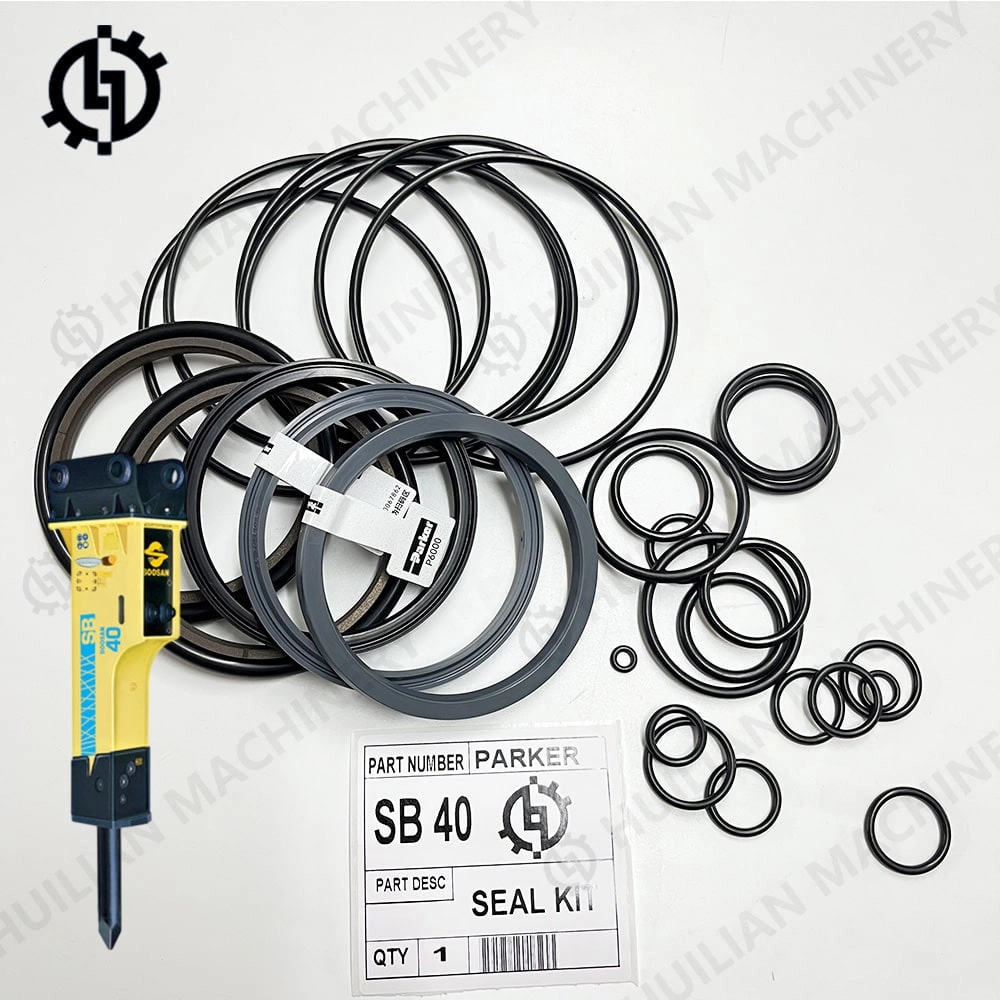
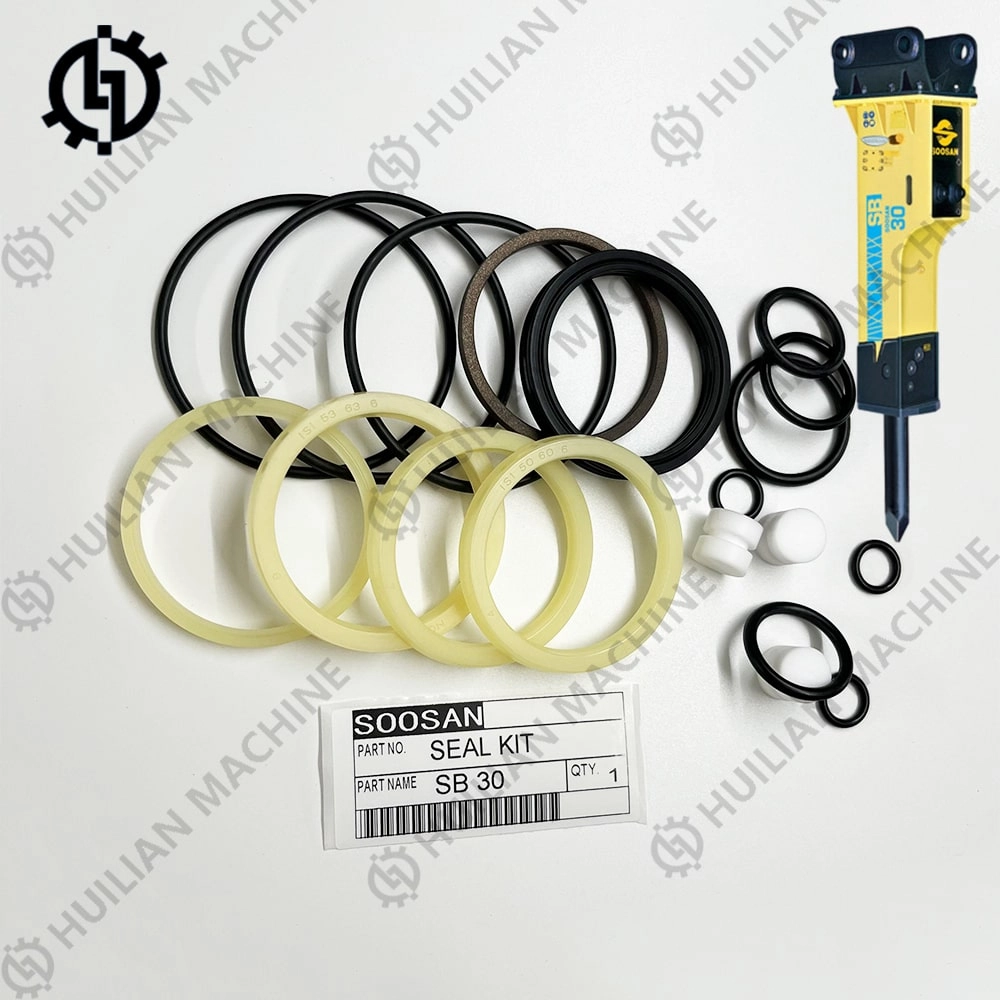
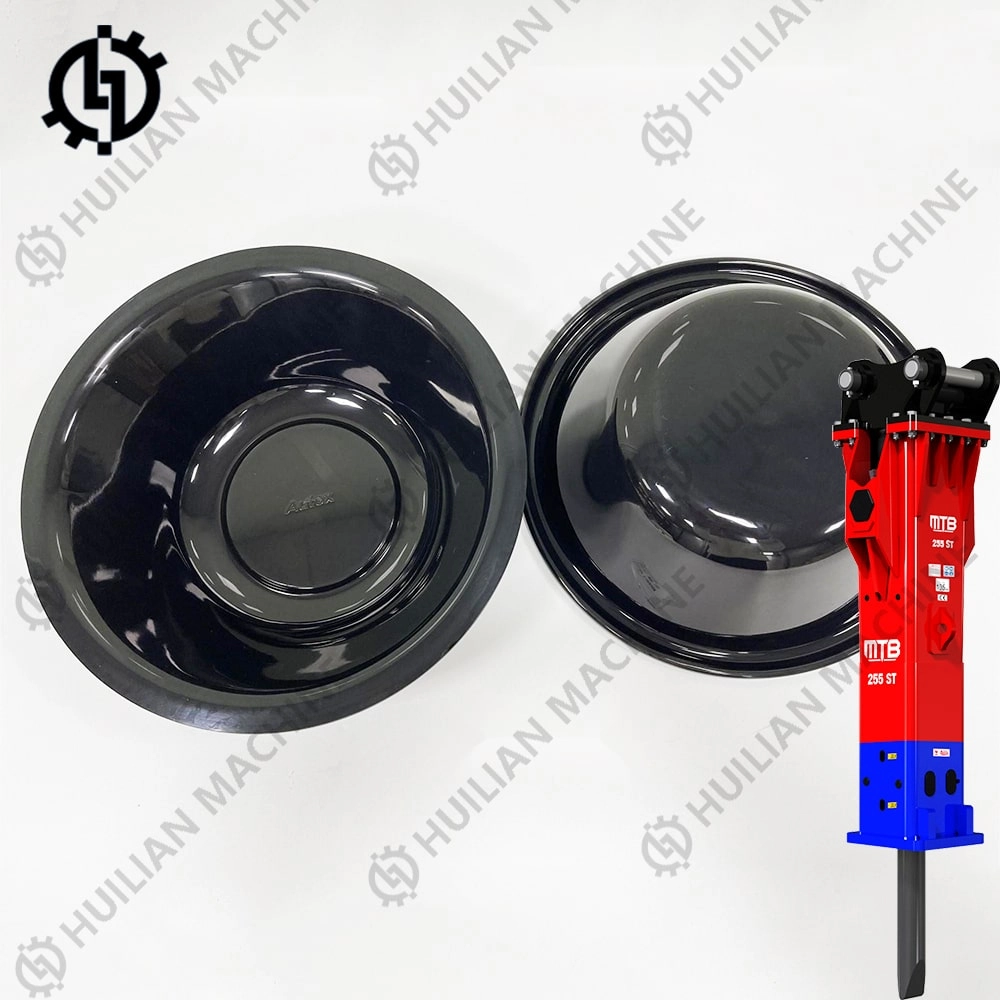
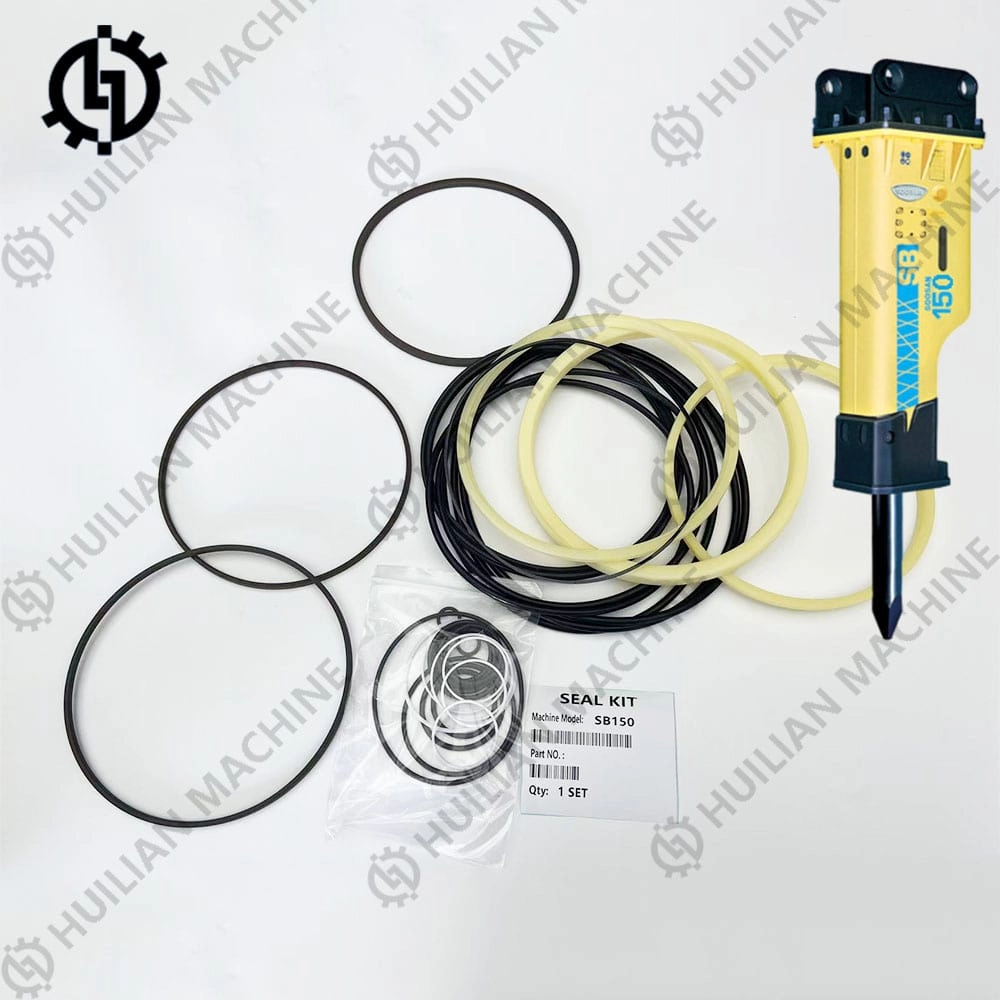
We provide a wide range of high-quality excavator parts, including hydraulic breakers, chisels, seal kits, diaphragms, pistons, wear bushes, retainer bars, through bolts, side bolts, valves, and liners.
Do you offer OEM and aftermarket parts?
Yes, we manufacture high-quality OEM parts and supply aftermarket parts from top brands such as NOK, Parker, SKF, and Hallite to ensure optimal performance.
What is your shipping and delivery time?
We offer fast and reliable global shipping. Delivery times vary depending on location and order size, but we strive to process and ship orders as quickly as possible.




Getting started is easy 
Contact with our experts to find the best excavator parts solutions for your needs. Discover how Huilian can enhance your equipment's performance and efficiency.


Get in touch
 About us
© 2025 HUILIAN MACHINE. All rights reserved