



How to Extend Your Breaker's Life: A Deep Dive into High-Quality Spare Parts and Maintenance
- Quick Summary: Key Takeaways for Breaker Longevity
- What Are Critical Hydraulic Rock Breaker Hammer Spare Parts?
- Why Quality Matters
- Anatomy of a High-Performance Breaker: Core Components
- Critical Wear Parts vs. Internal Components
- The Maintenance Matrix: Daily, Weekly, and Monthly Care
- Recommended Service Intervals
- The Quality Gap: Why Metallurgy and Material Science Matter
- The Huilian Difference
- Troubleshooting: Linking Symptoms to Spare Part Failures
- Common Symptoms and Fixes
- Expert Tips to Maximize Investment and Minimize Downtime
- Best Practices for Operators
- Conclusion & Call to Action
Quick Summary: Key Takeaways for Breaker Longevity
Hydraulic rock breaker hammer spare parts are not just replacements; they are upgrades that define performance. Routine maintenance of seal kits and bushings can prevent catastrophic piston failure. Matching the correct chisel type to the rock hardness increases efficiency by up to 30%. This guide covers essential parts of anatomy, maintenance schedules, and how to choose high-quality spares.
What Are Critical Hydraulic Rock Breaker Hammer Spare Parts?
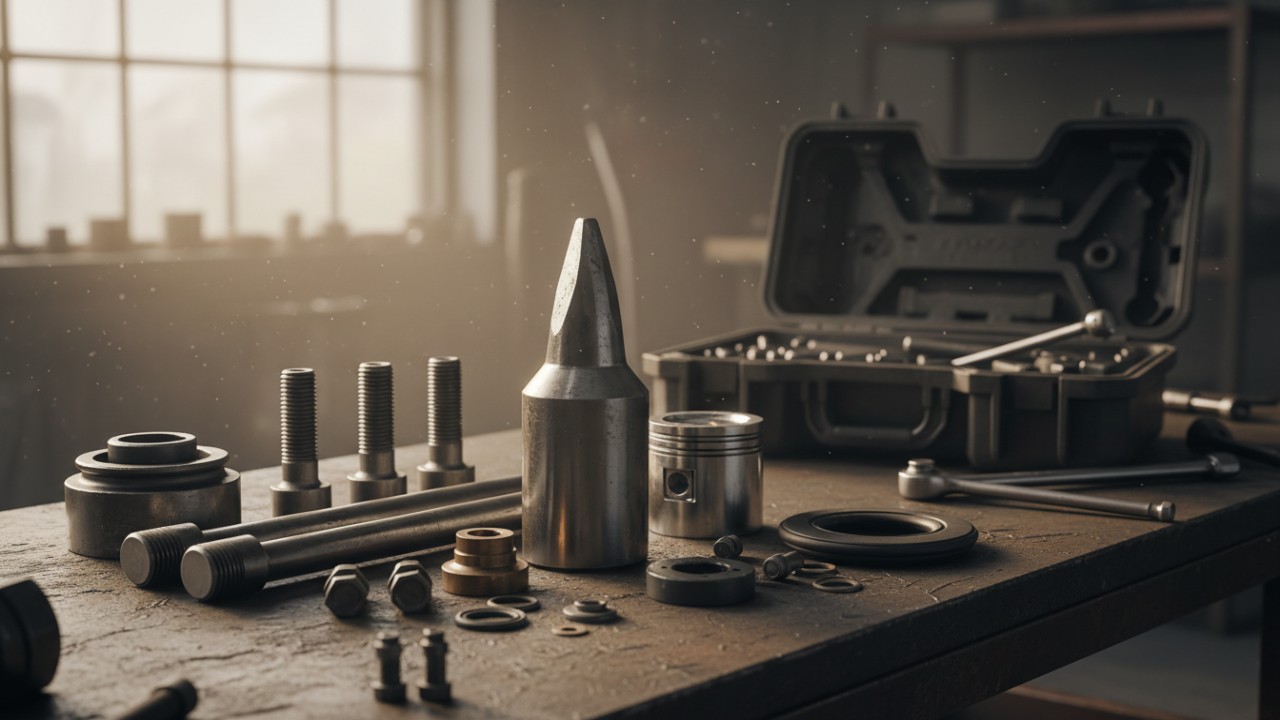
Hydraulic rock breaker hammer spare parts are the essential interchangeable components—such as chisels, pistons, seal kits, and bushings—that enable a hydraulic hammer to transfer energy effectively for demolition and excavation. High-quality spare parts are engineered with precise metallurgy to withstand extreme impact forces, ensuring the breaker operates at peak efficiency while protecting the carrier machine from hydraulic shock. Understanding these parts is the first step in a preventative maintenance strategy.
Why Quality Matters
Using inferior parts often leads to "false economy." While the initial price is lower, the frequency of hydraulic breaker seal kit replacement increases drastically due to poor material elasticity and heat resistance. Premium parts ensure:
- Impact Energy Transfer: Maximizing the force delivered to the rock.
- Carrier Protection: Preventing hydraulic spikes that damage the excavator's main pump.
- Operational Continuity: reducing unplanned downtime on the job site.
Anatomy of a High-Performance Breaker: Core Components
Core components of a hydraulic breaker include the front head, cylinder, piston, and back head, all held together by side bolts and functioning through a precise interaction of hydraulic fluid and nitrogen gas. Each part plays a distinct role in the energy cycle.
Critical Wear Parts vs. Internal Components
Understanding the difference between consumables and internals helps in planning your rock hammer chisel types and wear management.
- The Chisel (Tool): The primary contact point. We analyze Moil, Wedge, and Blunt types. Moil points are best for concrete and soft rock, while blunt tools are superior for igneous rock to prevent snapping.
- The Piston: The heart of the breaker. It converts hydraulic pressure into kinetic energy. Surface finish is critical here; even microscopic scoring can lead to seal failure.
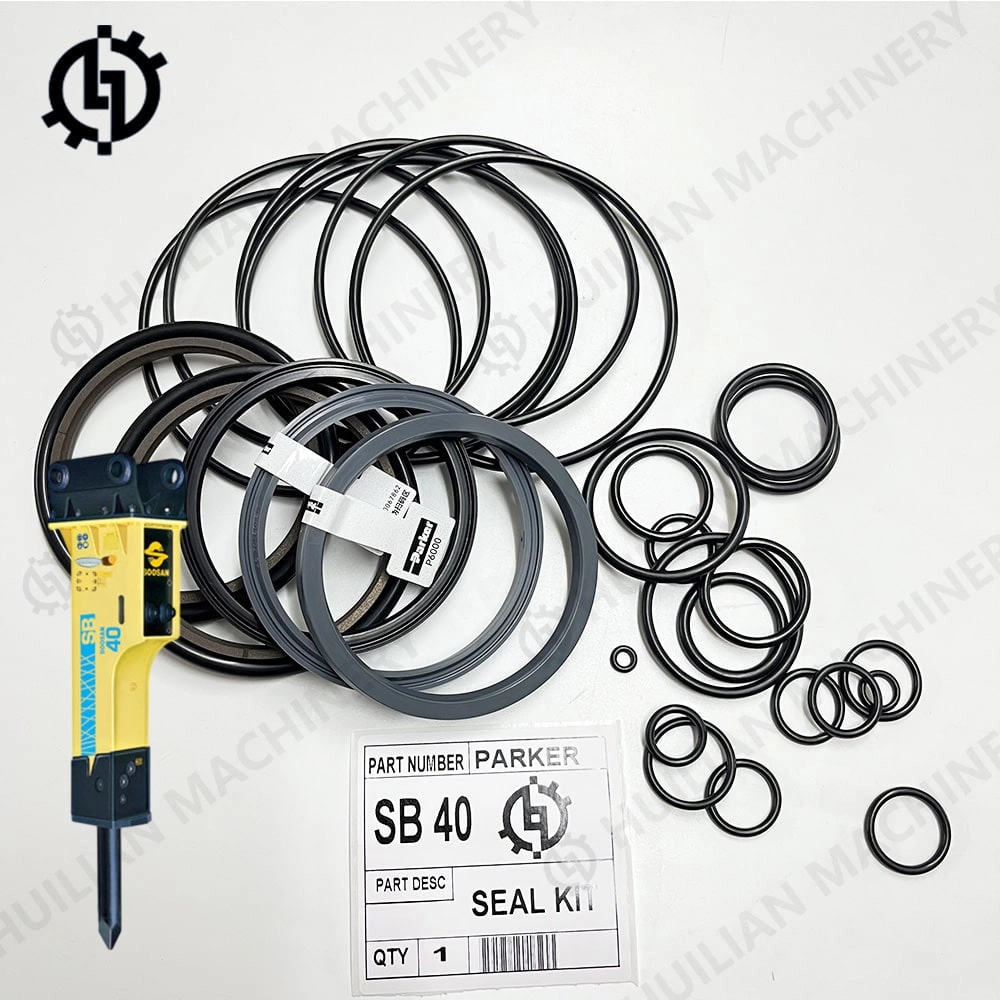
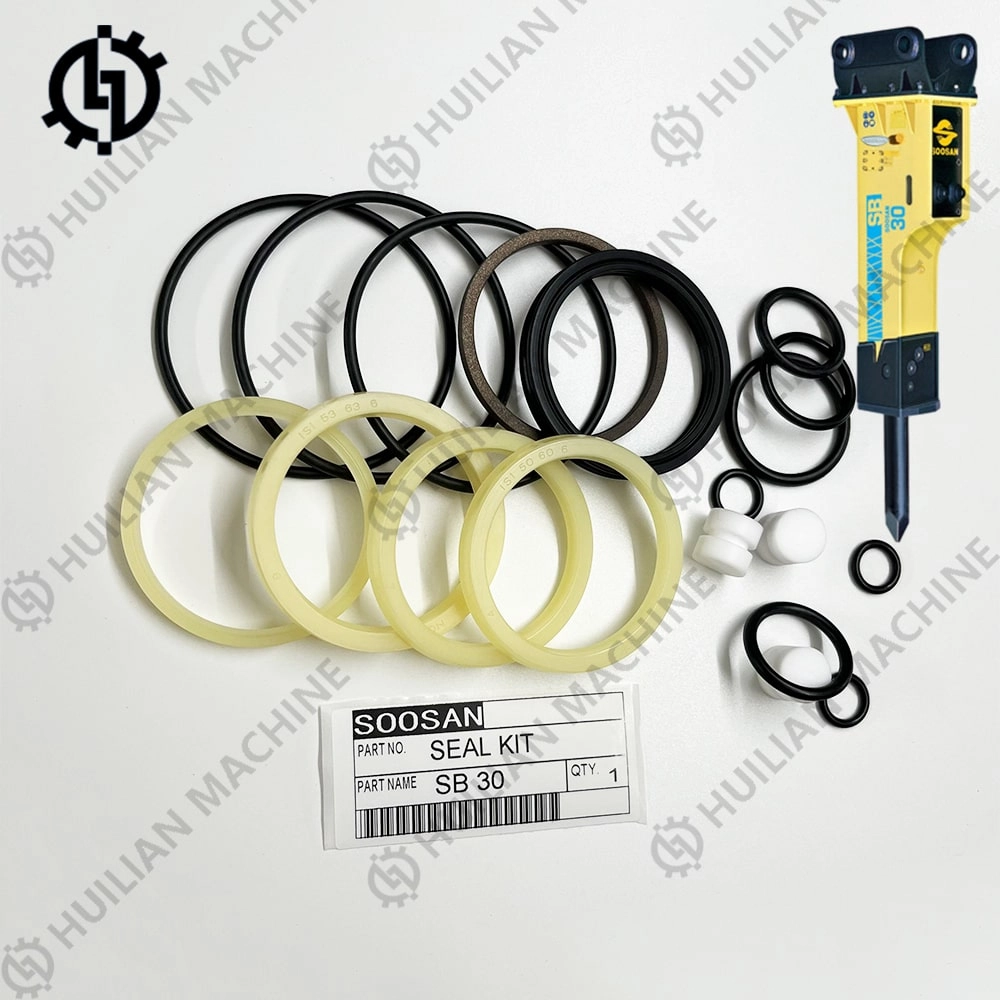
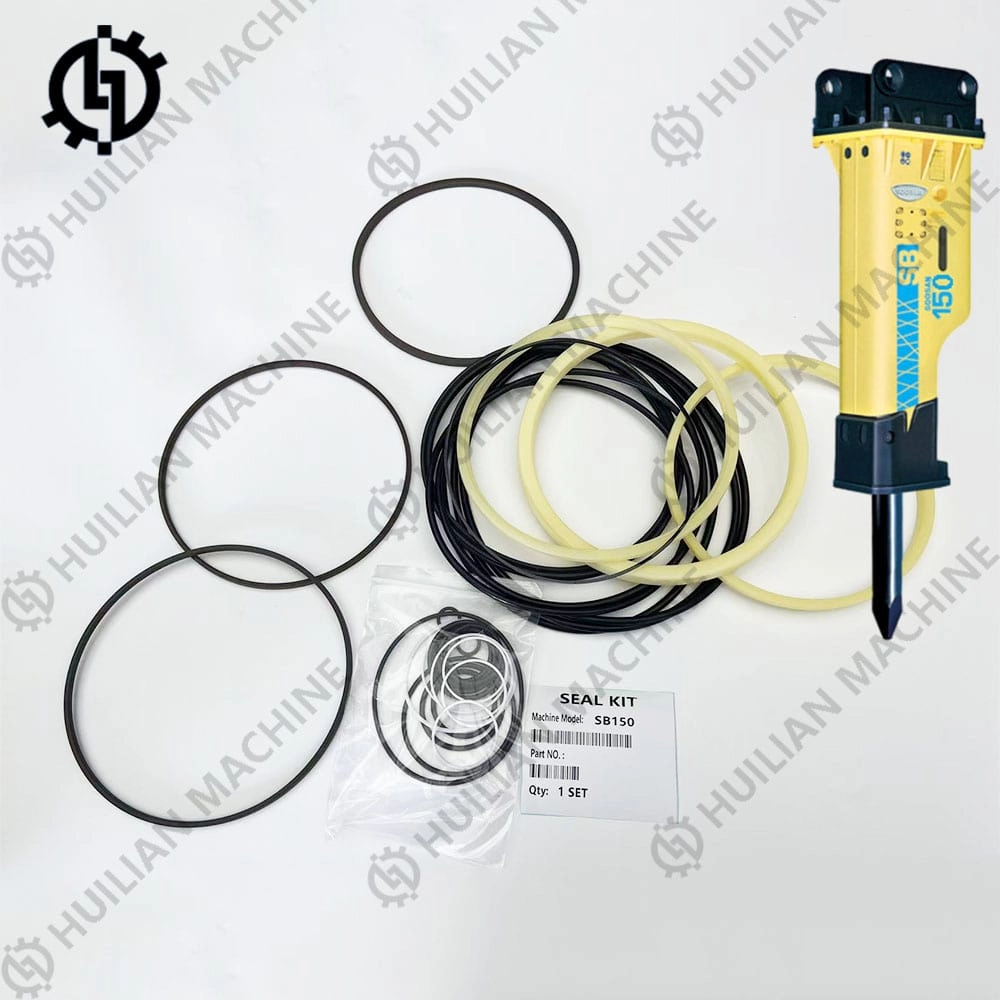
- Seal Kits: The unsung heroes. High-performance polyurethane seals prevent oil leaks and maintain nitrogen pressure.
- Through Bolts & Side Bolts: These hold the breaker assembly together. Proper tensioning prevents structural fatigue.
- Front Head & Bushings: These guide the chisel and absorb lateral thrust, protecting the main body from wear.
The Maintenance Matrix: Daily, Weekly, and Monthly Care
An excavator attachment maintenance schedule is a structured timeline of inspections and service tasks designed to detect wear early and prevent costly mechanical failures. Adhering to this schedule is the single most effective way to extend the life of your asset.
Recommended Service Intervals
According to the Association of Equipment Manufacturers (AEM), rigorous adherence to safety and maintenance manuals is critical for operator safety and equipment longevity.
- Daily Visual Inspection:
- Check for loose hoses and grease leaks around the tool bush.
- Verify chisel retaining pins are secure.
- Greasing Protocol: The golden rule is lubricating every 2 hours of operation to prevent steel-on-steel friction.
- Weekly Checks:
- Inspect through bolts for tightness.
- Check the accumulator diaphragm for proper nitrogen levels.
- Monthly / 500-Hour Service:
- Replace hydraulic filters.
- Inspect the piston and cylinder for scoring or micro-fractures.
Pro Tip: Fluid cleanliness is paramount. According to the International Organization for Standardization (ISO), maintaining hydraulic fluid cleanliness codes (such as ISO 4406) significantly reduces particle contamination that abrades internal seals.
The Quality Gap: Why Metallurgy and Material Science Matter
Metallurgy in breaker parts refers to the specific chemical composition and heat treatment processes (like carburizing and quenching) used to maximize the hardness and toughness of steel components. This science dictates whether a chisel snaps under pressure or withstands the blow.
The Huilian Difference
At Guangzhou Huilian Machines Co., Ltd., we understand that not all steel is created equal. Founded in 2005, Huilian has spent nearly two decades perfecting the manufacturing of excavator breaker parts.
- Heat Treatment Secrets: Our pistons and chisels undergo rigorous carburizing and quenching processes. This ensures a hard outer shell for wear resistance while maintaining a tough core to absorb shock without shattering.
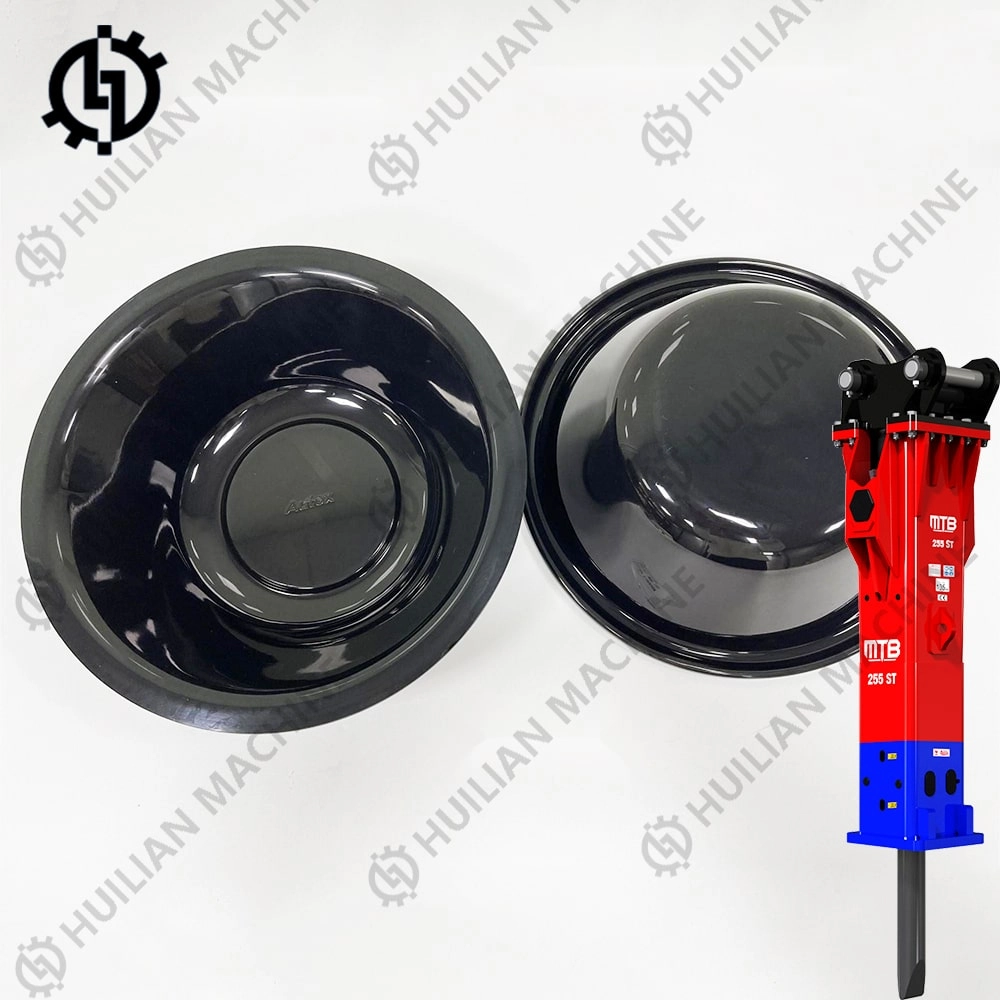
- Global Standards: Exporting to over 90 countries, we engineer our Parker seal kits, diaphragms, and valves to meet or exceed OEM specifications.
- Precision Manufacturing: Our team of R&D experts ensures that every through bolt and side bolt is tested for tensile strength, preventing the common issue of bolt fatigue in high-vibration environments.
Troubleshooting: Linking Symptoms to Spare Part Failures
Troubleshooting hydraulic breakers involves diagnosing performance issues—such as low impact power or excessive vibration—by correlating them with specific auditory or visual symptoms related to worn spare parts. Accurate diagnosis saves time and prevents unnecessary part swapping.
Common Symptoms and Fixes
- Low Impact Power:
- Cause: Often indicates nitrogen leakage or a worn seal kit.
- Fix: Check gas pressure and perform a hydraulic breaker seal kit replacement if oil is bypassing the piston.
- Excessive Vibration:
- Cause: Worn bushings allowing the chisel to wobble laterally.
- Fix: Replace the upper and lower bushings immediately to save the front head.
- Oil Overheating:
- Cause: Hydraulic restrictions or failing internal valves.
- Fix: Inspect the main relief valve and ensure carrier flow settings are correct.
- Leakage from the Front Head:
- Cause: Damaged wiper seals or scored piston.
- Fix: This requires immediate hydraulic hammer piston repair assessment. If the piston is deeply scored, it may need re-chroming or replacement.
Expert Tips to Maximize Investment and Minimize Downtime
Maximizing breaker investment requires a combination of correct operational techniques, such as the "10% Rule," and proper storage hygiene to preserve seal elasticity during downtime. Small habits yield large returns in longevity.
Best Practices for Operators
- The 10% Rule: Ensure your carrier's weight and hydraulic flow are within 10% of the breaker's optimal operating range. Oversizing causes damage; undersizing causes inefficiency.
- Torque Discipline: Breaker through-bolt torque specs are not suggestions. Under-torquing leads to bolt loosening and snapping, while over-torquing causes thread failure. Always use a calibrated torque wrench.
- Storage Hygiene: Store breakers vertically. This prevents the heavy piston from compressing the seals on one side for months, which causes distortion and leaks upon startup.
- Warm-Up Routine: In cold climates, run the breaker at half-throttle for 5-10 minutes. This warms the hydraulic fluid, preventing thermal shock to the seals.
Conclusion & Call to Action
Extending the life of your hydraulic breaker requires a proactive approach combining disciplined maintenance with the selection of premium spare parts. By understanding the anatomy of your equipment and investing in high-quality replacements for critical components like pistons and seals, you ensure operational continuity and higher ROI. Don't let inferior parts compromise your project's timeline or your machinery's health.
Contact Guangzhou Huilian Machines Co., Ltd today to discuss your specific needs and optimize your breaker's performance with our premium spare parts.


About
What is your shipping and delivery time?
We offer fast and reliable global shipping. Delivery times vary depending on location and order size, but we strive to process and ship orders as quickly as possible.
Are your parts compatible with all excavator brands?
Yes, our parts are designed to be compatible with major brands like Komatsu, Caterpillar, Hitachi, Hyundai, Doosan, JCB, Kobelco, Sany, and many more.
Do you offer OEM and aftermarket parts?
Yes, we manufacture high-quality OEM parts and supply aftermarket parts from top brands such as NOK, Parker, SKF, and Hallite to ensure optimal performance.
What types of excavator parts do you offer?
We provide a wide range of high-quality excavator parts, including hydraulic breakers, chisels, seal kits, diaphragms, pistons, wear bushes, retainer bars, through bolts, side bolts, valves, and liners.
How can I ensure I’m selecting the right part for my equipment?
Our expert team can assist you in finding the right part based on your machine model, specifications, and requirements. Contact us for personalized support.




Getting started is easy 
Contact with our experts to find the best excavator parts solutions for your needs. Discover how Huilian can enhance your equipment's performance and efficiency.


Get in touch
 About us
© 2025 HUILIAN MACHINE. All rights reserved