



Hydraulic Breaker vs. Static Ripper: Which Rock Hammer Wins for Heavy Demolition?
- Quick Summary: The Verdict in 30 Seconds
- What is the Difference Between a Hydraulic Breaker and a Static Ripper?
- The Hydraulic Breaker: Impact Power for Hard Rock
- The Static Ripper: Efficiency for Layered Demolition
- Head-to-Head Comparison: ROI and Performance
- Environmental & Safety: Noise Regulations
- Expert Tips for Fleet Managers (2026 Update)
- Conclusion
Quick Summary: The Verdict in 30 Seconds
The winner depends entirely on the geological compressive strength (MPa) of your job site.
- Best for Hard Rock (>100 MPa): The hydraulic breaker remains the undisputed king for high-compressive-strength material like granite and basalt.
- Best for Fractured Rock & Production: The Static Ripper offers 3-5x higher productivity in layered or medium-hardness terrain like limestone or shale.
- Cost Efficiency: Rippers generally have lower maintenance costs and fuel consumption compared to the hydraulic intensity of breakers.
- Urban Zones: Rippers are significantly quieter, making them the preferred choice for noise-sensitive city demolition.
What is the Difference Between a Hydraulic Breaker and a Static Ripper?
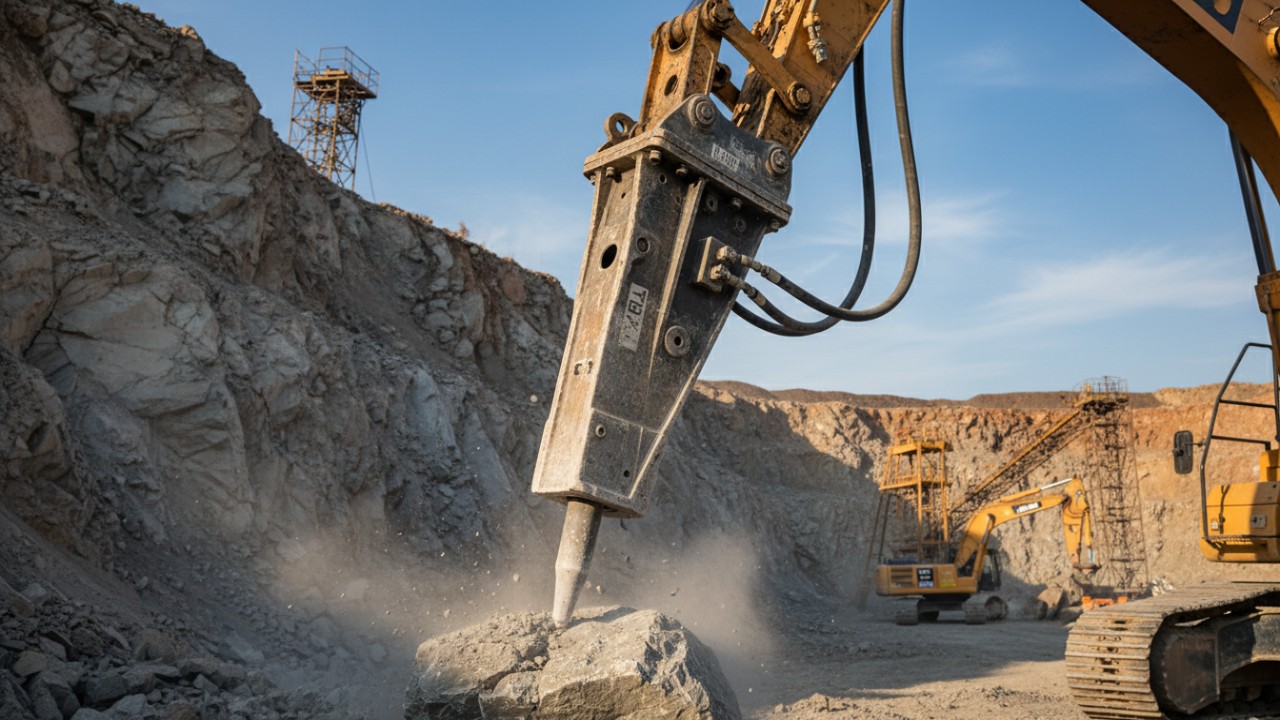
A hydraulic breaker fractures rock through high-frequency percussion, whereas a static ripper mechanically tears rock layers apart using leverage.
While both tools attach to excavators to penetrate the ground, their method of energy transfer differs fundamentally:
- Hydraulic Breaker (Impact): Uses an internal piston, powered by hydraulic oil and nitrogen gas, to deliver vertical impact energy (Joules) into a tool bit (chisel). It works like a giant jackhammer.
- Static Ripper (Leverage): Utilizes the excavator hydraulic breaker attachment points but relies on the machine's boom and crowd force (breakout force) to drag a high-strength shank through the ground. It works like a claw.
Understanding this distinction is critical because using a breaker on soft, layered rock is a waste of fuel, while using a ripper on solid granite will destroy your boom cylinders.
The Hydraulic Breaker: Impact Power for Hard Rock
Hydraulic breakers are essential for non-fractured, igneous rock and reinforced concrete where compressive strength exceeds 100 MPa.
When the ground refuses to yield, you need the brute force of percussion. Leading manufacturers like Huilian design these attachments with precision-machined pistons and nitrogen chambers to maximize the power-to-weight ratio.
Key Advantages:
- High Compressive Strength: Capable of shattering granite, basalt, and diorite that would snap a ripper tooth.
- Precision: Excellent for trenching in solid rock where exact width control is needed.
- Concrete Demolition: The only viable option for breaking heavily reinforced concrete foundations where rebar prevents ripping.
Maintenance Reality: Breakers are high-maintenance tools. They require:
- Greasing: Every 2 hours of operation to prevent bushing wear.
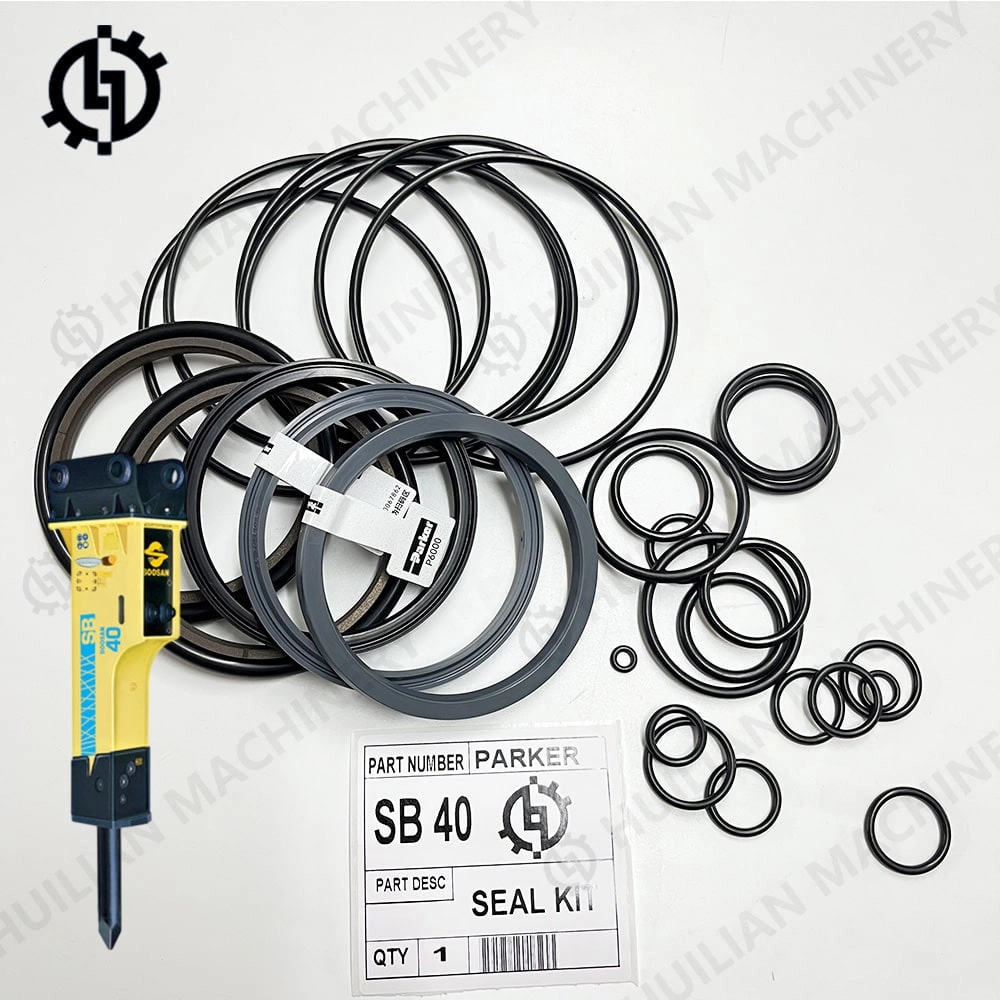
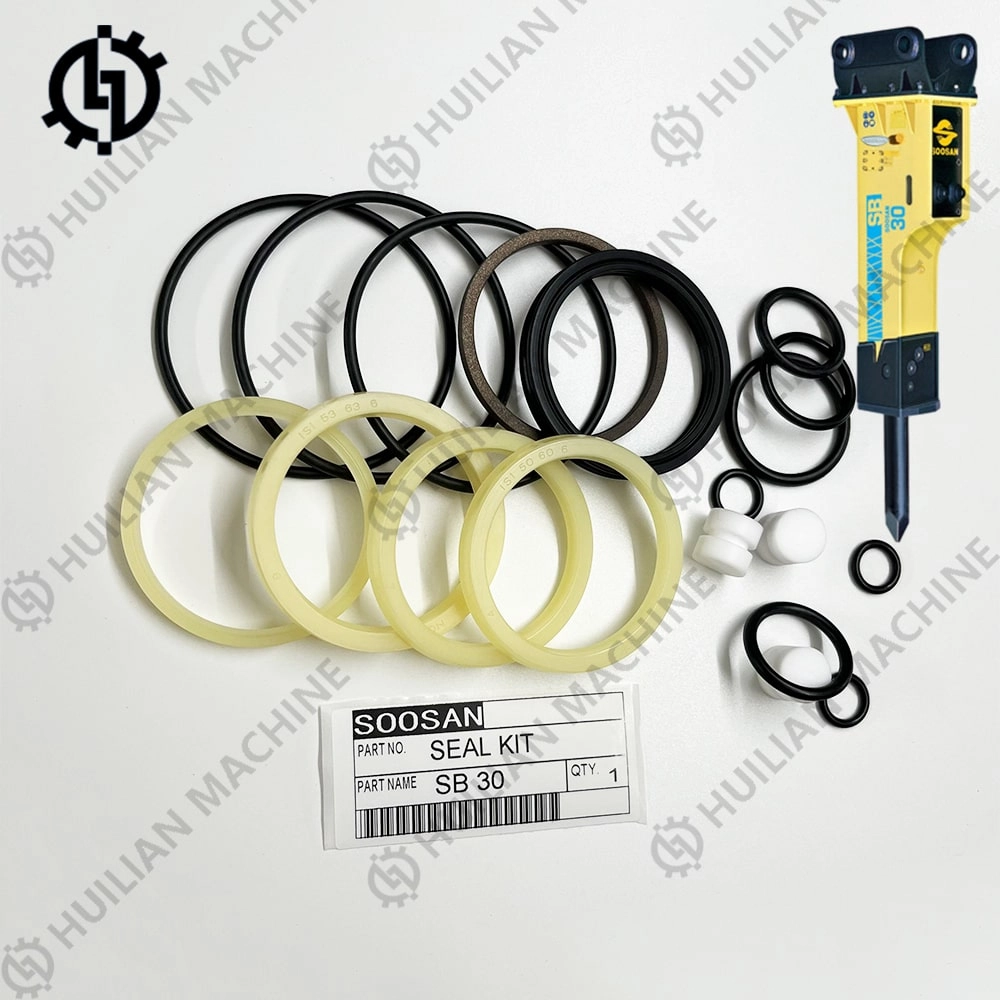
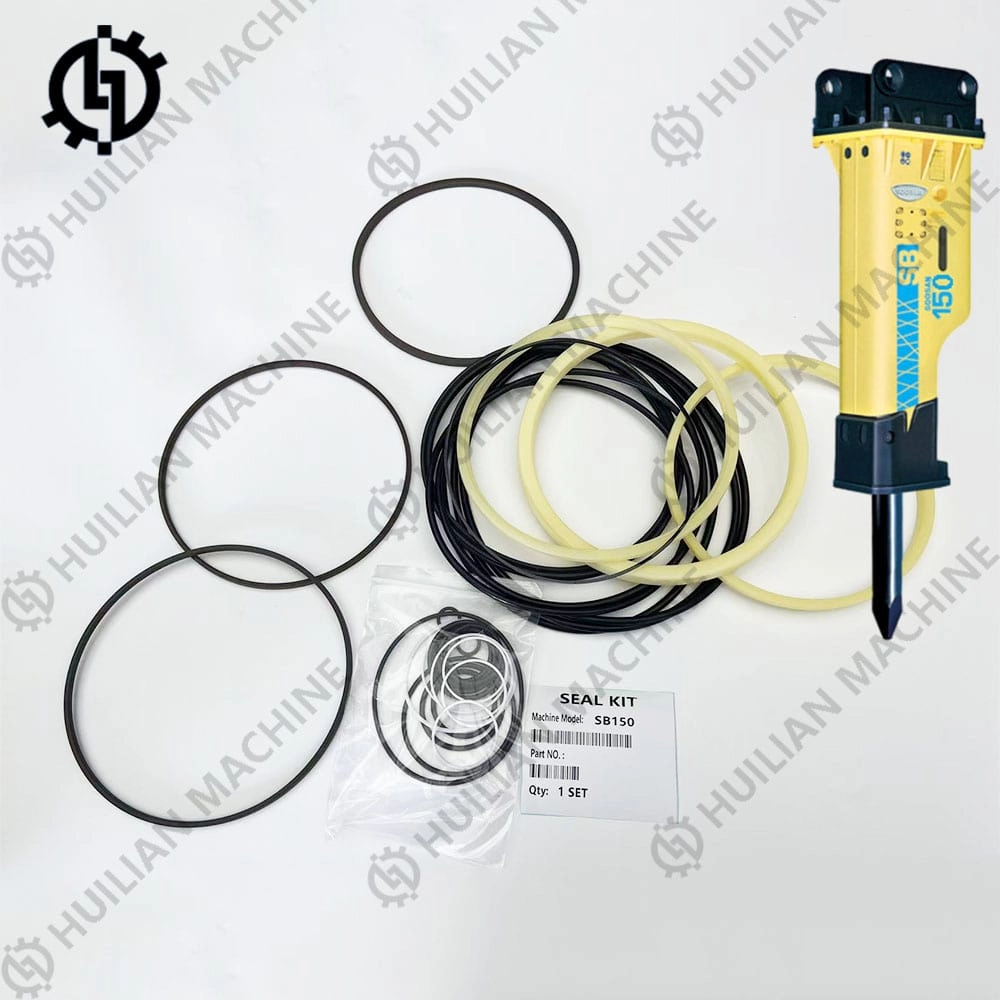
- Seal Kits: Periodic replacement of internal seals to maintain pressure.
- Nitrogen Checks: Ensuring the gas chamber is charged for maximum impact.
The Static Ripper: Efficiency for Layered Demolition
A static ripper is a low-maintenance, high-production tool designed to pry apart sedimentary rock, frozen ground, and fractured geological layers.
In the right conditions, static ripper tooth efficiency is unmatched. Because it operates in a continuous sweeping motion rather than a stop-and-start firing cycle, operators can clear material significantly faster.
Key Advantages:
- Speed: In limestone or shale (approx. 25-50 MPa), a ripper can be 400% more productive than a hammer.
- Low Maintenance: With no internal moving parts, hydraulics, or nitrogen seals, the only wear part is the replaceable tooth.
- Underwater Use: Unlike standard breakers, rippers work seamlessly underwater without expensive modification kits.
According to geological data from Rocscience, sedimentary rocks often have lower intact strength but high abrasiveness, making the ripping action more effective than crushing.
Head-to-Head Comparison: ROI and Performance
While breakers offer raw power, static rippers typically deliver a higher Return on Investment (ROI) through reduced fuel burn and lower maintenance costs.
When analyzing hydraulic hammer vs. ripper cost, fleet managers must look beyond the initial purchase price to the Total Cost of Ownership (TCO).
1. Fuel Consumption
- Breaker: Demands constant high-flow, high-pressure hydraulics, keeping the excavator engine under heavy load.
- Ripper: Uses standard boom movements, often allowing for lower engine RPM and up to 20% fuel savings per hour.
2. Wear and Tear
- Breaker: Generates intense vibrations that travel back into the excavator boom, pins, and bushings, potentially shortening the carrier's lifespan.
- Ripper: Smooth tearing action transmits less shock to the machine (provided the operator does not force it into hard rock).
3. Production Rates If you are paid by the ton, the ripper wins in soft rock. If you are paid by the hour for difficult technical demolition, the breaker is necessary.
Environmental & Safety: Noise Regulations
Static rippers are the superior choice for urban demolition projects due to strict noise pollution regulations and vibration limits.
Noise control is becoming a primary factor in demolition rock-breaking methods. Hydraulic breakers function by metal striking stone, creating sharp, impulsive noise spikes often exceeding 115 decibels.
According to the Occupational Safety and Health Administration (OSHA), permissible noise exposure is limited to 85 dBA for an 8-hour shift. Breakers often require operators and nearby workers to have limited exposure times or advanced hearing protection, whereas rippers operate quietly, blending in with standard engine noise.
Urban Benefits of Rippers:
- Reduced Noise Complaints: Ideal for hospitals, schools, or residential zones.
- Low Vibration: Protects adjacent structures from micro-fractures caused by heavy hammering.
Expert Tips for Fleet Managers (2026 Update)
Modern fleets in 2026 are moving toward hybrid coupler systems that allow operators to switch between breakers and rippers in seconds.
To stay competitive with heavy equipment attachments in 2026, versatility is key. Relying on a single tool limits your ability to bid on diverse projects.
Operational Best Practices:
- The 15-Second Rule: If your hydraulic breaker doesn't penetrate the material within 15 seconds, stop. Reposition the tool to avoid overheating the hydraulic fluid and damaging the piston seals.
- Match the Carrier: At Huilian, we see many failures caused by undersized breakers on oversized excavators. Always match the flow (LPM) and pressure (bar) requirements exactly.
- Hybrid Strategy: Use a static ripper to strip the overburden and fractured top layers, then switch to the hydraulic breaker only for the hard core. This saves fuel and extends breaker life.
Conclusion
Choosing between a hydraulic breaker and a static ripper is not about which tool is "better," but which tool matches your geology. For solid granite and heavy concrete, the hydraulic breaker is indispensable. For layered sedimentary rock and high-production bulk earthmoving, the static ripper offers unbeatable efficiency and lower costs.
With over 18 years of experience, Guangzhou Huilian Machines Co., Ltd. manufactures high-performance breaker parts and seal kits designed to keep your equipment running in the toughest conditions.
Contact Huilian today to discuss your specific needs and optimize your fleet's performance.


About
Are your parts compatible with all excavator brands?
Yes, our parts are designed to be compatible with major brands like Komatsu, Caterpillar, Hitachi, Hyundai, Doosan, JCB, Kobelco, Sany, and many more.
What is your shipping and delivery time?
We offer fast and reliable global shipping. Delivery times vary depending on location and order size, but we strive to process and ship orders as quickly as possible.
Do you offer OEM and aftermarket parts?
Yes, we manufacture high-quality OEM parts and supply aftermarket parts from top brands such as NOK, Parker, SKF, and Hallite to ensure optimal performance.
How can I ensure I’m selecting the right part for my equipment?
Our expert team can assist you in finding the right part based on your machine model, specifications, and requirements. Contact us for personalized support.
What types of excavator parts do you offer?
We provide a wide range of high-quality excavator parts, including hydraulic breakers, chisels, seal kits, diaphragms, pistons, wear bushes, retainer bars, through bolts, side bolts, valves, and liners.




Getting started is easy 
Contact with our experts to find the best excavator parts solutions for your needs. Discover how Huilian can enhance your equipment's performance and efficiency.


Get in touch
 About us
© 2025 HUILIAN MACHINE. All rights reserved