


OEM vs. Aftermarket Hydraulic Seal Kits: The Truth About Quality, Cost, and Longevity
- Quick Summary: The Verdict on Hydraulic Seal Kits
- Comparison at a Glance
- What is the Main Difference Between OEM and Aftermarket Hydraulic Seal Kits?
- The Branding vs. Manufacturing Reality
- The Cost Equation: Upfront Savings vs. Total Cost of Ownership
- Calculating Heavy Equipment Maintenance ROI
- Material Science & Engineering: Are OEM Seals Superior?
- Hydraulic Seal Material Compatibility
- Supply Chain Reality: Availability and Lead Times in 2026
- The Cost of Waiting
- Common Mistakes When Choosing Aftermarket Seals (Expert Tips)
- How to Avoid Failure
- Industry-Leading Solution: High-Performance Engineered Kits
- Why Choose Huilian?
- Conclusion & Call to Action
- Frequently Asked Questions (FAQ)
- Will using aftermarket hydraulic seal kits void my equipment warranty?
- How do I identify the correct seal kit without an OEM part number?
- Are aftermarket seals made of the same materials as OEM?
- How often should hydraulic cylinders be resealed?
Quick Summary: The Verdict on Hydraulic Seal Kits
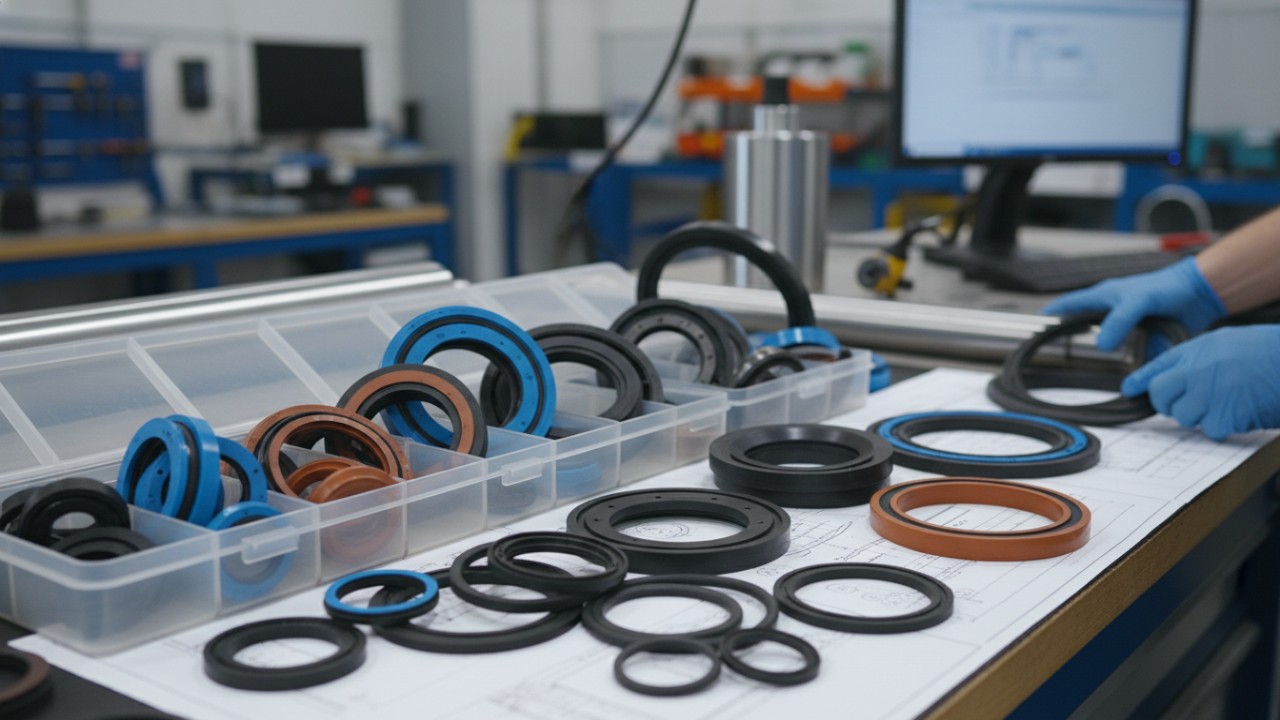
The choice between OEM and aftermarket seal kits comes down to balancing immediate cost savings with long-term reliability. While OEM parts guarantee a perfect fit and brand assurance, high-quality aftermarket alternatives now offer identical material specifications at a fraction of the price. Modern "Tier 1" aftermarket manufacturers often use the same raw material suppliers as the major equipment brands.
Comparison at a Glance
| Feature | OEM (Original Equipment Manufacturer) | Aftermarket (Tier 1 Quality) |
|---|---|---|
| Cost | High (Brand Premium) | Moderate to Low (30-60% Savings) |
| Fit Guarantee | 100% Guaranteed | High (Requires Precision Measurement) |
| Availability | Variable (Long Lead Times common) | High (Often In-Stock) |
| Material | Proprietary Standard | Matches or Exceeds OEM Specs |
What is the Main Difference Between OEM and Aftermarket Hydraulic Seal Kits?
The primary difference is the distribution channel and branding, not necessarily the manufacturing origin. OEM seals are packaged and sold by the machine manufacturer (e.g., Cat, Komatsu), while aftermarket kits are produced by independent sealing companies. Frequently, the same third-party factory manufactures seals for both the OEM brand and the aftermarket supplier.
The Branding vs. Manufacturing Reality
Most heavy equipment manufacturers do not own rubber plantations or chemical plants. They contract specialized sealing companies to produce their parts. This leads to a market reality where:
- OEM Kits: You pay for the logo on the box, the dealer network infrastructure, and the R&D recovery costs.
- Aftermarket Kits: You pay primarily for the materials and manufacturing, bypassing the multi-tiered markup.
However, the aftermarket spectrum is vast. It ranges from high-precision engineering firms like Guangzhou Huilian Machines Co., Ltd. (which adheres to strict ISO standards) to low-quality "will-fit" generic parts that fail prematurely. Distinguishing between these two is the key to successful OEM replacement seal procurement.
The Cost Equation: Upfront Savings vs. Total Cost of Ownership
A seal kit's true cost includes the purchase price plus the potential cost of downtime caused by premature failure. Smart procurement managers calculate the seal kit cost of ownership by amortizing the part's price over its operational hours. While an aftermarket kit might save $100 upfront, a single hour of unscheduled downtime can cost $500+.
Calculating Heavy Equipment Maintenance ROI
To determine if an aftermarket switch is viable, apply this ROI framework:
- Identify the Asset Lifecycle: For new machines under factory warranty, OEM parts may be safer to avoid disputes. For machines out of warranty, high-quality aftermarket parts maximize heavy equipment maintenance ROI.
- Assess Labor Costs: If the labor to strip a cylinder takes 10 hours, risking a cheap $20 seal is illogical. However, using a verified Tier 1 aftermarket seal (costing $50 vs. $150 OEM) maintains reliability while reducing expenses.
- Frequency of Replacement: In high-abrasion environments where seals are viewed as consumables, the lower cost of aftermarket kits allows for more frequent preventative changes without blowing the budget.
Material Science & Engineering: Are OEM Seals Superior?
OEM seals are not inherently superior in material composition; they simply adhere to a strictly defined material standard. The performance of a seal is dictated by its material chemistry—specifically the quality of polyurethane (TPU), PTFE, and NBR rubber—rather than the brand name.
Hydraulic Seal Material Compatibility
Understanding hydraulic seal material compatibility is crucial for longevity. Reputable aftermarket manufacturers follow international standards such as ASTM D2000 to classify their rubber materials. This ensures that a nitrile O-ring from an aftermarket supplier has the same oil resistance and temperature tolerance as one in an OEM box.
- Polyurethane (TPU): Used for rod and piston seals. High-quality aftermarket kits use strictly virgin TPU for maximum hydrolysis resistance.
- PTFE (Teflon): Essential for low friction. Bronze-filled PTFE is common in heavy-duty applications.
- Viton (FKM): Required for high-temperature applications or biodegradable fluids.
According to the International Organization for Standardization (ISO), specifically ISO 5597 and ISO 7425, the dimensions and tolerances for hydraulic seals are standardized globally. This allows capable aftermarket engineers to replicate seal profiles with micrometer-level precision.
Supply Chain Reality: Availability and Lead Times in 2026
In the current logistics climate, aftermarket suppliers often outperform OEMs in speed and availability. While large OEMs struggle with global backorders and bureaucratic distribution networks, agile aftermarket suppliers can pivot quickly to source materials and ship orders.
The Cost of Waiting
For fleet managers, the most expensive part is the one that isn't there. Aftermarket hydraulic cylinder repair providers often stock comprehensive kits for older machine models that OEMs have discontinued or placed on "obsolete" status.
- Strategic Stocking: Many fleets now keep a "safety stock" of aftermarket kits for their critical assets.
- Local Inventory: Independent suppliers often maintain deeper local inventories compared to dealer networks that rely on central warehouses.
Common Mistakes When Choosing Aftermarket Seals (Expert Tips)
The most common mistake is assuming all aftermarket parts are "generic" and purchasing based solely on the lowest price. This leads to the "Generic Trap," where dimensional inaccuracies cause fluid bypass and cylinder drift.
How to Avoid Failure
- Mistake #1: Ignoring Profiles. A U-cup seal comes in various lip designs (loaded vs. unloaded). Ensure your supplier understands these nuances.
- Mistake #2: Wrong Material for Fluid. Using standard NBR seals in a system running phosphate ester fluids will result in rapid seal swelling and failure.
- Mistake #3: Not Measuring. Never rely just on a part number for non-OEM kits. Measure the bore, rod, and groove width.
Expert Tip: Always verify if your supplier offers a warranty. A supplier confident in their product, like Huilian, will stand behind their seal kits.
Industry-Leading Solution: High-Performance Engineered Kits
Guangzhou Huilian Machines Co., Ltd. (Huilian) bridges the gap between expensive OEM parts and risky generics by offering precision-engineered seal kits. Founded in 2005, Huilian has established itself as a professional supplier of excavator parts, specializing in hydraulic breaker hammers and seal kits.
Why Choose Huilian?
We don't just sell parts; we understand the engineering behind them. Our team includes R&D experts and quality control professionals who ensure every Parker seal kit and excavator seal we export meets rigorous standards.
- Case Example: A mining client recently switched to Huilian seal kits for their aging fleet of excavators. By moving away from OEM pricing, they reduced their annual maintenance spend by 40% without a single increase in failure rates over 2,000 operational hours.
- Global Reach: We export to over 90 countries, proving that our quality holds up in the most diverse and demanding environments on Earth.
Conclusion & Call to Action
Choosing the right hydraulic seal kit is a strategic decision that impacts your equipment's uptime and your company's bottom line. By selecting high-quality aftermarket solutions that adhere to global standards, you can achieve OEM-level performance without the premium price tag.
Contact Guangzhou Huilian Machines Co., Ltd today at service@huilianmachine.com or +86 188 1917 0788 to discuss your specific needs and request a quote.
Frequently Asked Questions (FAQ)
Will using aftermarket hydraulic seal kits void my equipment warranty?
In the United States, the Federal Trade Commission (FTC) enforces the Magnuson-Moss Warranty Act, which generally prevents manufacturers from voiding a warranty simply because an aftermarket part was used. They must prove the aftermarket part caused the failure.
How do I identify the correct seal kit without an OEM part number?
You can identify a kit by measuring the rod diameter, bore diameter, and stroke of the cylinder. Additionally, noting the profile of the wiper and rod seals (e.g., straight lip vs. beveled) helps suppliers cross-reference the correct design.
Are aftermarket seals made of the same materials as OEM?
Yes, reputable aftermarket manufacturers use the same raw materials, such as high-grade Polyurethane (TPU) and NBR. However, quality varies by supplier, so it is critical to choose a vendor like Huilian that verifies material standards.
How often should hydraulic cylinders be resealed?
Cylinders should typically be resealed every 2,000 to 3,000 hours as part of preventative maintenance, or immediately if signs of external leakage, drifting (cylinder creeping), or rod scoring appear.


About
What is your shipping and delivery time?
We offer fast and reliable global shipping. Delivery times vary depending on location and order size, but we strive to process and ship orders as quickly as possible.
Are your parts compatible with all excavator brands?
Yes, our parts are designed to be compatible with major brands like Komatsu, Caterpillar, Hitachi, Hyundai, Doosan, JCB, Kobelco, Sany, and many more.
How can I ensure I’m selecting the right part for my equipment?
Our expert team can assist you in finding the right part based on your machine model, specifications, and requirements. Contact us for personalized support.
Do you offer OEM and aftermarket parts?
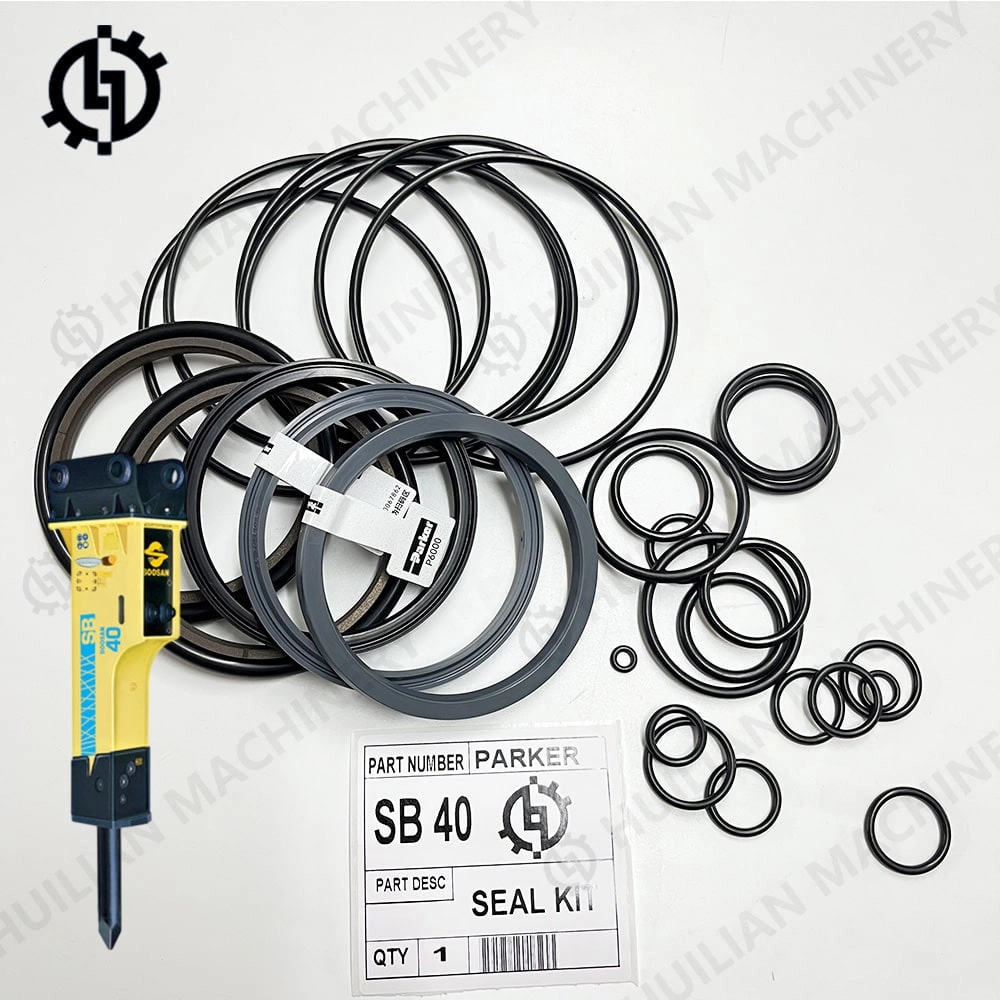
Yes, we manufacture high-quality OEM parts and supply aftermarket parts from top brands such as NOK, Parker, SKF, and Hallite to ensure optimal performance.
What types of excavator parts do you offer?
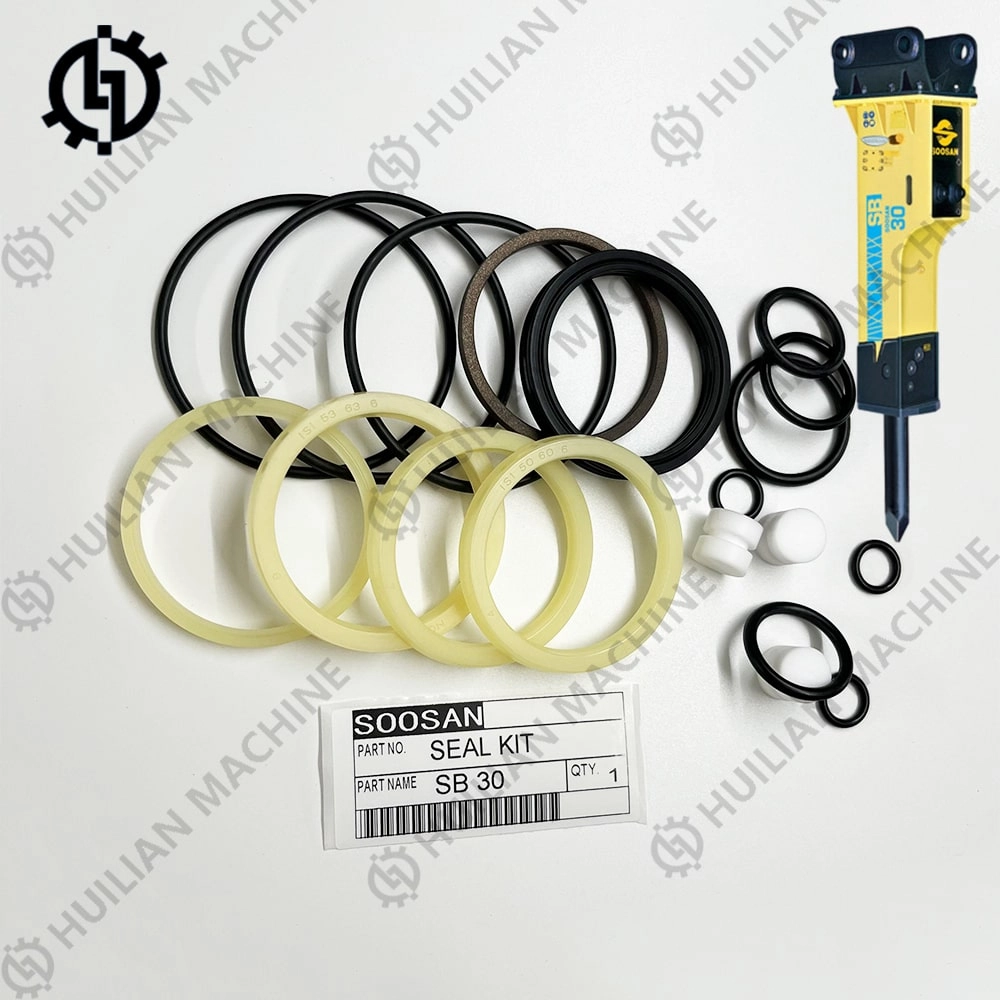
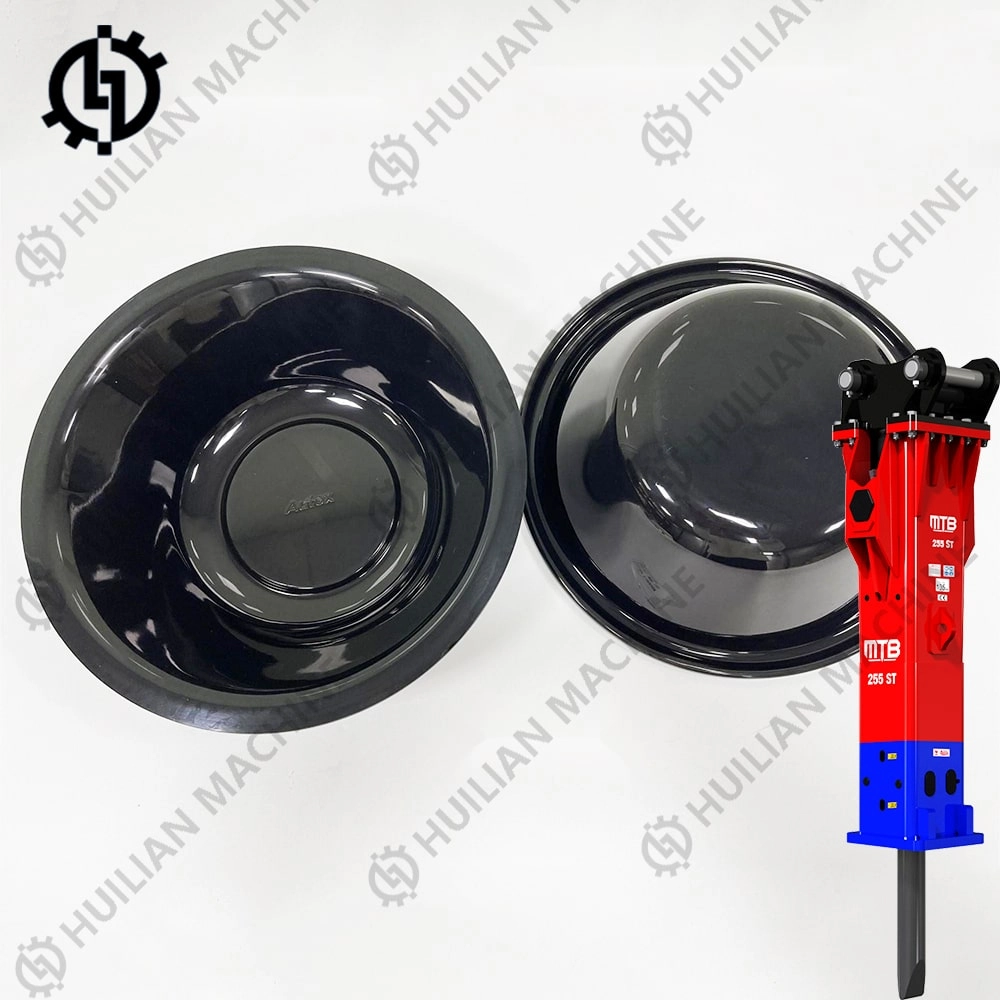
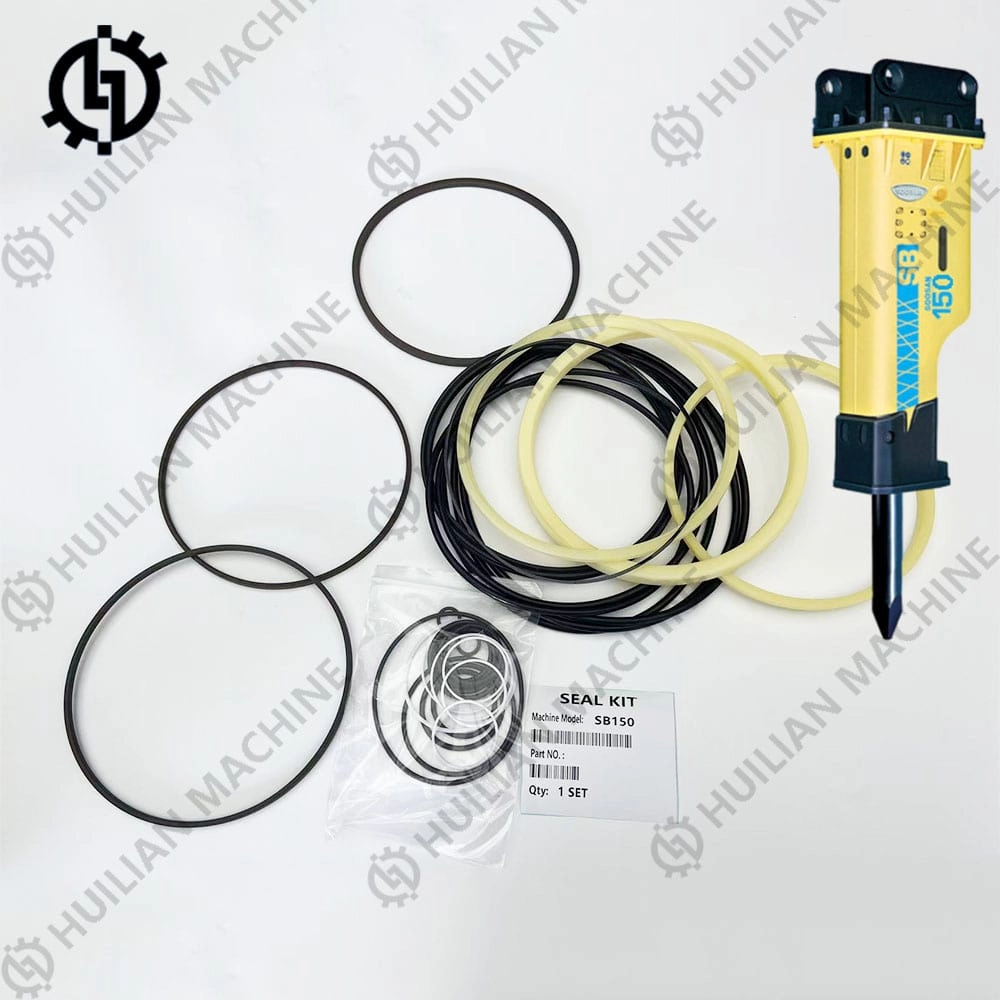
We provide a wide range of high-quality excavator parts, including hydraulic breakers, chisels, seal kits, diaphragms, pistons, wear bushes, retainer bars, through bolts, side bolts, valves, and liners.




Getting started is easy 
Contact with our experts to find the best excavator parts solutions for your needs. Discover how Huilian can enhance your equipment's performance and efficiency.


Get in touch
 About us
© 2025 HUILIAN MACHINE. All rights reserved