



Hydraulic vs Pneumatic Rock Breaker: Which Is Best?
- How impact tools work: fundamentals of breakers
- Hydraulic principles and why they matter
- Pneumatic principles and typical configurations
- Energy transfer, frequency and material response
- Performance comparison: hydraulic vs pneumatic rock breakers
- Power, productivity and measurable metrics
- Durability, maintenance and component life
- Operational costs and energy efficiency
- Selecting the right breaker for your fleet and projects
- Match breaker to carrier size and hydraulic specifications
- Site environment, noise and regulatory constraints
- Use-case scenarios and recommended choices
- Practical considerations when buying and maintaining breakers
- Spare parts, consumables and lifecycle planning
- Training, installation and vendor support
- Data-driven procurement and monitoring
- Huilian Machine: OEM capabilities and why I recommend hydraulic solutions for many applications
- About Huilian Machine and product range
- Quality control, team expertise and global reach
- Competitive advantages, technical strengths and partnership opportunities
- FAQ
- 1. Is a hydraulic rock breaker always better than a pneumatic one?
- 2. What does china hydraulic rock breaker hammer mean for quality?
- 3. How do I match a breaker to my excavator?
- 4. What maintenance tasks are critical to extend breaker life?
- 5. How do operational costs compare over time?
- 6. Can I retrofit a pneumatic breaker mount to a hydraulic carrier?
- Contact and next steps
I often get asked by fleet managers and site supervisors whether a hydraulic or pneumatic rock breaker is the better investment. From my years working with excavator part supply chains and deploying breaker systems across markets, including sourcing china hydraulic rock breaker hammer components, the answer depends on intended usage, carrier capabilities, operating environment and lifecycle economics. In this article I walk through the mechanics, performance metrics, maintenance realities and regulatory considerations that should inform your choice, and offer pragmatic recommendations supported by industry references.
How impact tools work: fundamentals of breakers
Hydraulic principles and why they matter
Hydraulic rock breakers convert hydraulic pressure and flow from an excavator or dedicated hydraulic power unit into percussive energy via a piston striking a tool (chisel). The system leverages Pascal's principle: a small displacement of fluid at high pressure generates a powerful linear force. This makes hydraulic systems very efficient at delivering high impact energy relative to their size. For background on hydraulic systems and cylinders, see Hydraulic cylinder — Wikipedia.
Pneumatic principles and typical configurations
Pneumatic breakers (air hammers) use compressed air to drive a piston and create impact. They are common where electric power is limited and compressors are available (e.g., tunneling, some demolition). Pneumatic tools tend to have lower impact energy per blow than hydraulic equivalents of the same physical size, but they can be beneficial where simplicity, lower initial cost and certain safety requirements (intrinsic safety in explosive atmospheres) matter. More on pneumatic tools: Pneumatic tool — Wikipedia.
Energy transfer, frequency and material response
Effectiveness against rock or concrete depends on delivered impact energy (Joules), blow frequency (blows per minute), and tool geometry. Higher energy at lower frequency often fractures large, massive rock better; higher frequency with lower energy chips surface materials faster. Understanding the interaction between tool energy and material mechanics helps select the right breaker size for productivity and reduced consumable wear.
Performance comparison: hydraulic vs pneumatic rock breakers
Power, productivity and measurable metrics
When evaluating breakers I prioritize these measurable metrics: impact energy (J), blow rate (bpm), hydraulic flow (L/min) and operating pressure (bar or MPa). Typical industry ranges (approximate, as published by multiple OEM datasheets) are shown in the table below. For manufacturer-specific specs consult OEM datasheets.
| Parameter | Hydraulic Breaker | Pneumatic Breaker | Typical Source / Note |
|---|---|---|---|
| Impact energy | 1,000 – 10,000+ J (varies with model) | 200 – 2,000 J | Manufacturer catalogs; hydraulic systems scale with carrier flow |
| Blows per minute (bpm) | 200 – 900 bpm | 400 – 1,200 bpm | Hydraulic: lower bpm at higher energy; Pneumatic: higher bpm, lower energy |
| Carrier interface | Requires hydraulic flow & pressure from carrier | Requires compressed air source (compressor) or pneumatic line | Carrier compatibility is crucial |
| Weight and size | Generally heavier per energy output, integrated with excavator hydraulics | Lighter units but can require heavy compressors | System weight must match carrier capacity |
| Typical use cases | Quarrying, heavy demolition, rock excavation | Tunneling, trenches, lighter demolition, where compressed air exists | Operational context drives choice |
Sources for fundamental hydraulic and pneumatic principles: Hydraulic cylinder, Pneumatic tool. For specific performance numbers consult OEM technical bulletins (e.g., major breaker manufacturers) and carrier documentation.
Durability, maintenance and component life
Hydraulic breakers, when matched correctly to carrier flow and pressure, typically offer longer life for heavy-duty rock work because the hydraulic circuit can be optimized (flow control, accumulators, shock damping) to reduce peak stress on components. Maintenance focuses on seals, tool bushings (WearBush), pistons and valves. Pneumatic breakers shift maintenance toward compressor upkeep, air line moisture control and frequent piston/tool wear replacement.
Operational costs and energy efficiency
From a total cost of ownership perspective, hydraulic breakers often win on fuel-to-impact efficiency when attached to modern excavators because they use the carrier’s hydraulic power directly. Pneumatic systems incur compressor fuel or electricity costs; in some confined environments this leads to higher lifecycle energy costs. For procurement decisions I recommend calculating fuel/kWh costs over expected operating hours and factoring in downtime and consumables.
Selecting the right breaker for your fleet and projects
Match breaker to carrier size and hydraulic specifications
One common error is choosing a breaker that does not match carrier hydraulic flow/pressure. Oversized breakers starve for flow and underperform; undersized breakers waste carrier capacity. Always consult carrier hydraulic charts and breaker recommended flow ranges. If you are sourcing a china hydraulic rock breaker hammer, verify that its recommended flow, pressure and mounting bracket are compatible with your excavator model and hydraulic power unit.
Site environment, noise and regulatory constraints
Noise and vibration limits can be decisive. Hydraulic breakers, particularly with modern shock-absorbing mounts, can produce less airborne noise at equivalent productivity than older pneumatic setups. For projects near urban areas, check local noise ordinances and choose low-noise packages or vibration-damping couplings. Regulatory and occupational safety standards (ISO quality frameworks and local noise regulations) should guide selection; see general ISO quality management info: ISO 9001 — ISO.
Use-case scenarios and recommended choices
Here are practical scenarios from my field experience:
- Large-scale quarrying or heavy rock excavation: choose a hydraulic breaker sized to your carrier’s high flow. The efficiency and impact energy matter most.
- Confined space tunneling where compressed air is already installed and intrinsic safety is a concern: pneumatic breakers may be preferred.
- Mixed demolition with frequent repositioning and smaller carriers: consider lighter hydraulic breakers or compact pneumatic units if compressors are available.
Practical considerations when buying and maintaining breakers
Spare parts, consumables and lifecycle planning
Breakers consume chisels, retaining pins, bushings and seals. Purchasing from suppliers that offer ready spare parts (pistons, WearBush, seal kits, through bolts) and clear maintenance schedules reduces downtime. In the China supply ecosystem, products labeled china hydraulic rock breaker hammer are often cost-competitive, but verify parts interchangeability and material specs. Insist on hardness reports for tools and material certificates for critical components.
Training, installation and vendor support
Proper installation (mounting brackets, nitrogen charge where applicable, hydraulic hose routing) and operator training markedly increase service life. OEMs or authorized distributors should provide installation guidance and service training. Verify warranty terms and spare parts lead times before purchase.
Data-driven procurement and monitoring
Modern excavator fleets benefit from telematics and condition monitoring that track hydraulic flow, impact counts, and operating cycles. Use this data to plan preventive maintenance and to compare predicted vs actual productivity for a chosen breaker model. When comparing suppliers, ask for field case studies or usage data demonstrating sustained performance under comparable conditions.
Huilian Machine: OEM capabilities and why I recommend hydraulic solutions for many applications
About Huilian Machine and product range
Founded in 2005, Huilian Machine is a professional OEM supplier of excavator parts. We are leading excavator breaker parts manufacturers in China and offer a wide range of products, including hydraulic breaker hammers, chisels, seals and seal kits, diaphragms, pistons, WearBush, rompin/retainer bars, through bolts, side bolts, valves and liners. Our product breadth means customers sourcing a china hydraulic rock breaker hammer can obtain matched consumables and rebuild kits that maintain consistent performance.
Quality control, team expertise and global reach
Huilian's team comprises experienced and skilled professionals, including technicians, R&D experts, designers, quality control professionals, salespeople and after-sales service teams. Our products are exported to over 90 countries and regions and are highly regarded by customers worldwide for their quality and variety. The company pursues quality processes aligned with international standards; prospective buyers should request material certificates, hardness test reports and sample inspection protocols prior to large orders.
Competitive advantages, technical strengths and partnership opportunities
Guangzhou Huilian Machinery Co., Ltd. is committed to becoming a global leader in the supply of excavator parts and components and is seeking global distributor partners to promote the sustainable development of the excavator parts industry. Key competitive points I look for—and that Huilian communicates—are integrated supply (breakers plus spare parts), experienced R&D for lifetime improvements, and proactive after-sales support. If you want to evaluate breaker options or require replacement parts for a china hydraulic rock breaker hammer, contact Huilian at huilianmachine.com or email service@huilianmachine.com. Phone: +86 188 1917 0788.
FAQ
1. Is a hydraulic rock breaker always better than a pneumatic one?
No. Hydraulic breakers generally deliver higher impact energy and better efficiency for heavy rock excavation, but pneumatic breakers can be preferable in specific contexts such as already-available compressed-air infrastructure, some tunneling environments or where intrinsic safety is required.
2. What does china hydraulic rock breaker hammer mean for quality?
The term often refers to hydraulic breaker hammers manufactured in China. Quality varies between manufacturers; choose suppliers who provide material certificates, hardness tests for tools, OEM-equivalent parts (pistons, seals, WearBush) and verifiable references. Huilian Machine is one such OEM supplier with a broad parts catalog and export experience.
3. How do I match a breaker to my excavator?
Match based on hydraulic flow (L/min), pressure (bar or MPa), carrier weight class and mounting bracket type. Oversized breakers will underperform; undersized breakers risk excessive wear and wasted carrier power. Request a compatibility chart from the supplier or your carrier OEM.
4. What maintenance tasks are critical to extend breaker life?
Regularly inspect and replace tool bushings (WearBush), chisels, seals and retaining components; maintain clean hydraulic oil and proper nitrogen charges where applicable; monitor for abnormal vibration or heat. Use genuine or OEM-equivalent spare parts to preserve tolerances and hardness.
5. How do operational costs compare over time?
Calculate lifecycle costs including fuel/power consumption, consumables (chisels, seals), maintenance hours and downtime. Hydraulic systems typically offer better fuel-to-impact efficiency when tied to excavators, but total cost depends on local fuel/electricity pricing and utilization hours.
6. Can I retrofit a pneumatic breaker mount to a hydraulic carrier?
Retrofitting is possible but not recommended without engineering analysis. Hydraulic carriers require hydraulic circuit compatibility; mounting points and damping systems differ. Consult an OEM or experienced fabricator and follow safety standards.
Contact and next steps
If you want specific model recommendations, compatibility checks for your excavator fleet, or replacement parts for a china hydraulic rock breaker hammer, I recommend contacting a reliable OEM supplier. For turnkey parts supply and technical support, visit Huilian Machine: https://www.huilianmachine.com/, email service@huilianmachine.com or call +86 188 1917 0788. I and the Huilian team can help you size breakers, source seal kits (including Parker-equivalent kits), and plan lifecycle maintenance to maximize uptime and reduce costs.
References and further reading: Hydraulic systems and pneumatic tool fundamentals on Wikipedia and Wikipedia, and ISO quality overview at ISO.org. For model-specific performance consult OEM technical datasheets and carrier hydraulic specifications.
How to Choose Quality Hydraulic Rock Breaker Spares Parts
Choosing High-Quality Materials for Long-Lasting Seal Kits
Upgrades and High-Performance Hydraulic Breaker Hammer Parts
Rock Breaker Mounting & Compatibility: Match to Excavator Size
About
Do you offer OEM and aftermarket parts?
Yes, we manufacture high-quality OEM parts and supply aftermarket parts from top brands such as NOK, Parker, SKF, and Hallite to ensure optimal performance.
What types of excavator parts do you offer?
We provide a wide range of high-quality excavator parts, including hydraulic breakers, chisels, seal kits, diaphragms, pistons, wear bushes, retainer bars, through bolts, side bolts, valves, and liners.
Are your parts compatible with all excavator brands?
Yes, our parts are designed to be compatible with major brands like Komatsu, Caterpillar, Hitachi, Hyundai, Doosan, JCB, Kobelco, Sany, and many more.
What is your shipping and delivery time?
We offer fast and reliable global shipping. Delivery times vary depending on location and order size, but we strive to process and ship orders as quickly as possible.
How can I ensure I’m selecting the right part for my equipment?
Our expert team can assist you in finding the right part based on your machine model, specifications, and requirements. Contact us for personalized support.

Huilian HL68 Hammer Breaker for 4-7 Ton Excavator SOOSAN SB40 Hydraulic Rock Breaker
Side type hydraulic breaker : Easy to control, convenient positioning, durable, high working efficiency, strong striking force, long service life, stable operating performance, convenient after-sales service.
Top type hydraulic breaker : Strong impact power; excellent environmental performance; exquisite manufacturing technology; easy maintenance,fast after-sales service
Box type hydraulic breaker :leading heat treatment technology, enhance heat resistance, wear resistance. Under the condition of keeping the oil pressure constant, the cylinder volumeis reduced and the fuel consumption is reduced.The self-developed core is adopted to make the piston cylinder body moredurable and the service life longer.Exposed decks are made of high-strength steel plates to reduce wear.The best efficiency matching with excavator and loader is realized
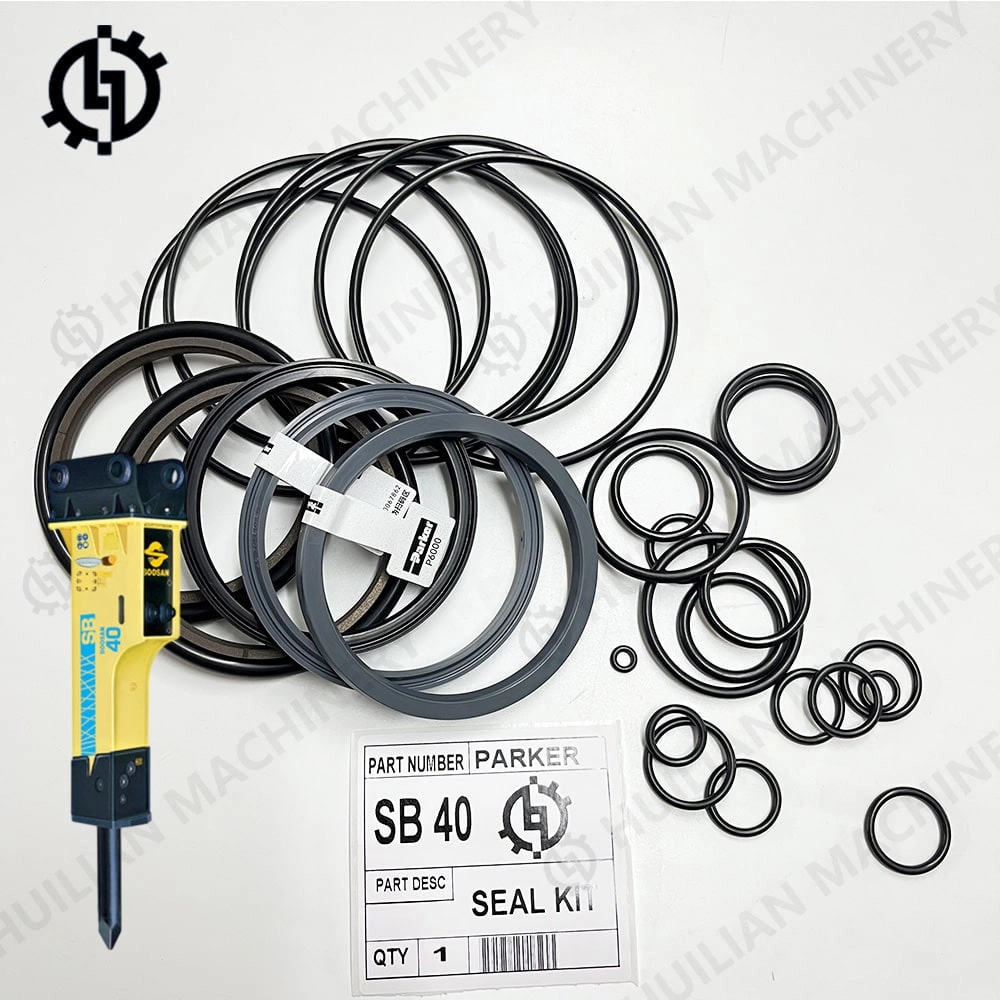
Parker Oil Seal Complete Repair SB40 Seal Kit COX001 CO1012 SB40Ⅱ SB40TSP SQ40 For Soosan Hydraulic Rock Breaker Hammer
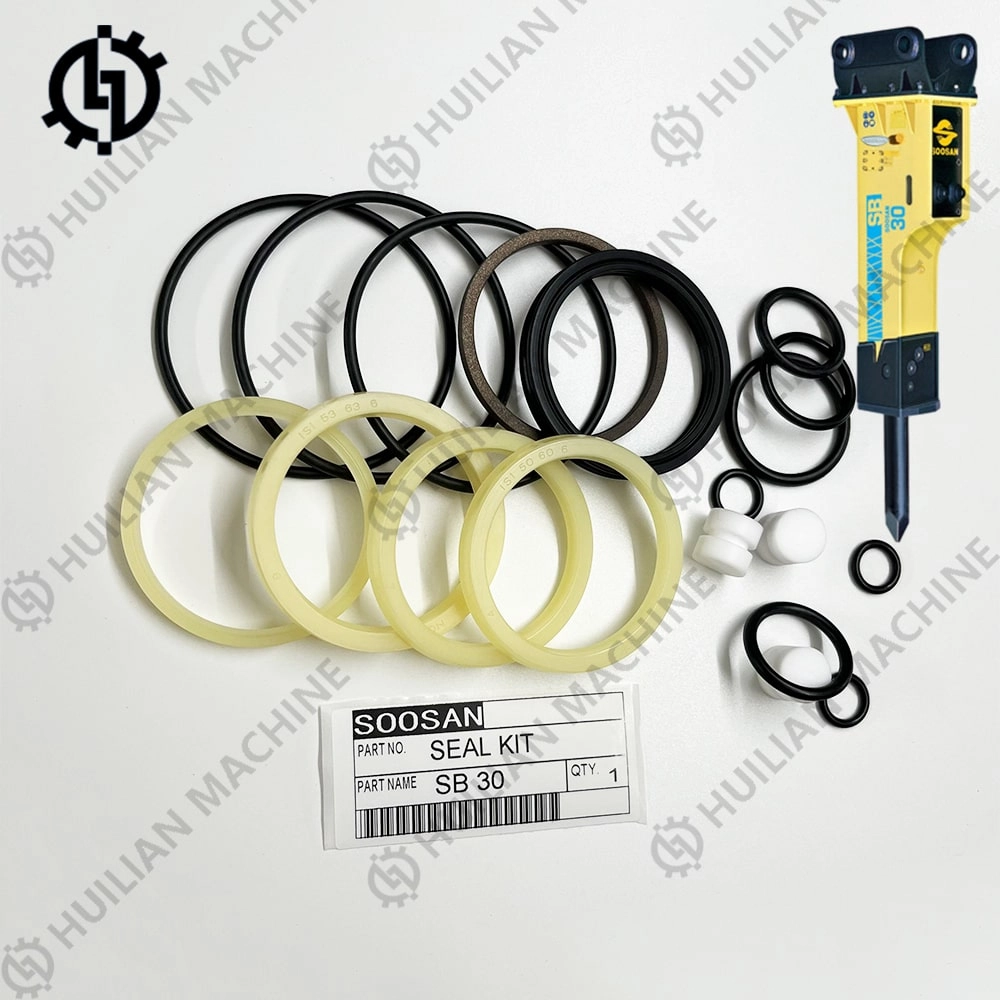
E71012 E7X001 SOOSAN SQ30 SB30Ⅱ SB30 Breaker Seal Kit SB30TS-P SB30Ⅱ TS-P SB30Ⅱ SSL Hydraulic Rock Hammer Parts Oil Repair Kit
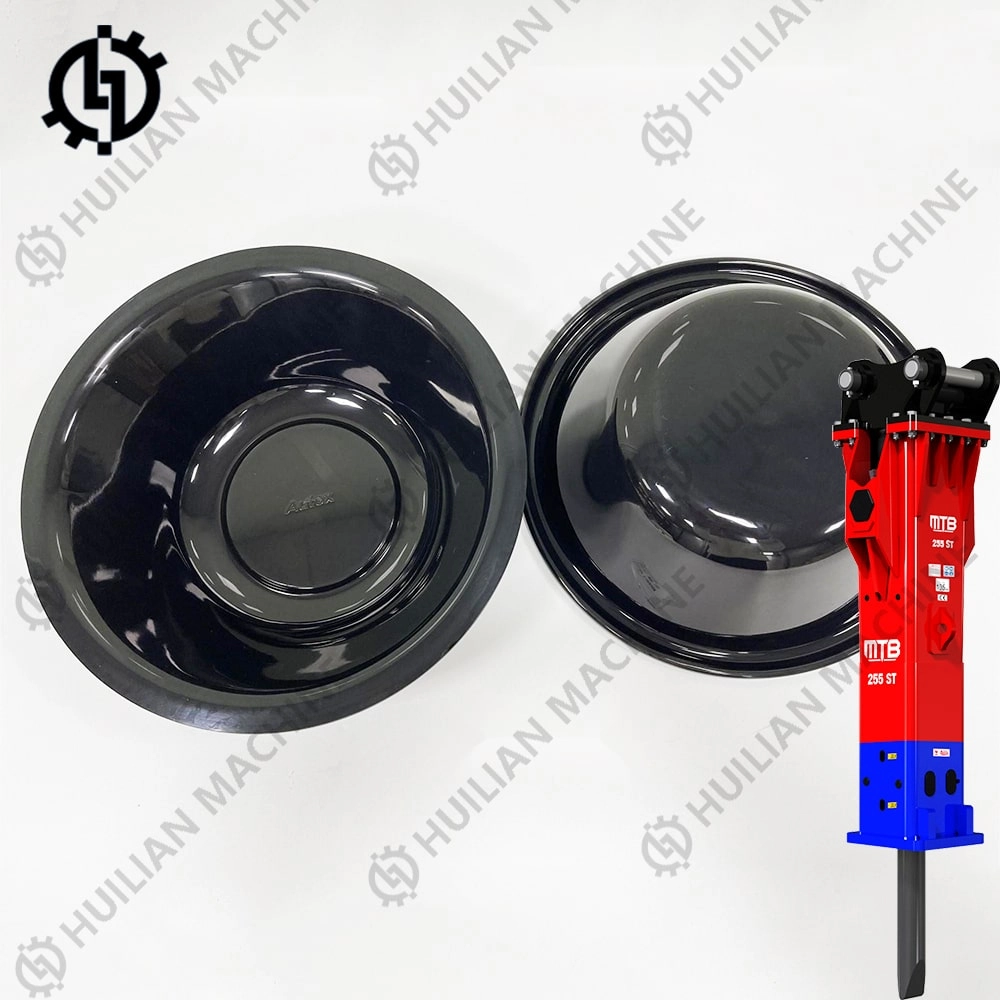
Inan Makina MTB Hydraulic Breaker Parts 45B0116A11 MTB255 MTB MT 255 Diaphragm MTB 255 IQ MTB-255 MTB 255 ST Membrane for Excavator Rock Hammer
 About us
© 2025 HUILIAN MACHINE. All rights reserved