



Rock Breaker Mounting & Compatibility: Match to Excavator Size
- Matching Hydraulic Systems to Breaker Performance
- Understanding carrier flow and pressure limits
- Why flow and pressure matter for the best rock breaker
- Safety and control system compatibility
- Rock Breaker Mounting & Compatibility: Match to Excavator Size
- Mounting types and standards
- Weight class matching: carrier vs breaker
- Choosing the best rock breaker for your working conditions
- Integration, Installation and Common Pitfalls
- Mounting geometry and structural considerations
- Hydraulic hoses, fittings and relief settings
- Commissioning checklist I use
- Maintenance, Parts and Long-Term Reliability
- Wear items and maintenance intervals
- When to rebuild vs replace
- Sourcing the best rock breaker parts and seal kits
- Practical Compatibility Scenarios and Case Studies
- Scenario 1: Mini-excavator in urban demolition
- Scenario 2: Mid-sized excavator in quarry secondary breaking
- Scenario 3: Large carrier in primary rock reduction
- Huilian Machine: OEM Parts and Global Support
- FAQ
- 1. How do I know what size breaker fits my excavator?
- 2. Can I mount a heavier breaker than recommended?
- 3. How often should I replace seals and wear parts?
- 4. What mounting standard should I use for quick couplers?
- 5. Where can I source reliable spare parts and seal kits?
- Contact & Next Steps
Choosing the best rock breaker for an excavator is about more than brand reputation — it requires matching breaker energy, hydraulic flow and mounting systems to your machine’s size and intended application. In this article I share practical, experience-based guidance on mounting types, compatibility checks, performance trade-offs, and maintenance steps that help you maximize uptime, reduce operating costs, and avoid damaging your carrier or breaker. I also cover parts, seal kits and service considerations for long-term reliability.
Matching Hydraulic Systems to Breaker Performance
Understanding carrier flow and pressure limits
Before selecting any breaker, I always verify the excavator’s maximum continuous hydraulic flow (L/min) and operating pressure (bar). Breakers are powered by the carrier’s hydraulic system, and mismatch in flow/pressure is the most common cause of poor performance or premature wear. Typical ranges by excavator class are summarized below, but always use your machine’s datasheet or the manufacturer’s plate for exact values.
Why flow and pressure matter for the best rock breaker
Hydraulic flow determines cycle speed (blows per minute) and thus productivity; pressure helps generate impact energy. A breaker receiving insufficient flow will have slow cycle rates. Excessive pressure can overstress seals, pistons and hoses. I recommend matching breaker specs (operating flow and max pressure) to the carrier within 10–15% where possible to achieve the best rock breaker performance and longevity.
Safety and control system compatibility
Modern excavators use proportional flow and electronic control systems. I check for valve compatibility (e.g., on/off vs proportional control), pilot pressure availability, and whether the breaker needs any additional flow-splitting or relief valve adjustments. Incorrect control hookup can create hydraulic shock and reduce component life.
Rock Breaker Mounting & Compatibility: Match to Excavator Size
Mounting types and standards
Mounting options include subframe-mounted systems (quick coupler point), direct pin-on (chisel attached via bracket), and custom adapters for universal connections. Standard north-south metrics such as pin diameter, distance between pins, and bracket height must match precisely. For large carriers, subframe and vibration-damping mounts are common to protect the boom and chassis.
Weight class matching: carrier vs breaker
Breaker mass affects carrier balance and transportability. Below is a practical compatibility chart I use when recommending the best rock breaker for various excavator sizes. These ranges are industry-typical and intended as selection guidance; always cross-check with manufacturer specs.
| Excavator Operating Weight (t) | Recommended Breaker Class | Typical Flow (L/min) | Typical Working Pressure (bar) | Approx. Breaker Mass (kg) |
|---|---|---|---|---|
| 1 - 3 t (mini) | Light / Micro | 20 - 40 | 80 - 120 | 40 - 120 |
| 3 - 8 t (small) | Light - Medium | 40 - 80 | 100 - 140 | 120 - 300 |
| 8 - 20 t (medium) | Medium | 80 - 140 | 120 - 160 | 300 - 700 |
| 20 - 40 t (large) | Heavy | 140 - 250 | 140 - 180 | 700 - 1400 |
| >40 t (extra-large) | Extra Heavy | 250 - 400+ | 150 - 220 | 1400+ |
Sources: Typical manufacturer specifications and industry practice; for general excavator class definitions see Wikipedia - Excavator.
Choosing the best rock breaker for your working conditions
Match breaker energy to the rock hardness and intended operation (demolition, trenching, secondary breaking). For continuous primary breaking in hard rock choose a heavier, higher-energy breaker even if it slightly reduces cycle rate. For surface work or lighter tasks prioritize higher blow frequency. I never recommend oversizing a breaker to the point that the carrier’s hydraulic system runs at or near max continuous pressure for extended periods.
Integration, Installation and Common Pitfalls
Mounting geometry and structural considerations
Proper pin alignment and bracket stiffness are critical. I always inspect boom and stick mounting points for signs of fatigue before installation. Incorrect geometry changes impact angle and increases side-loads on chisel and tool bushings, creating uneven wear and possible failure.
Hydraulic hoses, fittings and relief settings
Use hoses rated above the system’s max pressure and ensure fittings are torque-specified by the manufacturer. Install or verify relief valves to protect the breaker and carrier hydraulic circuits. Pressure spikes from quick-coupler operations require gas- or oil-filled accumulators or shock-absorbing valves on some installations.
Commissioning checklist I use
- Verify mounting dimensions and secure fasteners per torque spec.
- Confirm carrier flow and pressure match breaker operating range.
- Install correct hydraulic lines and check for clearance in full range of motion.
- Program any proportional controls and test pilot pressure.
- Perform test breaks on low-stress material and inspect for leaks, unusual vibration, or overheating.
Maintenance, Parts and Long-Term Reliability
Wear items and maintenance intervals
Wear parts include the chisel/point, tool bushings, top cap seals, pistons, and valve spools. I recommend scheduled inspections after the first 50 operating hours, then every 200–500 hours depending on intensity. A proper seal kit replacement cycle averts catastrophic piston failure and reduces downtime.
When to rebuild vs replace
Rebuild when structural components (housing, tool bushing bores) are within repairable tolerances and replacement of wear parts returns performance to OEM specs at a lower cost than full replacement. Replace the unit when cracks exceed repair limits or when cumulative downtime and repair costs exceed replacement cost—this frequently happens when hydraulic contamination has caused extensive internal damage.
Sourcing the best rock breaker parts and seal kits
Use OEM or high-quality aftermarket parts tested to the same material and hardness specifications. Components like pistons, diaphragms, and Parker-compatible seal kits should meet ISO/ASTM material standards; OEM part numbers and cross-reference tables help ensure fit and function. For industry background on quality standards, see ISO standards overview.
Practical Compatibility Scenarios and Case Studies
Scenario 1: Mini-excavator in urban demolition
I recommended a light/micro breaker when a customer used a 2-ton machine for sidewalk demolition. The choice emphasized low weight, reduced recoil, and high frequency to chip concrete without destabilizing the carrier. Key changes included a soft-mount bracket and flow-limiting orifice to prevent hydraulic shock.
Scenario 2: Mid-sized excavator in quarry secondary breaking
For a 15-ton excavator doing secondary breaking in limestone, I selected a medium-to-heavy class breaker with higher blow energy and robust retainers. Upgrades included a reinforced subframe, shock isolators, and a high-flow hydraulic line. Results: 20–30% faster fragmentation and lower cycle counts to target size.
Scenario 3: Large carrier in primary rock reduction
Primary breaking in hard basalt required a heavy-duty breaker with high impact energy. I coordinated hydraulic cooling upgrades and a carrier-side accumulator to smooth pressure pulses. Monitoring of seal temperatures and periodic oil analysis extended service intervals by 15% compared to previous installations.
Huilian Machine: OEM Parts and Global Support
Founded in 2005, Huilian Machine is a professional OEM supplier of excavator parts. We are leading excavator breaker parts manufacturers in China. We offer a wide range of products, including hydraulic breaker hammers, chisels, seals and seal kits, diaphragms, pistons, WearBush, rompin/retainer bars, through bolts, side bolts, valves and liners. Huilian's team comprises experienced and skilled professionals, including technicians, R&D experts, designers, quality control professionals, salespeople and after-sales service teams. Our products are exported to over 90 countries and regions and are highly regarded by customers worldwide for their quality and variety. Guangzhou Huilian Machinery Co., Ltd. is committed to becoming a global leader in the supply of excavator parts and components and is seeking global distributor partners to promote the sustainable development of the excavator parts industry. Our website: https://www.huilianmachine.com/ Email: service@huilianmachine.com Phone: +86 188 1917 0788.
Huilian advantages: consistent OEM-quality machining, comprehensive parts inventory for Excavator Breaker Parts, Excavator Hydraulic Breaker, Excavator Seal Kit and Parker seal kit cross-references. Their strength lies in integrated R&D and QC processes, export footprint across 90+ countries, and targeted support for distributors seeking reliable supply chains. If you need seal kits, pistons, or full breaker assemblies, Huilian provides technical drawings, material certifications and after-sales service to support long-term operations.
FAQ
1. How do I know what size breaker fits my excavator?
Start with the excavator’s operating weight, hydraulic flow and maximum pressure. Use a compatibility chart (like the table above) and confirm mounting dimensions. If in doubt, consult the breaker supplier with your carrier model and serial number for a recommended match.
2. Can I mount a heavier breaker than recommended?
Technically you can, but it risks reduced machine stability, accelerated wear on boom/stick, higher fuel consumption, and hydraulic overheating. Oversizing may be justified for short-term high-energy tasks but is not recommended for continuous operations.
3. How often should I replace seals and wear parts?
Inspect seals after 50 hours, then follow an interval of approximately every 200–500 hours depending on workload and contamination levels. Replace chisel and tool bushings when wear exceeds manufacturer tolerances.
4. What mounting standard should I use for quick couplers?
Use a subframe compatible with your quick coupler system and ensure the subframe manufacturer supports breaker loads. Not all quick couplers are rated for impact tools—verify load and safety certifications.
5. Where can I source reliable spare parts and seal kits?
OEM suppliers and reputable aftermarket manufacturers with ISO quality systems are preferred. Companies like Huilian Machine provide broad product ranges (hydraulic breaker hammers, chisels, seal kits, pistons) and technical support for compatibility and installation.
Contact & Next Steps
If you’re evaluating breakers for a fleet or need technical compatibility checks, I recommend collecting the carrier model, serial number, hydraulic flow/pressure specs, and primary application. Send these to your parts supplier or to Huilian Machine for a tailored recommendation. For product catalogs, technical drawings or distributor inquiries, visit Huilian Machine or email service@huilianmachine.com. Phone: +86 188 1917 0788.
Selecting the best rock breaker means balancing energy, frequency, mounting compatibility and maintenance strategy. With the right match and quality parts, you’ll achieve higher productivity, lower operating costs and longer equipment life.

Procurement Checklist: D81115-D81119 Rock Hammer Parts
Best Excavator Breaker Hammers for Demolition and Quarry
Top hydraulic excavator breaker Manufacturers and Suppliers in China
Hydraulic Breaker Parts Compatibility: Match to Excavators
About
Are your parts compatible with all excavator brands?
Yes, our parts are designed to be compatible with major brands like Komatsu, Caterpillar, Hitachi, Hyundai, Doosan, JCB, Kobelco, Sany, and many more.
How can I ensure I’m selecting the right part for my equipment?
Our expert team can assist you in finding the right part based on your machine model, specifications, and requirements. Contact us for personalized support.
What is your shipping and delivery time?
We offer fast and reliable global shipping. Delivery times vary depending on location and order size, but we strive to process and ship orders as quickly as possible.
Do you offer OEM and aftermarket parts?
Yes, we manufacture high-quality OEM parts and supply aftermarket parts from top brands such as NOK, Parker, SKF, and Hallite to ensure optimal performance.
What types of excavator parts do you offer?
We provide a wide range of high-quality excavator parts, including hydraulic breakers, chisels, seal kits, diaphragms, pistons, wear bushes, retainer bars, through bolts, side bolts, valves, and liners.

Huilian HL68 Hammer Breaker for 4-7 Ton Excavator SOOSAN SB40 Hydraulic Rock Breaker
Side type hydraulic breaker : Easy to control, convenient positioning, durable, high working efficiency, strong striking force, long service life, stable operating performance, convenient after-sales service.
Top type hydraulic breaker : Strong impact power; excellent environmental performance; exquisite manufacturing technology; easy maintenance,fast after-sales service
Box type hydraulic breaker :leading heat treatment technology, enhance heat resistance, wear resistance. Under the condition of keeping the oil pressure constant, the cylinder volumeis reduced and the fuel consumption is reduced.The self-developed core is adopted to make the piston cylinder body moredurable and the service life longer.Exposed decks are made of high-strength steel plates to reduce wear.The best efficiency matching with excavator and loader is realized
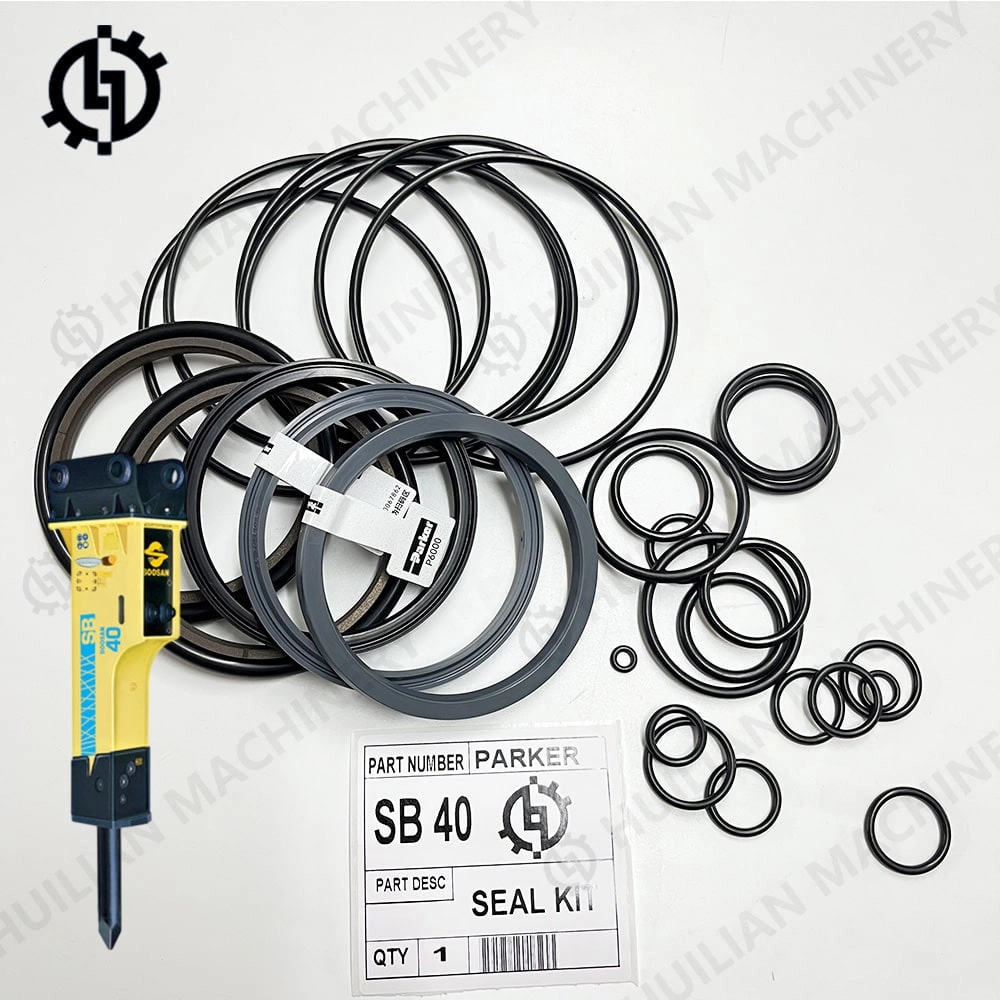
Parker Oil Seal Complete Repair SB40 Seal Kit COX001 CO1012 SB40Ⅱ SB40TSP SQ40 For Soosan Hydraulic Rock Breaker Hammer
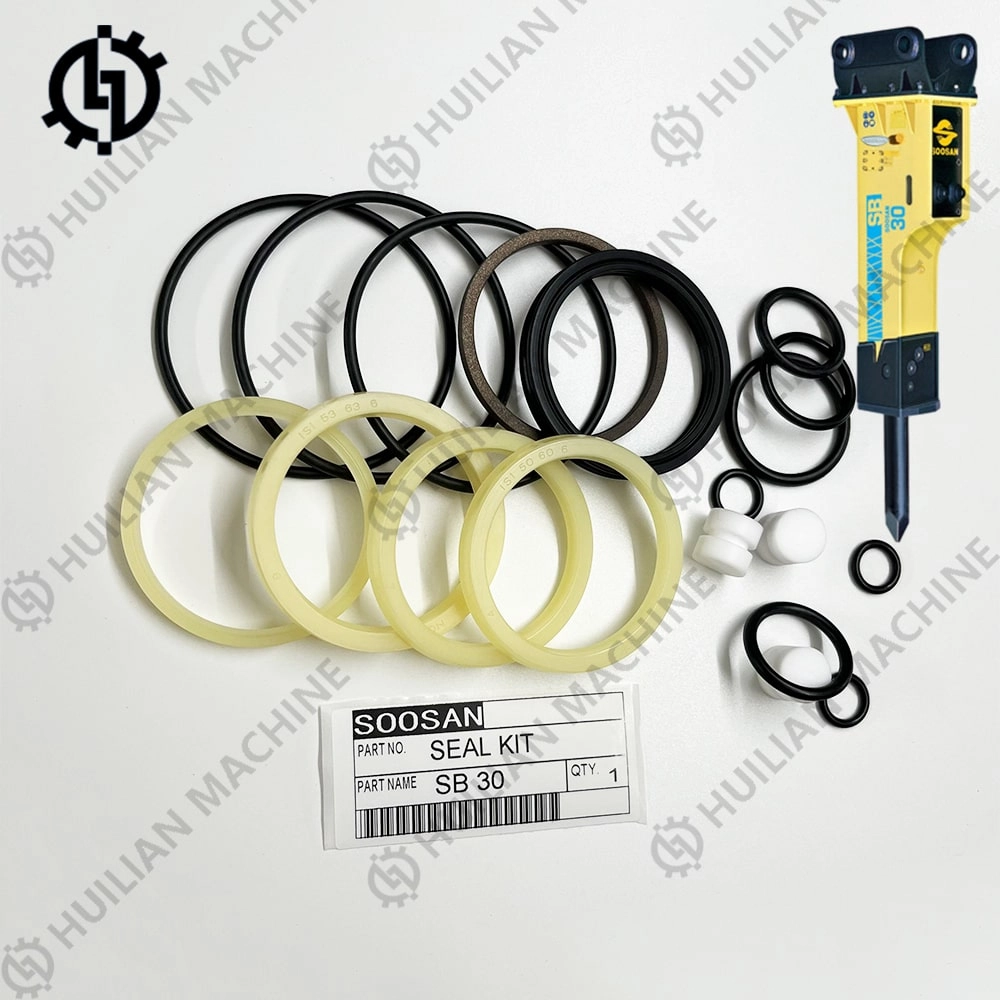
E71012 E7X001 SOOSAN SQ30 SB30Ⅱ SB30 Breaker Seal Kit SB30TS-P SB30Ⅱ TS-P SB30Ⅱ SSL Hydraulic Rock Hammer Parts Oil Repair Kit
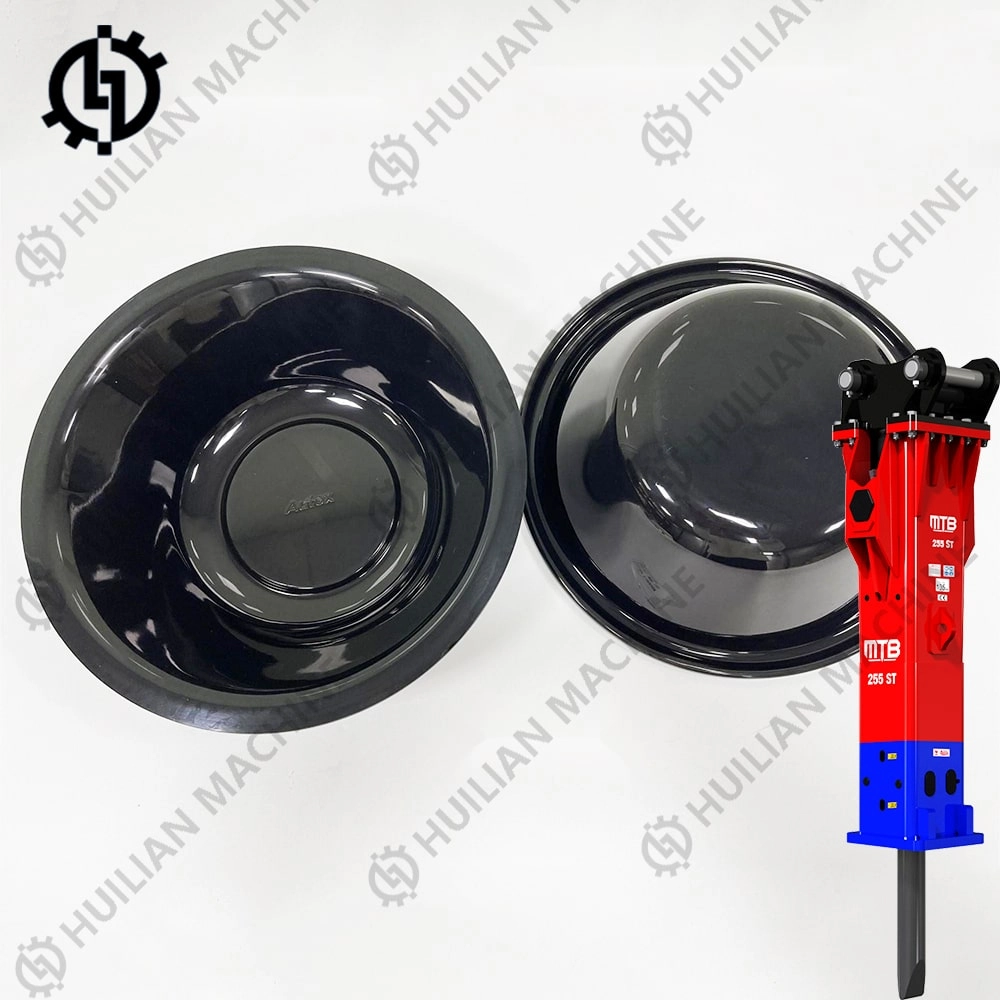
Inan Makina MTB Hydraulic Breaker Parts 45B0116A11 MTB255 MTB MT 255 Diaphragm MTB 255 IQ MTB-255 MTB 255 ST Membrane for Excavator Rock Hammer
 About us
© 2025 HUILIAN MACHINE. All rights reserved