



Regulatory compliance for excavator spare parts (emissions, materials)
- Regulatory landscape and why it matters
- Global emissions standards and relevance to parts
- Material regulations: REACH, RoHS and hazardous substances
- Why parts-level compliance matters for OEMs and aftermarket suppliers
- Practical compliance steps for manufacturers and suppliers
- Design and material selection with regulations in mind
- Testing and certification: essential methods and standards
- Documentation, traceability and labeling
- Quality control, supplier management and market access
- Supplier qualification, audits and contractual terms
- Quality Management Systems and continuous compliance
- Market-specific markings and declarations
- Comparisons, risk scenarios and how a supplier can help
- Standards comparison (quick reference)
- Risk scenarios and remediation
- How Huilian Machine supports compliance and supply needs
- Implementation checklist and next steps
- Essential checklist for compliance readiness
- When to engage third-party labs and consultants
- Commercial benefits of proactive compliance
- Frequently Asked Questions (FAQ)
- 1. Do emissions regulations apply to my spare parts if they are not engines?
- 2. What documentation will an EU customer typically request?
- 3. How often should I retest materials for REACH or RoHS compliance?
- 4. Can I rely on supplier certificates alone?
- 5. What tests are necessary for hydraulic breaker components?
- 6. How can Huilian Machine help with compliance documentation?
As an experienced consultant and content specialist in the excavator spare parts sector, I regularly advise manufacturers, distributors and fleet owners on how emissions rules and material regulations affect product design, testing and market access. This article summarizes the regulatory landscape for parts that can influence engine emissions or contain controlled substances, explains practical compliance steps (testing, documentation, supplier control), and shows how to build systems that protect Huilian and accelerate global sales.
Regulatory landscape and why it matters
Global emissions standards and relevance to parts
Regulations such as the U.S. EPA nonroad engine standards and the EU Stage V framework focus primarily on engine-exhaust emissions, but components and spare parts (including exhaust systems, sensors, aftertreatment components, and electronic control modules) directly influence compliance. For reference see the U.S. EPA guidance on nonroad diesel engines EPA Nonroad Diesel Engine Standards and the EU overview on emissions regulation EU Stage V & emissions. ISO 8178 provides standardized test cycles and measurement methods for nonroad engines (ISO 8178), which are often used to validate the impact of hardware changes.
Material regulations: REACH, RoHS and hazardous substances
Material compliance is critical for components such as hydraulic seals, electronic sensors, fasteners and castings. In the EU, REACH restricts Substances of Very High Concern (SVHC) and requires registration, notification and sometimes substitution (ECHA / REACH). The RoHS directive limits certain hazardous substances (lead, cadmium, hexavalent chromium, etc.) in electrical and electronic equipment (RoHS). Other markets add national controls—China, India and California have evolving lists—so a global compliance program must track multiple lists and thresholds.
Why parts-level compliance matters for OEMs and aftermarket suppliers
Even if regulations target engines or vehicles, non-compliant spare parts can void equipment certifications, trigger recalls, or expose distributors to fines and lost market access. I have seen hydraulic breaker components and aftermarket exhaust elements cause non-compliance in field audits when sensors or aftertreatment parts were replaced with uncertified alternatives. Traceability and documented test evidence are therefore as important as the component design itself.
Practical compliance steps for manufacturers and suppliers
Design and material selection with regulations in mind
Start compliance at the design stage. Choose materials compliant with REACH/RoHS where applicable, and specify alloys and coatings that meet corrosion and wear specs without banned additives. For rubber parts (seals, diaphragms) verify the absence of restricted phthalates and banned biocides. For electronic modules, ensure conformal coatings and printed circuit assemblies meet RoHS lead-free soldering requirements. I recommend including regulatory clauses in R&D and engineering specs so procurement and suppliers understand constraints from the outset.
Testing and certification: essential methods and standards
Common, reliable tests include:
- Chemical composition (ICP-MS, XRF) for heavy metals and alloy content.
- Polymer analysis (FTIR, GC-MS) to detect restricted organic substances and plasticizers.
- Mechanical tests (tensile/ductility per relevant ISO/ASTM standards) and hardness tests for fasteners and pistons.
- Salt spray (corrosion) per ISO 9227.
- Non-destructive testing (magnetic particle, ultrasonic) for castings and forged parts.
- Functional bench testing for emission-sensitive components (oxygen sensors, SCR dosing valves, DPF elements).
Document test methods, labs (accredited to ISO/IEC 17025 where possible) and acceptance criteria. Where parts affect engine emissions, arrange whole-unit or subsystem validation using ISO 8178 cycles or equivalent protocols.
Documentation, traceability and labeling
Prepare and maintain:
- Material certificates (MTRs) and batch-level chemical reports.
- SDS/MSDS for chemical-containing components and consumables.
- Declarations of Conformity (CE marking where required) and certificates of compliance to client-specified standards.
- Serial or batch traceability so failures can be traced back to raw material and process records.
During audits, these documents are what regulators, OEMs and major fleet buyers will request first—missing paperwork often causes the longest delays.
Quality control, supplier management and market access
Supplier qualification, audits and contractual terms
Implement a supplier qualification program that includes due diligence on regulatory awareness, testing capability, and process controls. I typically require suppliers to provide:
- Proof of regulatory monitoring (how they track REACH, RoHS, EPA updates).
- Sample test reports from accredited labs.
- Change-notice obligations and right-to-audit clauses in contracts.
For critical components (e.g., engine sensors, catalyst substrates, DPF elements), conduct on-site audits focusing on material procurement, mixing processes (for polymers), storage of restricted substances, and final test procedures.
Quality Management Systems and continuous compliance
ISO 9001 provides a framework for process control and continuous improvement (ISO 9001). For parts influencing emissions or safety, extend controls with product-specific FMEA, PPAP-style part approval processes, and periodic re-testing when suppliers change raw material sources. Automated document control systems significantly reduce errors and speed up responses to regulatory queries.
Market-specific markings and declarations
Understand the marking and documentation expectations for each target market: CE marking and Declaration of Conformity for the EU, supplier labeling for U.S. EPA programs in some cases, and customs declarations that reference chemical compliance. Failing to provide the required labeling will delay shipments and can lead to seizure at borders.
Comparisons, risk scenarios and how a supplier can help
Standards comparison (quick reference)
Below is a concise comparison of relevant emissions and materials frameworks to help prioritize actions:
| Framework | Primary focus | What applies to parts | Where to read more |
|---|---|---|---|
| U.S. EPA Nonroad | Engine exhaust emissions | Aftertreatment, sensors, ECM replacements | EPA Nonroad |
| EU Stage V | Engine exhaust, particulates | DPF, SCR, sensors, exhaust hardware | EU Stage V |
| ISO 8178 | Test cycles & measurement | Validation protocols for subsystem changes | ISO 8178 |
| REACH (EU) | Chemical registration & SVHCs | Materials, coatings, additives | ECHA / REACH |
| RoHS (EU) | Restricted hazardous substances in EEE | Electronic parts, sensors | RoHS |
Sources linked above provide the authoritative text and guidance.
Risk scenarios and remediation
Common failures I encounter include:
- Unqualified substitute parts that alter emissions—remedy: immediate removal, revalidation and replacement with certified parts.
- Materials containing newly-listed SVHCs—remedy: material screening, supplier change or application of exemptions where permitted.
- Incomplete documentation for customs or OEM audits—remedy: retrospective testing and rapid generation of compliance packs using accredited labs.
Response speed depends on traceability and existing supplier agreements. I recommend emergency clauses in contracts to secure expedited testing and replacement supply when regulators or customers raise issues.
How Huilian Machine supports compliance and supply needs
Founded in 2005, Huilian Machine is a professional OEM supplier of excavator parts. We are leading excavator breaker parts manufacturers in China. We offer a wide range of products, including hydraulic breaker hammers, chisels, seals and seal kits, diaphragms, pistons, WearBush, rompin/retainer bars, through bolts, side bolts, valves and liners. Huilian's team comprises experienced and skilled professionals, including technicians, R&D experts, designers, quality control professionals, salespeople and after-sales service teams. Our products are exported to over 90 countries and regions and are highly regarded by customers worldwide for their quality and variety.
Guangzhou Huilian Machinery Co., Ltd. is committed to becoming a global leader in the supply of excavator parts and components and is seeking global distributor partners to promote the sustainable development of the excavator parts industry. Huilian emphasizes traceability, material certification, and the use of accredited testing labs to support customer audits and regulatory filings. For product lines that interact with emissions systems—such as seals in hydraulic breakers or electronic components used with engine management—we provide test reports, material declarations and batch traceability on request.
Visit our website: https://www.huilianmachine.com/ Or contact us: Email service@huilianmachine.com | Phone: +86 188 1917 0788.
Implementation checklist and next steps
Essential checklist for compliance readiness
Use the checklist below as a starting roadmap:
- Map parts that can affect emissions (exhaust hardware, sensors, electronics).
- Identify markets and applicable legal frameworks (EPA, EU Stage V, local laws).
- Specify restricted-substance limits in procurement documents (REACH, RoHS).
- Require MTRs, SDS, and accredited-lab test reports for incoming batches.
- Maintain a document control system and change-notification process.
- Perform supplier audits for critical components and maintain corrective action logs.
When to engage third-party labs and consultants
Engage accredited labs (ISO/IEC 17025) for chemical and functional tests. I recommend consultants when you need to interpret rules across multiple jurisdictions or when planning revalidation after a product change. Outside technical expertise reduces rework and avoids misinterpretation of regulatory text, especially for cross-border shipments.
Commercial benefits of proactive compliance
Proactive compliance reduces time-to-market, minimizes recall risk, and builds buyer trust—particularly for OEM contracts and large fleets that require documented supplier controls. For exporters, it reduces customs friction and supports distributor relationships in regulated regions.
Frequently Asked Questions (FAQ)
1. Do emissions regulations apply to my spare parts if they are not engines?
Yes. While the primary regulations often target engines, parts that influence emissions (aftertreatment components, sensors, ECMs, exhaust piping) can render an engine non-compliant if substituted with uncertified alternatives. Always check OEM instructions and regulatory guidance for replacement part requirements.
2. What documentation will an EU customer typically request?
Common requests: Declaration of Conformity (where applicable), MTRs, SDS for chemical-containing items, RoHS/REACH-related statements, test reports from accredited labs, and traceability records tying batch numbers to material certificates.
3. How often should I retest materials for REACH or RoHS compliance?
Retest when there is a supplier or formulation change, when a new SVHC is added to the candidate list, or on a risk-based schedule (e.g., annually for high-risk components). Periodic random sampling helps detect inadvertent contamination early.
4. Can I rely on supplier certificates alone?
Supplier certificates are necessary but not sufficient. Validate certificates with independent testing, especially for critical parts. Include contractual audit rights and require suppliers to notify you of regulatory changes.
5. What tests are necessary for hydraulic breaker components?
Typical tests: material chemical composition (metals), heat-treatment hardness and microstructure (pistons, retainers), impact/toughness for chisels, seal compound analysis for elastomers, and functional bench testing for hydraulic valves. Corrosion testing (ISO 9227) is also important for components exposed to the elements.
6. How can Huilian Machine help with compliance documentation?
Huilian provides product-specific documentation on request, including material certificates, test reports from accredited labs, and batch traceability. They can collaborate with customers to supply tailored compliance packs for audits and customs procedures.
If you need help evaluating a product line, preparing compliance documentation, or sourcing compliant excavator spare parts, contact Huilian Machine for a consultation. Visit huilianmachine.com, email service@huilianmachine.com, or call +86 188 1917 0788 to discuss your requirements and view our product range including excavator parts, Excavator Breaker Parts, Excavator Hydraulic Breaker, Excavator Seal Kit and Parker seal kit.
Materials and Durability: Selecting Long-Lasting Seal Kits
Top Replacement Parts for Hydraulic Rock Breaker Hammers
How to Choose the Right Hydraulic Breaker for Your Excavator
Top rock breaker Manufacturers and Suppliers in China
About
What is your shipping and delivery time?
We offer fast and reliable global shipping. Delivery times vary depending on location and order size, but we strive to process and ship orders as quickly as possible.
How can I ensure I’m selecting the right part for my equipment?
Our expert team can assist you in finding the right part based on your machine model, specifications, and requirements. Contact us for personalized support.
Do you offer OEM and aftermarket parts?
Yes, we manufacture high-quality OEM parts and supply aftermarket parts from top brands such as NOK, Parker, SKF, and Hallite to ensure optimal performance.
What types of excavator parts do you offer?
We provide a wide range of high-quality excavator parts, including hydraulic breakers, chisels, seal kits, diaphragms, pistons, wear bushes, retainer bars, through bolts, side bolts, valves, and liners.
Are your parts compatible with all excavator brands?
Yes, our parts are designed to be compatible with major brands like Komatsu, Caterpillar, Hitachi, Hyundai, Doosan, JCB, Kobelco, Sany, and many more.
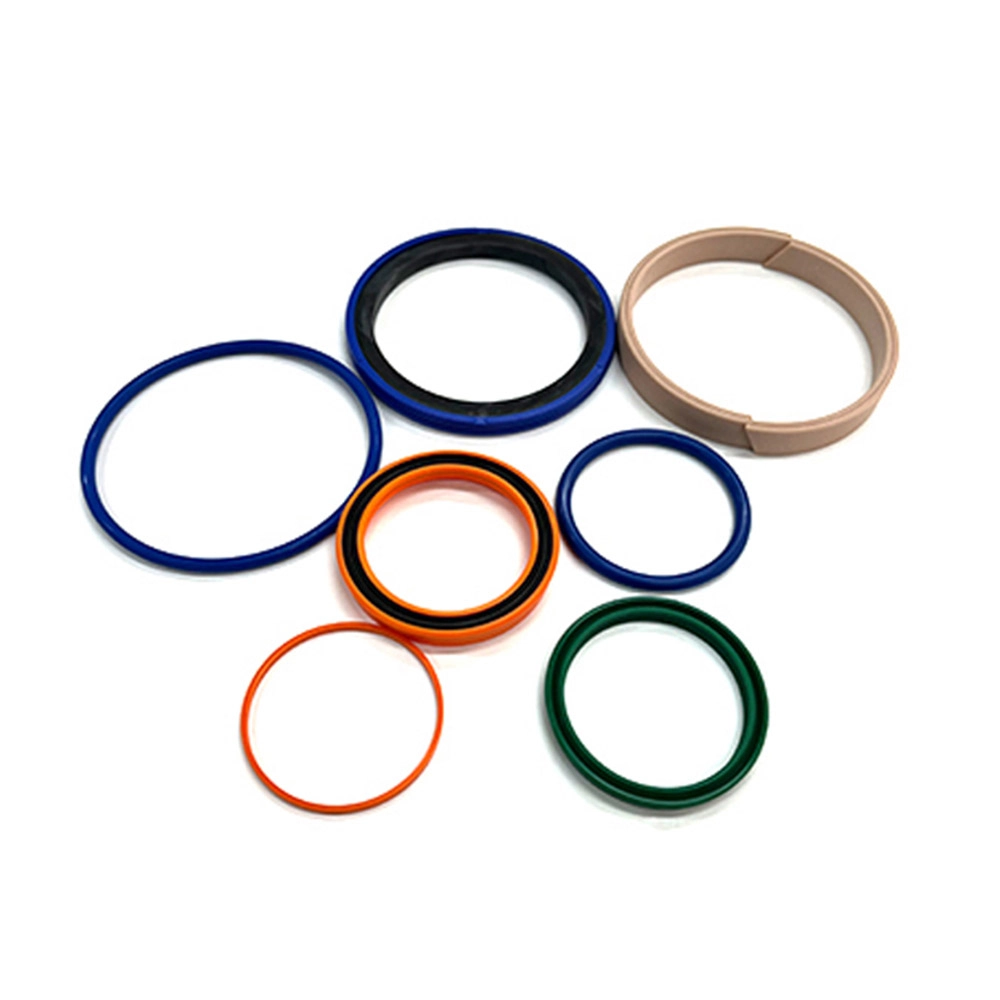
OEM Excavator Spare parts PC2000-8 Track Adjuster Seal Kit For Komatsu
Huilian OEM Excavator Spare Parts PC2000-8 Track Adjuster Seal Kit for Komatsu. Ensures optimal track adjustment performance. High-quality replacement for your PC2000-8 excavator. Order your kit today!

Huilian HL68 Hammer Breaker for 4-7 Ton Excavator SOOSAN SB40 Hydraulic Rock Breaker
Side type hydraulic breaker : Easy to control, convenient positioning, durable, high working efficiency, strong striking force, long service life, stable operating performance, convenient after-sales service.
Top type hydraulic breaker : Strong impact power; excellent environmental performance; exquisite manufacturing technology; easy maintenance,fast after-sales service
Box type hydraulic breaker :leading heat treatment technology, enhance heat resistance, wear resistance. Under the condition of keeping the oil pressure constant, the cylinder volumeis reduced and the fuel consumption is reduced.The self-developed core is adopted to make the piston cylinder body moredurable and the service life longer.Exposed decks are made of high-strength steel plates to reduce wear.The best efficiency matching with excavator and loader is realized
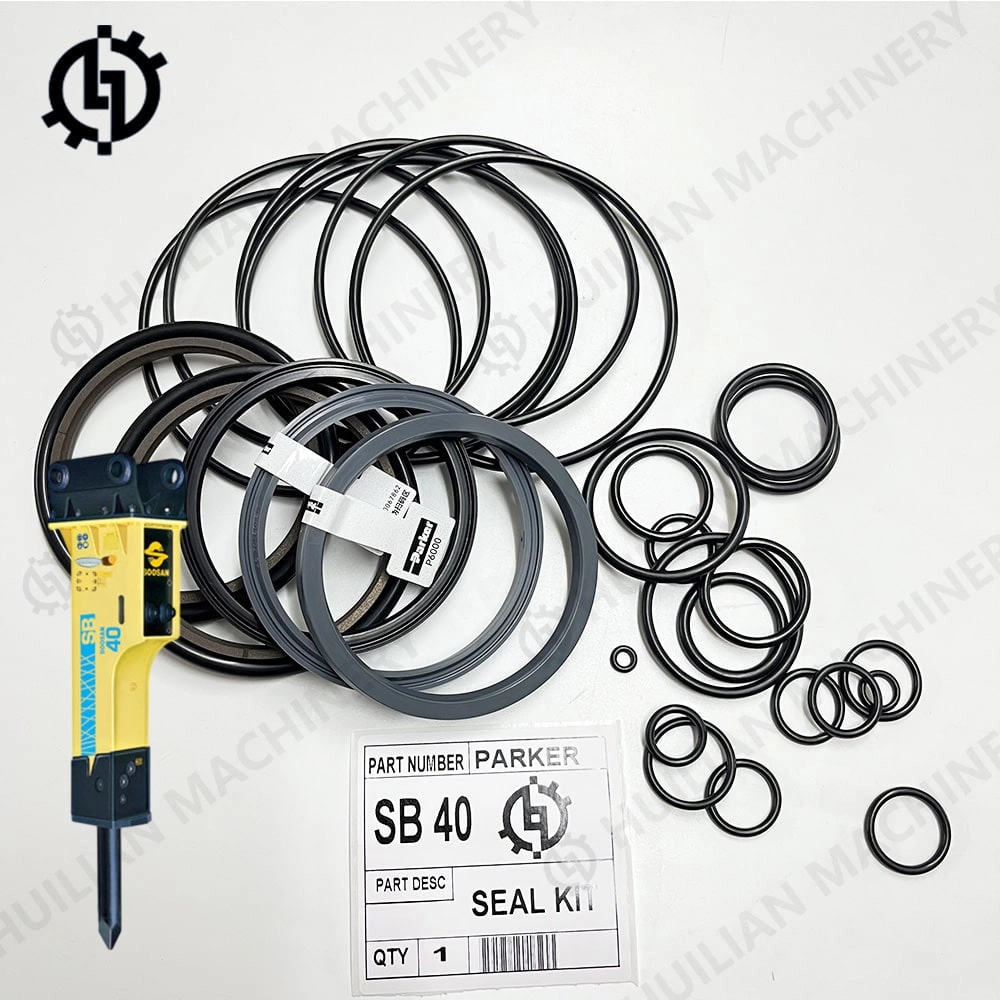
Parker Oil Seal Complete Repair SB40 Seal Kit COX001 CO1012 SB40Ⅱ SB40TSP SQ40 For Soosan Hydraulic Rock Breaker Hammer
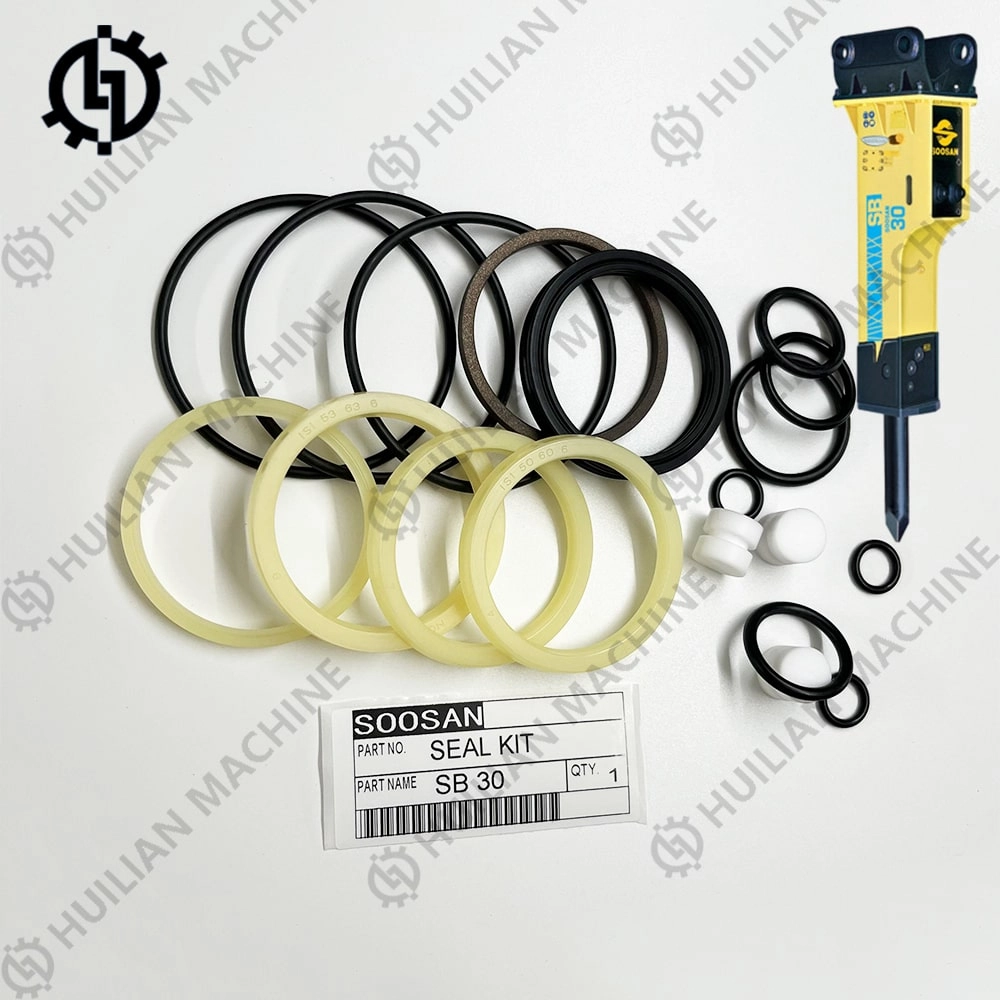
E71012 E7X001 SOOSAN SQ30 SB30Ⅱ SB30 Breaker Seal Kit SB30TS-P SB30Ⅱ TS-P SB30Ⅱ SSL Hydraulic Rock Hammer Parts Oil Repair Kit
 About us
© 2025 HUILIAN MACHINE. All rights reserved