



Breaking Force and Stability: The 2026 Master Guide to Selecting Excavator Breakers
- Key Takeaways: Quick Selection Summary
- What are the primary factors for breaking force and stability in excavator breakers?
- 1. The Energy Class Matrix
- The Physics of Stability: Beyond Carrier Weight
- Calculating the Stability Ratio
- Breaking Force Fundamentals: Joules vs. BPM
- Selecting for Material Type
- Technical Compatibility: Flow, Pressure, and Back-Pressure
- The "Sweet Spot" for Hydraulics
- 2026 Standards: Noise Regulations and Environmental Compliance
- Compliance Checklist
- Expert Tips: 5 Critical Mistakes to Avoid
- FAQ
- What happens if a breaker is too heavy for the excavator?
- How do I calculate the correct breaker size for my 20-ton excavator?
- Does higher impact energy always mean better performance?
- What is the difference between a top-mount and side-mount breaker?
- How often should nitrogen gas be charged in a hydraulic breaker?
- Can I use a hydraulic breaker underwater?
- What is 'Blank Firing' and why is it dangerous?
- What are the 2026 noise regulations for hydraulic breakers?
- References
Selecting the correct hydraulic breaker is no longer just about matching tonnage; it is a calculation of kinetic energy, hydraulic flow dynamics, and carrier stability. With Guangzhou Huilian Machines Co., Ltd (Huilian) celebrating over two decades of precision manufacturing since 2005, we have seen firsthand how the wrong attachment can catastrophically damage an excavator’s boom or hydraulic pump.
This guide moves beyond basic compatibility charts. It breaks down the physics of the Hydraulic Impact Energy Class, the 2026 environmental standards for urban operation, and the critical Excavator Carrier Stability Ratio you need to know to prevent tipping and structural fatigue.
Key Takeaways: Quick Selection Summary
Optimal breaker selection relies on a precise mathematical ratio between the attachment’s mass and the carrier’s hydraulic output.
For project managers and fleet operators, these are the non-negotiable rules for 2026:
- The 8-12% Rule: Your breaker’s operating weight should typically fall between 8% and 12% of the excavator’s total operating weight.
- Energy vs. Frequency: Hydraulic Impact Energy Class (Joules) defines the breaking power per blow, while frequency (BPM) determines speed; hard rock needs high energy, while concrete demands high frequency.
- Stability Factor: Stability is a function of the breaker’s physical length and the carrier’s lifting capacity at maximum reach, not just static weight.
- Flow Matching: You must match the Breaker Oil Flow Requirements (L/min) exactly; exceeding flow limits causes oil overheating and seal failure.
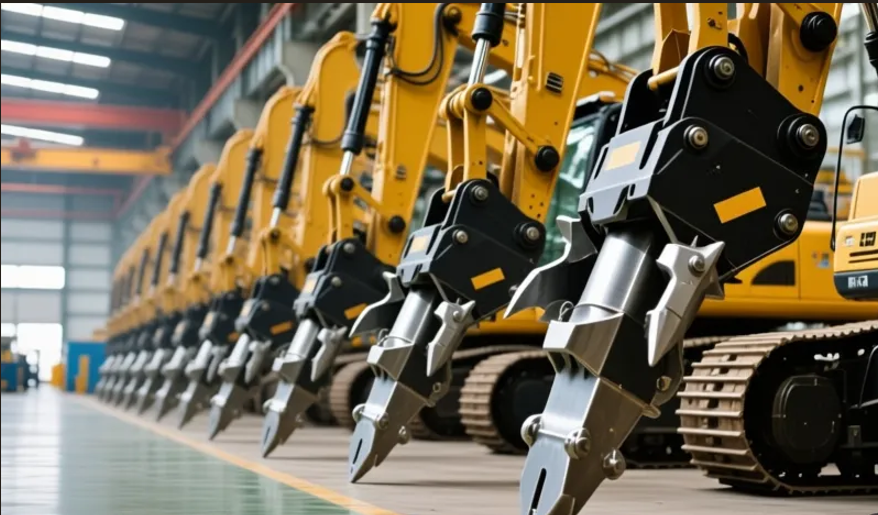
What are the primary factors for breaking force and stability in excavator breakers?
The three governing factors are the carrier’s hydraulic lifting capacity, the breaker’s operating weight relative to the boom, and the compressive strength of the target material.
Balancing these elements ensures the breaker hammer for excavator operations delivers maximum kinetic energy without compromising safety. When these factors are misaligned, operators experience "blank firing" or dangerous instability.
1. The Energy Class Matrix
To choose the right tool, you must understand the relationship between the excavator's mass and the breaker's output:
- Carrier Weight: The physical counterweight required to absorb recoil.
- Operating Pressure: The hydraulic force (Bar/PSI) delivered by the pump.
- Material Hardness: Soft concrete (low energy, high BPM) vs. Hard Granite (high energy, low BPM).
According to market data from Global Growth Insights, the demand for specialized hydraulic breakers is projected to grow by over 4.7% annually through 2033, driven largely by the need for more efficient, material-specific attachments in infrastructure projects.
The Physics of Stability: Beyond Carrier Weight
Stability is the mechanical ability of the excavator to maintain its Center of Gravity (COG) inside the track footprint while the breaker is fully extended.
Many operators make the mistake of only looking at the "static weight" of the breaker. However, the moment arm—the distance from the cab to the breaker tip—amplifies the force on the boom pins.
Calculating the Stability Ratio
- Over-the-Side Capacity: Breakers are heaviest when working at a 90-degree angle to the tracks. Your carrier must handle the breaker's weight plus a 25% safety margin in this position.
- Leverage Effect: A longer breaker increases the leverage ratio. If the breaker is too long, even if it is within the weight limit, it can cause the excavator to tip forward during the recoil phase.
- Quick Couplers: In 2026, most machines use quick couplers. You must add the weight of the coupler (often 200-500kg) to your stability calculations.
Industry Experience: At Huilian Machine, we frequently supply reinforced through bolts and side bolts to customers who initially underestimated the lateral stress on their breakers. Using high-grade, heat-treated bolts is essential for maintaining structural integrity during high-angle demolition.
Breaking Force Fundamentals: Joules vs. BPM
Breaking force is the total kinetic energy delivered per single impact (Joules), whereas BPM (Blows Per Minute) measures the frequency of those impacts.
Operators often confuse "power" with "speed." A high-BPM breaker might bounce off hard rock, while a high-Joule breaker might shatter soft concrete too aggressively, causing potential damage.
Selecting for Material Type
- Hard Rock (Quarrying): Requires high Hydraulic Impact Energy Class. The goal is to fracture the material with fewer, harder hits.
- Demolition (Concrete/Asphalt): Requires higher frequency. The goal is to induce micro-cracks rapidly.
- Variable Speed Technology: Modern breakers feature "Smart-Valves" that detect hydraulic resistance. If the tool hits soft material, it automatically increases BPM and lowers energy.
Technical Compatibility: Flow, Pressure, and Back-Pressure
Technical compatibility is defined by matching the excavator’s hydraulic output (L/min) and relief valve setting (Bar) to the breaker’s specific operating range.
Ignoring Breaker Oil Flow Requirements is the leading cause of premature failure. If the excavator pumps 200 L/min into a breaker designed for 150 L/min, the excess energy creates heat, destroying seals and vaporizing the oil film.
The "Sweet Spot" for Hydraulics
- Flow Rate (L/min): Must be verified using a flow meter. Do not rely on spec sheets alone, as older pumps lose efficiency.
- Back Pressure: High back pressure in the return line reduces impact power. Dedicated return lines directly to the tank are mandatory for high-performance breakers.
- Nitrogen Gas Aeration: If flow is turbulent, nitrogen from the accumulator can mix with oil (aeration), causing spongy hydraulics and loss of power.
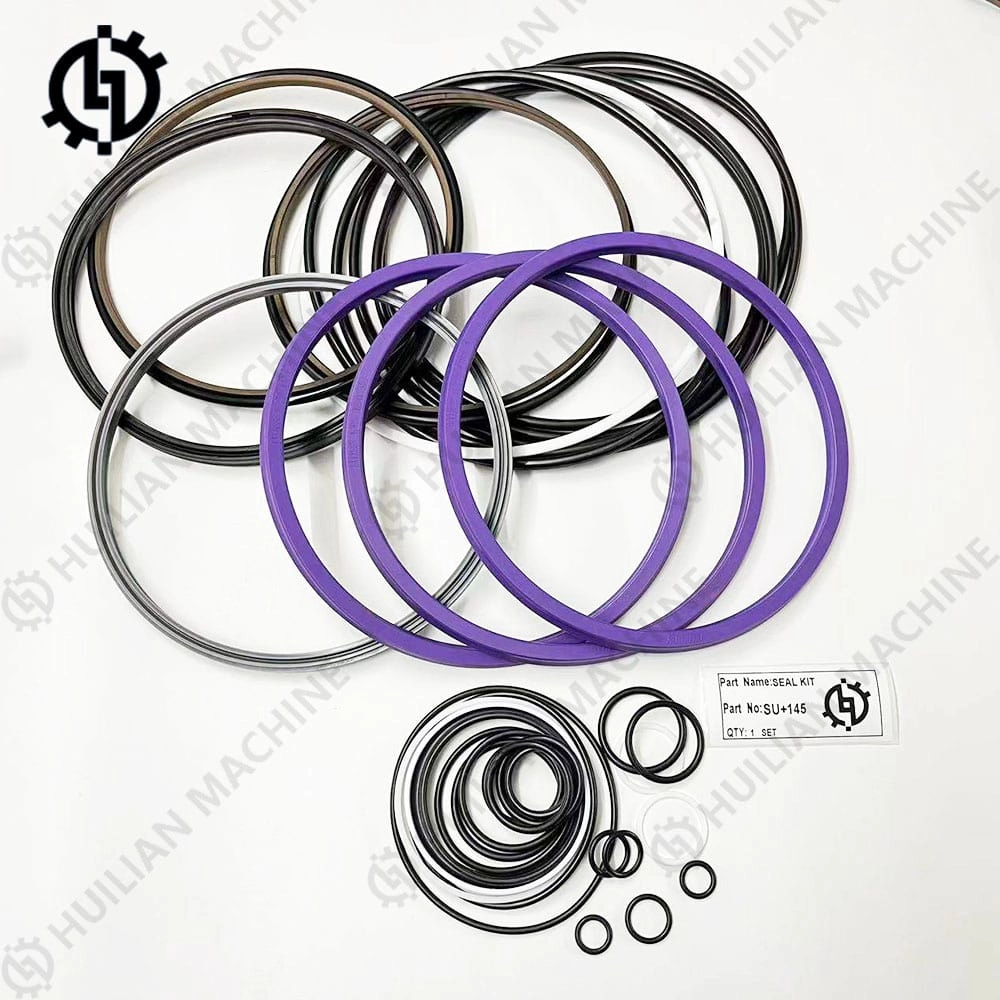
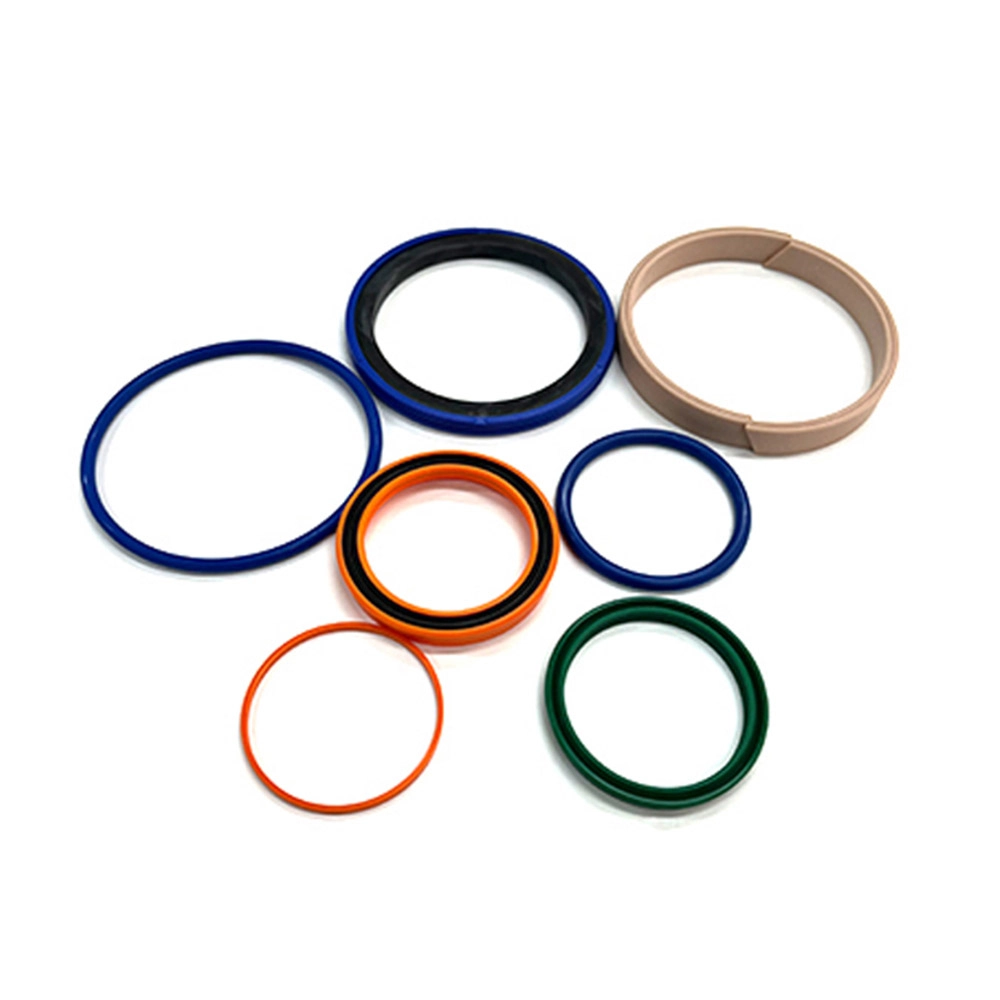
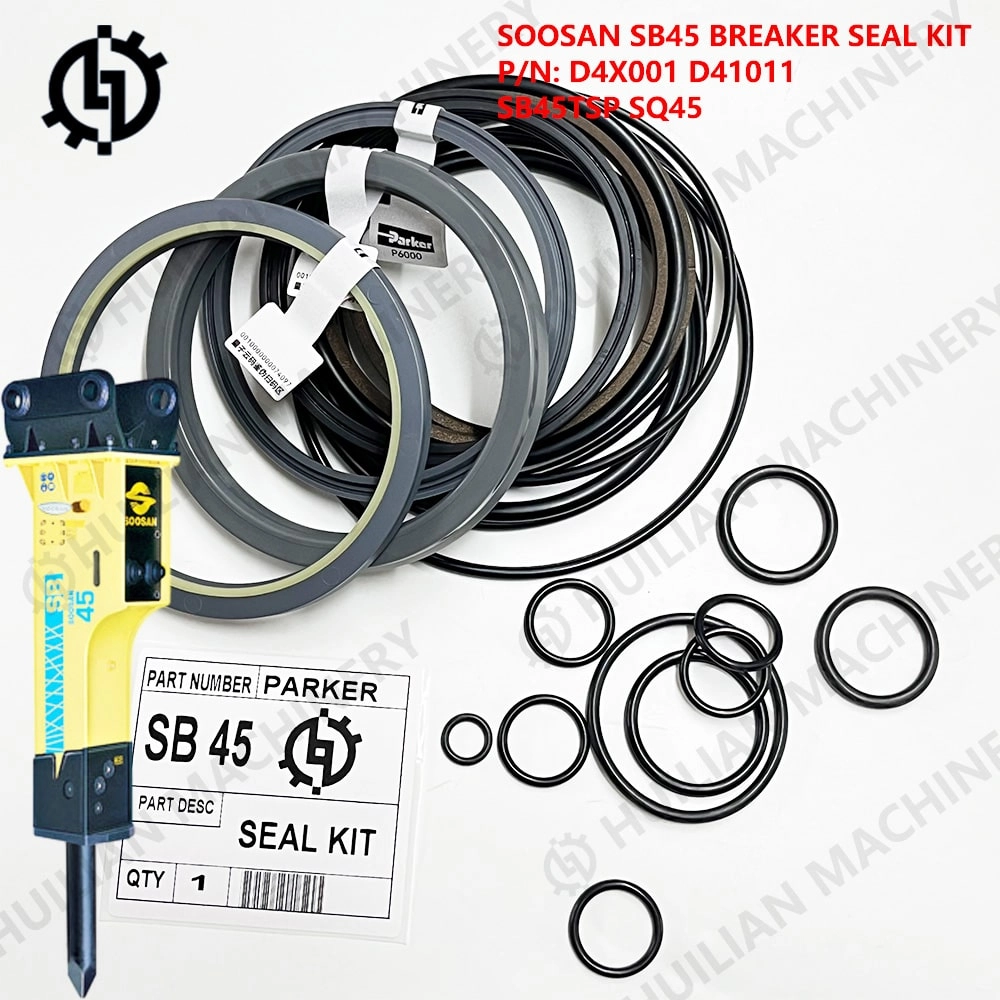
Huilian Tech Note: We export Excavator Seal Kits and Parker seal kits to over 90 countries. Our data indicates that 60% of seal failures are due to overheating caused by mismatched flow rates. Always install high-temp seals if your duty cycle exceeds 70%.
2026 Standards: Noise Regulations and Environmental Compliance
New 2026 environmental regulations in urban zones mandate the use of "fully boxed" or "silenced" breaker housings to maintain noise levels below 90-95 dB(A).
Standard "side-plate" breakers are becoming obsolete in city centers due to noise pollution ordinances.
Compliance Checklist
- Boxed Housing: Encloses the impact mechanism, reducing noise by 10-15 dB.
- Dampening Plates: Internal buffers that isolate vibration from the carrier boom.
- Auto-Lube Systems: Mandatory on many new sites to prevent squealing from dry friction.
Expert Tips: 5 Critical Mistakes to Avoid
The most costly errors stem from neglecting the physical limitations of the tool and the carrier, leading to catastrophic structural failure.
Avoid these common pitfalls to protect your investment:
- Oversizing the Breaker: Using a breaker that exceeds the Excavator Carrier Stability Ratio. This causes rapid wear on the boom pins and potential tipping.
- Ignoring Blank Firing: Allowing the piston to strike without material resistance. This sends shockwaves back into the housing, snapping tie bolts.
- Wrong Chisel Selection: Using a blunt tool for granite or a wedge for concrete. Adhere to Chisel Diameter Standards and profiles for your specific material.
- Neglecting Warm-Up: In cold climates, striking hard before the hydraulic oil reaches operating temperature (approx. 50°C) can crack the diaphragm.
- Underwater Errors: Using a standard breaker underwater without a dedicated compressed air line will suck water into the cylinder (water hammer effect), instantly destroying the seals and piston.
FAQ
What happens if a breaker is too heavy for the excavator?
It causes excessive wear on the boom and arm pins and drastically reduces stability. The machine becomes prone to tipping, especially when working over the side, and the hydraulic pump suffers strain from the increased lift requirements.
How do I calculate the correct breaker size for my 20-ton excavator?
Apply the 8-12% rule. For a 20-ton machine, the breaker should weigh between 1,600kg and 2,400kg. Always verify the excavator’s hydraulic flow rate matches the breaker’s spec and check the lifting capacity chart at maximum reach.
Does higher impact energy always mean better performance?
No. High energy is superior for hard rock, but high frequency (BPM) is more efficient for concrete demolition. Excessive energy on soft material leads to "blank firing," while low energy on hard rock causes tool mushrooming.
What is the difference between a top-mount and side-mount breaker?
Top-mounts offer a longer reach and better vertical force transfer, making them ideal for deep trenching. Side-mounts have a lower profile, which is better for transport and working in height-restricted areas like tunnels.
How often should nitrogen gas be charged in a hydraulic breaker?
Check pressure every 100 to 200 operating hours. Signs of low nitrogen include reduced impact power and a "fluttering" hose. Always consult the 2026 pressure-temperature charts provided by your manufacturer.
Can I use a hydraulic breaker underwater?
Only if it is equipped with a specific underwater kit and a continuous airline connected to the compressor. Without positive air pressure, water enters the impact chamber during the piston's upstroke, causing catastrophic hydraulic contamination.
What is 'Blank Firing' and why is it dangerous?
Blank firing occurs when the piston strikes the chisel without resting on the rock. The energy is not absorbed by the material but by the breaker body and carrier, often leading to broken tie bolts, cracked housings, and boom damage.
What are the 2026 noise regulations for hydraulic breakers?
Many urban jurisdictions now require "Fully Boxed" or silenced housings to keep noise below 95 dB. Vibration-absorbing bushes are often mandatory to protect operators and nearby structures from low-frequency tremors.
References


About
Are your parts compatible with all excavator brands?
Yes, our parts are designed to be compatible with major brands like Komatsu, Caterpillar, Hitachi, Hyundai, Doosan, JCB, Kobelco, Sany, and many more.
What types of excavator parts do you offer?
We provide a wide range of high-quality excavator parts, including hydraulic breakers, chisels, seal kits, diaphragms, pistons, wear bushes, retainer bars, through bolts, side bolts, valves, and liners.
How can I ensure I’m selecting the right part for my equipment?
Our expert team can assist you in finding the right part based on your machine model, specifications, and requirements. Contact us for personalized support.
What is your shipping and delivery time?
We offer fast and reliable global shipping. Delivery times vary depending on location and order size, but we strive to process and ship orders as quickly as possible.
Do you offer OEM and aftermarket parts?
Yes, we manufacture high-quality OEM parts and supply aftermarket parts from top brands such as NOK, Parker, SKF, and Hallite to ensure optimal performance.


Getting started is easy 
Contact with our experts to find the best excavator parts solutions for your needs. Discover how Huilian can enhance your equipment's performance and efficiency.


Get in touch
 About us
© 2025 HUILIAN MACHINE. All rights reserved