



Maintenance and Care of Excavator Breakers: Secrets to Extending Service Life in 2026 and Beyond
- How can you extend the service life of an excavator breaker?
- Essential Maintenance Checklist: Daily, Weekly, and Monthly Intervals
- Daily Checklist (Every 2 Hours of Operation)
- Weekly Checklist (Every 50 Hours)
- Monthly Checklist (Every 200 Hours)
- Advanced Lubrication: Why Chisel Paste Outperforms Standard Grease
- The 2026 Predictive Maintenance Revolution: IoT and Wear Sensors
- Common Mistakes: 5 Operational Errors That Kill Hydraulic Hammers
- Frequently Asked Questions (FAQ)
- How often should I grease my excavator breaker?
- What are the signs of a failing hydraulic breaker bushing?
- Why is nitrogen pressure important for hydraulic hammers?
- Can I use standard chassis grease in a breaker?
- What is "blank firing" and why is it dangerous?
- How do I match a breaker to my excavator size?
- How do I store a hydraulic breaker for the winter?
- When should the hydraulic oil in a breaker be changed?
- References
How can you extend the service life of an excavator breaker?
Systematic maintenance combined with strict adherence to the '10% Rule' (matching breaker weight to carrier weight) is the proven method to maximize longevity. This involves a disciplined regimen of daily lubrication, nitrogen pressure monitoring, and preventing metal-on-metal friction.
To truly extend the life of a hydraulic breaker for excavator attachments, operators must move beyond reactive repairs to proactive care. The primary driver of premature failure is the neglect of the tool's bushings and seals, which bear the brunt of the impact energy.
- The 10% Rule: Ensure your breaker's weight is approximately 10% of the excavator's operating weight to prevent structural stress.
- High-Viscosity Lubrication: Use specialized chisel paste to prevent the tool from welding to the bushing.
- Visual Inspections: Check for cracks and loose bolts daily to maintain peak impact energy (PSI).
- IoT Integration: Modern 2026 systems utilize sensors to track wear patterns in real-time.
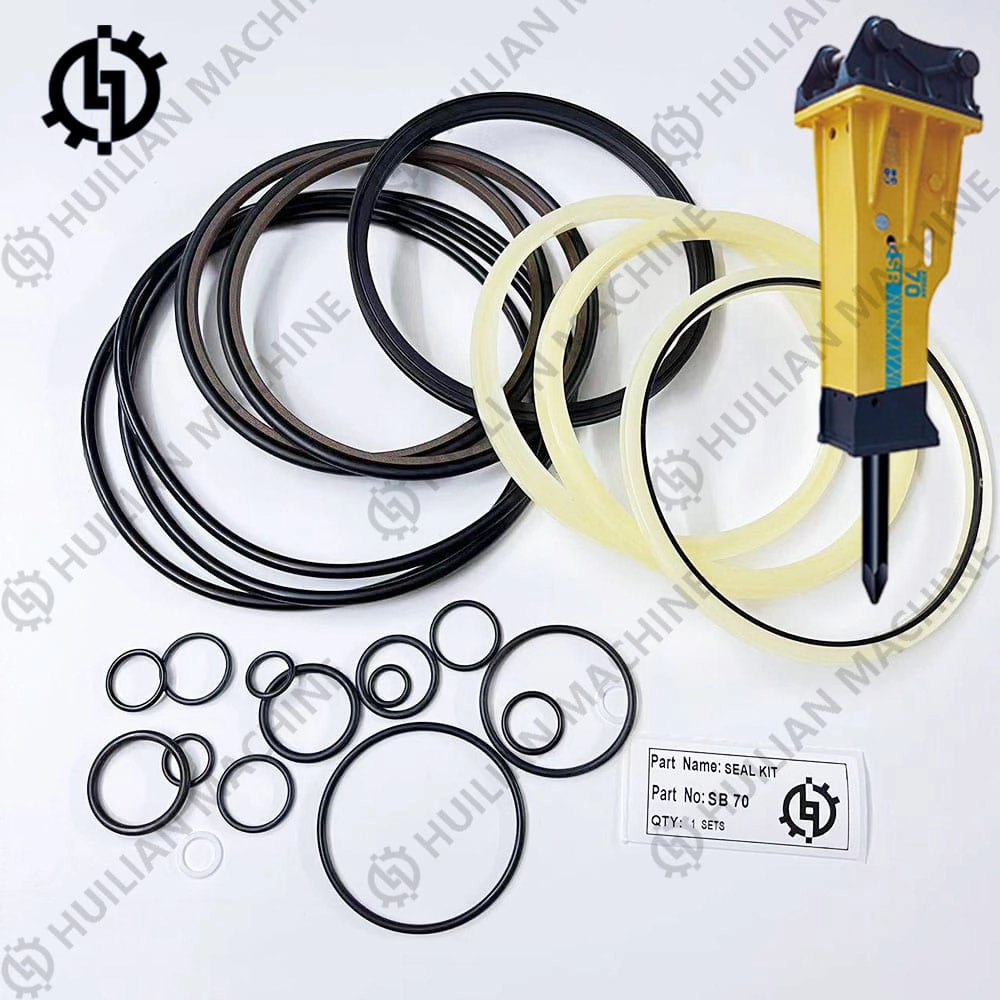
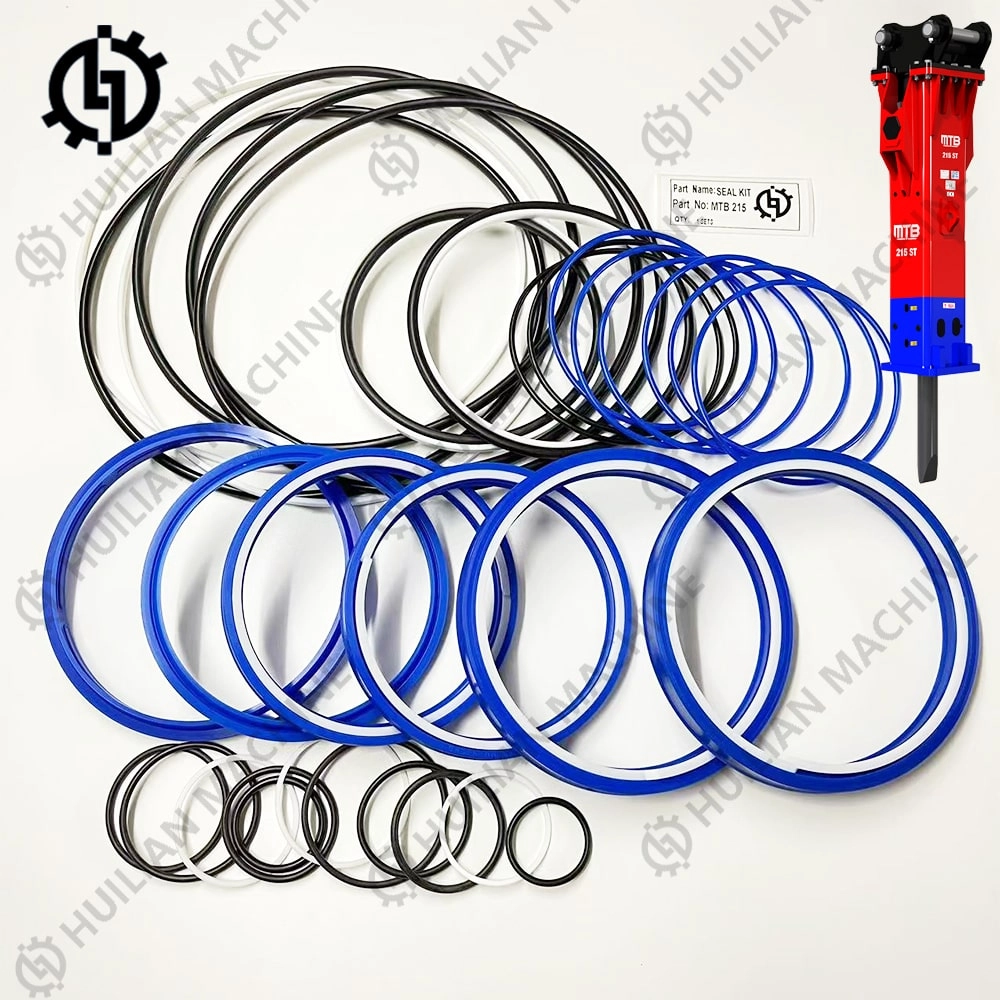
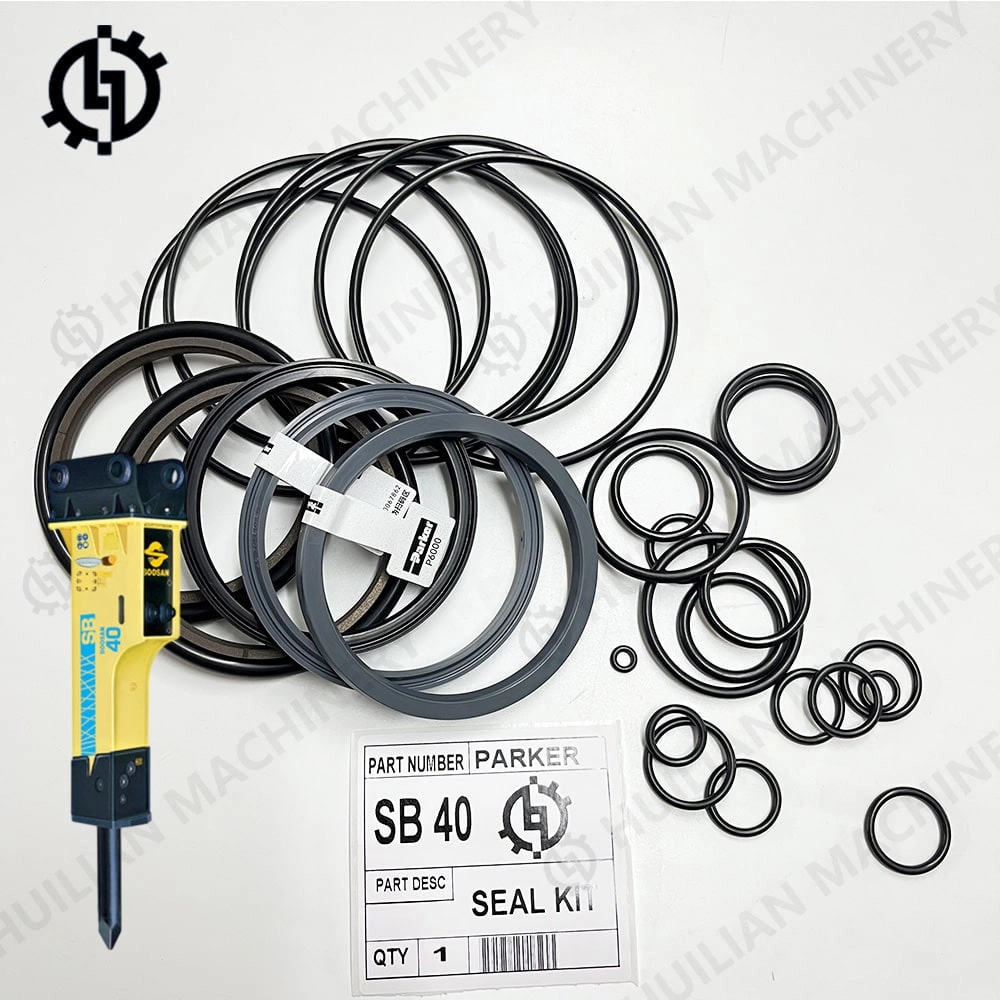
Drawing from the experience of Guangzhou Huilian Machines Co., Ltd (Huilian), a leading OEM supplier exporting to over 90 countries, we see that customers who implement these strict protocols reportedly double the lifespan of their wear parts. Huilian's R&D team specifically designs seal kits and diaphragms to withstand these rigorous modern demands.
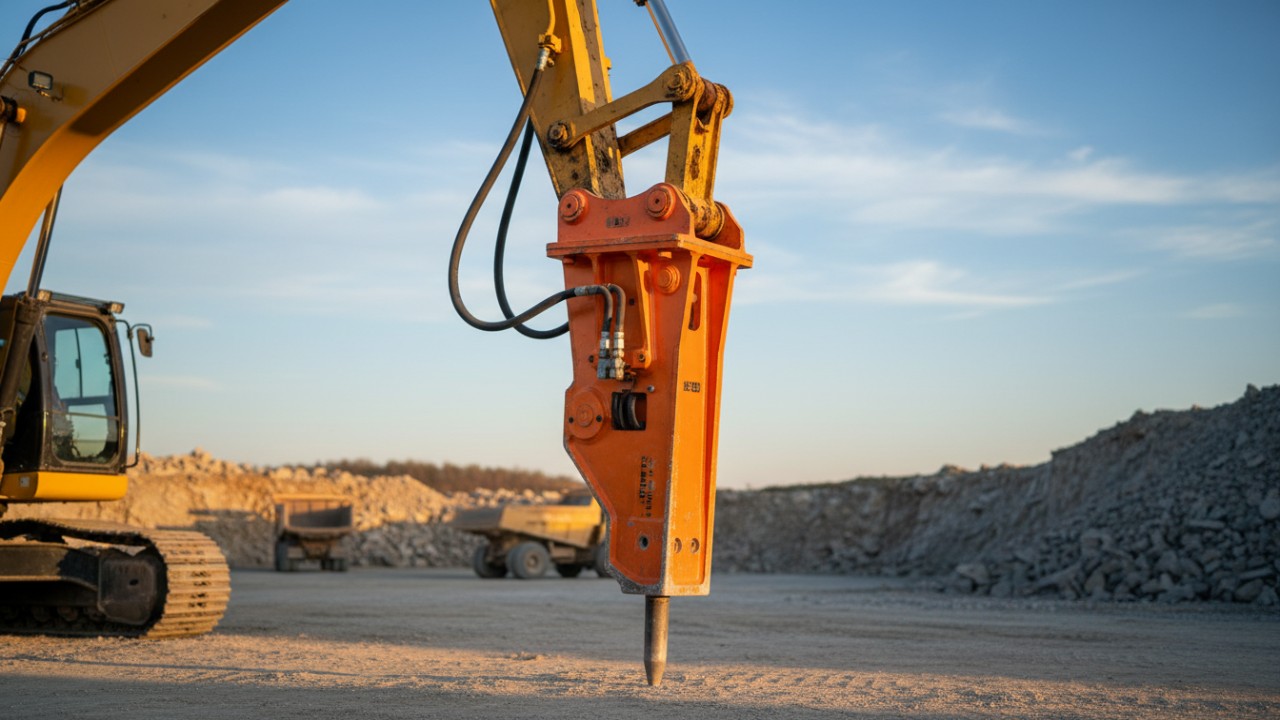
Essential Maintenance Checklist: Daily, Weekly, and Monthly Intervals
A structured maintenance schedule requires daily visual checks for leaks, weekly bushing wear measurements, and monthly nitrogen pressure verification. Breaking these tasks down into intervals ensures no critical component is overlooked during operation.
Implementing a robust hydraulic hammer preventative maintenance schedule is the most effective way to avoid the industry-average downtime costs, which recent reports indicate can reach up to $500,000 per hour in heavy industrial sectors.
Daily Checklist (Every 2 Hours of Operation)
- Grease the Tool: Manually apply chisel paste to the tool shank every 2 hours to maintain a protective film.
- Visual Leak Check: Inspect hydraulic hoses and fittings for oil drips indicating seal failure.
- Tighten Hardware: Check for loose side bolts or through-bolts caused by heavy vibration.
Weekly Checklist (Every 50 Hours)
- Measure Bushing Wear: Use a manufacturer gauge to check the lower bushing; excessive clearance leads to piston misalignment.
- Inspect the Chisel: Look for hairline fractures or mushrooming on the tool head.
Monthly Checklist (Every 200 Hours)
- Nitrogen Testing: Execute nitrogen charging protocols for breakers to ensure the gas pressure matches the manufacturer's spec for optimal impact energy.
- Accumulator Check: Verify the accumulator diaphragm is intact to prevent hydraulic spikes.
Advanced Lubrication: Why Chisel Paste Outperforms Standard Grease
Specialized chisel paste, containing copper and graphite particles, is engineered to withstand temperatures exceeding 500°F (260°C) without liquefying. Standard chassis grease melts under the intense friction of a hydraulic hammer, leading to immediate metal-on-metal contact.
Many operators make the fatal mistake of using NLGI 2 standard grease. This grease cannot maintain the boundary film required during the 20-second strike cycle of a breaker. Once the film breaks down, the piston strikes the tool directly, causing micro-welding and scoring.
- Heat Resistance: Chisel paste remains solid at high temperatures where standard grease runs like water.
- Solid Additives: Copper and graphite provide a physical barrier even if the oil base evaporates.
- Application Method: For vertical applications, ensure the tool is pressed against the piston to prevent filling the chamber with grease (hydraulic lock).
At Huilian, our technical experts recommend pairing high-grade chisel paste with our optimized excavator seal kits to ensure the entire lubrication system remains sealed and contaminant-free. This synergy between seal integrity and lubrication quality is vital for heavy-duty applications.
The 2026 Predictive Maintenance Revolution: IoT and Wear Sensors
Predictive maintenance in 2026 leverages IoT telematics and vibration sensors to detect internal stress fractures and hydraulic anomalies before catastrophic failure occurs. This shift from "fail-and-fix" to "predict-and-prevent" is transforming how fleets manage asset lifecycles.
According to recent market research, the predictive maintenance market is projected to reach over $14 billion by 2025, driven by the need to reduce unplanned outages. By utilizing excavator breaker failure mode analysis, smart systems can now correlate hydraulic flow spikes with seal degradation.
- Vibration Analysis: Sensors detect abnormal vibration patterns indicating early-stage housing cracks.
- Temperature Spikes: Monitoring hydraulic fluid temperature helps identify internal bypass issues in the cylinder.
- Digital Logbooks: Automated service alerts ensure nitrogen charging protocols for breakers are never missed.
- Eco-Friendly Fluids: Transitioning to biodegradable hydraulic fluids to meet 2026 environmental standards without sacrificing performance.
Common Mistakes: 5 Operational Errors That Kill Hydraulic Hammers
The most destructive operational error is "blank firing," where the piston strikes the tool without resistance, sending shockwaves directly into the breaker housing. This single action is the leading cause of broken tie-rods and cracked front heads.
Avoiding these errors is as critical as the maintenance itself. Data from global OEM suppliers like Huilian suggests that 60% of premature failures are operator-induced.
- Blank Firing: Always ensure the tool is firmly pressed against the material before firing.
- Prying with the Tool: Using the breaker as a lever creates lateral stress that snaps chisels and scores pistons.
- Incorrect Flow Settings: Overspeeding the breaker generates excessive heat, hardening the seals and leading to leaks.
- Underwater Operation (No Air Kit): Operating underwater without a compressed air kit sucks water into the hydraulic system, causing instant corrosion and failure.
- Improper Storage: Storing a breaker horizontally for long periods allows seals to deform; always store vertically or use proper supports.
Frequently Asked Questions (FAQ)
How often should I grease my excavator breaker?
Manually grease the tool shank every 2 hours of continuous hammering. If using an auto-lube system, ensure the reservoir is filled daily. Continuous lubrication is the only defense against friction welding.
What are the signs of a failing hydraulic breaker bushing?
Signs include excessive lateral play (wobble) in the tool, visible scoring on the chisel shank, or a noticeable decrease in striking accuracy. If the tool moves more than the manufacturer's limit (often a few millimeters), replace the bushing immediately.
Why is nitrogen pressure important for hydraulic hammers?
Nitrogen acts as a shock absorber and energy store. Low pressure results in weak impact force, while high pressure causes erratic firing and excessive recoil, damaging the carrier.
Can I use standard chassis grease in a breaker?
No. Standard grease liquefies at breaker operating temperatures. You must use high-temp chisel paste with copper or graphite additives to prevent tool and bushing failure.
What is "blank firing" and why is it dangerous?
Blank firing occurs when the breaker is engaged but the tool is not pressed against rock. The piston strikes the retainer bars instead of the rock, sending destructive energy back into the breaker body, often snapping bolts.
How do I match a breaker to my excavator size?
Follow the 10% Rule: The hydraulic breaker's weight should be approximately 10% of the excavator's operating weight. Additionally, ensure the excavator's hydraulic flow and pressure output match the breaker's specifications.
How do I store a hydraulic breaker for the winter?
Store the breaker vertically to prevent seal deformation. Release the nitrogen gas if storing for extended periods, and liberally coat the tool and piston with anti-corrosive grease to prevent rust.
When should the hydraulic oil in a breaker be changed?
Change the hydraulic oil every 600-1,000 hours, or sooner if oil sampling shows high particulate counts or oxidation. Contaminated oil is responsible for up to 80% of hydraulic system failures.
References


About
How can I ensure I’m selecting the right part for my equipment?
Our expert team can assist you in finding the right part based on your machine model, specifications, and requirements. Contact us for personalized support.
What types of excavator parts do you offer?
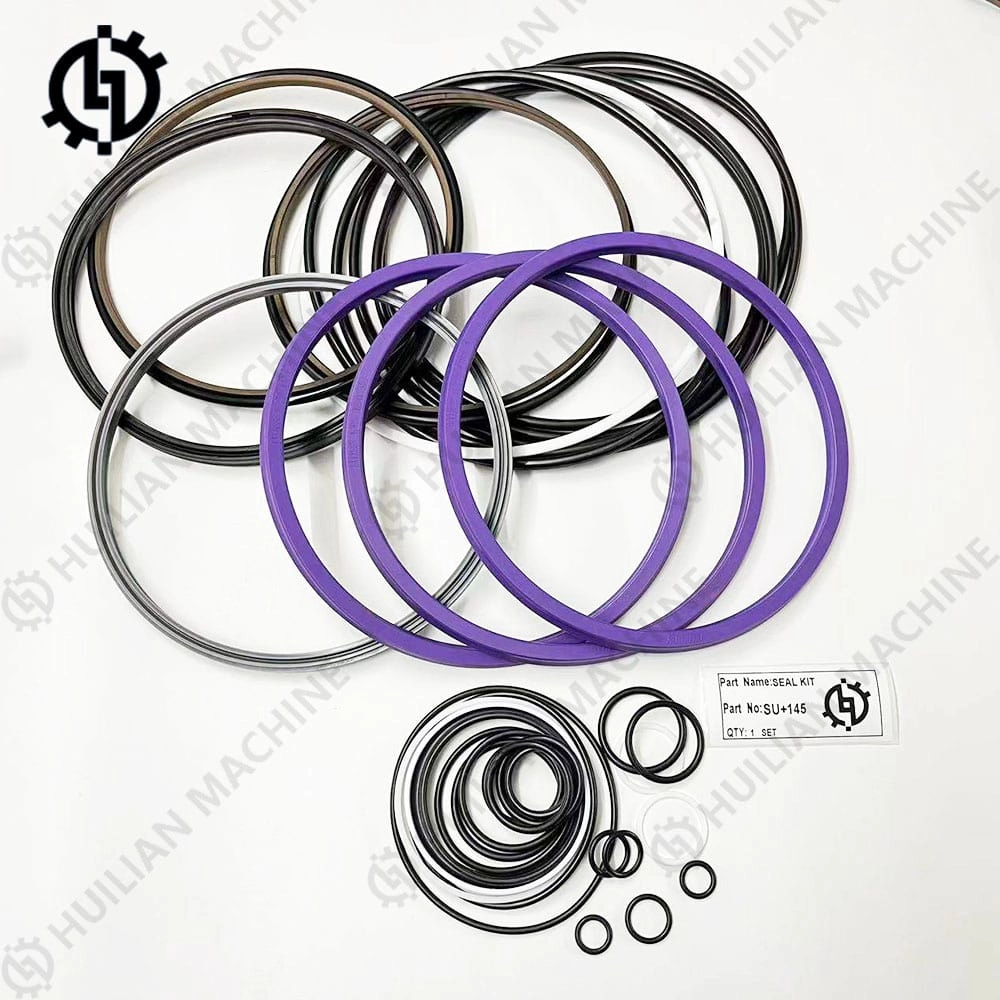
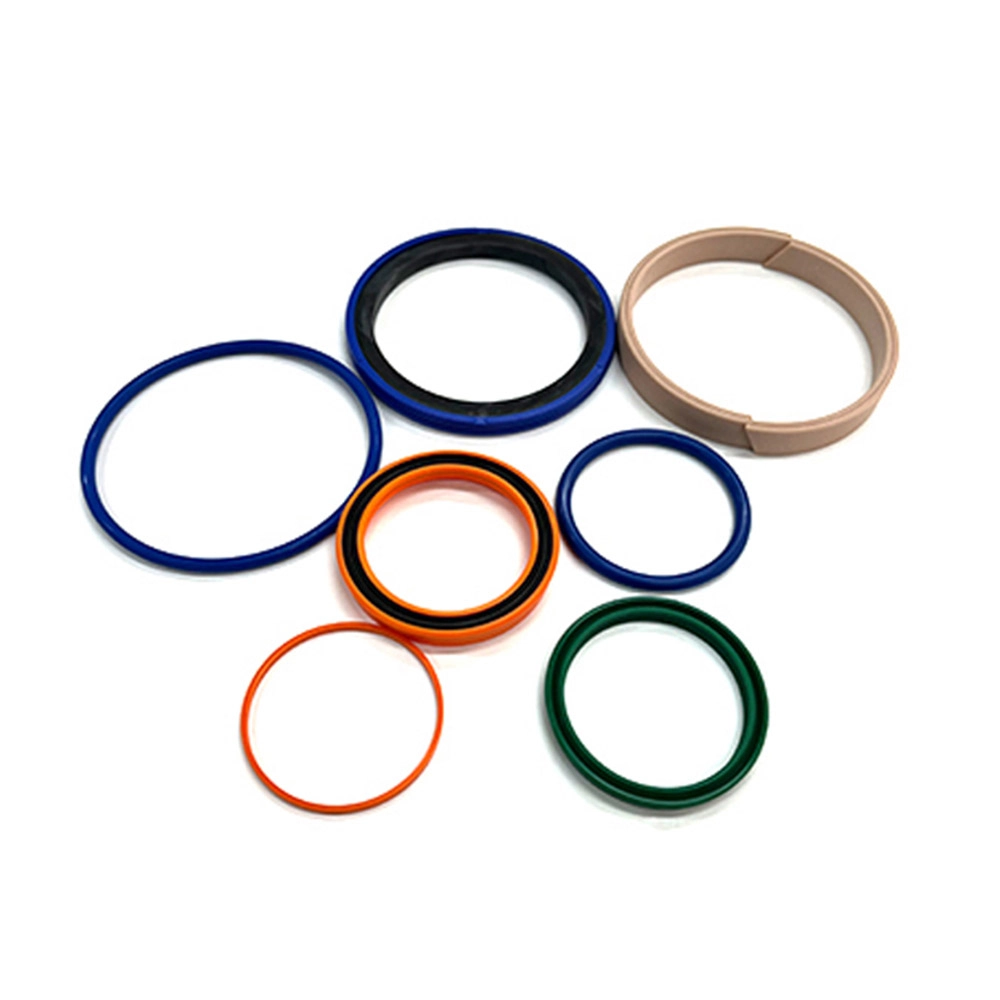
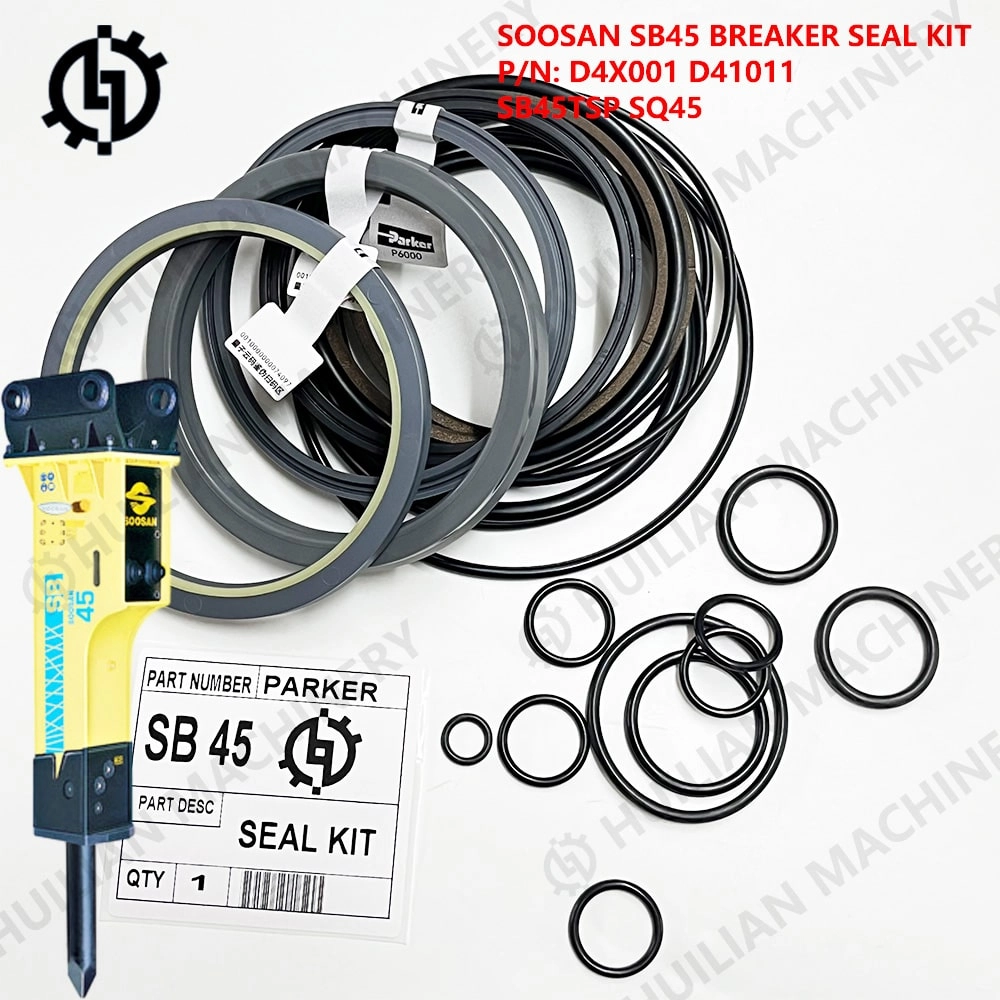
We provide a wide range of high-quality excavator parts, including hydraulic breakers, chisels, seal kits, diaphragms, pistons, wear bushes, retainer bars, through bolts, side bolts, valves, and liners.
Do you offer OEM and aftermarket parts?
Yes, we manufacture high-quality OEM parts and supply aftermarket parts from top brands such as NOK, Parker, SKF, and Hallite to ensure optimal performance.
Are your parts compatible with all excavator brands?
Yes, our parts are designed to be compatible with major brands like Komatsu, Caterpillar, Hitachi, Hyundai, Doosan, JCB, Kobelco, Sany, and many more.
What is your shipping and delivery time?
We offer fast and reliable global shipping. Delivery times vary depending on location and order size, but we strive to process and ship orders as quickly as possible.


Getting started is easy 
Contact with our experts to find the best excavator parts solutions for your needs. Discover how Huilian can enhance your equipment's performance and efficiency.


Get in touch
 About us
© 2025 HUILIAN MACHINE. All rights reserved