



Compatibility Chart: Matching Your Breaker to Your Excavator Weight (Tons) in 2026
- What Is Excavator Tonnage Matching for Breakers?
- Quick Summary & Key Takeaways
- 2026 Breaker to Carrier Weight Compatibility Chart (Data Comparison Table)
- The Science of Sizing: Hydraulic Flow, Pressure, and Stability
- Modern Demolition: 2026 Tech Trends and Cost Analysis
- Common Mistakes and Expert Tips for Tonnage Matching
- Industry Leading Solutions for Attachment Matching
- Conclusion
- Frequently Asked Questions
- How do I calculate the right size breaker for my excavator?
- Can I put a larger breaker on a smaller excavator?
- What happens if a breaker is too small for the excavator?
- Does the quick coupler weight affect excavator tonnage matching?
- How does hydraulic flow impact breaker performance?
- What is the ideal operating weight ratio for demolition tools?
- How do I know if my excavator's back-pressure is correct?
- Are breaker-to-carrier compatibility charts universal?
What Is Excavator Tonnage Matching for Breakers?
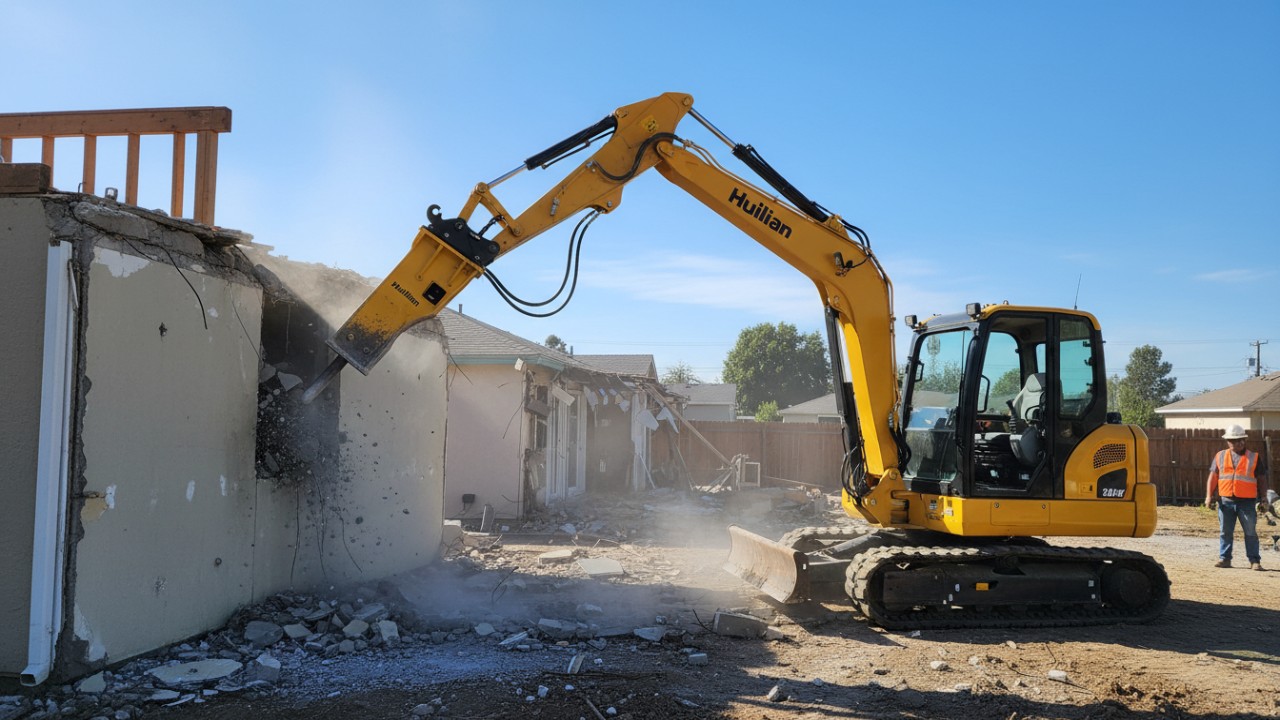
Excavator tonnage matching is the critical process of precisely pairing a hydraulic breaker's operating weight and impact energy with an excavator's carrier weight range compatibility. Properly sizing these attachments ensures optimal hydraulic flow, prevents structural damage to the boom, and maximizes overall demolition efficiency.
Choosing the right breaker is more than just picking the heaviest tool on the lot. As the leading experts at Guangzhou Huilian Machines Co., Ltd know, a perfectly matched system balances the excavator operating weight ratio to deliver maximum force without overstressing the machine. Since 2005, our engineering teams have seen firsthand how utilizing a comprehensive hydraulic breaker sizing guide prevents costly downtime and catastrophic equipment failure.
For instance, when working with compact machines in tight urban environments, selecting a specialized 0.5-1.2 Ton Mini Excavator Breaker ensures that the carrier remains stable while still delivering the necessary punch for residential concrete removal. The goal is to achieve a seamless integration where the carrier and the attachment function as a single, unified demolition powerhouse.
Quick Summary & Key Takeaways
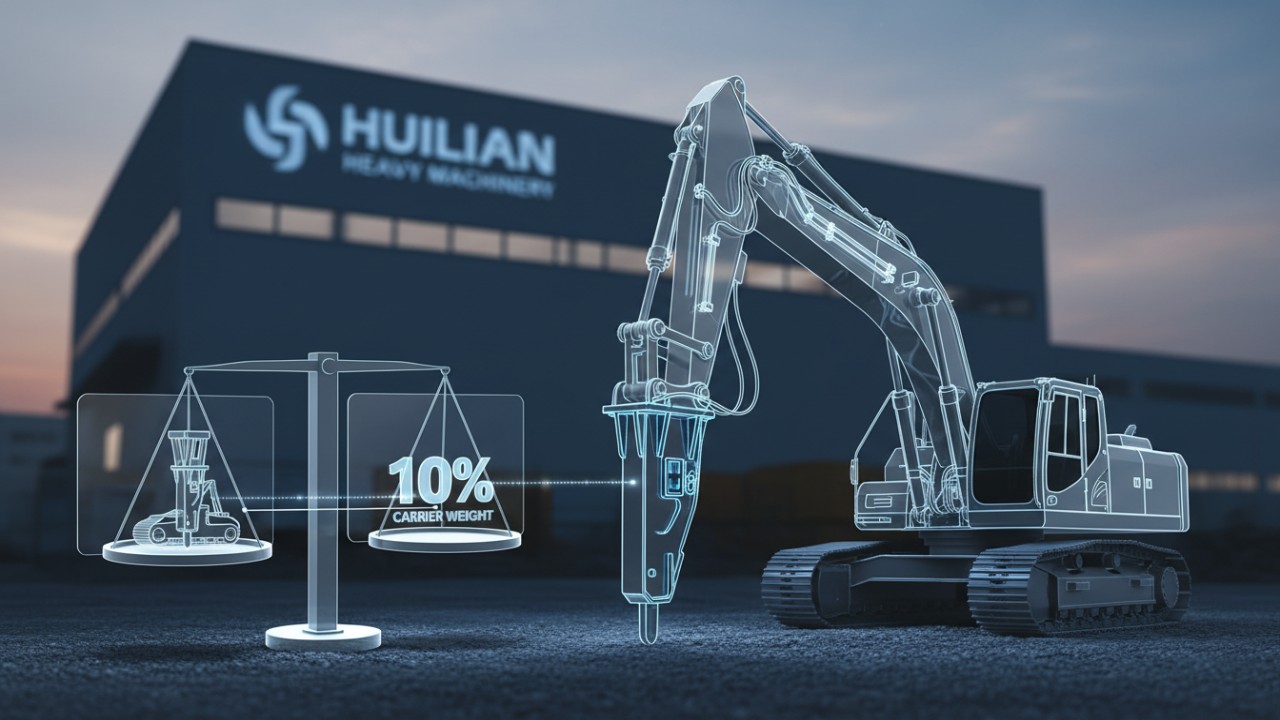
A successful breaker installation requires adhering to the 10 percent rule, where the breaker's weight equals roughly 10 percent of the carrier's total operating weight. Balancing hydraulic flow requirements and back-pressure is equally essential to prevent boom damage or internal hammer failure.
When matching demolition tools to your heavy equipment, keep these vital points in mind to ensure long-term reliability:
- The 10 Percent Rule: Always match the breaker's weight to approximately 10 percent of the excavator's total operating weight for ideal balance and a safe center of gravity.
- Hydraulic Flow is King: Physical weight is only half the battle. Hydraulic flow (GPM) and back-pressure are just as critical as physical weight for proper carrier compatibility.
- Avoid Sizing Extremes: Oversized breakers cause severe boom damage and tipping hazards, while undersized breakers lead to internal hammer failure, blown seals, and blank firing.
2026 Breaker to Carrier Weight Compatibility Chart (Data Comparison Table)
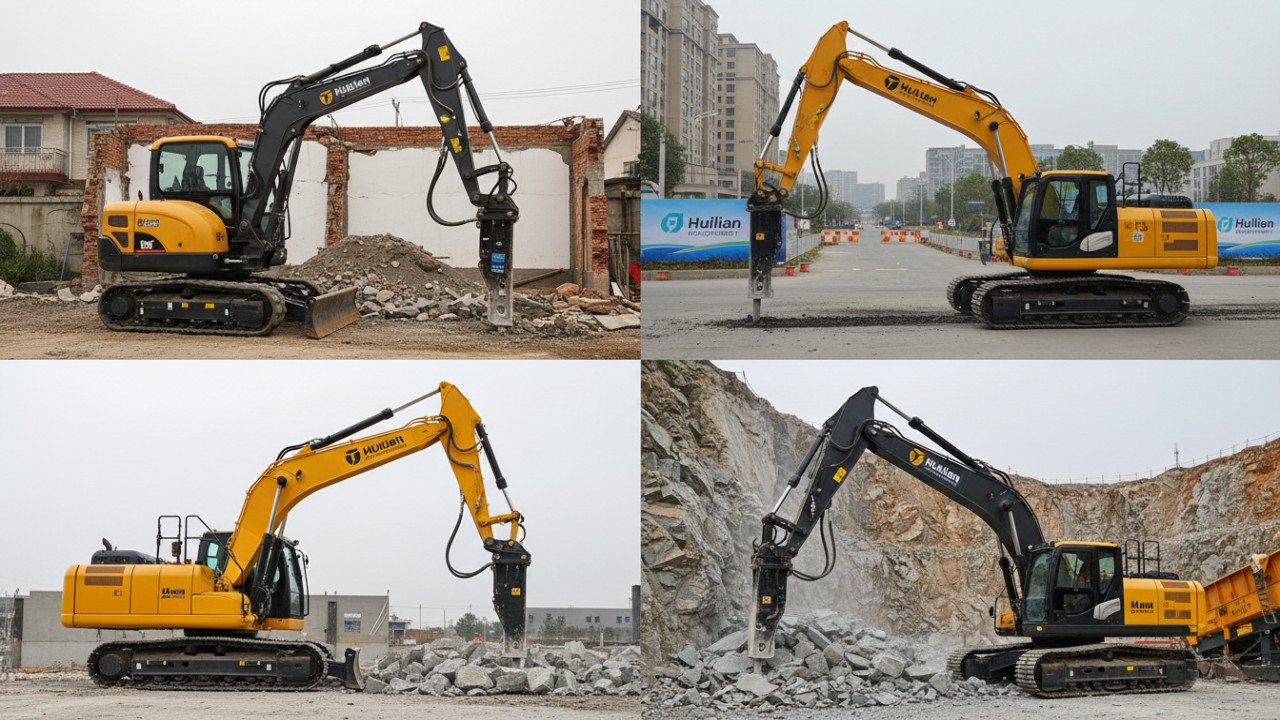
This 2026 compatibility chart provides an authoritative hydraulic breaker sizing guide based on standard excavator tonnage matching principles. By aligning the breaker weight with the carrier's weight class, operators can optimize impact energy vs machine size for safe, efficient demolition.
According to industry classifications established by organizations like the Association of Equipment Manufacturers (AEM), excavators are grouped into distinct size categories. Use the data comparison table below to determine the ideal breaker weight range for your specific machine.
If you are operating a midi-class machine, upgrading to a high-quality 4-7 Ton Excavator Hydraulic Rock Breaker will provide the perfect balance of power and stability for utility trenching. Always cross-reference this chart with your machine's specific lifting capacity chart.
The Science of Sizing: Hydraulic Flow, Pressure, and Stability
The science of sizing relies on the Goldilocks Rule of attachment weight to maintain the excavator's center of gravity and safe tipping loads. Operators must calculate the exact hydraulic flow requirements and operating pressure to drive the hammer efficiently without overheating the system.
Proper excavator operating weight ratio goes far beyond static weight. It involves dynamic forces that impact the machine during every single strike:
- Center of Gravity & Stability: Maintaining safe tipping loads is crucial. An oversized breaker shifts the center of gravity dangerously forward, which can cause the machine to tip when swinging over the side of the tracks.
- Hydraulic Harmony: The carrier's hydraulic system must provide adequate Gallons Per Minute (GPM) and Pounds Per Square Inch (PSI). If the flow is too low, the breaker will strike weakly. If it is too high, the hydraulic fluid will overheat, destroying the Parker seal kits and internal valves.
- Mounting Logistics: Accounting for mounting brackets, pin diameters, and structural limits during the installation process ensures a secure, vibration-free fit.
For standard carriers, utilizing a precisely engineered 18-21 Tons Breaker guarantees that the hydraulic flow perfectly matches the impact energy required for heavy commercial demolition.
Modern Demolition: 2026 Tech Trends and Cost Analysis
Modern 2026 demolition trends highlight variable-speed breaker technologies that automatically adjust impact energy based on material density. Correctly sizing your breaker significantly reduces excessive wear and tear, lowering overall maintenance costs by up to 30 percent across your entire heavy equipment fleet.
As we move through 2026, technology is transforming how we approach impact energy vs machine size.
- Variable-Speed Tech: New breakers sense material hardness and adjust their strike rate automatically, preventing structural shock to the excavator's boom.
- Cost Reductions: A breakdown of operating costs demonstrates how correct sizing prevents internal seal blowouts and piston damage. Running an improperly sized breaker can increase maintenance costs exponentially due to frequent replacements of chisels, diaphragms, and WearBush components.
- Fuel Efficiency: Real-world cost comparisons show the fuel efficiency of a properly matched 20-ton excavator versus an oversized 30-ton carrier on identical jobs. The correctly matched machine burns significantly less diesel while achieving the same daily yardage.
At Guangzhou Huilian Machines Co., Ltd, our R&D experts continuously integrate these advancements into our OEM excavator parts to ensure our global distributor partners receive the most efficient, technologically advanced tools on the market.
Common Mistakes and Expert Tips for Tonnage Matching
A frequent mistake in excavator tonnage matching is assuming a larger breaker guarantees faster production, which actually decreases structural integrity and slows cycle times. Always verify back-pressure requirements and account for the quick coupler's weight to ensure safe and efficient operation.
Avoid these common pitfalls to maximize your equipment's lifespan and protect your operators:
- Mistake: Assuming bigger is always better. An oversized hammer damages the boom, overheats the hydraulic fluid, and creates a dangerous lifting scenario.
- Expert Tip: Always verify the back-pressure requirements of the breaker against the excavator's auxiliary hydraulic lines before operation. High back-pressure acts as a shock absorber against the piston, killing your impact energy and generating massive amounts of heat.
- Mistake: Forgetting to account for the weight of the quick coupler when calculating the total attachment load. This hidden weight can easily push a machine past its safe lifting capacity, violating strict safety standards set by the Occupational Safety and Health Administration (OSHA).
Industry Leading Solutions for Attachment Matching
Leveraging proprietary compatibility tools from Guangzhou Huilian Machines Co., Ltd eliminates the guesswork in carrier weight range compatibility. Our ongoing support, flow testing, and hydraulic calibration ensure that your carrier and attachment work in perfect harmony for maximum demolition output.
Founded in 2005, Huilian Machine is a professional OEM supplier of excavator parts and one of the leading breaker parts manufacturers in China. Our extensive product line includes everything from complete hydraulic breaker hammers to chisels, seals, pistons, and rompin/retainer bars.
- Case Study: A mid-sized demolition contractor recently struggled with poor cycle times and overheating issues. By utilizing our compatibility tools and upgrading to a perfectly matched hydraulic hammer from our inventory, they increased daily output by 25 percent and eliminated their overheating problems.
- Global Reach: With products exported to over 90 countries, our experienced technicians and after-sales service teams provide the exact flow testing and calibration needed for success on any jobsite.
For heavy-duty applications, contractors rely on our 28-35 Ton Excavator Hydraulic Rock Breaker to deliver unmatched reliability, durability, and breaking power in the toughest quarry environments.
Conclusion
Matching your hydraulic breaker to your excavator's tonnage is critical for maximizing productivity, ensuring operator safety, and extending the lifespan of your heavy equipment. By utilizing compatibility charts and understanding hydraulic requirements, you can optimize your next demolition project efficiently.
Avoiding common sizing mistakes and adhering to proper excavator tonnage matching guidelines will save you thousands in maintenance and fuel costs. Whether you are replacing worn seals, upgrading internal valves, or investing in a brand-new breaker, always consult a professional hydraulic breaker sizing guide and partner with an experienced manufacturer. Proper setup guarantees that your machine will run cooler, hit harder, and last longer.
Frequently Asked Questions
How do I calculate the right size breaker for my excavator?
- Use the 10 percent rule where the breaker weight is roughly 10 percent of the carrier weight.
- Verify that the excavator's hydraulic flow and operating pressure match the breaker's requirements.
- Ensure the pin sizes and mounting brackets are compatible with your specific boom layout.
Can I put a larger breaker on a smaller excavator?
- No, an oversized breaker creates dangerous instability and tipping hazards.
- The excess weight will cause severe stress fractures on the boom and stick.
- The smaller excavator's hydraulic system will overheat trying to power the heavy attachment.
What happens if a breaker is too small for the excavator?
- The excessive hydraulic power from the carrier will damage the breaker's internal seals and components.
- It often leads to blank firing, which destroys the tool and the piston.
- You will experience inefficient breaking power and wasted fuel consumption.
Does the quick coupler weight affect excavator tonnage matching?
- Yes, the weight of the quick coupler must be subtracted from the maximum allowable attachment weight.
- Failing to account for the coupler can push the machine over its safe tipping load.
- Couplers also extend the center of gravity, which changes the lifting capacity dynamics.
How does hydraulic flow impact breaker performance?
- Too little hydraulic flow results in slow, weak impacts and poor demolition performance.
- Too much flow causes rapid overheating, internal seal failures, and premature component wear.
- Matching the GPM (gallons per minute) perfectly ensures the hammer fires at its intended rate.
What is the ideal operating weight ratio for demolition tools?
- For most standard hydraulic breakers, an operating weight ratio between 8 percent and 12 percent of the carrier weight is ideal.
- Heavier specialty tools like pulverizers may require a slightly different ratio depending on the linkage.
- Always consult the specific attachment manufacturer's guidelines for the exact ratio.
How do I know if my excavator's back-pressure is correct?
- You must use a flow meter and pressure gauge during installation to test the auxiliary lines.
- High back-pressure acts as resistance against the breaker piston, significantly reducing impact energy.
- Adjustments to the return line or installing larger diameter hoses can help resolve back-pressure issues.
Are breaker-to-carrier compatibility charts universal?
- No, compatibility charts vary significantly by manufacturer and specific equipment series.
- Differences in hydraulic engineering, linkage design, and operating pressures change compatibility.
- Always use the chart specifically provided by the brand of the breaker and the brand of the excavator.
Contact Guangzhou Huilian Machines Co., Ltd today to discuss your specific needs.


About
What is your shipping and delivery time?
We offer fast and reliable global shipping. Delivery times vary depending on location and order size, but we strive to process and ship orders as quickly as possible.
What types of excavator parts do you offer?
We provide a wide range of high-quality excavator parts, including hydraulic breakers, chisels, seal kits, diaphragms, pistons, wear bushes, retainer bars, through bolts, side bolts, valves, and liners.
Do you offer OEM and aftermarket parts?
Yes, we manufacture high-quality OEM parts and supply aftermarket parts from top brands such as NOK, Parker, SKF, and Hallite to ensure optimal performance.
How can I ensure I’m selecting the right part for my equipment?
Our expert team can assist you in finding the right part based on your machine model, specifications, and requirements. Contact us for personalized support.
Are your parts compatible with all excavator brands?
Yes, our parts are designed to be compatible with major brands like Komatsu, Caterpillar, Hitachi, Hyundai, Doosan, JCB, Kobelco, Sany, and many more.




Getting started is easy 
Contact with our experts to find the best excavator parts solutions for your needs. Discover how Huilian can enhance your equipment's performance and efficiency.


Get in touch
 About us
© 2025 HUILIAN MACHINE. All rights reserved