



Compact Solutions: Best Small Breakers for Mini Excavators (1-8 Ton)
- What Are Mini Excavator Breakers?
- Key Takeaways: Quick Summary
- Sizing Guidelines: Matching Breakers to 1-8 Ton Carriers
- Data Comparison Table: Small Breaker Classifications (1-8 Ton)
- Expert Tips & Common Mistakes in Compact Demolition
- 2026 Trends: Silenced Breakers and Urban Compliance
- Industry Leading Solutions: Elevating Your Demolition Game
- Conclusion & Call to Action
- Frequently Asked Questions
- What size breaker do I need for a 3-ton mini excavator?
- Can I use the same hydraulic breaker on different mini excavators?
- What happens if a hydraulic breaker is too big for a mini excavator?
- How often should I grease my mini excavator breaker?
- What is blank firing on a hydraulic hammer?
- Why is nitrogen gas used in hydraulic breakers?
- What is the difference between a moil point and a chisel tool?
- How much does a mini excavator breaker cost?
When tackling tough concrete, rock, or asphalt on a confined job site, equipping your machine with the right tools is the difference between a profitable day and costly downtime. Mini excavator breakers have transformed how contractors approach tight-space jobs, offering massive demolition power within a highly compact footprint. However, selecting the perfect hydraulic hammer for a 1-8 ton carrier is not as simple as picking the heaviest attachment available. It requires a deep understanding of hydraulic dynamics, weight ratios, and modern regulatory compliance.
In this comprehensive guide, we will explore the critical factors involved in sizing your breaker, the latest trends in noise reduction, and the best practices for maintenance. Whether you are trenching for residential utilities or scaling rock in an urban environment, mastering these compact solutions will elevate your demolition game.
What Are Mini Excavator Breakers?
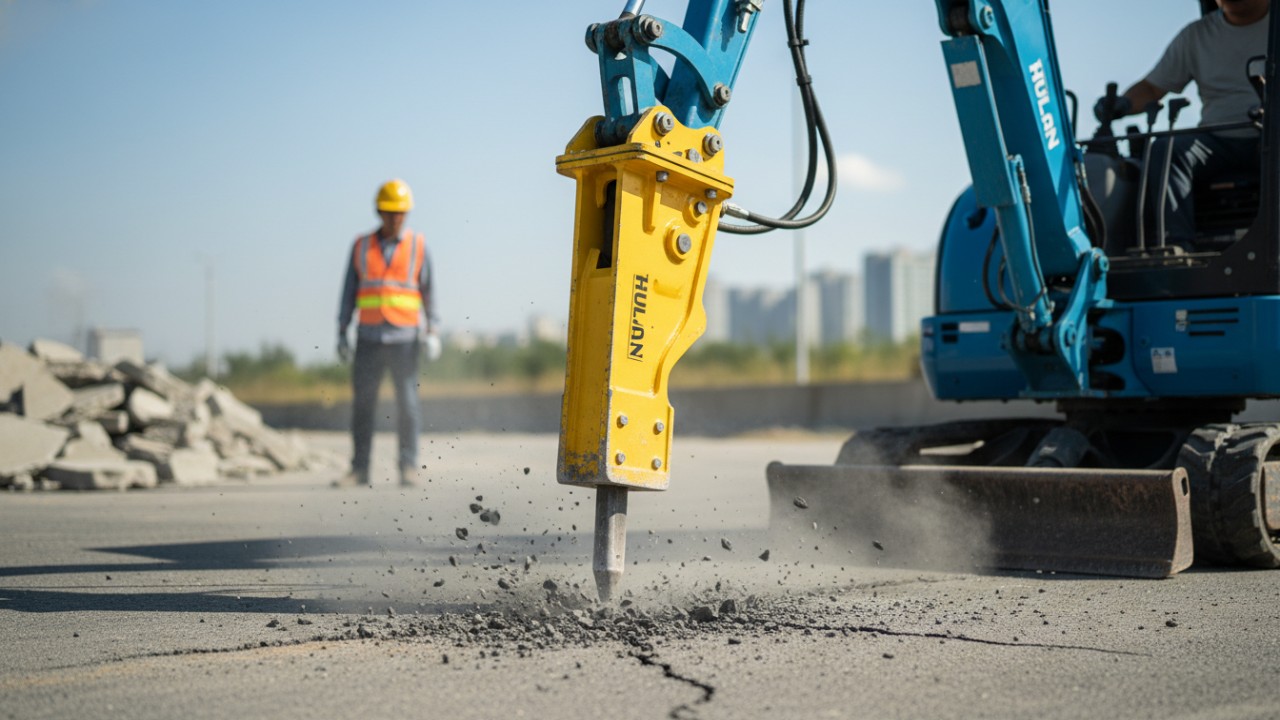
Mini excavator breakers are specialized hydraulic hammer attachments engineered specifically for compact carriers weighing between 1 and 8 tons, utilizing the machine’s auxiliary hydraulic flow to deliver high-impact energy for breaking concrete, rock, and asphalt while preventing structural stress to the carrier.
Beyond their basic definition, these attachments are precision-engineered powerhouses. They convert the kinetic energy of pressurized hydraulic fluid into mechanical impact energy. Inside the breaker housing, a precision-machined piston strikes a high-strength steel tool bit (such as a moil point or chisel) hundreds of times per minute.
Properly matched breakers ensure highly efficient demolition by working in perfect harmony with the carrier's pump. When the attachment is correctly paired with the excavator, it prevents dangerous pressure spikes, protects the boom from micro-fractures, and ensures that the internal hydraulic seals remain intact over thousands of hours of operation.
Key Takeaways: Quick Summary
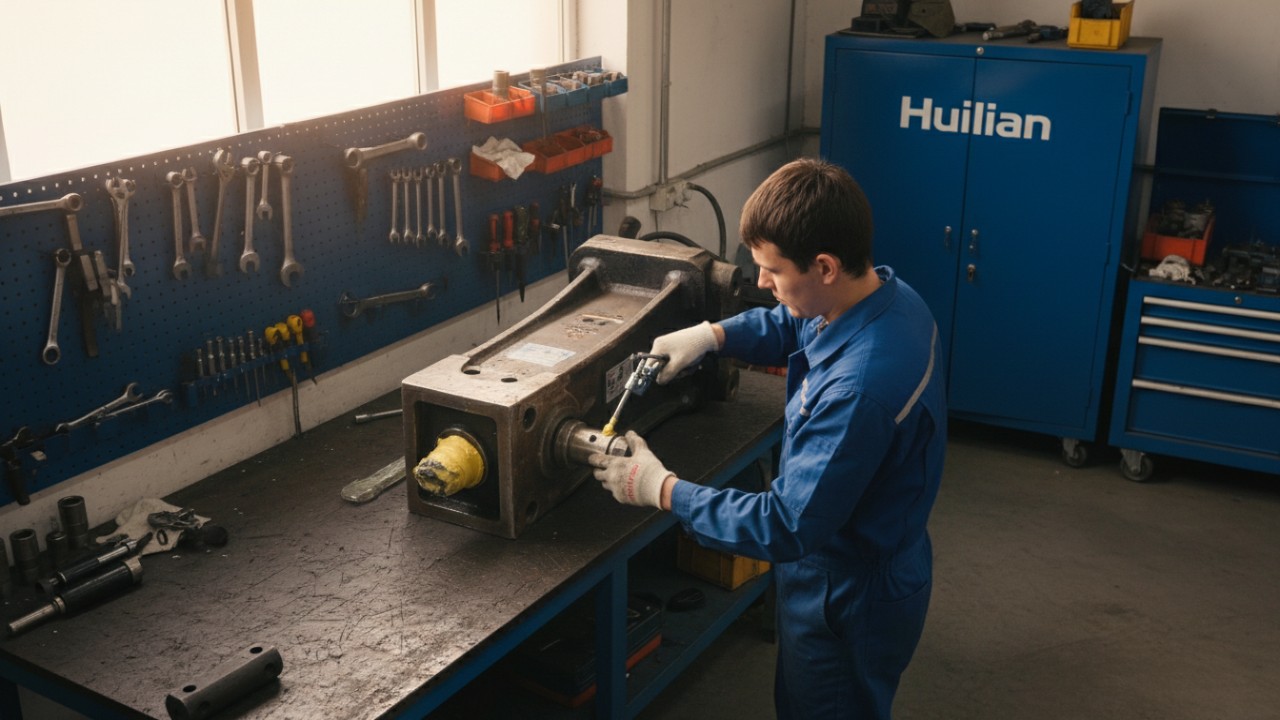
To maximize job site productivity and operator safety, contractors must strictly balance attachment weight and hydraulic flow specifications, adapt to modern urban noise regulations with silenced models, and prioritize rigorous daily maintenance routines to significantly extend the equipment's operational lifespan.
- Weight Limits: Always follow the 10-15% weight rule to ensure the breaker does not exceed the safe lifting capacity of your excavator.
- Hydraulic Matching: Match hydraulic flow (GPM) and operating pressure (PSI) strictly to the carrier's output specifications to avoid overheating.
- Noise Compliance: Silenced breakers are becoming a regulatory necessity for urban and residential projects entering 2026.
- Maintenance: Rigorous daily maintenance, including greasing with high-temperature moly-paste and checking nitrogen pressure, can easily double the attachment's lifespan.
Sizing Guidelines: Matching Breakers to 1-8 Ton Carriers
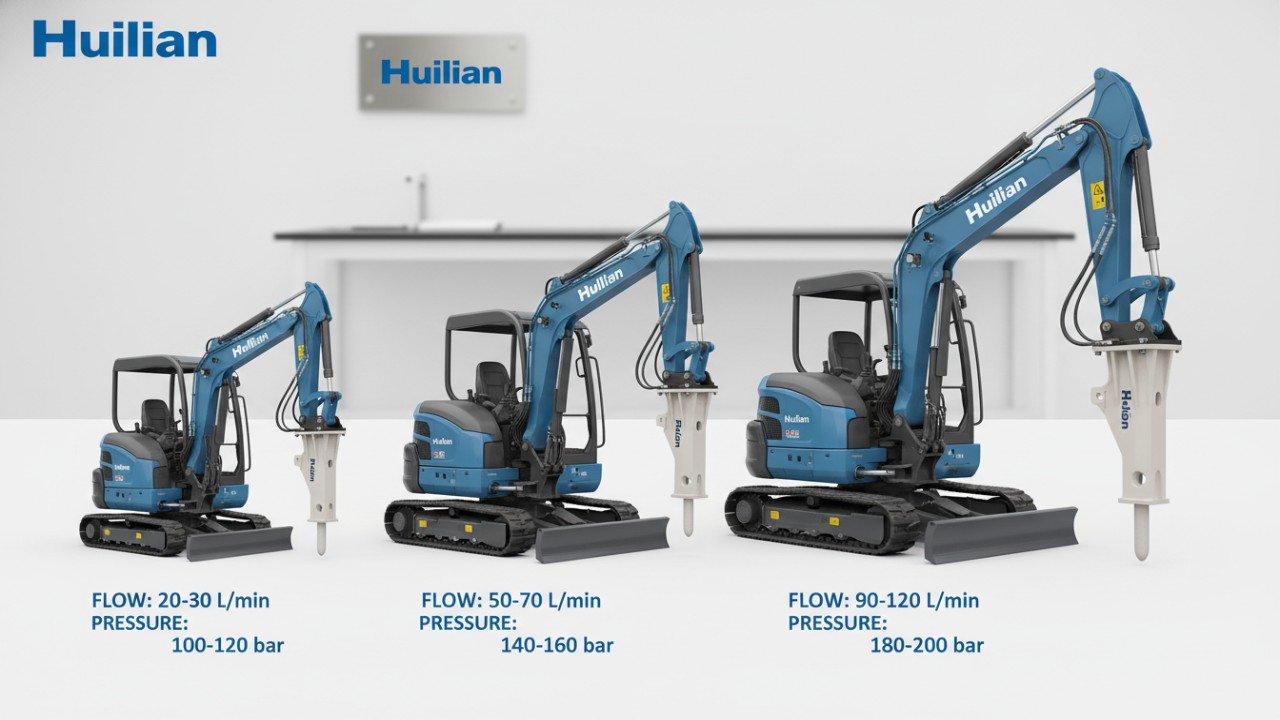
Properly sizing your breaker requires a meticulous balance between the 10-15% weight rule and exact hydraulic flow rate compatibility, creating a technical synergy that maximizes impact energy while preventing hazardous tipping, boom stress, and catastrophic hydraulic fluid overheating during intense demolition tasks.
Understanding the relationship between your attachment and the mini excavator operating weight is the foundational step in safe compact demolition. Reputable industry bodies, such as the Association of Equipment Manufacturers (AEM), consistently emphasize the importance of standardized sizing and strict safety protocols for compact equipment. Following the 10-15% weight rule means your hydraulic hammer's total weight should ideally sit between 10% and 15% of the excavator's total operating weight.
Beyond physical weight, finding the technical sweet spot between hydraulic flow rate (Gallons Per Minute - GPM) and Operating Pressure (PSI) is critical. If a breaker demands more GPM than the carrier can provide, the hammer will strike weakly and erratically, leading to low productivity. Conversely, if the carrier pushes too much flow into a small breaker, it creates immense back-pressure, rapidly overheating the hydraulic fluid and blowing internal seals.
The hidden dangers of over-sizing go beyond hydraulic failure. A breaker that is too heavy creates severe tipping hazards, especially when the boom is fully extended over the side of the tracks. Under-sizing, while less dangerous, leads to premature wear on the breaker as operators instinctively push down harder on the machine to compensate for the lack of impact energy.
Data Comparison Table: Small Breaker Classifications (1-8 Ton)
The 1-8 ton compact equipment demolition spectrum is systematically divided into Micro, Mini, and Midi classes, with each distinct tier possessing unique hydraulic flow requirements, average impact energy ratings, and ideal job site applications tailored to specific carrier sizes and project demands.
| Classification | Carrier Weight Class | Avg. Impact Energy (ft-lbs) | Required Flow Rate (GPM) | Ideal Job Site Applications |
|---|---|---|---|---|
| Micro | 1 - 3 Ton | 150 - 300 | 4 - 9 GPM | Light driveway removal, indoor demolition, tight residential landscaping |
| Mini | 3 - 5 Ton | 300 - 550 | 7 - 14 GPM | Sidewalks, block walls, residential utility trenching, pool excavations |
| Midi | 5 - 8 Ton | 550 - 1,000 | 12 - 22 GPM | Heavy-duty urban trenching, reinforced concrete slabs, commercial prep |
By consulting this structured data, contractors can visually contrast small breaker sizes and ensure they are selecting the exact right tool for both their machine and their specific material density.
Expert Tips & Common Mistakes in Compact Demolition
Avoiding destructive operational errors like blank firing and improper tool selection is vital for extending your attachment's lifespan, requiring operators to apply correct vertical downforce and choose the appropriate chisel or moil point to drastically improve overall demolition efficiency and safety.
One of the most catastrophic mistakes an operator can make is blank firing (also known as dry firing). This occurs when the hydraulic pedal is engaged, but the tool bit is not resting firmly against a solid surface. Without material to absorb the blow, the internal piston's immense kinetic energy is forced directly into the breaker housing and retaining pins, causing rapid structural failure. Always apply proper vertical downforce against the material before engaging the hammer.
Another common error is ignoring material density and using a standard moil point for every single job. While a moil point is excellent for general multi-directional fracturing, switching to a chisel tool is far superior for precision trenching or cutting straight lines in asphalt.
Finally, how you store your equipment matters. Always store breakers vertically when detached to prevent internal seal deformation and subsequent hydraulic fluid leaks. Mastering these habits will drastically improve your overall Efficiency & Maintenance routines and protect your investment.
2026 Trends: Silenced Breakers and Urban Compliance
As urban noise regulations become increasingly strict, silenced concrete breakers are now a regulatory necessity for city demolition, utilizing fully enclosed box designs and advanced polyurethane dampeners to drastically minimize decibel output and meet stringent local environmental compliance laws and protect operators.
The landscape of modern compact demolition in city environments is shifting rapidly. With organizations like the Occupational Safety and Health Administration (OSHA) strictly enforcing an 85 dBA action level for worker hearing protection over an 8-hour shift, loud, open-style breakers are becoming obsolete.
To combat this, manufacturers are engineering fully enclosed, silenced breaker box designs. These models suspend the internal percussion mechanism within a heavy-duty steel casing using high-density polyurethane dampeners. This prevents metal-on-metal resonance and absorbs high-frequency sound waves before they reach the operator or the surrounding neighborhood.
Furthermore, as we move through 2026, we are seeing a massive rise in built-in auto-lube systems in smaller 1-8 ton attachments. Previously reserved for massive mining excavators, these compact auto-lube systems automatically inject precise amounts of moly-paste into the tool bushing. This eliminates the need for manual hourly greasing, minimizing operator error and preventing friction melting during long shifts.
Industry Leading Solutions: Elevating Your Demolition Game
Upgrading to premium, precision-engineered attachments ensures optimal hydraulic performance and minimal downtime, which is why industry leaders focus on manufacturing advanced hydraulic breakers specifically optimized to match the complex hydraulic power curves of modern 1-8 ton compact excavators for maximum efficiency.
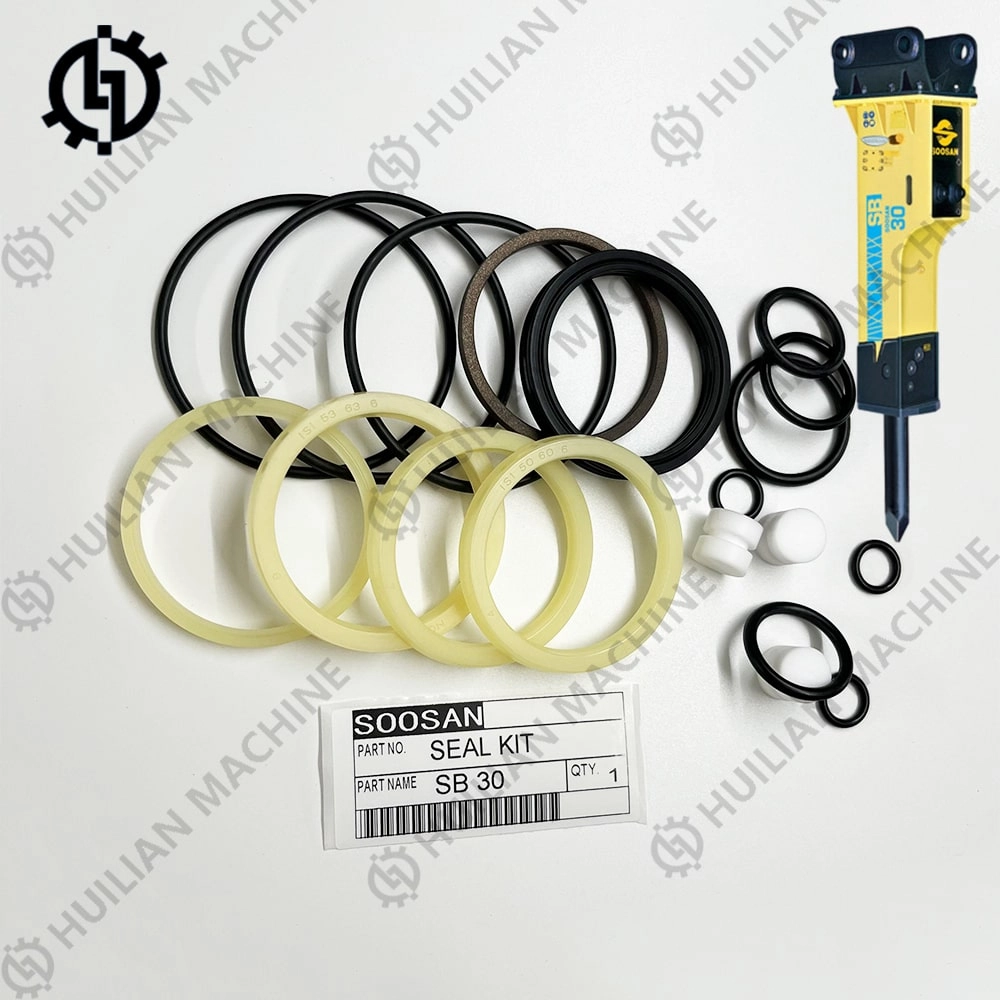
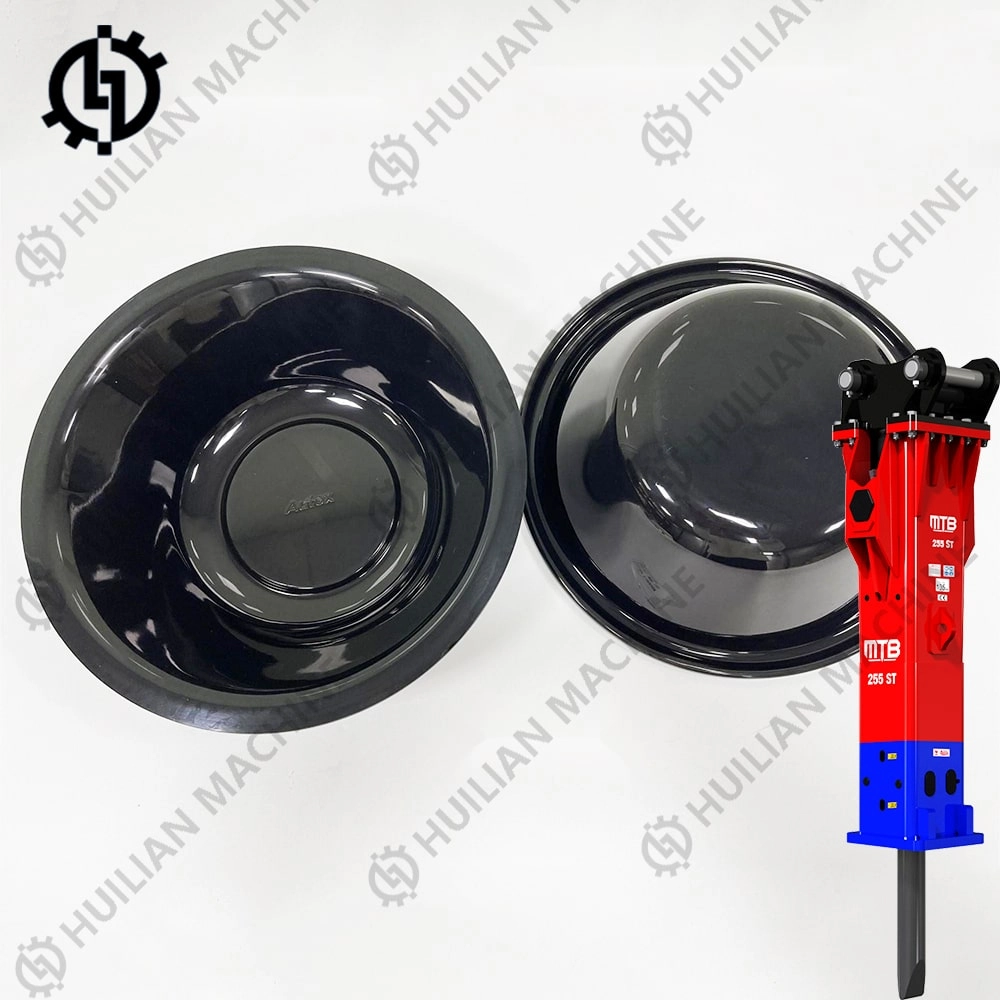
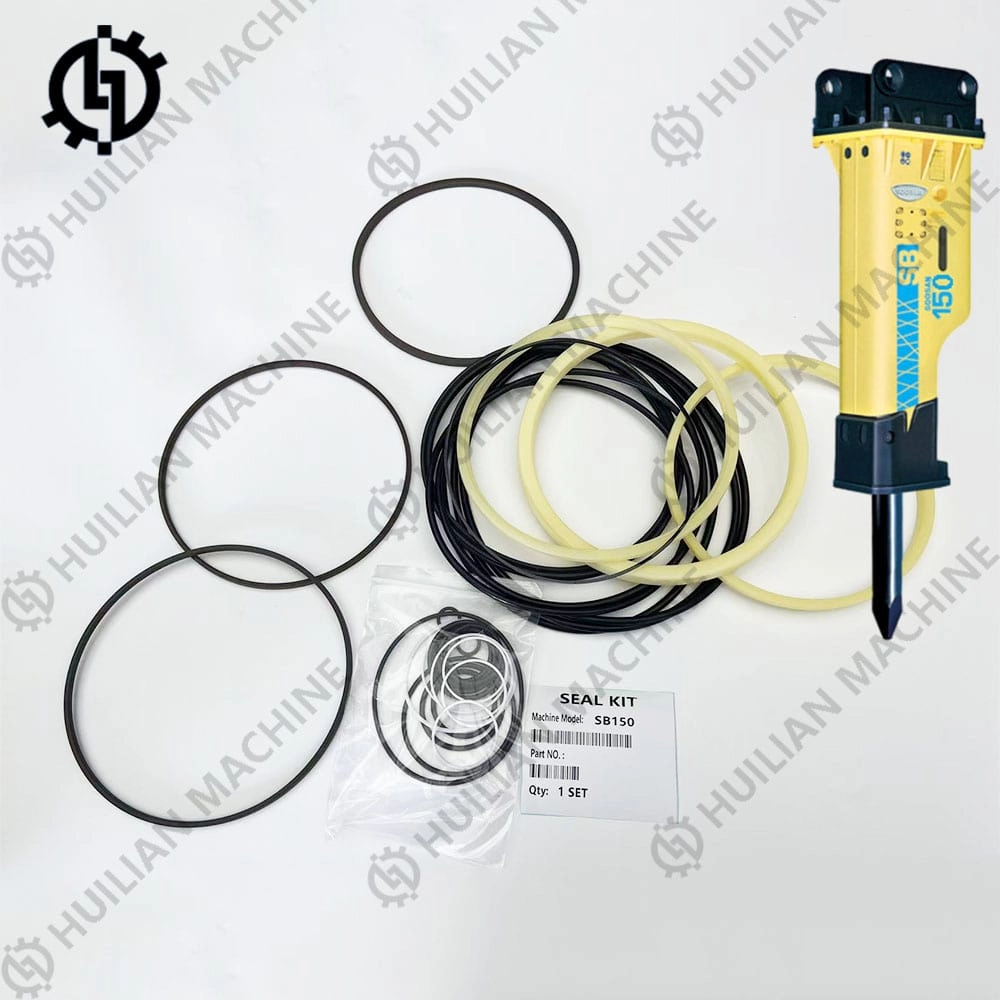
Founded in 2005, Guangzhou Huilian Machines Co., Ltd (brand name Huilian) has established itself as a professional OEM supplier and one of the leading excavator breaker parts manufacturers in China. We understand that a breaker is only as good as its internal components. That is why our dedicated team of R&D experts, technicians, and quality control professionals meticulously design a wide range of products, including complete hydraulic breaker hammers, chisels, seals and seal kits, diaphragms, pistons, and retainer bars.
Because our products are exported to over 90 countries, we have deep, first-hand experience with the diverse demands of global job sites. For instance, contractors utilizing our perfectly matched hydraulic flow systems and advanced chisel tech frequently report achieving 30% faster concrete removal compared to standard aftermarket options.
We also integrate critical safety features into our designs. Our breakers feature built-in anti-blank firing mechanisms and advanced nitrogen accumulator protections. These innovations act as heavy-duty shock absorbers, storing kinetic energy to increase the piston's downward impact force while simultaneously safeguarding your compact carrier's hydraulic pumps from dangerous pressure spikes.
Conclusion & Call to Action
Selecting the optimal mini excavator breaker requires a careful, informed balance of carrier operating weight, hydraulic output, and job site demands, ensuring that strict maintenance and compliant equipment choices maximize your return on investment and keep downtime to an absolute minimum.
By following the 10-15% weight rule, matching your GPM precisely, and investing in modern silenced technology, you empower your fleet to tackle the toughest demolition tasks safely and efficiently.
Contact Guangzhou Huilian Machines Co., Ltd today to discuss your specific needs.
Frequently Asked Questions
What size breaker do I need for a 3-ton mini excavator?
Typically, a 3-ton excavator requires a hydraulic breaker weighing between 300 to 450 lbs. You must also verify that the breaker's required flow rate aligns with the carrier, usually requiring between 7 to 12 GPM.
Can I use the same hydraulic breaker on different mini excavators?
Yes, as long as both excavators fall into the same operating weight class and feature matching hydraulic flow and pressure outputs. Keep in mind that you may need to swap out the mounting bracket or use an adapter plate to fit different pin dimensions.
What happens if a hydraulic breaker is too big for a mini excavator?
Using an oversized breaker can cause severe structural damage to the excavator's boom and stick. It also creates a significant tipping hazard and overloads the hydraulic pump, leading to overheating and system failure.
How often should I grease my mini excavator breaker?
Standard industry practice dictates that you should grease the breaker every 2 hours of continuous operation. Always use high-temperature, moly-based chisel paste rather than standard chassis grease to prevent friction melting.
What is blank firing on a hydraulic hammer?
Blank firing occurs when the breaker is activated without the tool bit resting firmly against a solid material. This causes the internal piston's immense energy to be absorbed directly by the breaker housing and pins, leading to rapid component failure.
Why is nitrogen gas used in hydraulic breakers?
Nitrogen gas acts as an internal accumulator and heavy-duty shock absorber. It stores kinetic energy to increase the piston's downward impact force while simultaneously preventing dangerous hydraulic pressure spikes back into the carrier.
What is the difference between a moil point and a chisel tool?
A moil point is cone-shaped and excels at general concrete demolition and multi-directional fracturing. A chisel tool features a flat blade, making it the perfect choice for trenching, cutting straight lines, and precise rock scaling.
How much does a mini excavator breaker cost?
Prices vary based on impact class, brand, and features, typically ranging from $3,000 to $8,000 for machines in the 1-8 ton category. Investing in a high-quality, silenced breaker often yields superior long-term ROI due to reduced maintenance costs and extended operational lifespan.


About
Are your parts compatible with all excavator brands?
Yes, our parts are designed to be compatible with major brands like Komatsu, Caterpillar, Hitachi, Hyundai, Doosan, JCB, Kobelco, Sany, and many more.
What types of excavator parts do you offer?
We provide a wide range of high-quality excavator parts, including hydraulic breakers, chisels, seal kits, diaphragms, pistons, wear bushes, retainer bars, through bolts, side bolts, valves, and liners.
Do you offer OEM and aftermarket parts?
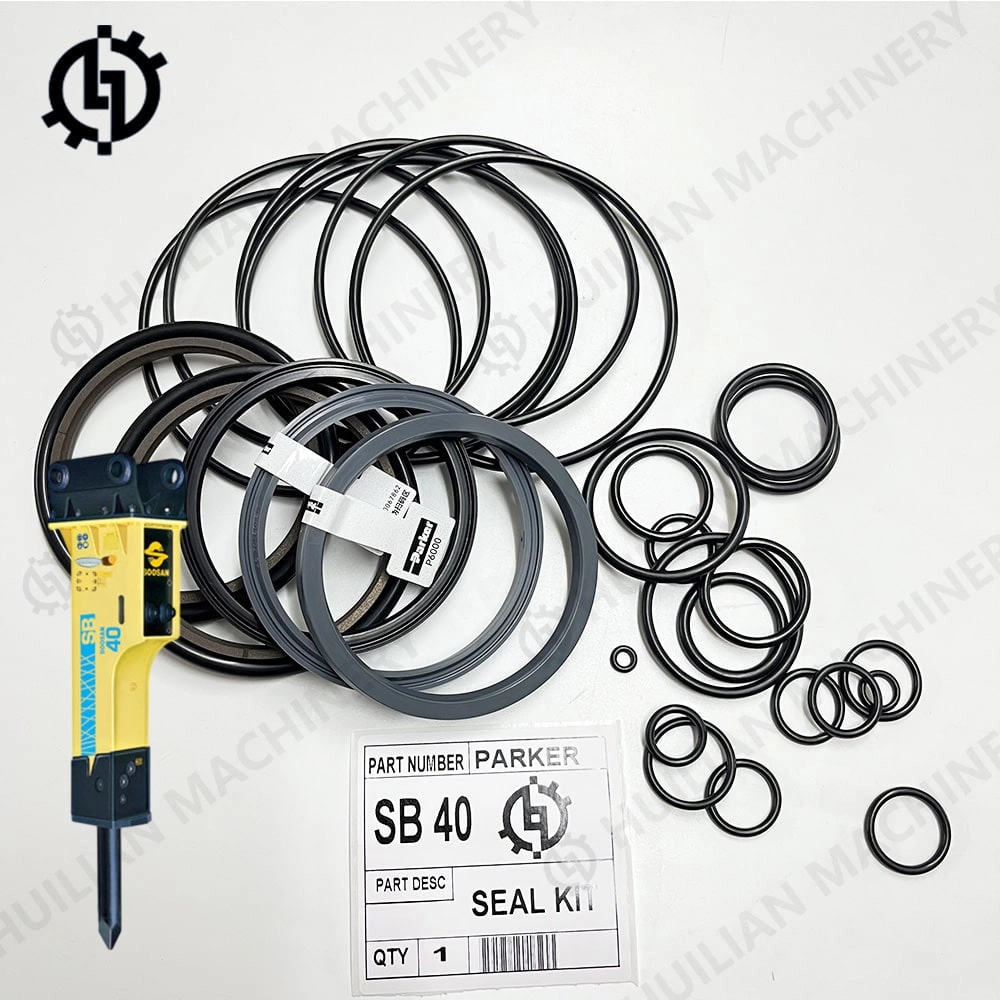
Yes, we manufacture high-quality OEM parts and supply aftermarket parts from top brands such as NOK, Parker, SKF, and Hallite to ensure optimal performance.
How can I ensure I’m selecting the right part for my equipment?
Our expert team can assist you in finding the right part based on your machine model, specifications, and requirements. Contact us for personalized support.
What is your shipping and delivery time?
We offer fast and reliable global shipping. Delivery times vary depending on location and order size, but we strive to process and ship orders as quickly as possible.




Getting started is easy 
Contact with our experts to find the best excavator parts solutions for your needs. Discover how Huilian can enhance your equipment's performance and efficiency.


Get in touch
 About us
© 2025 HUILIAN MACHINE. All rights reserved