



Hydraulic Breaker vs. Pulverizer: Which Excavator Attachment Delivers the Best ROI in 2026?
- What is a Hydraulic Breaker for an Excavator?
- Key Takeaways: 2026 Attachment ROI Summary
- How Does a Concrete Pulverizer Compare to a Hydraulic Breaker?
- Data Comparison Table: Hydraulic Breaker vs. Pulverizer
- Calculating ROI: Initial Costs, Maintenance, and 2026 Market Trends
- Expert Tips and Common Operator Mistakes
- Why Contractors Choose Huilian Machines for Demolition Solutions
- Conclusion
- Frequently Asked Questions
- Can a pulverizer replace a hydraulic breaker?
- How much does a hydraulic breaker for an excavator cost in 2026?
- What is the 15-second rule for hydraulic breakers?
- Which attachment is better for concrete recycling?
- Do pulverizers require specific hydraulic flow?
- How often should I grease my hydraulic breaker?
- Is a hydraulic hammer the same as a hydraulic breaker?
- Can I use a hydraulic breaker underwater?
What is a Hydraulic Breaker for an Excavator?
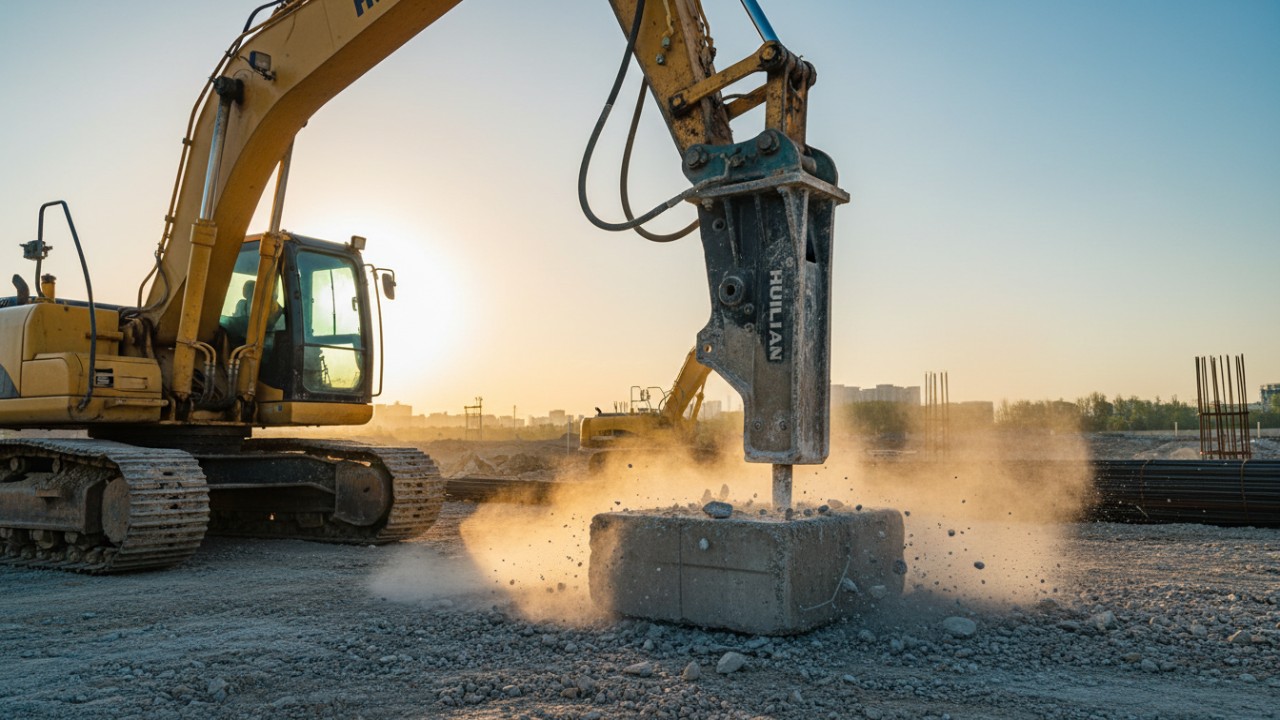
A hydraulic breaker for an excavator is a powerful percussion hammer attachment designed to demolish hard structures like concrete, rock, and asphalt. Powered by the excavator's hydraulic system, it uses a high-pressure piston to deliver concentrated impact energy to a chisel point.
This mechanism makes it an absolutely essential tool for primary demolition, trenching, and foundation removal, where extreme breaking force is required to fracture solid mass. The internal mechanism utilizes hydraulic oil flow from the carrier machine to lift the piston, compressing a nitrogen gas chamber. Once released, this stored kinetic energy drives the piston down onto the tool steel (chisel) at immense speeds. The type of chisel used—whether a moil point for deep penetration, a wedge for splitting rock, or a blunt tool for oversized boulders—determines the efficiency of the energy transfer.
Key applications and benefits include:
- Primary Demolition: Fracturing large boulders, massive structural foundations, and heavily reinforced pillars.
- Trenching Operations: Breaking through bedrock or hard pan for municipal pipeline and underground utility installation.
- Road Surface Removal: Tearing up deeply compacted asphalt and commercial concrete slabs efficiently.
Key Takeaways: 2026 Attachment ROI Summary
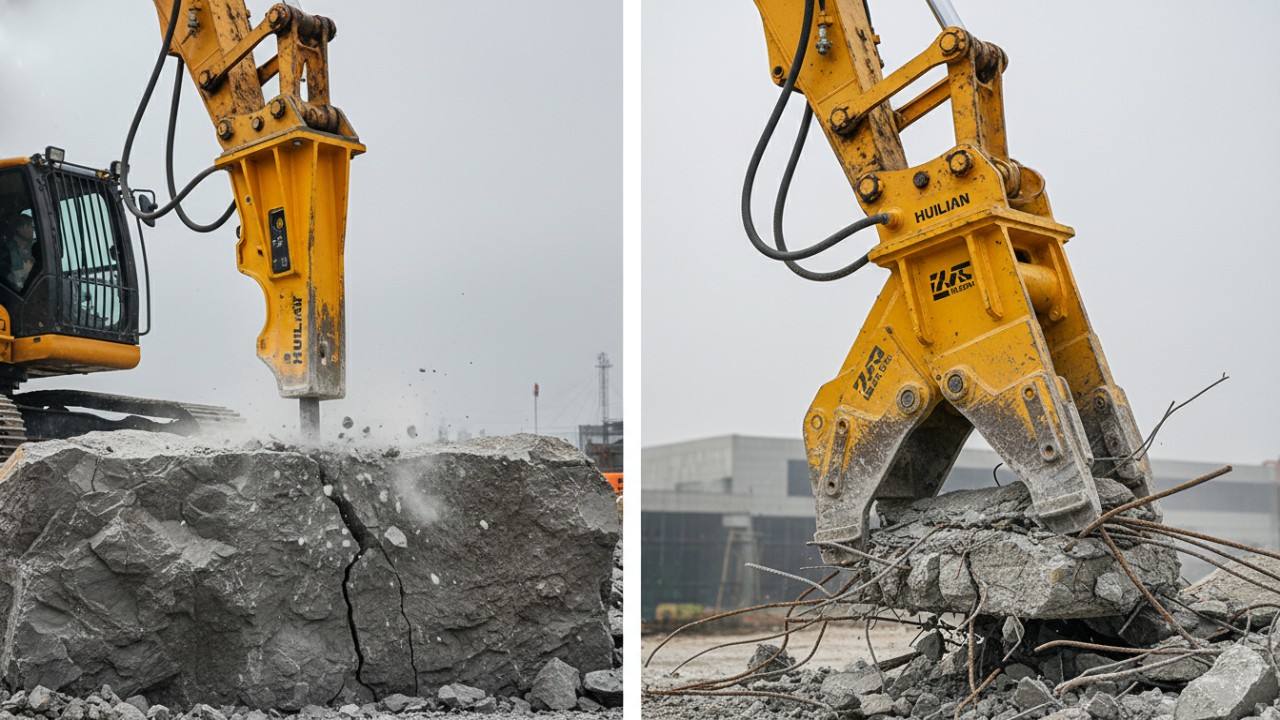
Your highest ROI in 2026 depends heavily on whether your project phases focus on breaking down structural mass or processing materials post-demolition. Hydraulic breakers excel in primary demolition, while concrete pulverizers dominate secondary processing and scrap recycling.
Understanding the specific application of each tool prevents unnecessary wear and tear on your excavator and the attachment itself. By accurately mapping out your job site workflow, you can optimize your equipment investments and avoid costly delays caused by utilizing the wrong machinery for the material at hand.
- Primary Impact Force: Hydraulic breakers excel in primary demolition, trenching, and hard rock excavation where raw penetration force is mandatory.
- Material Processing: Concrete pulverizers dominate secondary demolition, efficiently crushing concrete to separate rebar for profitable scrap recycling.
- Strategic Deployment: Deploying the right tool at the correct stage avoids catastrophic damage to internal components and significantly boosts daily yield.
How Does a Concrete Pulverizer Compare to a Hydraulic Breaker?
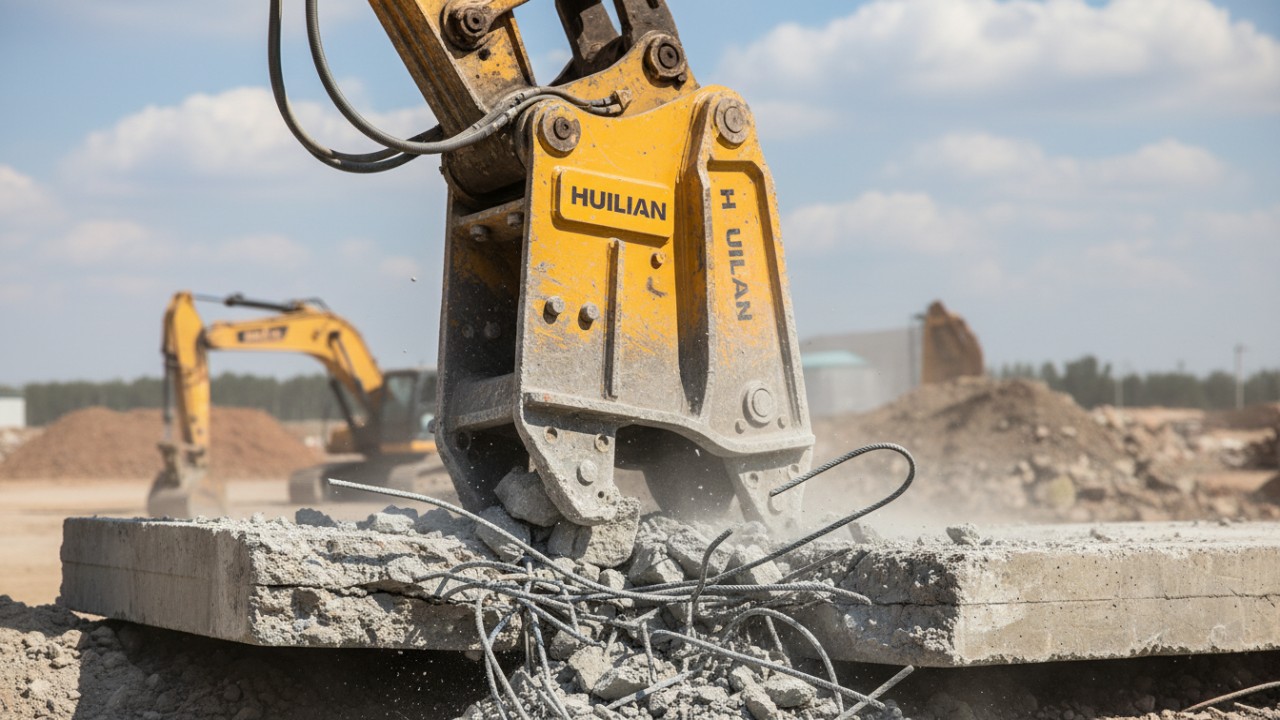
A concrete pulverizer differs from a breaker by using hydraulic cylinder pressure to close crushing jaws rather than delivering percussive strikes. While breakers fracture solid structural foundations with concentrated force, pulverizers chew up pre-broken slabs and sort out steel reinforcements.
Operational efficiency varies drastically between the two attachments. Because they use a squeezing motion, pulverizers generally operate with less vibration and noise, making them ideal for urban environments and sensitive residential zones. Pulverizer jaws are equipped with heavy-duty, abrasion-resistant steel teeth designed to concentrate hydraulic force onto specific fracture points within the concrete. As the jaws close, the brittle concrete shatters, while the flexible steel rebar bends and remains intact. This separation process is vital for sorting. Conversely, breakers are unmatched for initial solid rock penetration but create significant ground vibration and decibel levels.
- Mechanical Action: A breaker relies on percussive hydraulic hammer impact energy (measured in foot-pounds) striking a single point. A pulverizer relies on continuous hydraulic jaw crushing pressure.
- Primary Use Case: Breakers fracture large, solid structural foundations; pulverizers chew up pre-broken concrete slabs and sort out structural steel.
- Environmental Impact: Pulverizers operate with significantly less vibration and noise; breakers are much louder but provide the necessary kinetic force for initial solid rock penetration.
Data Comparison Table: Hydraulic Breaker vs. Pulverizer
The comparison between a hydraulic breaker and a pulverizer highlights distinct differences in function, operation noise, lifespan, and ideal material targets. Choosing the correct attachment is vital for maximizing job site efficiency and controlling long-term capital costs.
Calculating ROI: Initial Costs, Maintenance, and 2026 Market Trends
Calculating ROI requires analyzing upfront acquisition costs, operational maintenance expenses, and potential revenue generation. Breakers demand rigorous maintenance to prevent failure, whereas pulverizers offer high ROI through onsite recycling and scrap metal recovery.
When assessing ROI, contractors must look beyond the initial invoice. Secondary demolition tools like pulverizers create a self-sustaining financial model on the job site. By crushing concrete to a specific aggregate size, contractors can reuse the material onsite as backfill, eliminating the cost of purchasing new gravel and the transportation fees associated with hauling away waste. According to the U.S. Environmental Protection Agency (EPA), hundreds of millions of tons of construction and demolition debris are generated annually in the United States alone. When combining reduced disposal fees, reduced material purchasing costs, and revenue from recycled rebar, a pulverizer can often pay for itself within the first 12 to 18 months of rigorous use. Breakers, conversely, require specialized high-temperature chisel paste and frequent nitrogen gas recharging to maintain strike power, representing a continuous maintenance overhead.
- Acquisition Cost Analysis: Breakers typically have a lower entry price point compared to complex hydraulic pulverizer jaws, making them accessible for general contractors.
- Maintenance Overhead: Breaker longevity relies on replacing wear items like retainers and bushings; pulverizers require jaw teeth hard-facing or replacement.
- Revenue Generation: Pulverizers monetize job site debris through direct secondary demolition tools recycling, drastically reducing landfill tipping fees.
Expert Tips and Common Operator Mistakes
Avoiding common operator mistakes, such as blank firing a breaker or using a pulverizer on unbroken rock, protects your investment and maximizes attachment efficiency. Proper operation requires matching the carrier machine's specs exactly to the attachment.
Improper equipment use not only destroys expensive machinery but also introduces severe safety hazards. In addition to blank firing, another major mistake is using the breaker as a pry bar. Operators sometimes wedge the chisel into a crack and use the excavator's boom to pry the rock apart. This creates immense lateral stress on the tool steel, leading to snapped chisels, damaged retainer pins, and completely ruined front heads. The Occupational Safety and Health Administration (OSHA) mandates strict noise exposure limits, but proper training also focuses on mechanical safety to prevent flying debris caused by snapped tools. To ensure proper compatibility and flow rates, always consult your Excavator Buying Guide before mounting a new attachment.
- Mistake: Blank firing a hydraulic breaker. This rapidly destroys internal tie rods, pistons, and retaining pins because the un-transferred energy is absorbed by the breaker body itself rather than the rock.
- Mistake: Attempting to use an excavator concrete pulverizer on solid, unbroken structural rock before primary breaking has occurred, which inevitably leads to hydraulic cylinder blowout or jaw cracking.
- Expert Tip: Always match the excavator's operating weight and hydraulic flow (GPM) precisely to the attachment specifications to maximize efficiency and protect the carrier machine's hydraulic pumps.
Why Contractors Choose Huilian Machines for Demolition Solutions
Contractors choose Guangzhou Huilian Machines Co., Ltd because we are a professional OEM supplier delivering industry-leading excavator breaker parts, comprehensive ROI consulting, and elite warranty support for 2026 job sites.
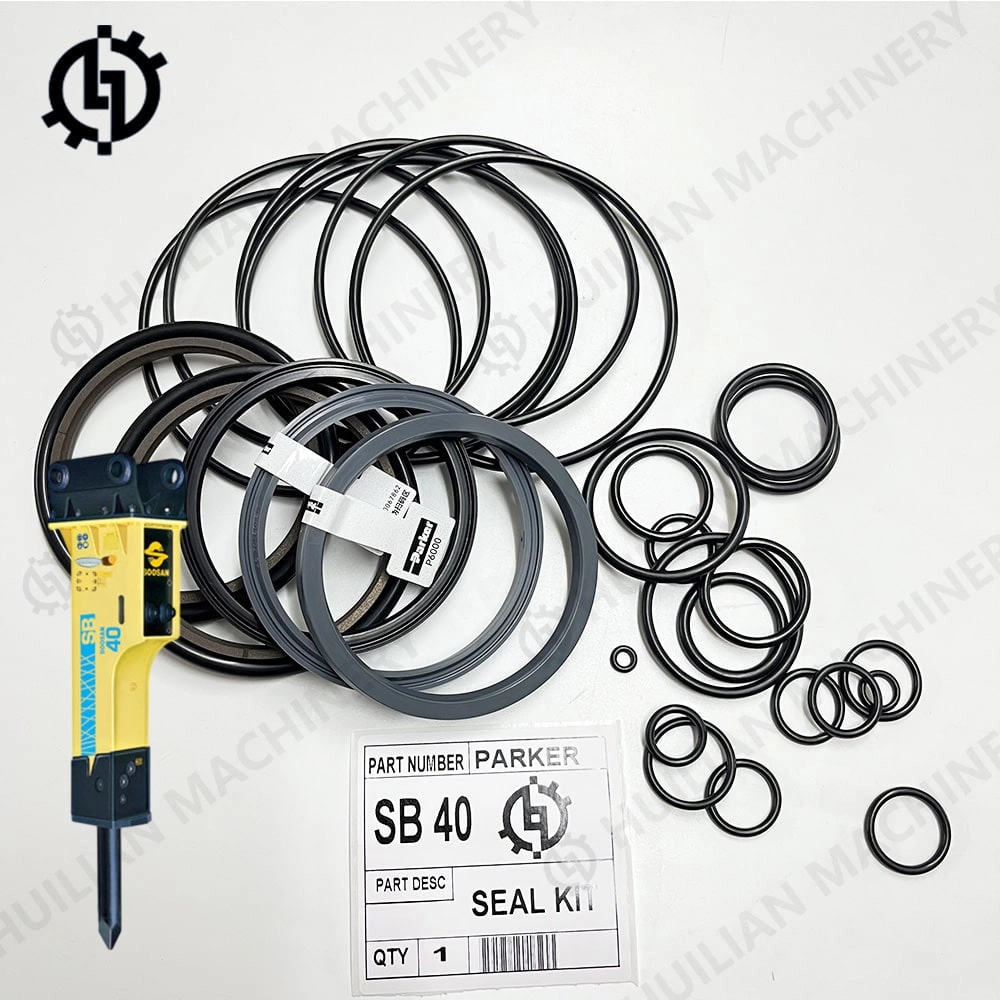
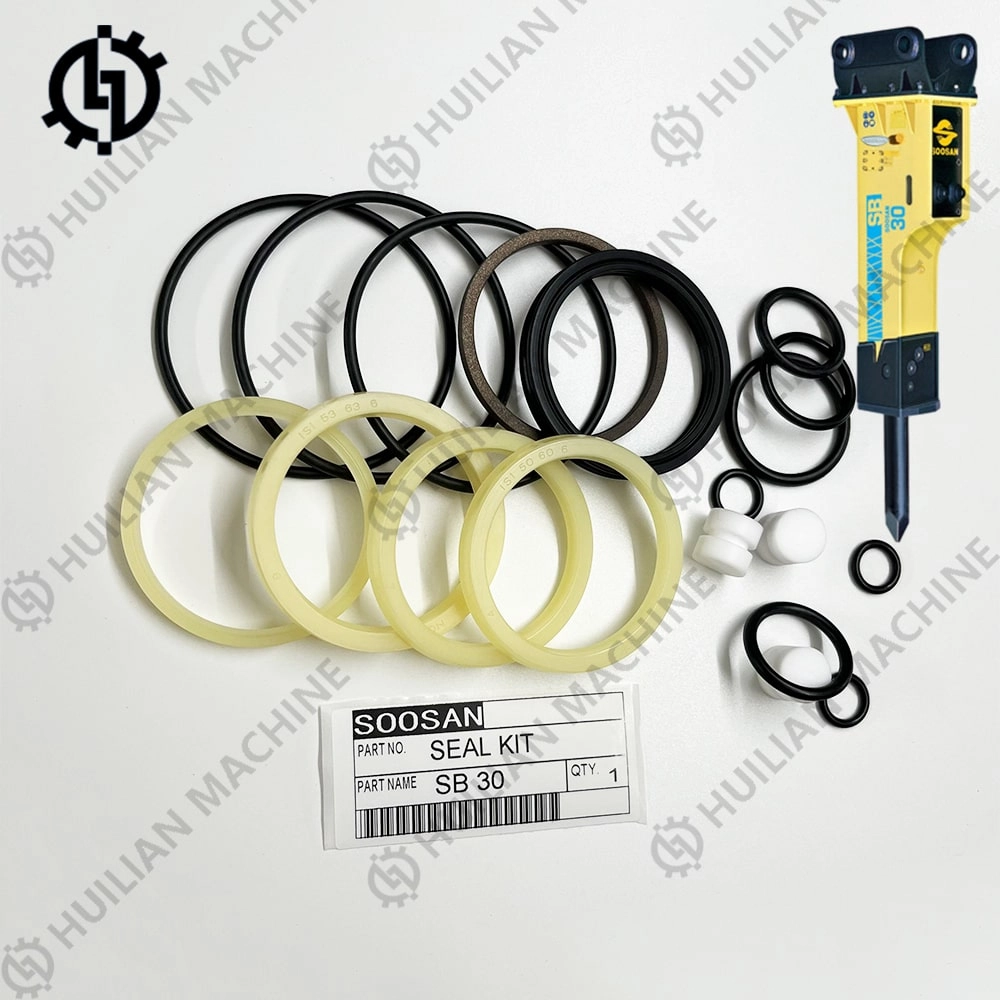
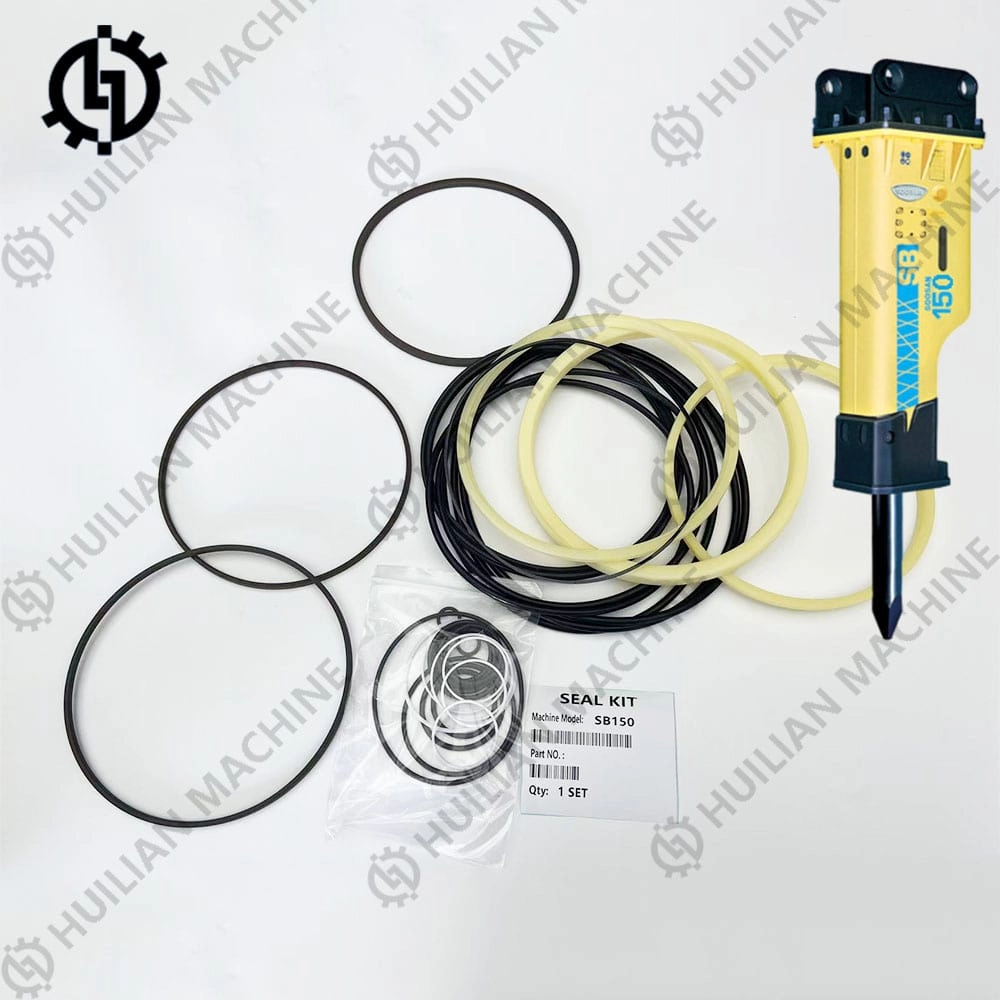
Founded in 2005, Huilian Machine has spent over two decades becoming a leading excavator breaker parts manufacturer in China. Our dedicated R&D experts, technicians, and quality control professionals ensure that every hammer, chisel, seal kit, and piston meets rigorous global standards. Because we export to over 90 countries, we understand the varied and extreme environments our attachments must endure. We specialize in the critical wear parts that keep your operations running smoothly. When a breaker requires a rebuild, contractors rely on Huilian for precision-machined pistons, durable through bolts, and robust seal kits, including premium Parker seal kits.
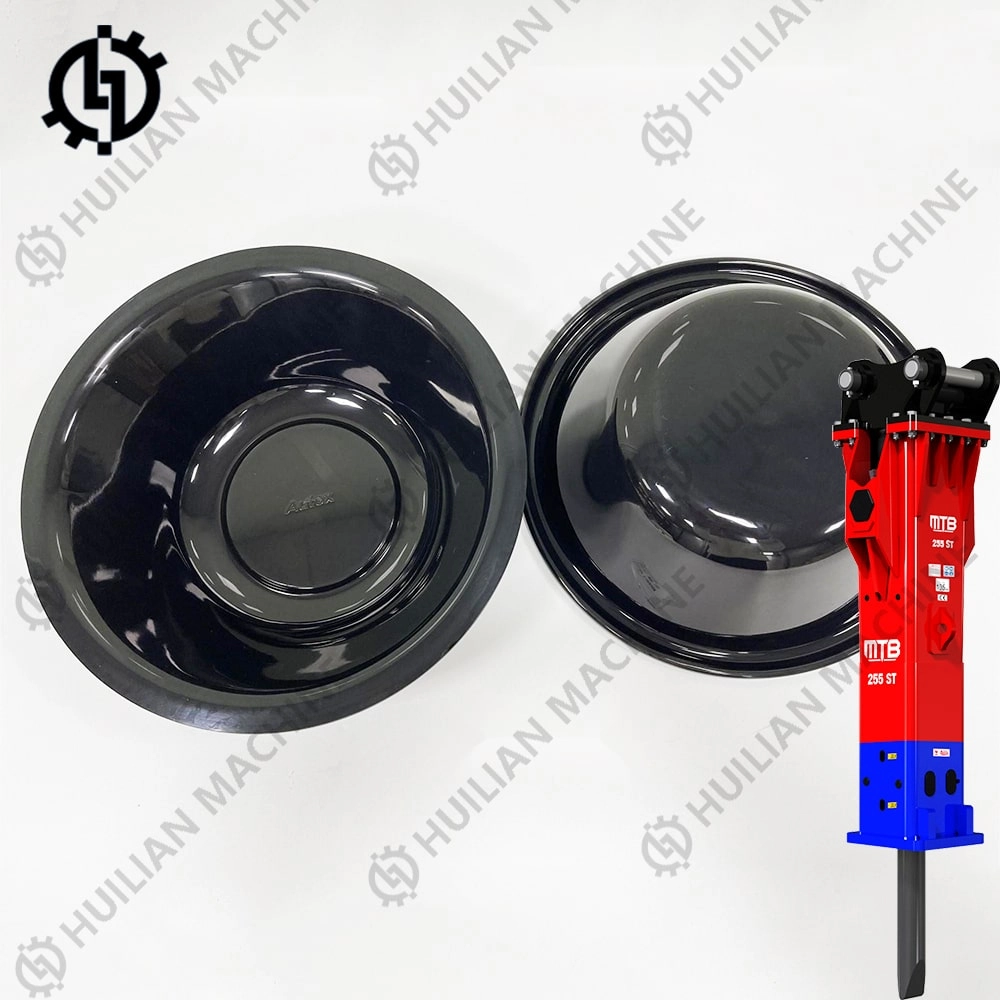
- Comprehensive Parts Supply: We manufacture and supply an extensive range of OEM parts, including diaphragms, WearBush components, side bolts, and valves.
- ROI Consulting: Unlike standard suppliers, we provide deep consulting to ensure you select the exact attachment for your concrete crushing vs breaking requirements, preventing costly mismatches.
- Global Reliability: We back our heavy-duty attachments with elite 2026 warranty programs and expert after-sales service teams, safeguarding your equipment investment worldwide.
Conclusion
Choosing between a hydraulic breaker and a pulverizer ultimately comes down to your job site's specific workflow—whether you need primary impact breaking or secondary material recycling. Both attachments offer distinct, high-yield demolition attachment ROI advantages for modern 2026 demolition projects when correctly sized, operated, and maintained.
By carefully evaluating the material you intend to process and understanding the mechanical limits of each tool, you can significantly extend the lifespan of your heavy machinery. Incorporating both tools sequentially—using a breaker for primary demolition and a pulverizer for secondary recycling—often yields the ultimate operational efficiency and maximum profitability.
Contact Guangzhou Huilian Machines Co., Ltd today to discuss your specific needs.
Frequently Asked Questions
Can a pulverizer replace a hydraulic breaker?
No, they serve different stages of the demolition process.
- Breakers are engineered for primary breaking of solid structures and rock.
- Pulverizers are designed for secondary processing, crushing loose concrete, and rebar separation.
How much does a hydraulic breaker for an excavator cost in 2026?
Costs vary widely based on the impact energy class and carrier weight of the excavator.
- Small models start around $5,000, while heavy-duty demolition models can exceed $50,000.
- Contractors must always factor in ongoing maintenance and lifespan when calculating actual ROI.
What is the 15-second rule for hydraulic breakers?
It is a crucial safety and equipment maintenance rule for excavator operators.
- Never fire the breaker in the exact same spot for more than 15 continuous seconds.
- If the material doesn't break, reposition the chisel to prevent severe overheating and internal tool damage.
Which attachment is better for concrete recycling?
A concrete pulverizer is vastly superior for recycling operations.
- It uses crushing jaws to turn large concrete chunks into smaller, manageable aggregate.
- It efficiently separates steel rebar from the concrete, allowing the metal to be sold for scrap profit.
Do pulverizers require specific hydraulic flow?
Yes, just like breakers, pulverizers need the correct hydraulic flow (GPM) and pressure (PSI).
- Providing too little flow results in weak, ineffective crushing force.
- Providing too much flow or pressure can blow out the attachment's hydraulic cylinders.
How often should I grease my hydraulic breaker?
Hydraulic breakers should typically be greased every 2 hours of continuous operation.
- Always use high-temperature, moly-based chisel paste rather than standard multi-purpose grease.
- Proper and frequent lubrication prevents friction damage to the tool steel and internal bushings.
Is a hydraulic hammer the same as a hydraulic breaker?
Yes, the terms "hammer" and "breaker" are used interchangeably in the construction industry.
- Both refer to the percussive attachment mounted on excavators for breaking hard materials.
- However, "hammer" is also sometimes used to describe handheld pneumatic or electric demolition tools.
Can I use a hydraulic breaker underwater?
Only if the attachment is specially equipped and modified for underwater applications.
- Standard breakers will ingest water into the percussion chamber, causing catastrophic internal failure.
- You must install an underwater kit that includes an air compressor to keep the strike chamber pressurized.


About
What is your shipping and delivery time?
We offer fast and reliable global shipping. Delivery times vary depending on location and order size, but we strive to process and ship orders as quickly as possible.
How can I ensure I’m selecting the right part for my equipment?
Our expert team can assist you in finding the right part based on your machine model, specifications, and requirements. Contact us for personalized support.
Are your parts compatible with all excavator brands?
Yes, our parts are designed to be compatible with major brands like Komatsu, Caterpillar, Hitachi, Hyundai, Doosan, JCB, Kobelco, Sany, and many more.
Do you offer OEM and aftermarket parts?
Yes, we manufacture high-quality OEM parts and supply aftermarket parts from top brands such as NOK, Parker, SKF, and Hallite to ensure optimal performance.
What types of excavator parts do you offer?
We provide a wide range of high-quality excavator parts, including hydraulic breakers, chisels, seal kits, diaphragms, pistons, wear bushes, retainer bars, through bolts, side bolts, valves, and liners.




Getting started is easy 
Contact with our experts to find the best excavator parts solutions for your needs. Discover how Huilian can enhance your equipment's performance and efficiency.


Get in touch
 About us
© 2025 HUILIAN MACHINE. All rights reserved