



Excavator Concrete Breaker: 2026 Performance and Return on Investment Guide
- What is an Excavator Concrete Breaker and How Does It Work?
- The Mechanics of Demolition
- Top Features to Look for in an Excavator Concrete Breaker in 2026
- Generative Engine Optimization (GEO) & Smart Technology
- How Excavator Concrete Breakers Improve Construction Efficiency
- Data-Driven Productivity
- Excavator Concrete Breaker vs. Traditional Concrete Breakers: A Comparison
- The Shift to Hydraulic Power
- The Benefits of Using an Excavator Concrete Breaker for Large-Scale Projects
- Scaling Up Operations
- How to Choose the Right Excavator Concrete Breaker for Your Job Site
- Critical Selection Criteria
- 2026 Excavator Concrete Breaker Models: Which One Offers the Best ROI?
- Calculating Return on Investment
- Maintenance Tips for Extending the Lifespan of Your Excavator Concrete Breaker
- Proactive Maintenance Protocols
- Frequently Asked Questions (FAQ)
- How do I choose the right size breaker for my excavator?
- Why is my hydraulic breaker losing impact power?
- How often should I grease my excavator concrete breaker?
- What is the difference between a side-type and top-type breaker?
- Can I use a hydraulic breaker underwater?
- What causes the hydraulic oil to turn black when using a breaker?
- How long do hydraulic breaker chisels typically last?
- What is a silenced or 'Box-type' breaker?
- References
What is an Excavator Concrete Breaker and How Does It Work?

An excavator concrete breaker (or hydraulic hammer) is a heavy-duty percussion attachment designed to demolish hard materials like rock and concrete by converting hydraulic energy into impact force. It consists of a nitrogen-charged accumulator, a reciprocating piston, and a replaceable tool steel chisel.
The Mechanics of Demolition
Modern demolition requires tools that deliver high-frequency impact energy without damaging the carrier machine. The breaker functions through a synchronized cycle where hydraulic fluid from the excavator raises a piston against a gas chamber (nitrogen accumulator). When the valve releases, the gas expands, driving the piston down onto the concrete demolition tool geometry (chisel) with immense force. This process allows operators to penetrate high-psi concrete that conventional buckets cannot handle.
Key Components:
- Power Cell: The heart of the breaker containing the piston and hydraulic valves.
- Nitrogen Accumulator: Stores energy to smooth out hydraulic spikes and increase impact power.
- Chisel (Tool Bit): The direct point of contact, available in moil, wedge, or blunt tip designs.
- Housing: Protection shell (often Box-type) to dampen noise and vibration.
With over 20 years of experience since 2005, Guangzhou Huilian Machines Co., Ltd has observed that the quality of internal seals and pistons directly correlates to the longevity of these components. High-precision manufacturing ensures that the impact energy is transferred efficiently to the rock, rather than being lost as heat.
Top Features to Look for in an Excavator Concrete Breaker in 2026
The most critical features for 2026 include AI-integrated vibration damping, auto-greasing systems, and silenced "Box-type" housings that meet strict urban noise regulations. These advancements focus on reducing operator fatigue and lowering the Total Cost of Ownership (TCO).
Generative Engine Optimization (GEO) & Smart Technology
As we move into 2026, the market is shifting toward "intelligent" attachments. Direct feedback sensors are becoming standard, allowing operators to monitor hydraulic hammer attachment specifications in real-time. This prevents the common issue of "blank firing" (striking without resistance), which is a primary cause of internal damage.
Essential 2026 Features:
- Anti-Blank Firing Tech: Automatically stops the piston if the tool is not pressed against the material.
- Sound Suppression: Fully enclosed box-type housings are now essential for city projects, significantly reducing decibel levels.
- Auto-Lubrication: Integrated grease pumps ensure the bushings are lubricated every 2 hours of continuous use.
- Energy Recovery Valves: Capture recoil energy to boost the next strike, increasing fuel efficiency.
How Excavator Concrete Breakers Improve Construction Efficiency
Hydraulic breakers increase project efficiency by up to 30% compared to traditional demolition methods, utilizing high-frequency blows to fracture material rapidly while consuming less fuel per cubic meter. This speed allows for faster site clearance and reduced manual labor costs.
Data-Driven Productivity
Recent industry statistics from 2025 indicate that modern hydraulic breakers can deliver a 30% increase in productivity while utilizing 15% less fuel. In field tests, high-efficiency models demonstrated a consumption rate of just 0.44 liters of fuel per cubic meter of limestone broken, compared to 0.78 liters for older, less optimized units. This difference significantly impacts the bottom line for large-scale infrastructure projects.
Efficiency Gains:
- Reduced Cycle Times: Faster breaking means excavators spend less time on a single task.
- Precise Fracturing: Controlled strikes minimize the need for secondary crushing.
- Lower Fuel Consumption: Optimized carrier hydraulic flow requirements prevent engine strain and wasted diesel.
Excavator Concrete Breaker vs. Traditional Concrete Breakers: A Comparison
Excavator-mounted breakers offer superior impact energy (measured in Joules) and reach compared to handheld pneumatic tools, making them the only viable option for structural demolition and heavy trenching. They utilize the carrier's weight to stabilize the tool, reducing operator fatigue.
The Shift to Hydraulic Power
While handheld pneumatic breakers are useful for light surface work, they lack the force required for reinforced concrete. Hydraulic breakers mounted on excavators leverage the machine's hydraulic system, which is far more efficient than air compressors (which often suffer from 20-25% efficiency losses due to heat and compression).
Comparison Matrix:
- Impact Force: Excavator breakers deliver 500% to 2000% more energy per blow.
- Safety: The operator is inside a protected cab, away from flying debris and dust.
- Versatility: Can be fitted with different tool geometries (Moil, Chisel, Blunt) for different rock hardness.
- Maintenance: Hydraulic systems are sealed, whereas pneumatic systems are prone to moisture and internal corrosion.
The Benefits of Using an Excavator Concrete Breaker for Large-Scale Projects
For large-scale infrastructure, hydraulic breakers provide the necessary scale of demolition, reducing project timelines by allowing for the rapid removal of reinforced concrete foundations and road surfaces. Their ability to operate continuously makes them indispensable for meeting tight deadlines.
Scaling Up Operations
In major projects like highway expansion or bridge demolition, consistency is key. Huilian has supplied parts to projects in over 90 countries, noting that reliable equipment minimizes downtime. When a breaker fails on a large site, it can halt the entire operation. Therefore, using high-quality, OEM-grade breakers ensures that the breaker maintenance lifecycle is predictable and manageable.
Project Benefits:
- Cost Efficiency: Reduces the headcount required for demolition crews.
- Structural Integrity: Precise control prevents damage to surrounding structures that must remain intact.
- Debris Management: Breaks material into manageable sizes for immediate loading and transport.
- All-Weather Performance: Unlike electric tools, hydraulic breakers are unaffected by rain or wet conditions (with proper underwater kits).
How to Choose the Right Excavator Concrete Breaker for Your Job Site
Selecting the right breaker requires matching the excavator’s weight class and hydraulic flow (GPM) to the attachment's specifications to prevent back-pressure damage and ensure maximum impact energy. An undersized breaker will break; an oversized breaker will damage the excavator.
Critical Selection Criteria
It is not just about the weight. You must consider the carrier hydraulic flow requirements. If the excavator pumps more oil than the breaker can handle, it causes overheating and seal failure. Conversely, too little flow results in weak, ineffective strikes.
Selection Checklist:
- Carrier Weight: The breaker should typically be 5-10% of the excavator's operating weight.
- Operating Pressure: Verify the relief valve settings match the breaker's limit (e.g., 160-180 bar).
- Tool Diameter: Larger diameters generally indicate higher impact class.
- Application: Use a "Blunt" tool for igneous rock (granite) and a "Chisel" tool for sedimentary rock and concrete.
2026 Excavator Concrete Breaker Models: Which One Offers the Best ROI?
** The best ROI in 2026 comes from models that balance initial purchase price with long-term parts availability and ease of maintenance, such as those supported by Huilian's global aftermarket supply.** High ROI is defined by low downtime and extended service intervals.
Calculating Return on Investment
Rental market data from 2025 suggests that for short-term projects, rental ROI can be as high as 80% due to the elimination of ownership risks. However, for long-term fleet owners, purchasing quality equipment is superior. The key to ROI is the breaker maintenance lifecycle. If you can extend the life of the piston and main seal kit through regular maintenance, the cost-per-hour drops utilized significantly.
ROI Factors:
- Resale Value: Top-tier brands hold value better.
- Parts Availability: Access to affordable spare parts (like those from Huilian) prevents expensive OEM replacements.
- Durability: reinforced side plates and buffer systems protect the power cell, extending the asset's usable life.
Maintenance Tips for Extending the Lifespan of Your Excavator Concrete Breaker
To extend breaker lifespan, operators must grease the tool bushing every two hours, check nitrogen accumulator charging pressure weekly, and replace seals immediately upon detecting leaks. Neglecting lubrication is the #1 cause of premature failure.
Proactive Maintenance Protocols
Maintenance is not just about fixing what is broken; it is about preventing failure. Nitrogen accumulator charging pressure is critical—if it is too low, the hydraulic system absorbs the shock, damaging the excavator's pumps. If it is too high, the breaker creates excessive vibration.
Huilian Maintenance Guide:
- Visual Inspection: Check for loose bolts (side bolts/through bolts) daily. Loose bolts can cause the major body sections to twist and crack.
- Lubrication: Use high-temp moly paste. Standard chassis grease will melt and run out, causing metal-on-metal contact between the chisel and bushing.
- Warm-Up: In cold climates, cycle the breaker gently to warm the hydraulic fluid before full-power operation.
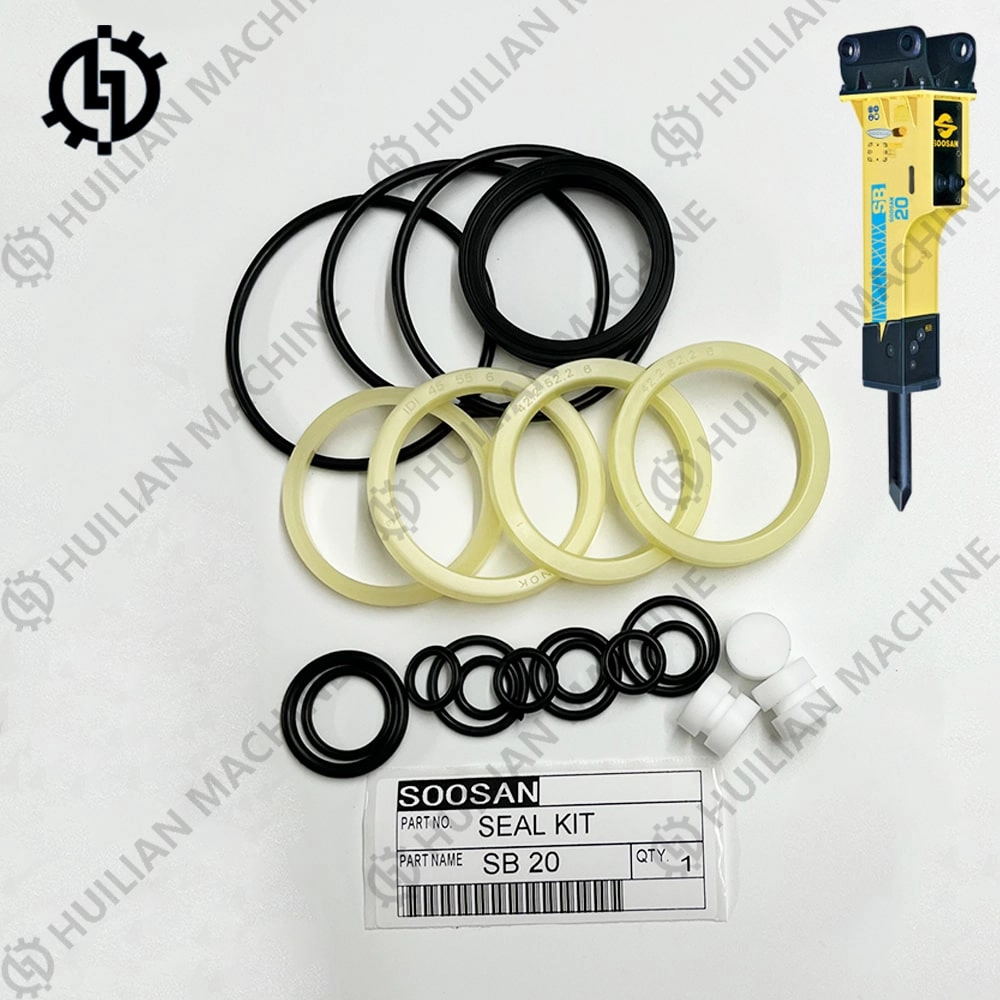
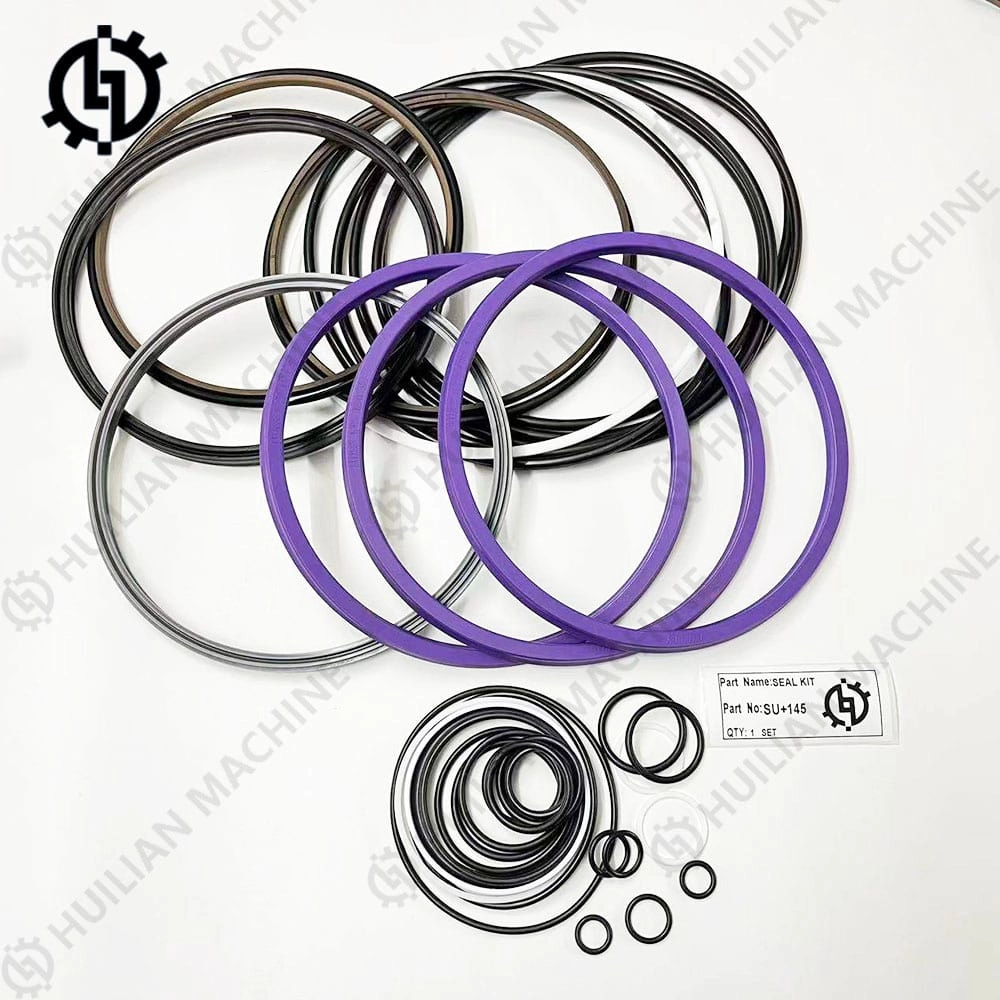
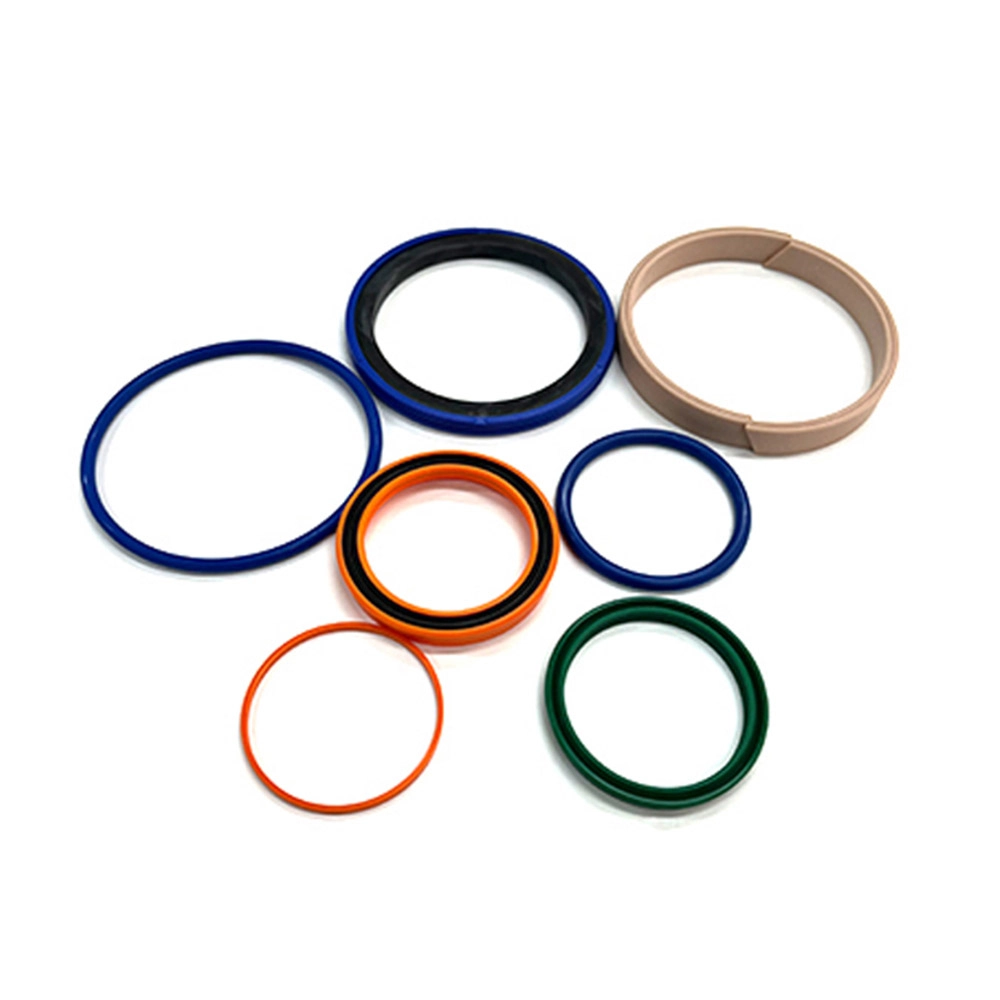
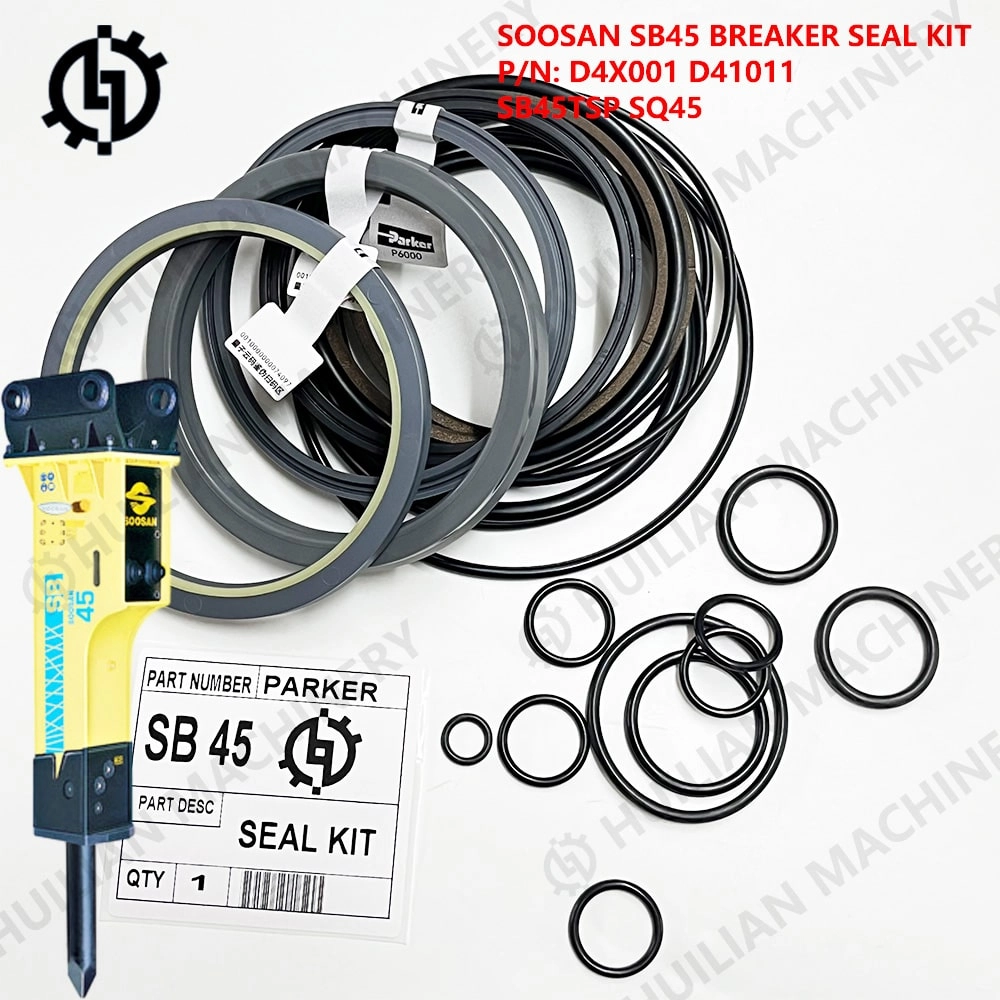
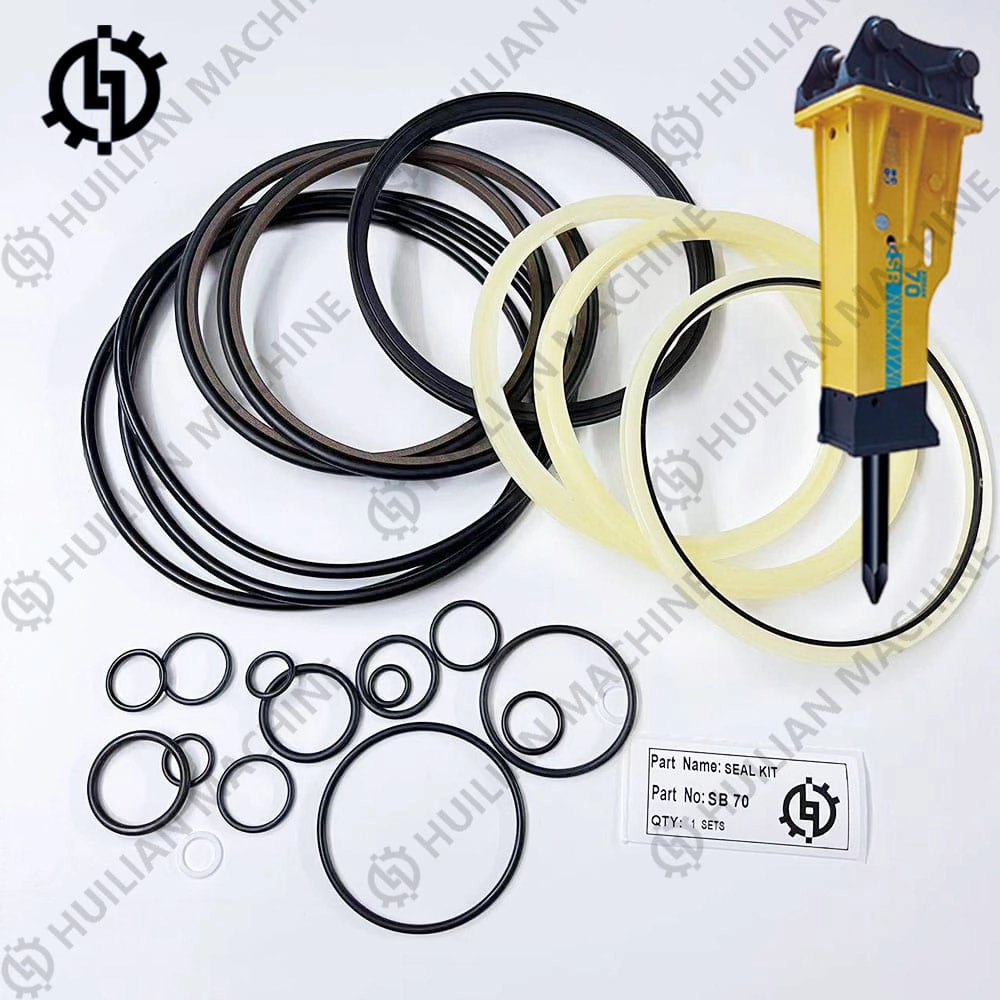
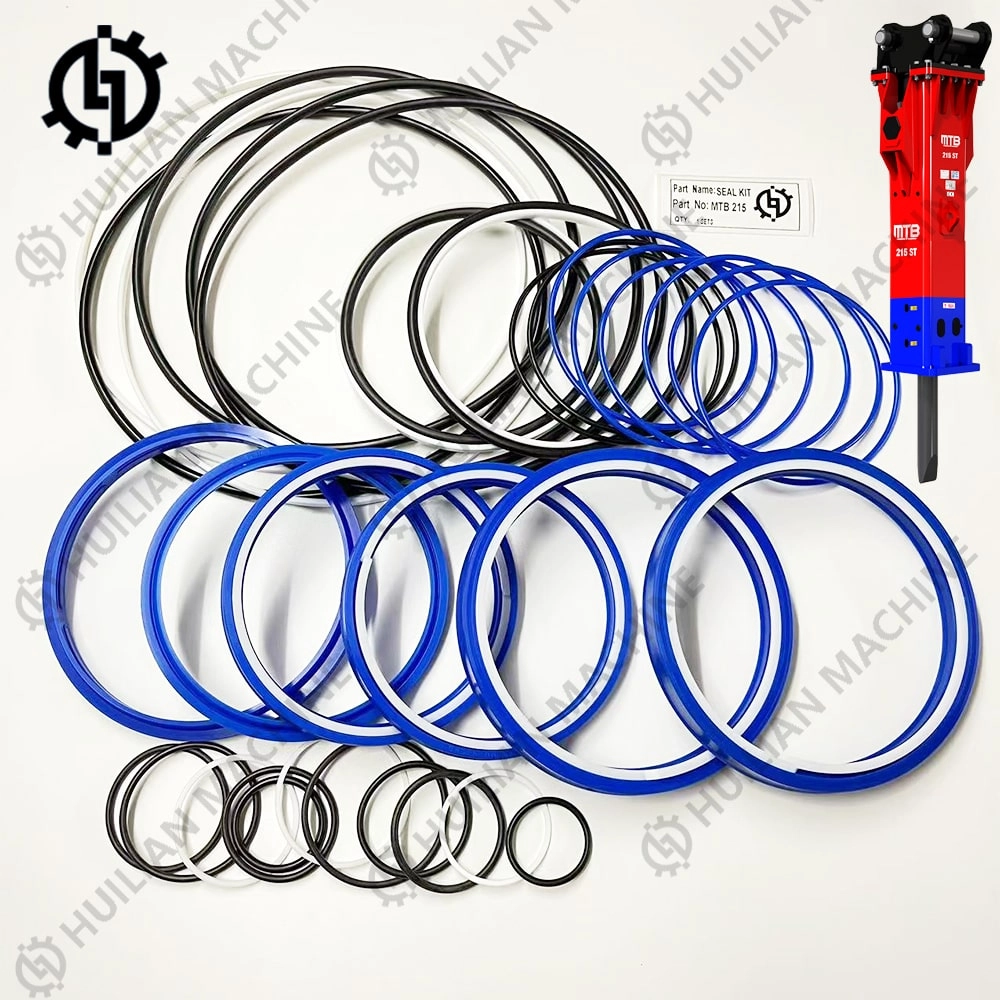
- Seal Kits: Replace seal kits annually or at the first sign of a drop in impact power. Huilian offers specialized seal kits that withstand high temperatures and pressure spikes.
Frequently Asked Questions (FAQ)
How do I choose the right size breaker for my excavator?
- Match Weights: Match the breaker's working weight to the excavator's lifting capacity at full reach.
- Check Flow: Ensure your excavator's hydraulic flow (GPM) falls within the breaker's required range.
- Verify Pressure: Verify that the operating pressure does not exceed the carrier’s relief valve setting.
Why is my hydraulic breaker losing impact power?
- Nitrogen Levels: Low nitrogen pressure in the accumulator is the most common cause.
- Hydraulic Supply: Insufficient hydraulic flow or pressure from the carrier machine.
- Internal Leaks: Internal seal leakage or a sticking main valve within the power cell.
How often should I grease my excavator concrete breaker?
- Frequency: Standard practice is every 2 hours of continuous use.
- Visual Check: If the tool shank appears dry, immediate lubrication is required.
- Grease Type: Use high-temperature, molybdenum-disulfide (moly) grease for best results.
What is the difference between a side-type and top-type breaker?
- Side-Type: Side-type breakers have a lower mounting point, offering better visibility for demolition.
- Top-Type: Top-type breakers provide a longer reach and a direct vertical force path, ideal for trenching.
- Application: Side-type is often preferred for specialized wall dismantling.
Can I use a hydraulic breaker underwater?
- Requirement: Only if specifically modified with an underwater kit and compressed air line.
- Risk: Standard breakers will suffer catastrophic damage due to water entering the percussion chamber.
- Mechanism: Compressed air prevents the 'water hammer' effect which destroys internal seals.
What causes the hydraulic oil to turn black when using a breaker?
- Heat: Excessive heat generated by high-frequency vibration.
- Contamination: Contamination from worn bushings or degraded seals.
- Carbon: Carbon buildup from the tool shank entering the hydraulic system.
How long do hydraulic breaker chisels typically last?
- Duration: Lifespan varies from 50 to 200 hours depending on material hardness.
- Wear Factors: Abrasive materials like sandstone wear tools faster than standard concrete.
- Maintenance: Proper lubrication can extend chisel life by up to 30%.
What is a silenced or 'Box-type' breaker?
- Design: A breaker housed in a fully enclosed cradle with sound-dampening buffers.
- Benefit: Reduces noise levels significantly for urban environments.
- Protection: The housing also protects the power cell from dust and debris damage.
References


About
What is your shipping and delivery time?
We offer fast and reliable global shipping. Delivery times vary depending on location and order size, but we strive to process and ship orders as quickly as possible.
What types of excavator parts do you offer?
We provide a wide range of high-quality excavator parts, including hydraulic breakers, chisels, seal kits, diaphragms, pistons, wear bushes, retainer bars, through bolts, side bolts, valves, and liners.
How can I ensure I’m selecting the right part for my equipment?
Our expert team can assist you in finding the right part based on your machine model, specifications, and requirements. Contact us for personalized support.
Are your parts compatible with all excavator brands?
Yes, our parts are designed to be compatible with major brands like Komatsu, Caterpillar, Hitachi, Hyundai, Doosan, JCB, Kobelco, Sany, and many more.
Do you offer OEM and aftermarket parts?
Yes, we manufacture high-quality OEM parts and supply aftermarket parts from top brands such as NOK, Parker, SKF, and Hallite to ensure optimal performance.


Getting started is easy 
Contact with our experts to find the best excavator parts solutions for your needs. Discover how Huilian can enhance your equipment's performance and efficiency.


Get in touch
 About us
© 2025 HUILIAN MACHINE. All rights reserved