



Rock Crusher Seal Kit Guide: 2026 Performance Standards and Maintenance Specifications
- Article Quick Summary: Key Takeaways for Fleet Managers
- What is a Rock Breaker Seal Kit and Why is it Critical for Operation?
- Critical Functions of a Seal Kit
- Anatomy of a High-Performance Seal Kit: Core Components
- Key Components & Functions
- Material Science: Comparing PU, NBR, and 2026 Next-Gen Polymers
- Material Performance Comparison
- Expert Installation: Avoiding the 5 Most Common Mistakes
- The 5 Installation Sins
- Industry-Leading Solutions: Integrating Advanced Seal Technologies
- Advanced Seal Strategies
- Cost-Benefit Analysis: Premium Kits vs. Budget Alternatives
- The Real Cost of "Cheap" Seals
- Frequently Asked Questions (FAQ)
- How often should I replace my rock breaker seal kit?
- What are the first signs of a failing breaker seal?
- Can I replace just the dust seal if the main seal is not leaking?
- Why do seals harden and become brittle?
- Are aftermarket seal kits as good as OEM kits?
- How should I store spare seal kits to prevent degradation?
- What is the difference between a 'Step Seal' and a 'U-Cup'?
- Does my choice of hydraulic oil affect seal life?
- References
Article Quick Summary: Key Takeaways for Fleet Managers
- Primary Defense: Seal kits are the single most critical component for preventing hydraulic contamination and maintaining pressure retention.
- 2026 Material Standards: The industry is shifting toward high-resilience high-pressure polyurethane seals (PU) with self-lubricating additives to extend service intervals.
- Cost Efficiency: Preventative replacement strategies reduce the total cost of ownership by approximately 30% compared to reactive repairs.
- Nitrogen Maintenance: Correct nitrogen charging is non-negotiable; improper levels lead to seal "burning" and catastrophic failure.
What is a Rock Breaker Seal Kit and Why is it Critical for Operation?

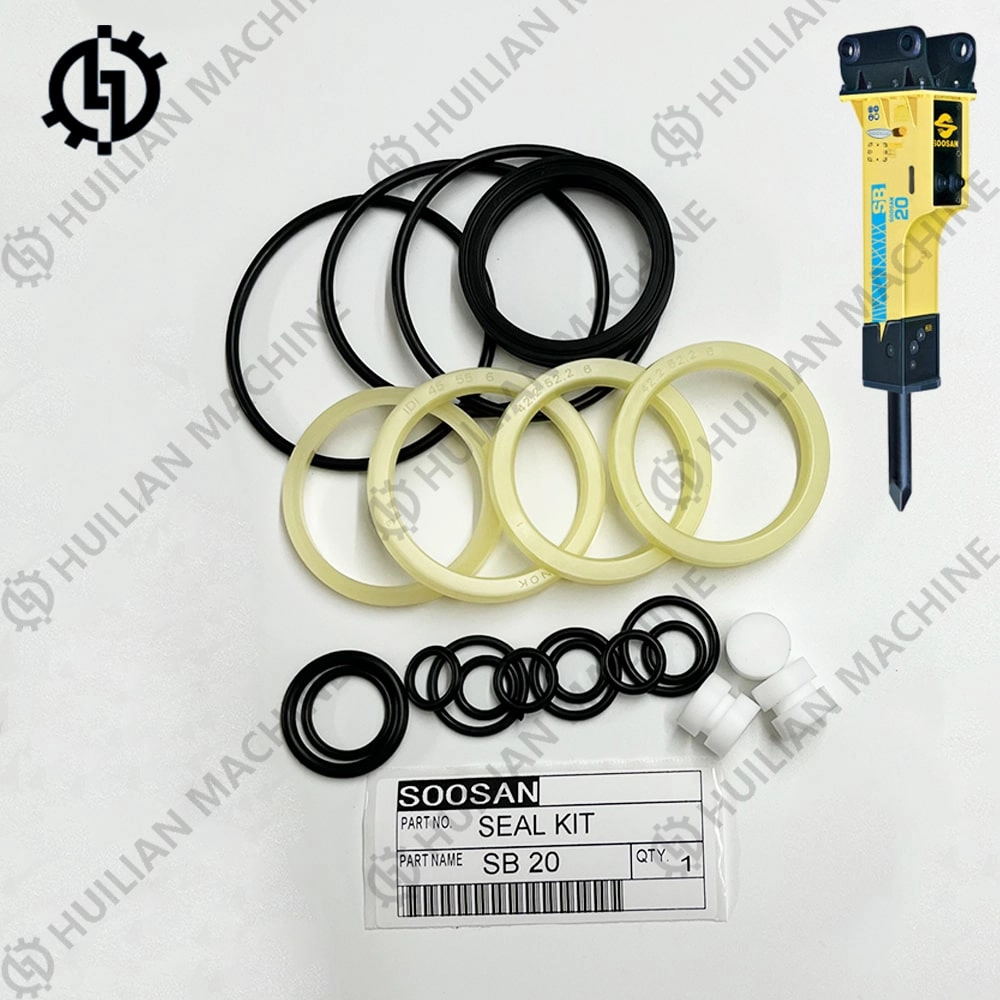
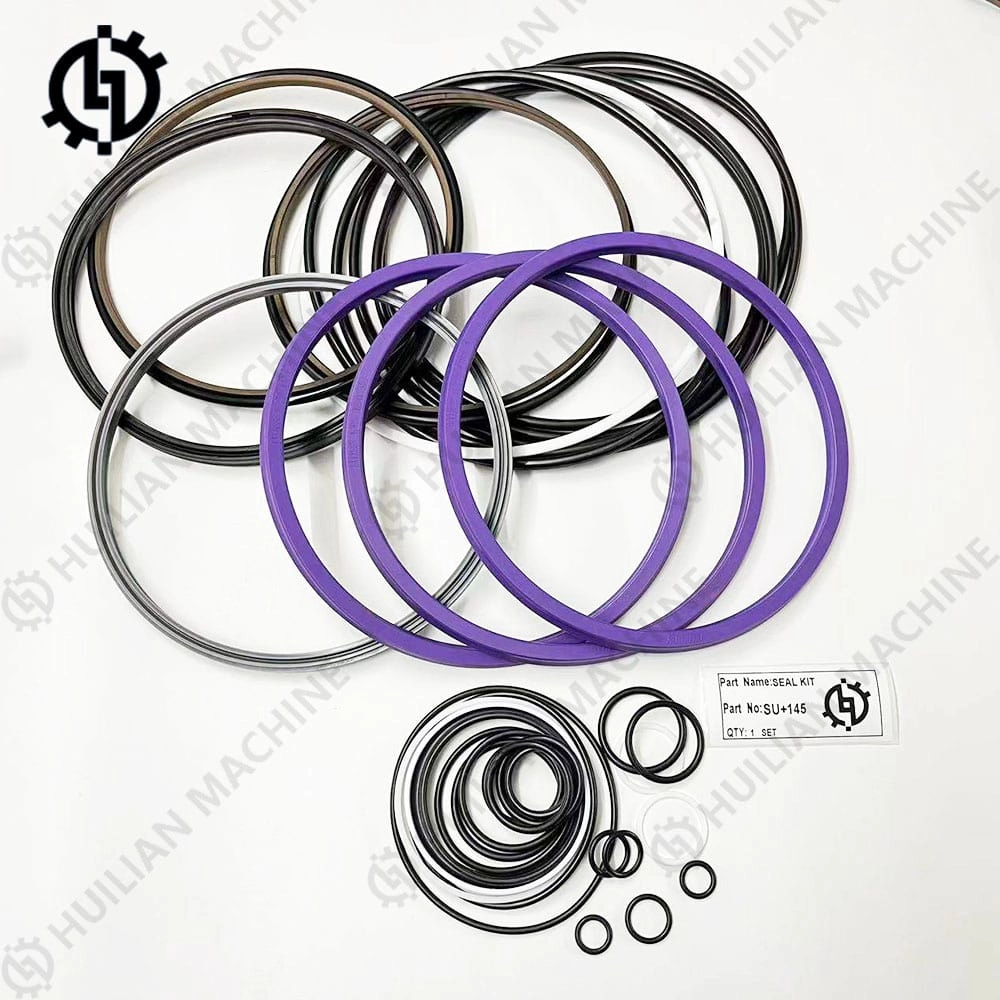
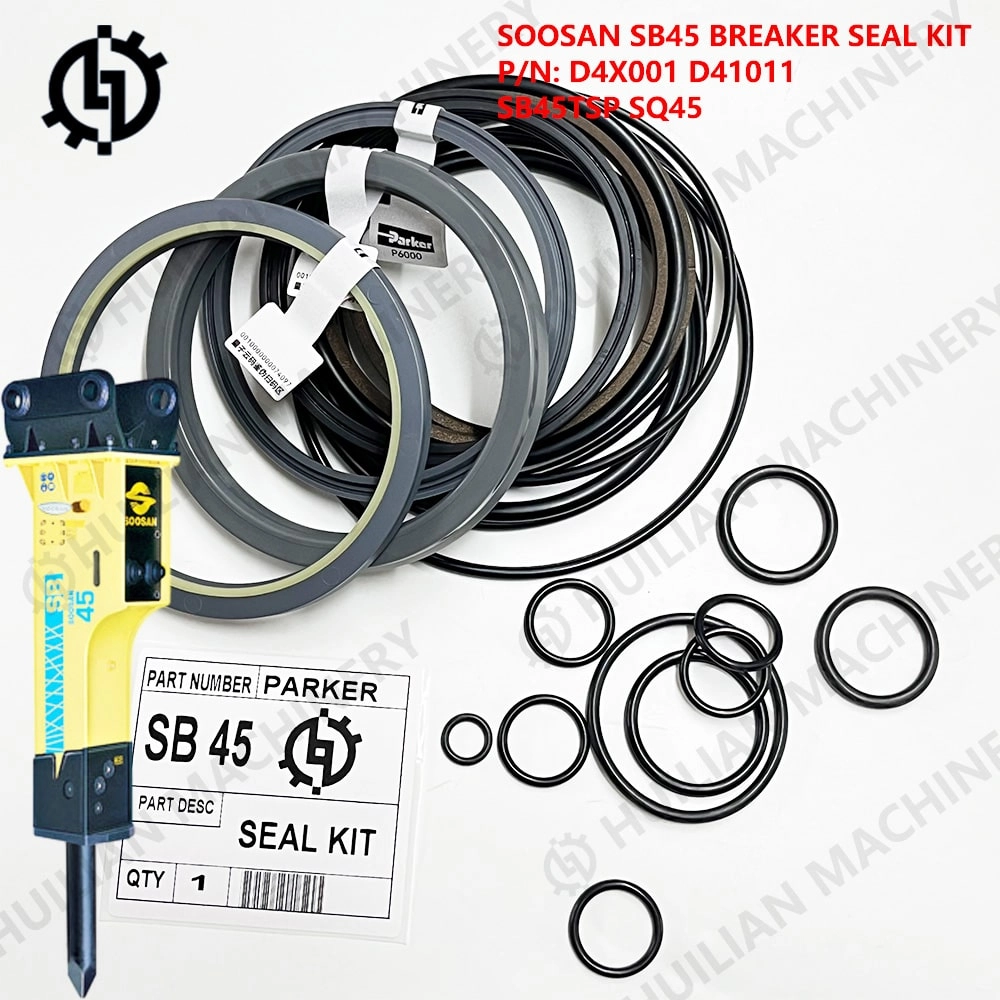
A rock breaker seal kit is a specialized assembly of hydraulic seals—including piston seals, buffer rings, and dust wipers—engineered to contain high-pressure fluids and prevent contaminants from entering the hammer mechanism.
maintaining the hydraulic integrity required for high-impact percussion is the kit's primary function. These components ensure the hammer strikes with consistent force while protecting internal metal surfaces from friction, heat, and scoring. Without fully functional seals, hydraulic breakers suffer from immediate power loss, external oil leaks, and eventually, catastrophic piston damage that can total the attachment.
According to data from Guangzhou Huilian Machines Co., Ltd, a leading OEM supplier founded in 2005, seal failure is the number one cause of unscheduled breaker downtime. With exports to over 90 countries, Huilian's field data suggests that proactively managing seal health is the most effective way to secure asset longevity.
Critical Functions of a Seal Kit
- Pressure Retention: Prevents hydraulic fluid bypass, ensuring maximum impact energy.
- Contamination Control: Blocks rock dust and silica from scoring the piston.
- Thermal Stability: high-quality hydraulic hammer repair kits withstand operating temperatures up to 110°C (230°F).
Anatomy of a High-Performance Seal Kit: Core Components
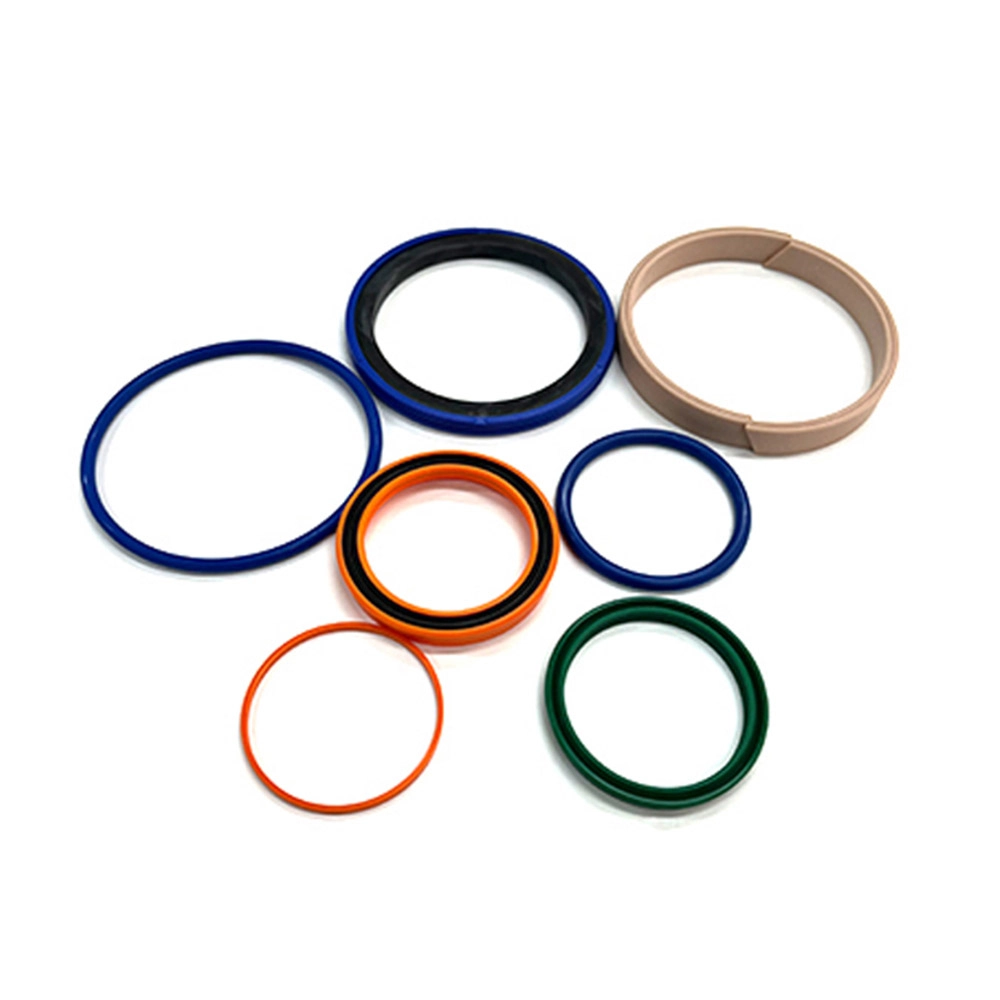
The core anatomy of a seal kit consists of dynamic seals (Main, Buffer) that handle reciprocating motion and static seals (O-Rings, Backups) that prevent leakage at fixed interfaces.
Understanding each component allows technicians to diagnose specific failure modes. For instance, if the main seal fails but the buffer seal is intact, the issue is likely pressure spiking rather than contamination. A holistic view of the "Semantic Entity Net" connecting these parts is vital for accurate troubleshooting.
Key Components & Functions
- Main Oil Seal: The primary barrier against high-pressure hydraulic fluid, critical for power generation.
- Dust/Wiper Seal: The first line of defense, scraping debris off the piston rod as it retracts.
- Buffer Seal: Absorbs initial pressure spikes (shock loads) to protect the main seal from extrusion.
- U-Cups and O-Rings: Provide secondary sealing at static and dynamic interfaces to ensure zero-leak performance.
- Diaphragms: Essential for nitrogen-charged accumulators to maintain consistent impact energy.
Material Science: Comparing PU, NBR, and 2026 Next-Gen Polymers
The 2026 industry standard for heavy-duty breakers prioritizes Thermoplastic Polyurethane (PU) over Nitrile Rubber (NBR) due to PU’s superior tensile strength and abrasion resistance.
While NBR remains useful for static O-rings due to its oil compatibility, high-pressure polyurethane seals are mandatory for dynamic piston applications in modern breakers. Recent advancements have introduced self-lubricating additives into PU matrices, significantly reducing friction during "dry-fire" events where lubrication momentarily fails.
Material Performance Comparison
- Polyurethane (PU): Best for Impact. Extremely resistant to extrusion and wear. The gold standard for main seals.
- Nitrile Rubber (NBR): Best for Cost. Excellent resistance to standard hydraulic oils but has lower heat tolerance (max 100°C).
- Fluorocarbon (FKM/Viton): Best for Heat. Withstands extreme temperatures and aggressive synthetic oils but lacks the bounce-back elasticity of PU.
- 2026 Next-Gen Polymers: Hybrid materials featuring embedded nano-lubricants to extend seal life by 20%.
Expert Installation: Avoiding the 5 Most Common Mistakes
The most frequent cause of premature seal failure is installation error, specifically the introduction of microscopic contaminants or physical damage to the seal lip during assembly.
Even the most expensive OEM kit will fail if installed on a scored piston or in a dirty environment. Huilian Machine’s technical team emphasizes that 80-90% of hydraulic failures are traced back to contamination, a statistic supported by recent industry reports from YorkPMH.
The 5 Installation Sins
- Using Sharp Tools: Metal picks cause microscopic scratches on the sealing surface, leading to immediate leaks.
- Incorrect Greasing Posture: Failing to lubricate the seal groove can cause the seal to roll or invert during installation.
- Ignoring Surface Finish: Installing new seals on a damaged or scored piston rod guarantees breaker piston seal failure within hours.
- Improper Nitrogen Pre-charge: Nitrogen pressure maintenance is critical; incorrect levels cause cavitation damage to the seals.
- Dry Installation: Installing seals without proper hydraulic fluid lubrication causes friction burns on the very first stroke.
Industry-Leading Solutions: Integrating Advanced Seal Technologies
Leading aftermarket solutions now utilize CNC-machined seals and Parker-grade polymers to match or exceed OEM specifications for legacy and modern breakers.
For operators managing mixed fleets, sourcing reliable kits that fit specific models is a logistical challenge. Companies like Guangzhou Huilian Machines Co., Ltd address this by offering a comprehensive range of hydraulic hammer repair kits compatible with global brands. Their experience shows that using premium aftermarket kits can offer comparable durability to OEM parts, provided the material certification is verified.
Advanced Seal Strategies
- Case Study: Mining fleets using premium aftermarket PU seals reported a 15% increase in service intervals compared to standard budget kits.
- CNC Precision: Custom-machined seals ensure a perfect fit for older breaker models where OEM parts are obsolete.
- Impact-Hour Maintenance: Shifting from calendar-based to impact-hour-based replacement schedules optimizes asset utilization.
Cost-Benefit Analysis: Premium Kits vs. Budget Alternatives
Investing in premium seal kits yields a Return on Investment (ROI) of roughly 10:1 by preventing catastrophic downtime costs that can exceed $187,500 per hour in mining operations.
While a budget seal kit might save $50 upfront, the risk of aftermarket vs OEM seal durability issues is not worth the potential operational losses. A single seal failure can contaminate the entire hydraulic system, requiring a full flush and pump replacement.
The Real Cost of "Cheap" Seals
- Upfront Cost vs. Lifecycle Value: A $50 saving today often translates to $5,000 in downtime tomorrow.
- Material Certification: Always ensure your kit meets ISO 6020/2 standards for dimensional accuracy.
- Availability: Partnering with a supplier like Huilian, who holds extensive inventory, provides a strategic advantage for critical fleets.
Frequently Asked Questions (FAQ)
How often should I replace my rock breaker seal kit?
Typically every 600 to 1,000 operating hours. However, this depends on rock hardness and environmental temperature. In extreme heat, replacement intervals should be shortened.
What are the first signs of a failing breaker seal?
Visible oil weeping down the tool (moistening), a noticeable decrease in impact frequency, and rapid overheating of the hydraulic oil are key indicators.
Can I replace just the dust seal if the main seal is not leaking?
It is not recommended. Once the breaker is disassembled, the labor cost far outweighs the price of a full kit. Replacing all seals ensures uniform wear and reliability.
Why do seals harden and become brittle?
Excessive heat is the primary culprit. This is usually caused by improper nitrogen pressure or low hydraulic oil viscosity, causing polymers to lose elasticity and crack.
Are aftermarket seal kits as good as OEM kits?
Yes, high-quality aftermarket kits often use identical materials (e.g., Parker or Freudenberg polymers) and offer comparable performance at a lower price point, as seen with reputable suppliers like Huilian.
How should I store spare seal kits to prevent degradation?
Store them in a cool, dark place away from direct sunlight, ozone sources (like electric motors), and extreme temperature fluctuations to prevent dry rot.
What is the difference between a 'Step Seal' and a 'U-Cup'?
A Step Seal is designed for high-speed reciprocating movement with low friction, while a U-Cup provides a tighter static and dynamic seal for maximum pressure retention.
Does my choice of hydraulic oil affect seal life?
Yes. Using oil with incorrect additives can cause seal swelling or shrinkage. Always follow the breaker manufacturer's fluid specifications strictly.
References


About
Do you offer OEM and aftermarket parts?
Yes, we manufacture high-quality OEM parts and supply aftermarket parts from top brands such as NOK, Parker, SKF, and Hallite to ensure optimal performance.
How can I ensure I’m selecting the right part for my equipment?
Our expert team can assist you in finding the right part based on your machine model, specifications, and requirements. Contact us for personalized support.
What types of excavator parts do you offer?
We provide a wide range of high-quality excavator parts, including hydraulic breakers, chisels, seal kits, diaphragms, pistons, wear bushes, retainer bars, through bolts, side bolts, valves, and liners.
What is your shipping and delivery time?
We offer fast and reliable global shipping. Delivery times vary depending on location and order size, but we strive to process and ship orders as quickly as possible.
Are your parts compatible with all excavator brands?
Yes, our parts are designed to be compatible with major brands like Komatsu, Caterpillar, Hitachi, Hyundai, Doosan, JCB, Kobelco, Sany, and many more.



Getting started is easy 
Contact with our experts to find the best excavator parts solutions for your needs. Discover how Huilian can enhance your equipment's performance and efficiency.


Get in touch
 About us
© 2025 HUILIAN MACHINE. All rights reserved