



The Complete Guide to Hydraulic Excavator Breakers: How They Work and What They’re Used For
- Introduction
- What is a hydraulic excavator breaker?
- How does a hydraulic breaker work on an excavator?
- What is a hydraulic excavator breaker used for?
- How do I choose the right size hydraulic breaker for my excavator?
- What is the difference between a hydraulic breaker and a hydraulic hammer?
- How much does a hydraulic excavator breaker cost?
- How do you properly maintain a hydraulic excavator breaker?
- How long does a hydraulic breaker typically last?
- Conclusion
- Call to Action
Introduction
When brute force alone isn't enough to shatter stubborn concrete or bedrock, operators turn to one of the most powerful attachments in construction: the hydraulic excavator breaker. Whether you are prepping a trench, tearing up an old highway, or performing heavy equipment demolition, this essential attachment transforms your standard excavator into an unstoppable demolition machine.
This comprehensive guide will walk you through exactly how these powerful devices work, what they are used for, and how to protect your investment over the long haul. Understanding the mechanics and maintenance of your breaker is the best way to ensure maximum profitability on the job site.
What is a hydraulic excavator breaker?
A hydraulic excavator breaker is a heavy-duty percussion tool that attaches to the arm of an excavator, completely replacing the standard digging bucket. Often referred to simply as a rock breaker attachment, it is engineered to fracture hard, solid materials like reinforced concrete, asphalt, and natural rock.
These attachments are incredibly versatile and can be mounted on various carrier machines, including mini excavators, skid steers, and massive crawler excavators. Interestingly, the basic percussion technology has been a staple in construction for decades; the first serial-manufactured rock breaker was the Krupp HM 400, patented in the 1960s and later evolving into the sophisticated attachments we see today, as noted by industry pioneers like Epiroc.
Modern versions feature advanced vibration-dampening housings, automated greasing systems, and precision noise-reduction technologies. These modern enhancements make the tools significantly safer, quieter, and more efficient for modern job sites, particularly in dense urban environments.
How does a hydraulic breaker work on an excavator?
The fundamental principle behind a hydraulic breaker is the rapid conversion of fluid power into kinetic impact energy. The breaker relies entirely on the carrier machine's hydraulic system to function. Pressurized hydraulic fluid is pumped into the attachment, where it drives an internal steel piston up and down at incredible speeds.
As the piston is forced downward, it strikes the top of the breaker tool bit (often called the chisel). This immense transfer of kinetic energy travels through the chisel and directly into the material being targeted, causing it to fracture, split, and break apart upon impact.
The overall power and strike frequency of the attachment are entirely dictated by the excavator hydraulic flow and the internal gas pressure (usually nitrogen) within the breaker's accumulator. Advanced models even feature auto-adjusting stroke systems that can sense the hardness of the material, altering the impact force and strike rate dynamically to maximize efficiency and protect the internal components.
What is a hydraulic excavator breaker used for?
Hydraulic excavator breakers are primarily used in environments where rigid, solid materials need to be removed or significantly reduced in size. Their raw power makes them irreplaceable across multiple industries.
- Heavy Equipment Demolition: In the construction and infrastructure sector, they are the go-to tool for heavy equipment demolition. Crews rely on them to quickly tear down old foundations, bridges, retaining walls, and commercial concrete structures.
- Roadwork and Trenching: In roadwork, these attachments excel at ripping up thick layers of old asphalt and compacted sub-base materials before repaving. They also play a vital role in utility trenching, especially when crews encounter unexpected layers of bedrock that a standard bucket simply cannot penetrate.
- Quarrying and Mining: Furthermore, hydraulic breakers are heavily utilized in quarrying and mining operations. Instead of relying solely on explosives, operators use large excavators equipped with heavy-duty breakers for "secondary rock breaking"—reducing massive boulders down to manageable sizes so they can be fed into crushers or hauled away.
How do I choose the right size hydraulic breaker for my excavator?
Selecting the right size breaker is a critical balancing act; an improperly matched attachment can cause severe damage to both the breaker and your carrier machine. To make the correct choice, you must evaluate three main criteria:
- Carrier Weight and Size: The physical size of the carrier is paramount. A breaker that is too heavy will cause the excavator to become unstable and tip, while one that is too light won't be able to absorb the necessary recoil force, leading to structural fatigue on the boom.
- Hydraulic Compatibility: You must meticulously match the excavator's capabilities with the breaker's specifications. You need to verify that your machine can provide the correct gallons per minute (GPM) of fluid while maintaining the correct operating pressure. Pushing too much flow will over-speed the piston and cause catastrophic internal failure, whereas insufficient flow will result in weak, ineffective strikes.
- Application and Material: Consider the environment. If you are doing light indoor concrete demolition, a compact breaker on a mini excavator is ideal. Conversely, if you are working in a commercial quarry breaking high-density granite, you will need a heavy-class breaker mounted to a 30- to 40-ton carrier.
Always consult both the carrier and breaker manufacturer specifications and operating manuals before making a final purchase or rental decision.
What is the difference between a hydraulic breaker and a hydraulic hammer?
This is one of the most common points of confusion for newcomers to the heavy equipment industry, but the answer is surprisingly simple: there is virtually no difference. The terms "hydraulic breaker" and "hydraulic hammer" are completely synonymous and are used interchangeably across the industry.
Manufacturers, equipment dealers, and operators use both terms to describe the exact same hydraulically actuated percussion attachment. The preference for one term over the other usually comes down to regional dialects, specific company branding, or simply operator habit.
Whether you see a product labeled in a catalog as an "excavator demolition hammer" or a "hydraulic rock breaker," you are looking at the exact same internal piston-and-chisel technology. Both are designed with the singular purpose of smashing through rigid, unforgiving materials.
How much does a hydraulic excavator breaker cost?
The cost of a hydraulic excavator breaker varies wildly based on its physical size, impact energy class, and whether it is purchased brand new or on the used market. Pricing scales linearly with the size of the carrier machine it is meant to attach to.
For a mini excavator or skid steer, a brand-new, light-duty breaker typically ranges from $4,000 to $8,000. Stepping up to mid-sized excavators (the 15- to 20-ton class), you can expect to pay anywhere from $15,000 to $30,000 for a high-quality, newly manufactured attachment.
For massive heavy-class excavators used in serious mining and quarrying (30- to 40-ton machines and above), new hydraulic breakers can easily cost between $50,000 and well over $100,000. If budget is a primary concern, the used and remanufactured market offers significant savings. Remanufactured units from reputable dealers often cost 30% to 50% less than their brand-new counterparts, though buyers should always verify the flow requirements and internal wear before purchasing.
How do you properly maintain a hydraulic excavator breaker?
A hydraulic breaker is subject to extreme violence and friction during operation, making preventative maintenance absolutely essential. The following practices are non-negotiable for equipment longevity:
- Daily Lubrication: Because the breaker tool bit slides rapidly against the lower bushings, operators must apply a specialized, high-temperature chisel paste (not standard chassis grease) every two to three hours of operation to prevent metal-on-metal galling.
- Nitrogen and Hardware Checks: Another critical maintenance practice is checking the nitrogen gas levels in the accumulator. If the gas pressure drops, the breaker loses its shock-absorbing capabilities, placing severe stress on the excavator's boom. Fasteners, tie rods, and hydraulic hoses should also be visually inspected daily for tightness and leaks.
- Operator Technique: Operator habits dictate hardware health. To prevent extreme thermal degradation of internal seals, industry experts at Beilite Machinery strongly recommend operating the breaker in short bursts of 15 to 30 seconds at a time rather than holding it down continuously. Operators must also avoid "blank firing" (triggering the hammer when it isn't pressed firmly against a material), as this shoots the piston's energy directly into the retaining pins.
How long does a hydraulic breaker typically last?
With rigorous maintenance and proper operator technique, a high-quality hydraulic breaker can be an excellent, long-lasting investment. However, its lifespan is highly dependent on how aggressively it is used and the types of materials it breaks on a daily basis.
On average, a well-maintained hydraulic breaker will last for roughly 2,000 to 3,000 operating hours before requiring a major, complete rebuild. Because actual breaker run-time typically accounts for only about 25% of the carrier machine's total operating hours, this 2,000-hour metric often translates to about 3 to 5 years of steady use on a typical job site, according to life-cycle analyses from For Construction Pros.
Eventually, major internal components like the piston, cylinder, and main tie rods will succumb to metal fatigue. While standard wear parts (like tool bits and lower bushings) are replaced routinely throughout the year, reaching the 3,000-hour mark usually means the main breaker body will need to be factory-remanufactured or retired to back-up status.
Conclusion
Hydraulic excavator breakers are engineering marvels that bring unparalleled demolition capabilities to job sites worldwide. By understanding the fluid dynamics that power them, carefully matching them to the right carrier machine, and strictly adhering to daily lubrication protocols, you can maximize their efficiency and drastically extend their service life.
Call to Action
If you are ready to equip your heavy machinery fleet with the perfect demolition attachments, contact our team of equipment experts today for a customized consultation and pricing guide!


About
What types of excavator parts do you offer?
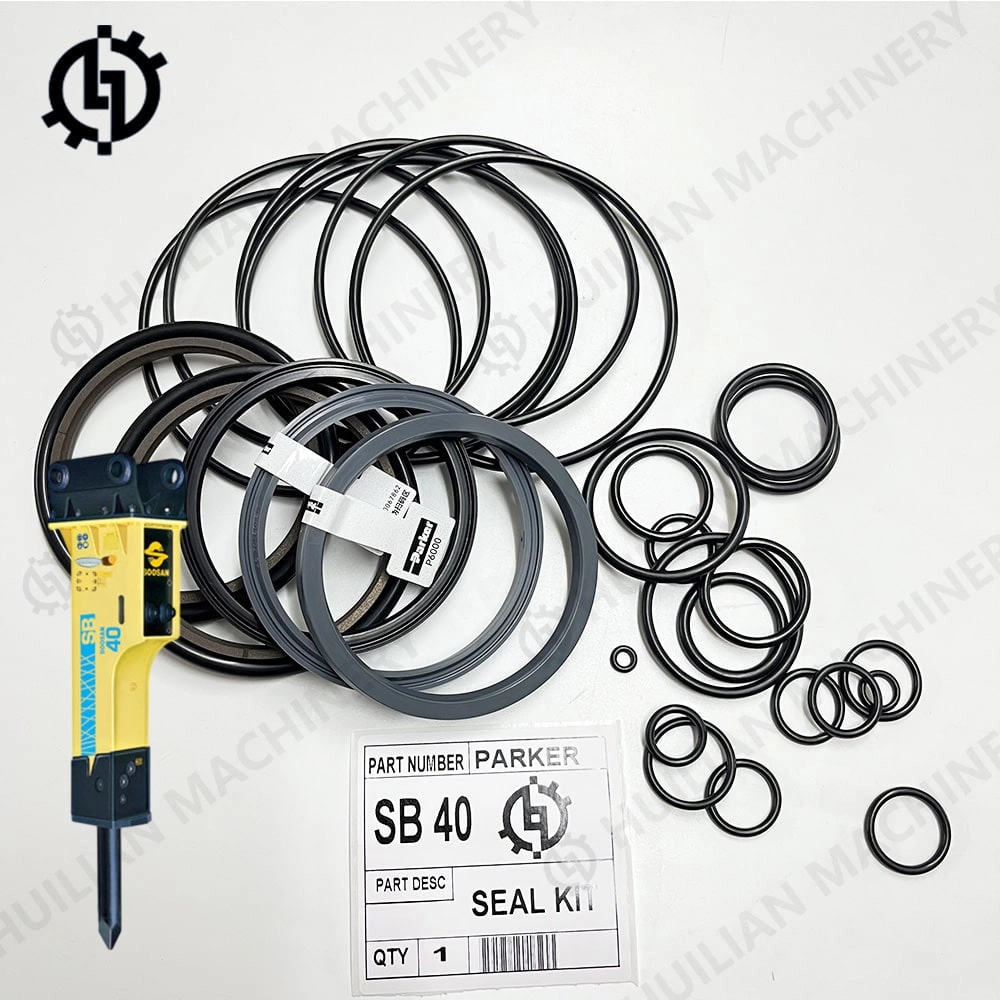
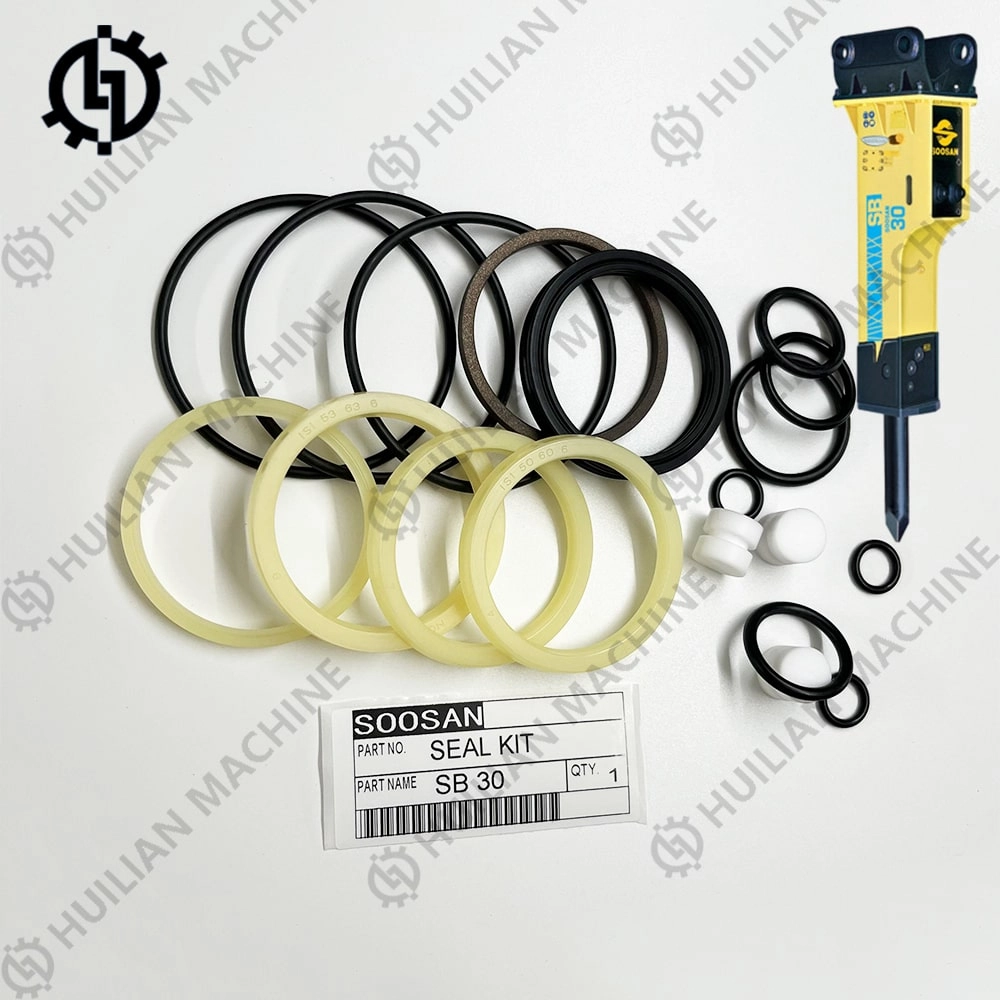
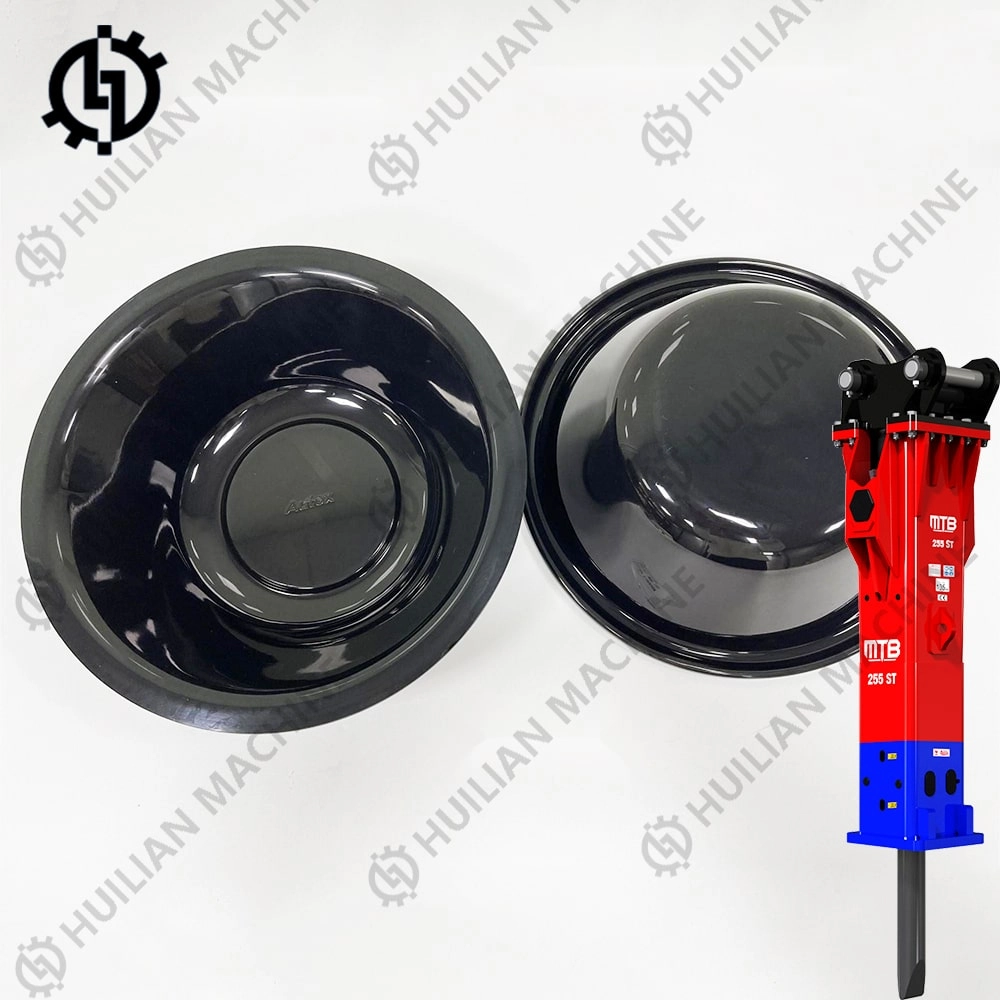
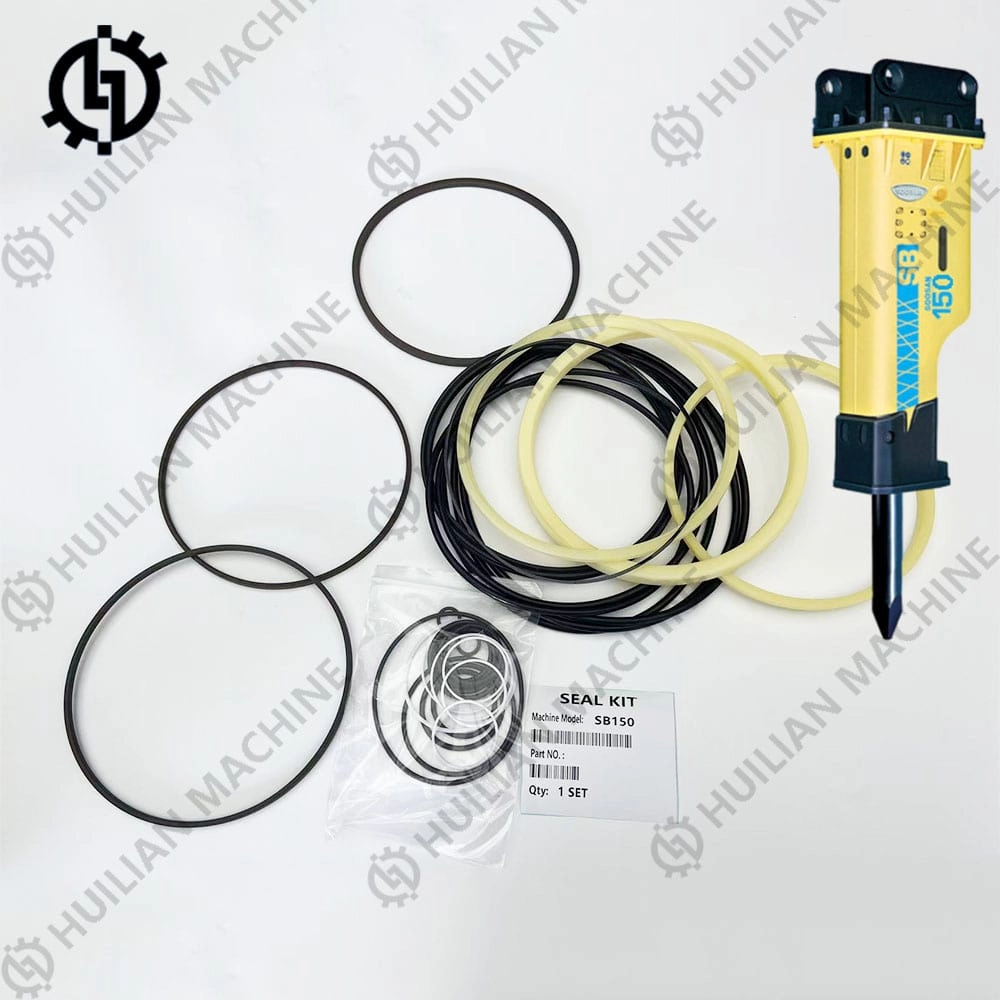
We provide a wide range of high-quality excavator parts, including hydraulic breakers, chisels, seal kits, diaphragms, pistons, wear bushes, retainer bars, through bolts, side bolts, valves, and liners.
What is your shipping and delivery time?
We offer fast and reliable global shipping. Delivery times vary depending on location and order size, but we strive to process and ship orders as quickly as possible.
Do you offer OEM and aftermarket parts?
Yes, we manufacture high-quality OEM parts and supply aftermarket parts from top brands such as NOK, Parker, SKF, and Hallite to ensure optimal performance.
How can I ensure I’m selecting the right part for my equipment?
Our expert team can assist you in finding the right part based on your machine model, specifications, and requirements. Contact us for personalized support.
Are your parts compatible with all excavator brands?
Yes, our parts are designed to be compatible with major brands like Komatsu, Caterpillar, Hitachi, Hyundai, Doosan, JCB, Kobelco, Sany, and many more.




Getting started is easy 
Contact with our experts to find the best excavator parts solutions for your needs. Discover how Huilian can enhance your equipment's performance and efficiency.


Get in touch
 About us
© 2025 HUILIAN MACHINE. All rights reserved