



The Ultimate Guide to Choosing and Operating the Right Komatsu Excavator Breaker
- Introduction
- How do I choose the right Komatsu excavator breaker?
- How does a Komatsu excavator breaker work?
- Can you use any hydraulic breaker on a Komatsu excavator?
- How do I properly maintain a Komatsu excavator breaker?
- Why is my Komatsu excavator breaker not hammering?
- Which Komatsu excavator breaker parts wear out the fastest?
- What do oil leaks in a Komatsu excavator breaker signify?
- What are the common problems with a Komatsu excavator breaker?
- Conclusion
- Call to Action
Introduction
Demolition, mining, and excavation are exceptionally demanding industries that require robust, high-performance machinery. When a bucket alone isn't enough to break through solid rock, frost, or reinforced concrete, a hydraulic breaker becomes an essential tool on your job site. Among the most trusted names in the heavy equipment industry, Komatsu provides attachments that deliver relentless breakout force and unmatched durability.
However, maximizing the lifespan and efficiency of your equipment requires more than just attaching a hammer and pulling a lever. Whether you are an operator, a fleet manager, or an equipment owner, understanding the intricacies of these powerful tools is vital.
This ultimate guide explores everything you need to know about choosing, operating, and maintaining the right Komatsu excavator breaker to keep your productivity high and your downtime to an absolute minimum.
How do I choose the right Komatsu excavator breaker?
Selecting the perfect breaker is critical for ensuring job site efficiency and preventing catastrophic damage to both the attachment and the carrier machine. The process begins with perfectly matching the physical and hydraulic specifications of the breaker to your specific excavator.
To choose the right breaker, carefully evaluate the following factors:
- Operating Weight: Match the breaker's weight and mounting bracket to your machine's class. Komatsu carriers range from utility mini-excavators to massive 60-metric-ton mining machines (PC78 to PC490).
- Series Selection: Komatsu offers distinct lines tailored to different needs. The V-series automatically adjusts its stroke length based on rock hardness, the H-series utilizes advanced accumulator technology, and the G-Series offers a straightforward, powerful nitrogen gas cushion design.
- Application Material: Consider your specific job. Scaling a tunnel requires different impact energy and tool geometry than tearing out reinforced concrete abutments.
Consulting your machine's manual and cross-referencing it with Komatsu's official attachment specifications will ensure you make the right investment for your fleet.
How does a Komatsu excavator breaker work?
A Komatsu hydraulic hammer attachment functions by converting hydraulic fluid power from the carrier machine into kinetic impact energy. The excavator's internal hydraulic pump sends highly pressurized oil down the boom lines and into the breaker. This pressurized fluid drives a heavy internal piston up and down at incredible speeds.
Many Komatsu models utilize a specialized combination of hydraulic power and a nitrogen gas cushion or an accumulator system. The nitrogen gas absorbs the violent upward recoil of the piston, minimizing shock to the excavator arm and operator. Simultaneously, it stores energy to dramatically increase the downward force of the next blow.
In advanced models, such as the Komatsu V-series, fully variable technology automatically monitors the resistance of the material being broken. It seamlessly adjusts the piston's stroke length and speed—delivering short, fast strikes for softer material and long, heavy blows for hard rock.
Can you use any hydraulic breaker on a Komatsu excavator?
Technically, you can mount different brands of demolition attachments on a Komatsu excavator, provided the physical mounting bracket (pin grabber or direct mount) and the carrier's operating weight align with the breaker's dimensions.
However, physical fitment is only half the equation. You must perfectly match the hydraulic flow and pressure (GPM and PSI) of the excavator to the hammer. If the carrier delivers excessive flow, the breaker will overheat, leading to rapid internal seal failure. If it delivers too little pressure, the breaker will strike weakly and inefficiently.
While third-party options exist, it is highly recommended to use genuine Komatsu heavy equipment parts and approved breakers. Komatsu breakers are engineered with specific back-pressure tolerances, flow-through control valves, and automatic pressure regulation designed to harmonize perfectly with a Komatsu carrier's exact hydraulic output.
How do I properly maintain a Komatsu excavator breaker?
Effective rock breaker maintenance is the absolute cornerstone of equipment longevity. Because these tools literally beat themselves against solid rock all day, preventative care is non-negotiable. The single most critical maintenance task is proper, consistent lubrication.
According to equipment experts at For Construction Pros, manual greasing should occur every two hours during active operation. High-quality, molybdenum-based grease reduces the intense metal-on-metal friction between the chisel and the lower bushing. Pumping fresh grease pushes out invasive rock dust; without it, the dirt and grease mix into a destructive lapping compound that grinds away internal steel.
Additionally, operators must conduct daily visual inspections. This includes checking the tightening torque of tie rods (through bolts), inspecting for missing retainer pins, and checking the hydraulic hoses for chafing. Regularly evaluating the nitrogen gas charge in the accumulator is also essential to ensure the tool retains its full impact power.
Why is my Komatsu excavator breaker not hammering?
When your breaker suddenly stops hammering, it brings job site production to a grinding halt. The most common culprit behind a silent breaker is low hydraulic pressure. This can result from a failing hydraulic pump on the carrier, a clogged system oil filter, or a damaged hose that is restricting the flow of hydraulic fluid to the attachment.
Another frequent issue is a severe lack of nitrogen gas pressure. If the accumulator or gas chamber loses its charge due to a blown O-ring, the internal piston will not have the necessary stored energy to cycle and strike the chisel forcefully.
Furthermore, cold weather or inadequate lubrication can cause the piston or knocker to seize physically inside the cylinder. Hardened, old grease mixed with fine cement dust can essentially glue the internal components together. In some modern breakers, advanced anti-blank firing protection might have engaged; if the tool is not firmly pressed against the work surface, the breaker intentionally will not fire to protect its internals.
Which Komatsu excavator breaker parts wear out the fastest?
Due to the violent and abrasive nature of demolition work, certain wearable parts on a hydraulic breaker will naturally degrade faster than others. The most frequently replaced component is the working tool, or chisel. Because it takes the direct, punishing impact against rock and concrete, the steel tip will inevitably dull, mushroom, or chip over time.
The retainer pins (tool retaining pins) and the inner/outer bushings are the next fastest-wearing components. As the chisel moves rapidly up and down, it creates intense lateral friction against the lower bushing. Without strict adherence to greasing intervals, these parts can wear out in a matter of weeks, leading to excessive tool play.
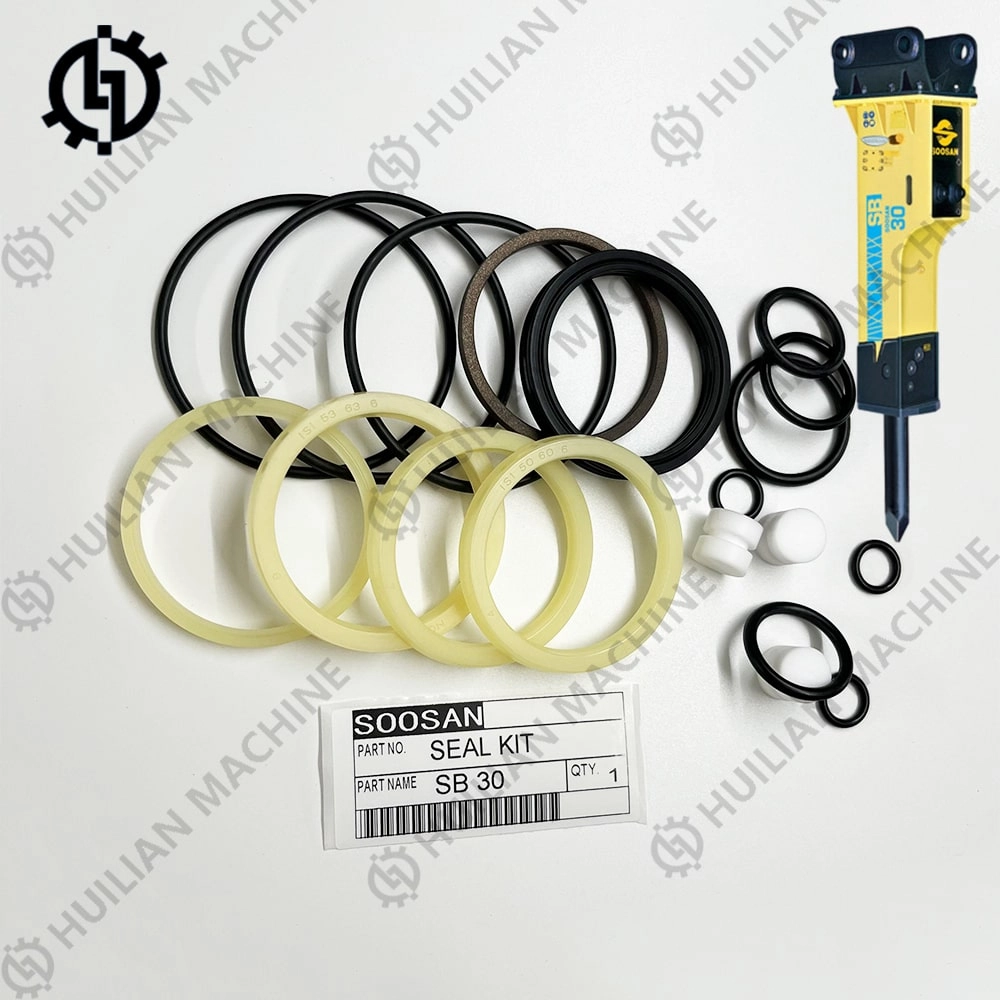
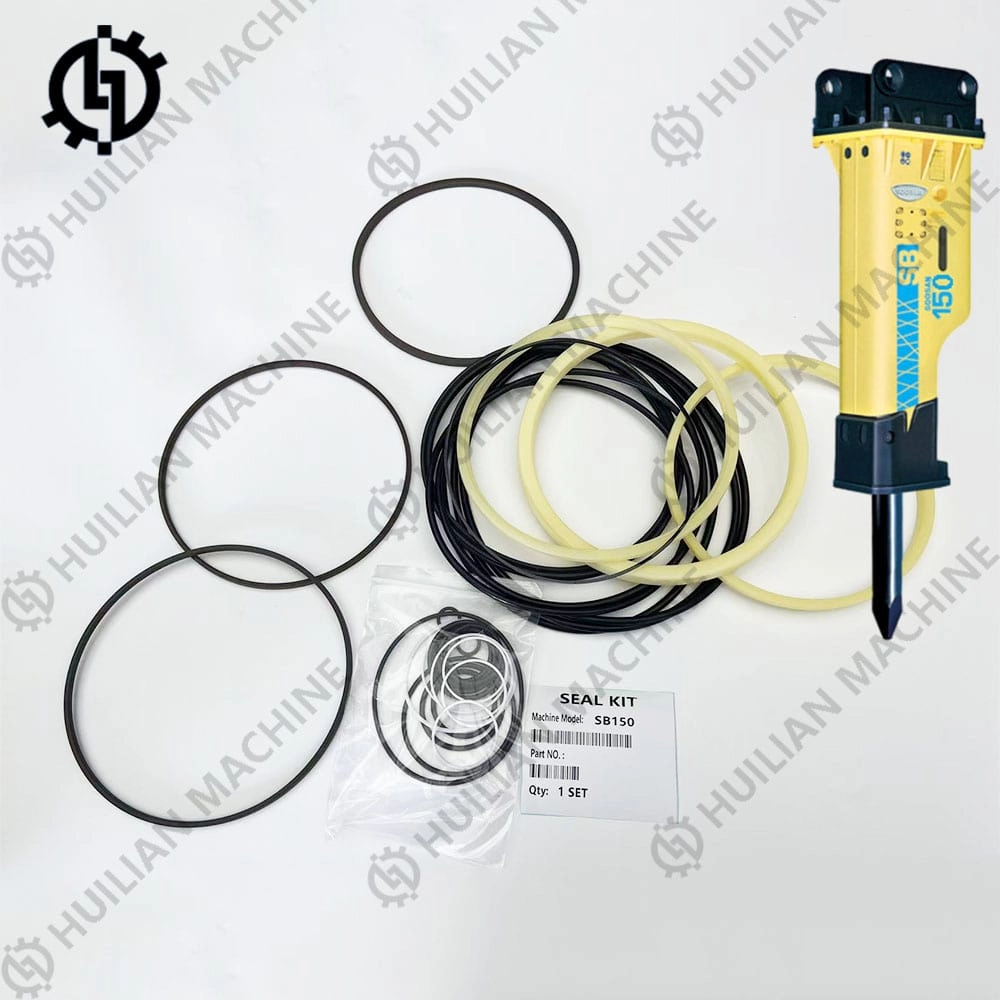
Finally, the internal elastomer seals—such as the U-cup seals, O-rings, and dust wipers—are highly susceptible to degradation. They must endure massive pressure spikes, constant friction, and high heat. Once these seals harden, crack, or tear, the breaker will immediately begin to lose operating efficiency and leak hydraulic fluid.
What do oil leaks in a Komatsu excavator breaker signify?
Discovering an oil leak on your hydraulic breaker is a blaring warning sign that internal maintenance is required immediately. A leak running down the chisel from the front head usually signifies that the lower cylinder seals and U-cup dust seals have failed. This is often a secondary symptom of worn-out bushings, which allow the chisel to move laterally and physically crush the seals.
If the fluid leak is emerging from the main body or the joints between the cylinder sections, it typically points to loose tie rods (through bolts). These massive bolts hold the breaker's main housing together under extreme hydraulic pressure. If they lose their required torque due to heavy operational vibration, the housing sections will separate slightly, allowing pressurized oil to spray out.
Never ignore a hydraulic fluid leak. Running a breaker while it is leaking will not only lead to catastrophic internal scoring of the piston and cylinder, but it can also drain the carrier machine's hydraulic fluid reservoir, potentially leading to secondary, highly expensive excavator pump failures.
What are the common problems with a Komatsu excavator breaker?
Beyond unexpected oil leaks and the tool failing to cycle, operators frequently encounter several other common operational issues. Most of these can be mitigated by proper operator training and strict adherence to the manual.
Key common problems include:
- Overheating: This is typically caused by operators running the breaker continuously for too long in a single spot without breaking through the material. It can also result from excessive hydraulic flow and pressure generating waste heat.
- Blank Firing Damage: This occurs when the operator triggers the hammer without the chisel being firmly pressed against the rock. The immense kinetic energy has nowhere to transfer, sending destructive shockwaves back into the breaker's housing that can snap retainer pins and tie rods.
- Weak Impact Force: Often caused by a gradual leak of nitrogen gas from the accumulator or worn internal piston seals, resulting in a sluggish, inefficient break.
To avoid these costly problems, ensure your operators are thoroughly trained, strictly adhere to manual greasing intervals, and always consult official Komatsu guidelines to guarantee your carrier machine is dialed into the exact pressure settings required.
Conclusion
Investing in a Komatsu hydraulic breaker is a highly strategic choice for any serious demolition, quarrying, or excavation operation. By understanding exactly how these powerful attachments function and precisely matching them to your carrier's weight and hydraulic capabilities, you guarantee maximum breakout force and long-term operational efficiency.
Remember that proactive maintenance, dedicated operator training, and swift troubleshooting are the ultimate keys to protecting your investment. Treat your hydraulic breaker with care, use genuine replacement parts, and it will relentlessly power through your toughest job site challenges for years to come.
Call to Action
Contact us today for a personalized consultation to find the perfect Komatsu excavator breaker and maintenance plan for your specific job site needs!


About
Do you offer OEM and aftermarket parts?
Yes, we manufacture high-quality OEM parts and supply aftermarket parts from top brands such as NOK, Parker, SKF, and Hallite to ensure optimal performance.
Are your parts compatible with all excavator brands?
Yes, our parts are designed to be compatible with major brands like Komatsu, Caterpillar, Hitachi, Hyundai, Doosan, JCB, Kobelco, Sany, and many more.
What is your shipping and delivery time?
We offer fast and reliable global shipping. Delivery times vary depending on location and order size, but we strive to process and ship orders as quickly as possible.
What types of excavator parts do you offer?
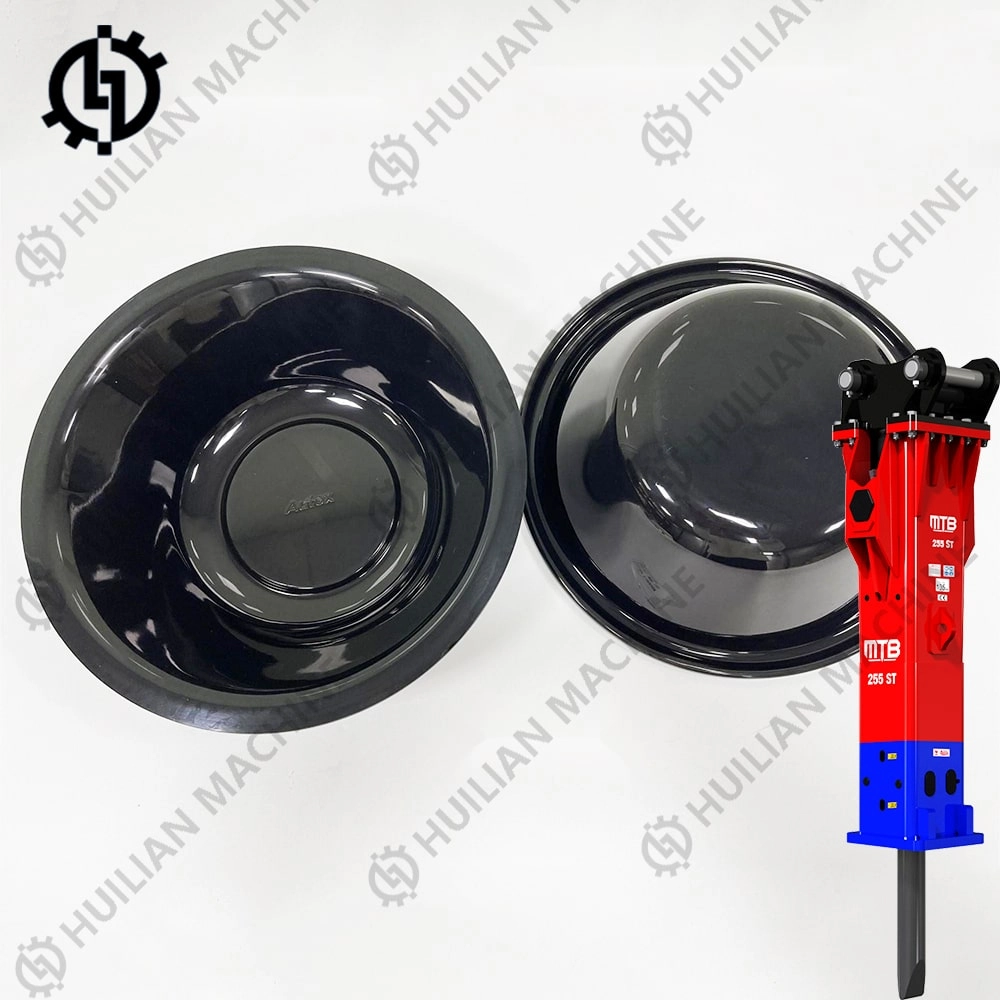
We provide a wide range of high-quality excavator parts, including hydraulic breakers, chisels, seal kits, diaphragms, pistons, wear bushes, retainer bars, through bolts, side bolts, valves, and liners.
How can I ensure I’m selecting the right part for my equipment?
Our expert team can assist you in finding the right part based on your machine model, specifications, and requirements. Contact us for personalized support.




Getting started is easy 
Contact with our experts to find the best excavator parts solutions for your needs. Discover how Huilian can enhance your equipment's performance and efficiency.


Get in touch
 About us
© 2025 HUILIAN MACHINE. All rights reserved