



Types of Hydraulic Breakers: Top-Type, Side-Type & Box-Type Explained
- Introduction: Choosing the Right Weapon for Demolition
- The Top-Type Hydraulic Breaker: Maximum Vertical Power
- The Side Type Breaker: Flexibility and Easy Maintenance
- The Silenced Box Type Breaker: The Urban Construction Standard
- Scaling Down: The Rise of Mini Excavator Breakers
- Essential Checklist: Breaker Application & Compatibility
- Routine Maintenance Tips for Different Breaker Designs
- Conclusion: Partnering with a Reliable Attachments Manufacturer
- Frequently Asked Questions (FAQs)
- How do I ensure a hydraulic breaker is fully compatible with my carrier machine?
- What is the actual difference between a silenced box type breaker and a standard side type breaker in terms of noise?
- How often should a hydraulic breaker be greased during heavy operation?
- Are mini excavator breakers capable of breaking heavily reinforced concrete?
- Why is my hydraulic breaker operating slowly or lacking its usual impact power?
Introduction: Choosing the Right Weapon for Demolition
In the demanding worlds of mining, road construction, and heavy demolition, a hydraulic breaker is not just an accessory; it is the primary weapon for productivity. For fleet managers and contractors, selecting the right hydraulic breaker is a critical financial decision. The market offers a variety of external designs, each engineered to solve specific operational challenges. Making the wrong choice can lead to severe carrier damage, delayed project timelines, and inflated maintenance costs. Understanding the distinct structural differences between the three primary configurations—top-type, side-type, and box-type hydraulic breakers—is the fundamental first step in optimizing your fleet's efficiency. Whether you are breaking solid bedrock or undertaking delicate urban trenching, the exterior housing dictates the tool's maneuverability, maintenance requirements, and environmental impact. This comprehensive guide will dissect these core designs, empowering you to make informed procurement decisions that maximize your return on investment and keep your demolition projects running on schedule.
The Top-Type Hydraulic Breaker: Maximum Vertical Power

When maximum vertical impact force is the primary objective, the top-type hydraulic breaker is the undisputed industry leader. Engineered with a straight, linear alignment between the main body and the cylinder, this design resembles a massive chisel dropping straight down from the excavator’s arm. Because the hydraulic hoses attach directly to the top of the unit, it boasts an extended overall length and a significantly longer piston stroke. This specific architecture translates to unparalleled, direct downward kinetic energy. For heavy-duty applications such as open-pit quarrying, primary rock excavation, and the systematic demolition of thick, reinforced concrete slabs, the top-type configuration excels. Its design inherently utilizes the carrier machine's downward pressure most efficiently. However, because of its elongated profile, it requires a higher operating clearance, making it slightly less maneuverable in highly confined spaces compared to other models. For sheer, unadulterated breaking power in open environments, this design remains the top choice for heavy machinery operators.
The Side Type Breaker: Flexibility and Easy Maintenance
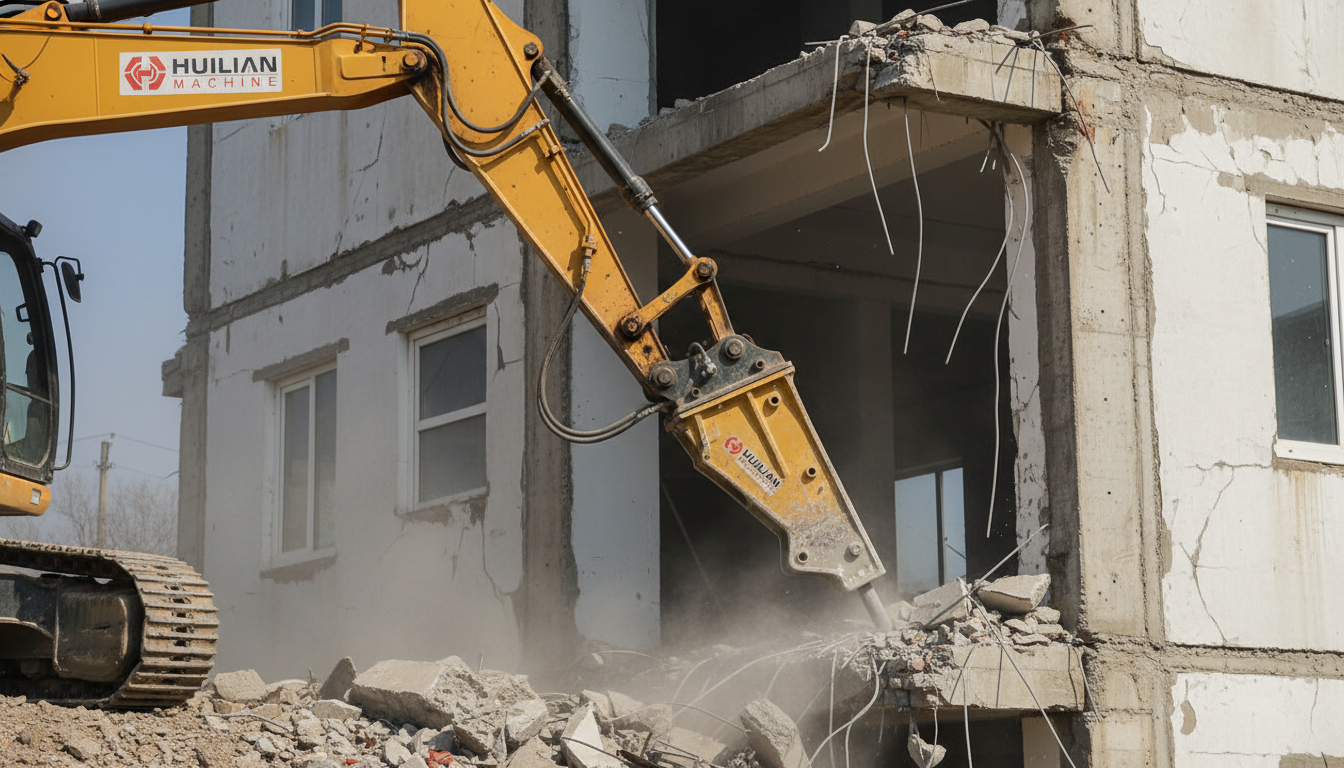
Historically one of the earliest designs to gain widespread adoption, the side type breaker remains a staple in construction fleets globally due to its exceptional versatility. Characterized by its distinctive L-shaped side mounting bracket, this configuration allows the main breaker body to be positioned closer to the excavator's cabin. This structural layout provides the operator with a significantly wider field of vision and enhanced maneuverability, particularly when working at complex angles. Beyond operational flexibility, the true value of a side type breaker lies in its remarkably low maintenance profile. The side-mounted bracket design allows mechanics to easily access internal components—such as the chisel pin, piston, and seal kits—without having to completely dismantle the entire heavy housing or detach it fully from the carrier. This rapid serviceability drastically reduces equipment downtime on the job site. It is the ideal workhorse for trenching operations, building foundation removal, and projects requiring precise, angled demolition on steep slopes.
The Silenced Box Type Breaker: The Urban Construction Standard
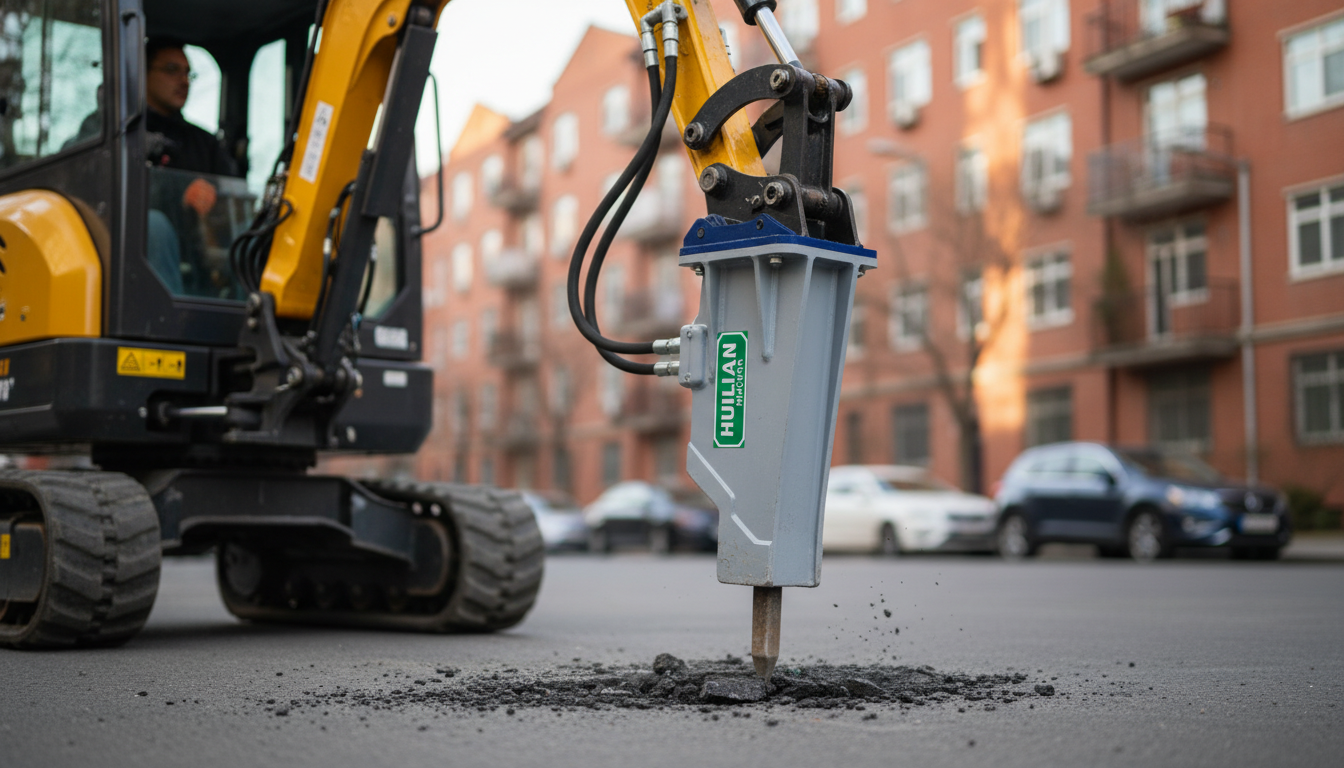
As global environmental regulations tighten and urbanization accelerates, the demand for equipment that minimizes acoustic pollution has skyrocketed. Enter the silenced box type breaker, which has rapidly become the mandatory standard for modern city construction. Unlike the exposed designs of the top and side models, this breaker is fully encased in a heavily reinforced, enclosed steel bracket. Between the internal working body and this outer shell, manufacturers integrate advanced vibration-dampening cushions and noise-absorbing polyurethane materials. This enclosed architecture serves a dual purpose: it significantly muffles the high-frequency percussion noise generated by the piston striking the chisel, and it drastically reduces the recoil vibration transmitted back into the excavator's boom. Consequently, a silenced box type breaker is absolutely indispensable for infrastructure renewals in densely populated urban centers, residential trenching, and indoor or tunnel operations where echoing noise poses a severe safety hazard to ground crews. It protects both the environment and your expensive machinery.
Scaling Down: The Rise of Mini Excavator Breakers
While massive mining hammers often dominate the headlines, there is a massive surge in demand for compact, highly agile demolition tools. The global market is witnessing a rapid rise in the deployment of mini excavator breakers designed for carriers ranging from 1 to 8 tons, including skid steer loaders and compact track loaders. Regardless of whether they utilize a side or box-style housing, these miniaturized attachments punch well above their weight class. They are engineered to deliver rapid blow frequencies rather than sheer heavy impact, making them incredibly efficient for precise tasks. Contractors rely heavily on mini excavator breakers for interior building renovations, concrete driveway removals, intricate landscaping projects, and navigating through narrow alleys where larger machinery simply cannot operate. As urban spaces become more congested, investing in high-quality compact breakers ensures your fleet remains versatile enough to bid on highly profitable, specialized residential and commercial indoor demolition contracts.
Essential Checklist: Breaker Application & Compatibility
Selecting the correct external housing is only the first phase of the procurement process; ensuring seamless breaker application & compatibility is what ultimately determines operational success. A mismatch between the attachment and the carrier machine is the leading cause of hydraulic pump failures and shattered chisels. B2B buyers must rigorously evaluate three critical technical parameters before purchasing. First is the carrier weight tonnage; mounting a heavy breaker on a light excavator causes severe structural imbalance and safety risks. Second is the hydraulic oil flow; insufficient flow results in weak strikes, while excessive flow will overheat and destroy the breaker's internal seals. Third is the optimal operating pressure. Procurement teams should always request comprehensive compatibility charts from manufacturers. Properly matching these specifications guarantees that the breaker operates efficiently within the excavator's designated safety margins, maximizing the destruction output while safeguarding the expensive hydraulic heart of the carrier machine.
Routine Maintenance Tips for Different Breaker Designs
To protect your heavy equipment capital investment, establishing a rigorous routine maintenance schedule is non-negotiable, and your approach must adapt based on the specific housing design of your breaker. For instance, while the enclosed nature of a box type model excellently prevents abrasive dust from infiltrating the main body, checking the nitrogen gas pressure or replacing the chisel pin often requires removing specific access panels. Conversely, the exposed architecture of a side type unit allows operators to perform daily greasing routines and visual inspections with unmatched speed. Regardless of the external type, fleet managers must enforce universal daily checks. This includes inspecting high-pressure hydraulic hoses for weeping fluid, ensuring the mounting pins are secure, and monitoring the chisel for excessive mushrooming or wear. Implementing an automated greasing system is also highly recommended for heavy-duty models, as consistent lubrication is the ultimate defense against premature friction wear between the tool and the bushings.
Conclusion: Partnering with a Reliable Attachments Manufacturer
Selecting the correct hydraulic breaker is vital for maximizing your demolition efficiency. Whether your project demands the raw power of a top-type, the operational agility of a side-type, the quiet compliance of a silenced box-type, or the precision of a mini excavator breaker, the right choice depends on your specific job site and strict carrier compatibility.
This is where partnering with a trusted industry leader like HUILIAN MACHINE makes the difference. We do more than just supply high-quality attachments; we provide precise compatibility matching, premium metallurgical components, and ongoing OEM parts support. By choosing HUILIAN MACHINE, you ensure your fleet is equipped with the most durable and efficient tools on the market. Contact our engineering team today to find the perfect hydraulic breaker configuration to drive your business forward.
Frequently Asked Questions (FAQs)
How do I ensure a hydraulic breaker is fully compatible with my carrier machine?
You must match three key specifications: the carrier's operating weight (tonnage), hydraulic oil flow rate (L/min or GPM), and operating pressure (PSI/bar). Always consult the manufacturer's compatibility chart to avoid damaging the breaker's seals or the excavator's pump.
What is the actual difference between a silenced box type breaker and a standard side type breaker in terms of noise?
A silenced box type features a fully enclosed housing with sound-absorbing materials, drastically reducing percussion noise and vibration. A side type has an exposed body and is significantly louder. Box types are essential for urban areas with strict noise regulations.
How often should a hydraulic breaker be greased during heavy operation?
Manually grease the chisel and bushings every 2 to 4 hours of continuous operation using high-temperature molybdenum grease. For heavy-duty use, installing an automatic greasing system is highly recommended to prevent premature wear.
Are mini excavator breakers capable of breaking heavily reinforced concrete?
No. Mini breakers deliver high-frequency, lower-impact strikes ideal for standard driveways and interior demolition. For thick, heavily reinforced concrete (like bridge pillars), you need the massive impact energy of a medium or heavy-duty breaker.
Why is my hydraulic breaker operating slowly or lacking its usual impact power?
This is typically caused by one of three issues: insufficient hydraulic oil flow from the excavator, depleted nitrogen gas pressure in the breaker, or worn internal seals. Inspect hydraulic settings and nitrogen levels immediately.


About
Do you offer OEM and aftermarket parts?
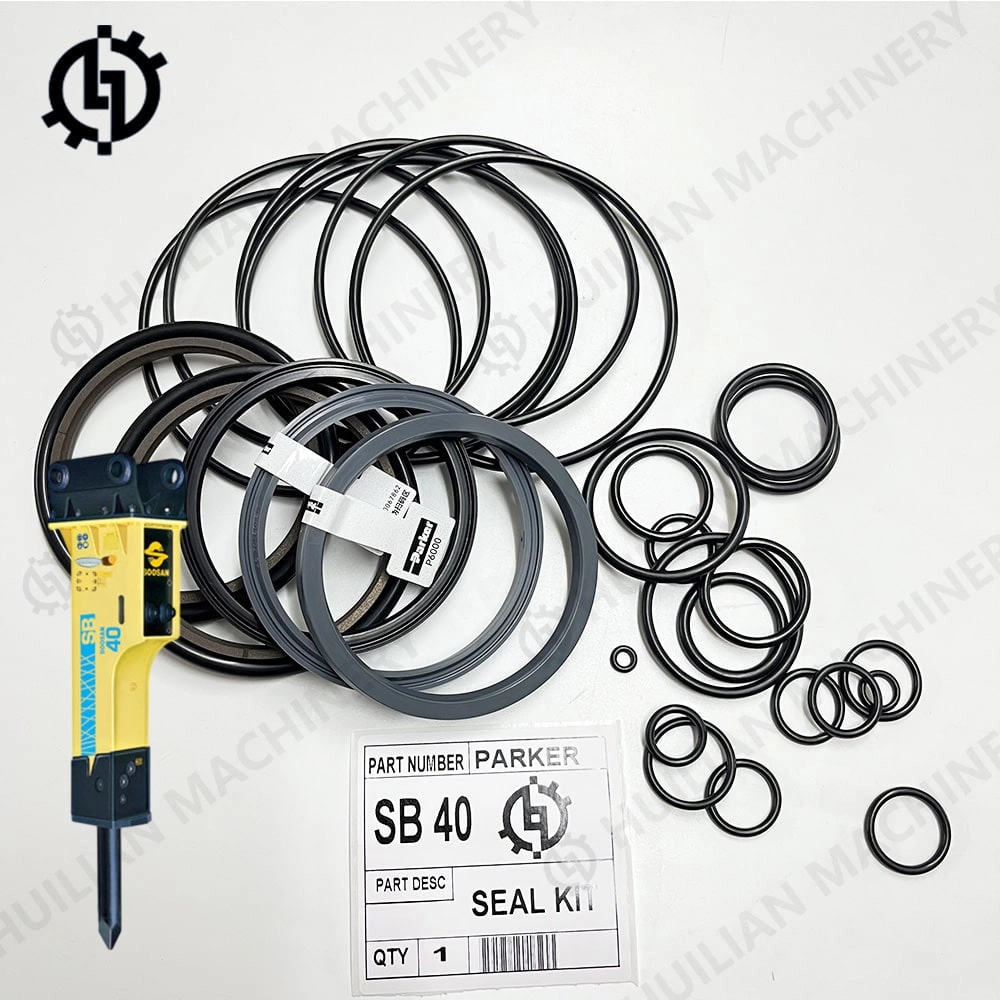
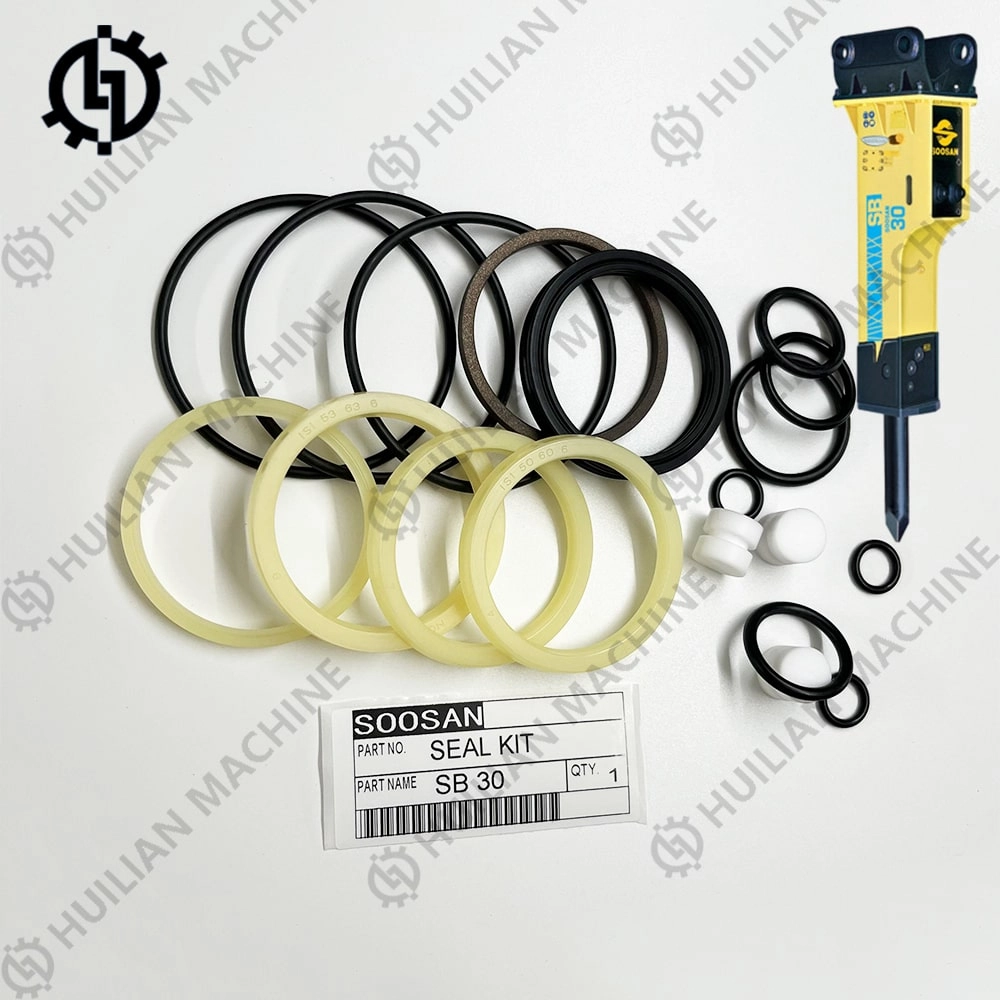
Yes, we manufacture high-quality OEM parts and supply aftermarket parts from top brands such as NOK, Parker, SKF, and Hallite to ensure optimal performance.
What types of excavator parts do you offer?
We provide a wide range of high-quality excavator parts, including hydraulic breakers, chisels, seal kits, diaphragms, pistons, wear bushes, retainer bars, through bolts, side bolts, valves, and liners.
How can I ensure I’m selecting the right part for my equipment?
Our expert team can assist you in finding the right part based on your machine model, specifications, and requirements. Contact us for personalized support.
What is your shipping and delivery time?
We offer fast and reliable global shipping. Delivery times vary depending on location and order size, but we strive to process and ship orders as quickly as possible.
Are your parts compatible with all excavator brands?
Yes, our parts are designed to be compatible with major brands like Komatsu, Caterpillar, Hitachi, Hyundai, Doosan, JCB, Kobelco, Sany, and many more.




Getting started is easy 
Contact with our experts to find the best excavator parts solutions for your needs. Discover how Huilian can enhance your equipment's performance and efficiency.


Get in touch
 About us
© 2025 HUILIAN MACHINE. All rights reserved